
1. Fairford suspects released on bail
The five men arrested near RAF Fairford were released on police bail on Monday afternoon, after "extensive interviews and enquiries", said Laurence Taylor, head of Counter Terrorism Policing. All five are British nationals from London, aged 23 to 25. They remain under investigation, with strict conditions on their movements and contacts. Taylor said police were keeping "an open mind", including on whether the incident was carried out by proxies, or by people working for a foreign state, "knowingly or unknowingly". The men's three vehicles were examined overnight with military support. The PA news agency reported, without citing sources, that no viable explosives had been found. A local farmer, whose tip may have led to the arrests, told the BBC she saw a "large group of hooded and masked men" early on Sunday; Defence Secretary Wes Streeting thanked her.
https://x.com/politlcsuk/status/2104582853136732240?s=61
2. Russia adds soldiers and money on the same day
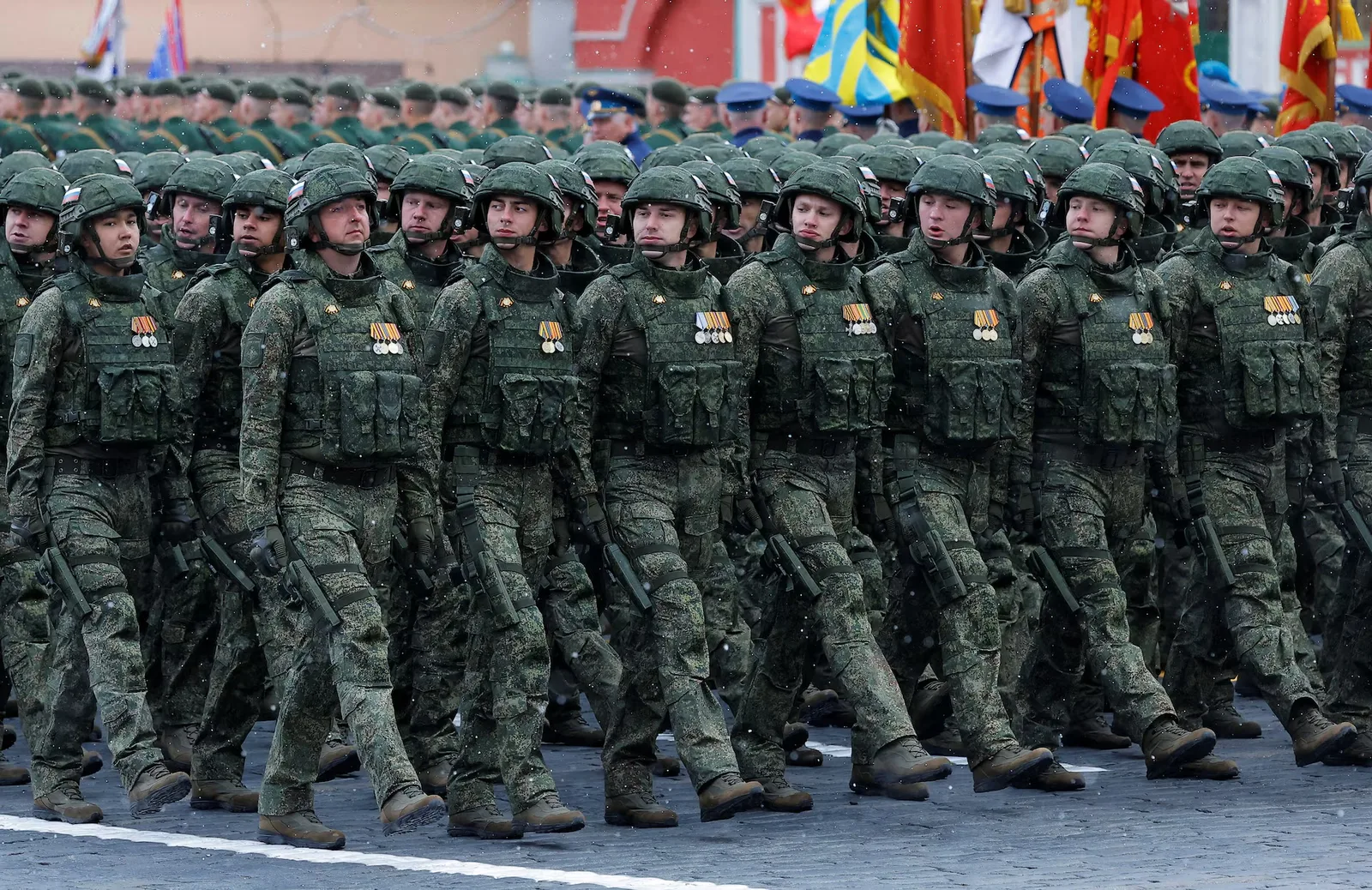
Vladimir Putin signed a decree raising the authorised strength of the armed forces to 2,441,630, including 1,550,500 military personnel: 15,500 more service members, and the fourth increase this year against three in the first four years of the war. On the same day, government documents seen by Reuters showed Russia plans to spend 17.1 trillion roubles ($202.6 billion) on defence in 2027, 27% more than originally budgeted and the most since the invasion began. The 2026 deficit estimate doubles to 3.2% of GDP. The Kremlin denies preparing a new mobilisation.
3. Washington and Tehran talk again, through mediators
Donald Trump confirmed that US and Iranian officials spoke through mediators on Monday, two days after he rejected Tehran's seven-day plan to reopen the Strait of Hormuz. US officials said he remains open to sanctions relief and releasing frozen Iranian assets in exchange for concrete progress toward a nuclear deal. Iran, meanwhile, claims its attacks on ships have forced US warships further from its coast. US media reported that eight Marines were injured on 14 September by an Iranian anti-ship cruise missile; CENTCOM did not respond to Al Jazeera's request for comment. The war is now in its eighth month.
4. Turkey's fund scandal reaches the ruling party
Erdoğan accepted the resignation of Fatma Betül Sayan Kaya, an AKP deputy chair and former family minister. The opposition Yeni Party accuses her and her husband of turning 163 million lira ($3.3 million) into about 2.17 billion ($44 million) by trading shares in the shipbuilder Özata Denizcilik just before the market crashed on 16 September. She has not addressed the allegations. 131 funds held by 455,758 investors are in liquidation. Late on Sunday, prosecutors lifted asset freezes on 45 companies and 19 funds, but not on individuals; on Monday, police detained eight more people.
https://x.com/business/status/2104135217732575535?s=61
5. Bitget reopens as its alleged launderers are exposed
Bitget was due to begin resuming withdrawals in phases on Monday, four days after losing $387.5 million in the year's biggest crypto theft. Its CEO says North Korea is "very likely" behind it, and TRM Labs links the attack to Pyongyang's TraderTraitor group; the FBI has not confirmed the attribution. Investigator ZachXBT identified five accounts he says belong to Chinese money movers laundering the funds, several of whom had asked for help in the public support channels of the services they used. One also appears in the laundering of the $292 million Kelp DAO theft in April. Funds are being moved through THORChain and mixers such as Wasabi.
6. Russia's jet drones hit the heart of Kyiv
Russia's round-the-clock bombardment killed at least seven people and wounded more than 80 across Ukraine, officials said on Monday. In central Kyiv, a drone struck the National Academy of Sciences, near the German embassy and key government buildings, killing a woman; staff escaped down firefighters' ladders. Three people were killed in a strike on an office centre in Dnipro. Overnight, Russia launched 165 drones, including 79 jet-powered, according to Ukraine's air force, which said 112 were shot down or jammed. These faster jet drones are harder to stop: Volodymyr Zelensky said on Saturday that Ukraine intercepts only just over half of them. Kremlin spokesman Dmitry Peskov said the chances of quick progress toward peace were bleak.