Shenzhen's Price List: What Trump, Xi and Putin Can Actually Trade
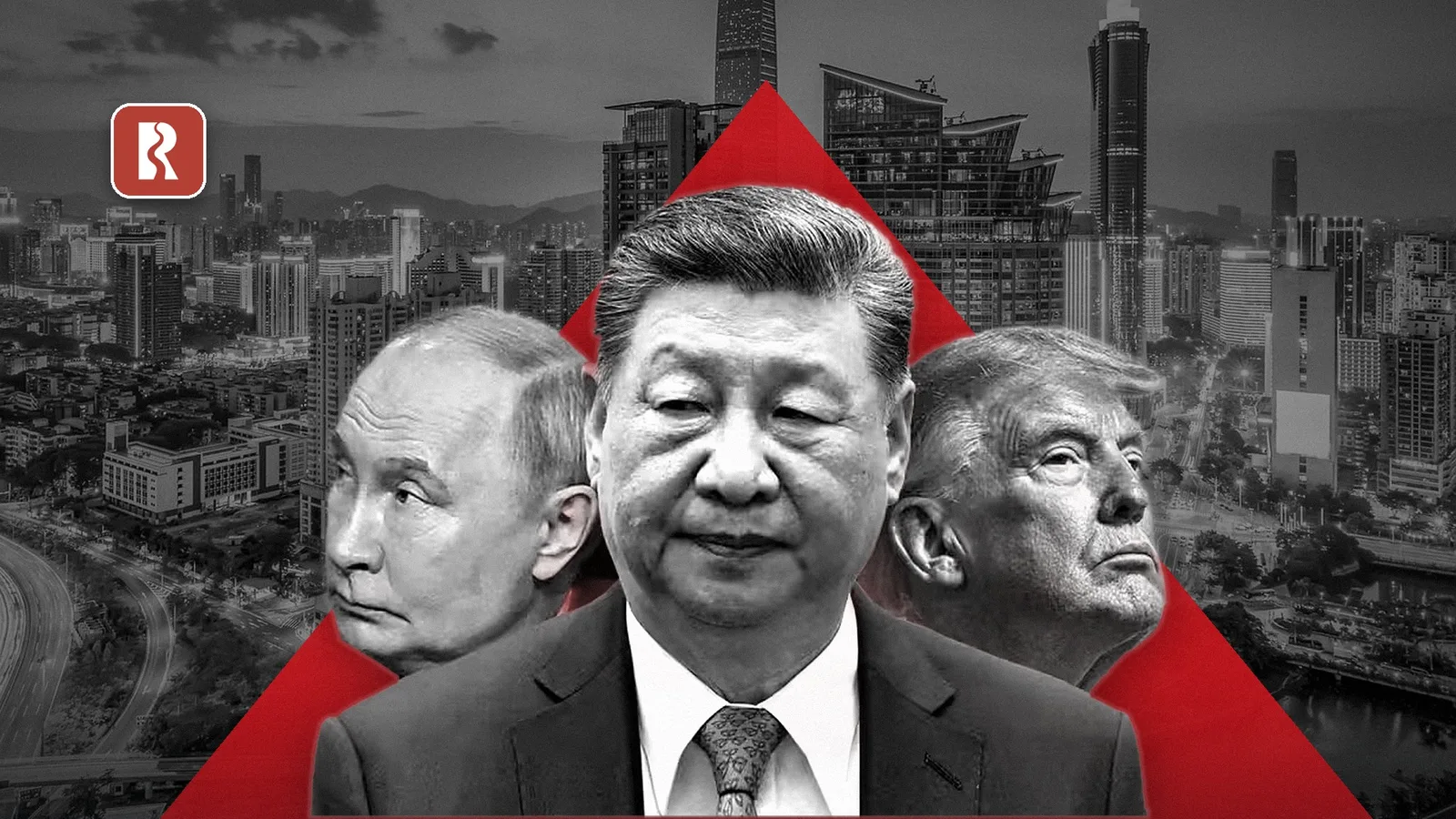
Donald Trump heads to Shenzhen hoping to meet Xi Jinping and, perhaps, Vladimir Putin. Behind the photograph sits a sanctions bill, €204bn of frozen Russian assets included, and most of it is not Washington's to give.
By Le Détroit
€204bn
of sanctioned Russian assets at Euroclear, end Sept
One Brussels vaultEuroclear report via Kyiv Independent and Expert (30 Oct 2026)Le Détroit's calculation: about 68% of the G7's €300bn round figure; the US holds about 1.5%
36.5%
average US tariff on Chinese goods, July 2026
After the Supreme Court and Section 301Congressional Research Service, IF12990 (18 Aug 2026), approximate2017: 2.7%; April 2025 peak: about 164%
64%
of Russia's seaborne crude on shadow-fleet tankers, June
The cap's blind spotKSE Institute Russian Oil Tracker, June 2026 dataLe Détroit's share: 2,805 of about 4,395 kb/d
0
Iranian crude cargoes loaded since 25 August
The blockadeKpler, 22 October 2026China bought 1.38m b/d of Iranian oil in 2025 (Kpler via Reuters)
Key judgements
Our assessment, written before the meetings. Confidence reflects the quality of the evidence behind each judgement, not the probability of an event.
Shenzhen is more likely to produce a photograph and a process than a sanctions deal; substantive US-China trade outcomes are more likely to wait for Miami and the 10 January deadline.Basis: Parts 2 and 8; Figures 2 and 8
ModerateModerate confidenceSourced facts, but the judgement rests on our reading of how the pieces fit
Most of what Moscow could ask for sits in European hands: SWIFT, about two thirds of the frozen reserves, the price cap and the EU lists; Washington alone can offer delistings, licences and softer enforcement.Basis: Parts 3 and 4; Figures 1, 3 and 4
HighHigh confidenceSeveral independent sources agree, and the inference is short
China's leverage over Iran is smaller than it looks while the blockade keeps Iranian oil off the market, and Russian crude has already replaced part of it.Basis: Parts 5 and 6; Figures 5 and 6
ModerateModerate confidenceSourced facts, but the judgement rests on our reading of how the pieces fit
For compliance teams the risk this week is asymmetric: relief would be partial, American and revocable, while escalation is already scheduled in Brussels.Basis: Part 7; Figure 7
HighHigh confidenceSeveral independent sources agree, and the inference is short
A trilateral that hints at sanctions relief would strain European unity more than it would ease pressure on Russia in the short term.Basis: Part 8; Figure 8
LowLow confidenceA reasoned view on events that have not happened; plausible, not established
Contents8 parts, 8 figures
Part 1A photograph with a price tag
Shenzhen will be sold as a photograph, but the ledger behind it is written in sanctions. When Asia-Pacific leaders meet in China's technology capital on 18 and 19 November, Donald Trump expects to sit down with Xi Jinping for the third time this year, and perhaps with Vladimir Putin as well. "One of the meetings, I think, will be with President Putin and President Xi, and that'll be interesting," he told reporters on 8 November, adding: "We're trying to end the war in Iran." Each man arrives holding something the other two want, and almost all of it is priced in restrictions: tariffs, export licences, frozen reserves, blacklisted banks and barrels that cannot be sold.
What is confirmed is thinner than the headlines. Mr Trump has accepted Beijing's invitation, and Mr Xi is the host. Mr Putin's attendance rests on reporting: Bloomberg said in September, citing Kremlin sources, that he planned to come, his first APEC in person since 2017, and his aide Yuri Ushakov spoke on 12 November of a planned meeting in China with Mr Trump, according to Ukraine's UNN agency. We found no formal Kremlin announcement. A three-way meeting is less certain still, although Mr Ushakov said in October that preparations had begun. China's foreign ministry says it "is in communication with relevant parties regarding a meeting between the three heads of state". The Financial Times reported that Washington and Moscow were pressing a hesitant Beijing, and that a Kremlin-linked source expected no substantive Ukraine negotiation at such a summit.
This piece is written before any of it happens, so it does not guess at the pictures. It prices what could change hands. Our argument is simple. The American and Chinese bill is mostly about trade, and the two men in the room can settle it, or roll it over again. The Russian bill is mostly about sanctions, and most of it is held by someone who is not invited: Europe. Of the ten main asks on the table, by Le Détroit's tally, Washington can deliver five on its own; Europe holds the key to four, and every one of them is a Russian ask.
Figure 1
Four seats, three chairs
What each leader brings to Shenzhen and what each wants. Europe holds much of what Moscow asks for, and it is not invited
Hover or tap a chip or a row for the detail and the source
Donald TrumpUnited States
BringsTariff truce to 10 Jan 2027Tariff truce to 10 Jan 2027: The truce, extended by two monthsTreasury Secretary Scott Bessent said on 23 September the terms stay in place until 10 January 2027 (Supply Chain Dive; DTN)Average US tariff on Chinese goods: about 36.5% in July 2026 (CRS)Chip licencesChip licences: H200 sales, case by caseAllowed in December 2025 with 25% of sales remitted to the US government; about ten Chinese firms cleared (Implicator, citing Reuters)Reuters reported on 14 May that none had shipped: Beijing paused ordersThe SDN listThe SDN list: Rosneft and Lukoil, designated 22 Oct 2025Delisting is a decision Washington can take alone (OFAC, EO 14024; McDermott via Mondaq)The licence for talks on selling Lukoil's foreign arm had been renewed seven times by June (Global Sanctions)Secondary sanctionsSecondary sanctions: A threat over foreign banksTreasury, 28 April 2026: "prepared to deploy secondary sanctions against foreign financial institutions" that keep facilitating Iran's oil tradeEasing or sharpening that threat needs no partner
WantsFarm purchasesFarm purchases: Soybeans and $17bn moreBusan pledge: at least 25m tonnes of soybeans a year in 2026 to 2028 (White House)About 10.2m tonnes committed for the 2026-27 crop so far (USDA via DTN); Bessent: China is lagging on a $17bn pledge of other farm goods (Supply Chain Dive; Reuters via The Standard)Rare earthsRare earths: Licences that actually flowChina extended its pause on the October 2025 controls to 10 January 2027 (Commerce Ministry, 9 Nov, via The National and Benchmark)China: 60% of mined and 91% of refined magnet rare earths (IEA via The National)An end to the Iran warAn end to the Iran war: "We're trying to end the war in Iran"Trump to reporters, 8 November (Reuters via News Tribune, 9 Nov 2026)Iran has kept its grip on Hormuz; the US blockades Iranian ports (AFP via Kuwait Times)Arms controlArms control: Three-way denuclearisation talks"We're talking a lot of things, including denuclearization," Trump said on 8 November (Reuters via News Tribune, 9 Nov 2026)Beijing has resisted arms-control talks, citing the larger US arsenal (FT via LIGA.net)
Xi JinpingChina, host
BringsRare-earth licencesRare-earth licences: The lever it used in 2025General licences for rare earths, gallium, germanium, antimony and graphite were promised at Busan (White House fact sheet, 1 Nov 2025)Suspension of the October 2025 controls now runs to 10 January 2027A $30bn tariff listA $30bn tariff list: "30 for 30"Cuts on about $30bn of farm and other non-sensitive goods; 1,619 products into China, 77 into the US; no timeline (DTN, 28 Sep 2026)Soybeans for crushing were left outThe roomThe room: Venue for a trilateralForeign ministry: China "is in communication with relevant parties regarding a meeting between the three heads of state" (Mao Ning, via The Korea Times, 7 Nov)The FT reported Washington and Moscow pressing a hesitant Beijing (via LIGA.net, 4 Nov)Sway in TehranSway in Tehran: Smaller than it looksChina bought 1.38m b/d of Iranian oil in 2025 (Kpler via Reuters)No Iranian crude has loaded since 25 August under the US blockade (Kpler, 22 Oct)
WantsLower tariffsLower tariffs: From about 36.5%US average tariff on Chinese goods about 36.5% after a 12.5% Section 301 tariff in July (CRS IF12990)China's average on US goods: about 31%Chips without stringsChips without strings: H200s and moreA 13 January framework caps approved buyers at 75,000 H200 units each (Implicator)Reuters found an Entity-Listed university bought two H200s for 874,700 yuan through a local supplier (11 Nov)Its banks left aloneIts banks left alone: And its refinersThe US designated Hengli's Dalian refinery on 24 April 2026 (OFAC via Al Jazeera)The EU listed two Chinese rural banks in July 2025; China hit back at two Lithuanian banks on 13 August 2025 (LRT; Euronews)TaiwanTaiwan: A pending arms saleA roughly $14bn US arms sale to Taiwan awaits approval; some observers expect a delay (Herald Corp, Sept 2026)"It will inevitably deal a blow to bilateral relations": Li Mingjiang, Nanyang Technological University
Vladimir PutinRussia
BringsUkraine talksUkraine talks: And a planned meeting in ChinaUNN, summarising Kremlin aide Yuri Ushakov on 12 November; on 6 October Ushakov said a Putin-Xi meeting would take place at the summit (UNN). We found no Kremlin announcement of the tripTrump on 60 Minutes: "I believe we're very close to making a deal" (Reuters via News Tribune, 9 Nov 2026)Arms controlArms control: The format Trump wantsTrump said in October he was open to three-way talks on denuclearisation with Xi and Putin (Reuters via News Tribune, 9 Nov 2026)The WSJ reported Putin proposed a trilateral on ending the war in Ukraine (same source)Iran's uraniumIran's uranium: An offer to take itPutin has offered to take Iran's enriched uranium; Russia runs the Bushehr plant (AP via San Mateo Daily Journal, ahead of the May Beijing summit)The US and Israel want the material out of Iran (same source)
WantsBank accessBank access: SWIFT, starting with farm lendingIn March 2025 the Kremlin tied a Black Sea truce to reconnecting Rosselkhozbank to SWIFT (Euronews; Meduza)Rubio: "Some of those conditions include sanctions that are not ours, they belong to the European Union."Its reservesIts reserves: €204bn at Euroclear aloneSanctioned Russian assets at Euroclear, end September 2026 (Euroclear report via Kyiv Independent and Expert)The EU froze the central bank's assets in December 2025 until the war ends and reparations are paid (OSW)Oil sanctions easedOil sanctions eased: Rosneft, Lukoil, the capEU and UK cap $44.1 a barrel, frozen until 14 July 2027 (White & Case; Skuld)Urals averaged about $61 in June (KSE Institute)A say on EuropeA say on Europe: Its 2021 proposals, updatedUshakov said Putin recalled Russia's 2021 security proposals, which Moscow intends to update (UNN, 12 Nov)Xi told Germany's president Europeans should take part in war talks, Steinmeier said (FT via LIGA.net)
EuropeNot at the table
HoldsSWIFTSWIFT: Based in Belgium, under EU lawReconnection "will depend exclusively on EU approval" (Euronews, 27 Mar 2025)The EU's stated precondition: unconditional Russian withdrawal (European Commission, 26 Mar 2025, via Meduza)€204bn€204bn: At Euroclear, BrusselsAbout 68% of a G7 round figure of €300bn: Le Détroit's calculationWindfall profits of about €8bn paid to Ukraine's support since July 2024 (Kyiv Independent)21 packages21 packages: A 22nd due by end NovemberThe 21st was adopted on 23 July 2026 (White & Case); European Pravda's EU sources expect the 22nd by the end of NovemberEvery sanctions decision needs all 27 governments (Kyiv Post)Monday's listMonday's list: 145 names, 50 banksAmbassadors agreed on 11 November; foreign ministers are due to adopt on 16 November (Kyiv Post; European Pravda)France's Benjamin Haddad announced restrictions on 50 banks, which European Pravda describes as operating in Russia; the Kyiv Post calls them Russian banks and companies
The askUS aloneEUG7, othersChina
RussiaDelist Rosneft and LukoilUS sanctions since 22 Oct 2025A US decisionOFAC designated both under EO 14024 (McDermott via Mondaq)The EU separately bans transactions with Rosneft (19th package); the UK froze both on 15 Oct 2025
ChinaEase the threat to Chinese banksSecondary sanctionsA US decision, with an EU echoTreasury's 28 April alert threatens foreign banksThe EU has listed Chinese banks and refiners in its own packages (LRT; S&P Global)
RussiaSWIFT for RosselkhozbankRussia's 2025 demandAn EU decisionSWIFT is in La Hulpe, Belgium, and bound by EU sanctions (Euronews)Rubio, March 2025: "sanctions that are not ours"
RussiaRelease the reservesAbout €300bn, G7 figureMostly an EU decisionEuroclear holds €204bn of sanctioned Russian assets; the US about $5bn (Euronews, 2023 estimate)Le Détroit's calculation: the US holds about 1.5% of the G7 total
RussiaLift or raise the price cap$44.1, EU and UKThe EU and the UK, in a G7 coalitionThe EU froze its automatic adjustment until 14 July 2027 (21st package)Washington alone cannot change the EU and UK level
RussiaDrop Monday's EU listings145 names, 50 banksAn EU decision, by unanimityForeign ministers due to adopt on 16 November (Kyiv Post)One veto would stop them
ChinaCut tariffsAbout 36.5% on averageA US decisionSection 301 and 232 tariffs are set by the administration; IEEPA tariffs fell to the Supreme Court in February (CRS)
ChinaChip licencesH200 and beyondA US decision, but China must buyBeijing paused H200 orders and ordered a supply-chain review (Implicator, citing Reuters)
USRare earths flowingLicences, not promisesA Chinese decisionPause extended to 10 January 2027 (Commerce Ministry, 9 Nov)
ChinaIranian oil back on saleWaivers, as in JuneA US decision, tied to a war dealIran demands the June oil waivers back (Al Jazeera, 1 Nov)No loadings since 25 August (Kpler)
Holds the keyHas a shareLe Détroit's tally: Washington can deliver 5 of these 10 asks alone; Europe holds the key to 4, all of them Russian
Source Reuters; White House; Treasury; CRS; DTN; Supply Chain Dive; The National; Benchmark; The Korea Times; FT via LIGA.net; UNN; Euronews; Meduza; Euroclear via Kyiv Independent; Kyiv Post; European Pravda; Le Détroit's assessmentLe DétroitBack to contents
Part 2The truce that ends in January
A truce last renewed for just two months is a bargaining chip, not a settlement, and that is what Mr Trump and Mr Xi bring to Shenzhen. The numbers show how far both sides have come down, and how far they remain from where they started. The average American tariff on Chinese goods was about 2.7% in 2017, peaked at about 164% in April 2025 and stood at about 36.5% in July, according to the Congressional Research Service. China's average on American goods is about 31%. By Le Détroit's calculation the American rate is still about 14 times its pre-war level.
The legal ground moved under the truce this year. In February the Supreme Court ruled that tariffs imposed under the International Emergency Economic Powers Act were unlawful, and the administration lifted them, including the "fentanyl" duty it had halved at Busan. A temporary 10% tariff under Section 122 followed for 150 days; in July a 12.5% Section 301 tariff on Chinese goods, justified by forced labour, replaced it. Washington has, in other words, lost the instrument it used to escalate in 2025 and rebuilt a smaller one.
The Busan deal of October 2025 has delivered unevenly. China pledged to buy at least 25m tonnes of soybeans a year from 2026 to 2028; export sales data show about 10.2m tonnes committed for the 2026-27 crop so far, according to DTN; Treasury Secretary Scott Bessent says China is meeting the soybean pledge but is "a little behind schedule" on about $17bn of other farm commitments. In return for American suspensions, Beijing paused the sweeping rare-earth controls it announced in October 2025. In September Mr Bessent said the truce would run to 10 January 2027; on 9 November China's commerce ministry extended its rare-earth pause to the same date, and its finance ministry kept a 24% tariff suspended while a 10% levy stays.
That leaves a short list of what is genuinely negotiable this week: a longer truce, firmer farm purchases, licences that make rare earths flow rather than trickle, and a "30 for 30" list of tariff cuts on about $30bn of non-sensitive goods that negotiators drew up without a timetable. Chips sit outside the deal. Washington allowed Nvidia's H200 sales in December with 25% of sales going to the US government, yet Reuters reported in May that none had shipped because Beijing paused orders; last week Reuters found that Northwestern Polytechnical University, on the US Entity List since 2001, had bought two H200s for 874,700 yuan through a domestic supplier. On rare earths, China's leverage is structural: it produces 60% of mined and 91% of refined magnet rare earths, according to the International Energy Agency.
Figure 2
The truce that keeps being renewed
Average tariffs between the US and China since 2017, and what the Busan deal promised against what it has delivered
Hover or tap a point or a row for the figure and the source
US tariffs on Chinese goodsChina's tariffs on US goodsIf the truce holds
0%50%100%150%Nov 2025Busan truceFeb 2026Court voids IEEPA tariffsJul 2026Section 301, 12.5%Shenzhen18 to 19 NovUS on Chinaabout 36.5%China on USabout 31%
US tariffs on Chinese goods, 2017: about 2.7%Before the trade warChina on US goods: about 8%Two-way averages, approximate (CRS)
US tariffs on Chinese goods, 2019: about 19%After the 2018 to 2019 Section 301 rounds: 7.5% to 25% on about $370bn of importsChina on US goods: about 21%Two-way averages, approximate (CRS)
US tariffs on Chinese goods, March 2025: about 39%IEEPA "fentanyl" tariff raised to 20% in MarchChina on US goods: about 21%Two-way averages, approximate (CRS)
China's tariffs on US goods, March 2025: about 21%US on Chinese goods: about 39%CRS, approximate
US tariffs on Chinese goods, April 2025: about 73%Reciprocal tariff of 34% announced over the trade deficitChina on US goods: about 55%Two-way averages, approximate (CRS)
China's tariffs on US goods, April 2025: about 55%US on Chinese goods: about 73%CRS, approximate
US tariffs on Chinese goods, April 2025, peak: about 164%Tit-for-tat escalation: reciprocal rate at 125% with some exceptionsChina on US goods: about 146%Two-way averages, approximate (CRS)
China's tariffs on US goods, April 2025, peak: about 146%US on Chinese goods: about 164%CRS, approximate
US tariffs on Chinese goods, May 2025: about 49%Both sides cut the reciprocal rate to 10% for 90 daysChina on US goods: about 31%Two-way averages, approximate (CRS)
China's tariffs on US goods, May 2025: about 31%US on Chinese goods: about 49%CRS, approximate
US tariffs on Chinese goods, November 2025: about 39%Busan deal: fentanyl tariff cut by 10 points; truce extended for a yearChina on US goods: about 31%Two-way averages, approximate (CRS)
US tariffs on Chinese goods, February 2026: about 34%Supreme Court rules IEEPA tariffs unlawful; a 10% Section 122 tariff for 150 daysChina on US goods: about 31%Two-way averages, approximate (CRS)
US tariffs on Chinese goods, July 2026: about 36.5%Section 122 expires; a 12.5% Section 301 tariff (forced labour) replaces itChina on US goods: about 31%Two-way averages, approximate (CRS)
10 January 2027: the truce endsUnless extended again. Bessent was unsure on 23 September whether a bigger deal would be ready by then (Supply Chain Dive)Dashed lines assume no change before then
20172025Jul2026Jul2027
Average tariff, %. Two-way averages as estimated by the Congressional Research Service, approximate and not weighted by trade. The axis is compressed before 2025. Le Détroit's calculation: the US average is still about 14 times its 2017 level.
ItemBusan pledgeWhere it stands, 13 NovStatus
Soybeansand other farm goodsAt least 25m tonnes a year, 2026 to 202810.2m tonnes committed for the 2026-27 crop; lagging on a $17bn pledge of other farm goods
PartlySoybeansWhite House fact sheet, 1 Nov 2025; USDA export sales via DTN, 28 Sep 2026; Bessent via Supply Chain DiveLe Détroit's calculation: 41% of one year's pledge (marketing years differ from calendar years); Bessent says China is meeting the soybean requirement (The Standard)
Rare earthsOctober 2025 controlsSuspended for one year; general licences for US usersPause extended to 10 January 2027 on 9 NovemberExtendedRare earthsCommerce Ministry via The National and Benchmark Mineral IntelligenceThe pause covers the October 2025 measures (Benchmark); The National notes earlier curbs on seven heavy rare earths from April 2025
China's 24% tariffon US goodsSuspended; a 10% levy staysSuspension extended two months; 10% remainsExtendedChina's 24% tariffChina's finance ministry via The National, 9 Nov 2026
US "fentanyl" tariffIEEPACut by 10 points from 10 Nov 2025Gone: IEEPA tariffs lifted after the Supreme Court ruling in FebruaryLapsedUS "fentanyl" tariffCRS IF12990; Supply Chain DiveChina arrested 21 nationals in August and controlled two precursor chemicals (Herald Corp)
Shipping feesSection 301, shipsBoth sides suspend fees for a yearUS suspension extended; 178 tariff exclusions renewedExtendedShipping feesUSTR filing via The National; National Grain and Feed Association via DTN
ChipsH200 and beyondOutside the dealLicences issued, no shipments reported by May; an Entity-Listed buyer found in NovemberOutsideChipsImplicator, citing Reuters (14 May); Reuters via BNN Bloomberg (11 Nov)USTR Jamieson Greer called the H200 decision "a sovereign decision for China"
The Busan truce, line by line. Agreed in October 2025, extended in September 2026 to 10 January 2027. Status is Le Détroit's reading of the sources in each tooltip.
Source Congressional Research Service, IF12990 (18 Aug 2026); White House (1 Nov 2025); DTN; Supply Chain Dive; The National; Benchmark; Implicator; Reuters; Herald Corp; Le Détroit's calculationsLe DétroitBack to contents
Part 3Putin's shopping list
What Moscow wants from Washington is cheap for Mr Trump to promise and hard for him to deliver. The sanctions on Russia are a layered structure built by many hands, and the American layer is not the thickest. The European Union has adopted 21 packages since February 2022, the latest on 23 July; each needs all 27 governments. On Monday, the day this article is published, EU foreign ministers are due to adopt 145 more listings, including restrictions on 50 banks, and a 22nd package is expected by the end of the month, according to European Pravda's EU sources.
The oil price cap shows how the layers interact. The EU and Britain cut their cap on Russian crude to $44.1 a barrel from February, and in July the EU froze the automatic adjustment until 14 July 2027, so that rising prices could not lift it. Yet Urals averaged about $61 in June, according to the KSE Institute: about $17 above the cap, by Le Détroit's calculation. The cap binds Western shipping, insurance and finance, not Russian sales, which is why, by Le Détroit's calculation from KSE Institute data, about 64% of Russia's seaborne crude moved on shadow-fleet tankers in June. The EU says it has now listed more than 690 of them.
Washington's own layer is narrower but sharper. The Treasury put Rosneft and Lukoil on its blacklist on 22 October 2025, and it can threaten foreign banks with secondary sanctions. Those are the levers Mr Trump can pull alone: delistings, general licences, slower enforcement, a softer tone towards the banks of third countries. He has used licences before; the one allowing talks on selling Lukoil's foreign arm had been renewed seven times by June.
Moscow has already shown where its list starts. In March 2025 the Kremlin tied a Black Sea truce to reconnecting Rosselkhozbank, its farm lender, to SWIFT. Marco Rubio, the secretary of state, answered at once: "Some of those conditions include sanctions that are not ours, they belong to the European Union." SWIFT is based in Belgium and bound by EU law, and the European Commission set its condition the same week: an unconditional Russian withdrawal. Nothing in Brussels's calendar suggests that has changed.
Figure 3
Europe's staircase
EU sanctions packages against Russia since 2022, the key American and allied steps, and the oil price cap
Packages 1 to 4: 23 February to 15 March 2022The first four packages: listings, financial measures and, within days of the invasion, exclusions of Russian banks from SWIFTAllies blocked the central bank from about $300bn of reserves on 28 February (Wikipedia)
Package 5: 8 April 2022Fifth package (Wikipedia)
Package 6: June 2022Sixth package
Package 7: July 2022Seventh package
Package 8: 6 October 2022Eighth package (Wikipedia); the G7 price cap followed on 5 December 2022
Package 9: 16 December 2022Ninth package (Wikipedia)
Package 10: February 2023Tenth package, around the first anniversary
Package 11: June 2023Eleventh package (Wikipedia: "late June")
Package 12: December 2023Twelfth package (European Commission; German government)
Package 13: February 2024Thirteenth package, in force on 24 February 2024 (German government)
Package 14: 24 June 2024Fourteenth package, agreed by foreign ministers (German government)
Package 15: December 2024Fifteenth package (German government)
Package 16: 24 February 2025Sixteenth package, on the third anniversary (German government)
Package 17: May 2025Seventeenth package
Package 18: 18 July 2025Dynamic price cap: $47.60 from 3 September 2025, 15% below the average Urals price (Skuld)First Chinese banks listed: Heihe and Suifenhe rural commercial banks (LRT; Euronews)
Package 19: 23 October 2025Full transaction ban on Rosneft and Gazprom Neft (McDermott via Mondaq)Chinese refiners Yulong and Liaoyang listed (S&P Global); A7A5 transactions banned from 25 November 2025 (Crowell)
Package 20: 23 April 202646 more vessels banned, 632 in all; 20 Russian banks and 4 third-country financial institutions (EEAS)Delayed for months by Hungarian and Slovak vetoes (Crowell)
Package 21: 23 July 2026Cap frozen at $44.1 until 14 July 2027; 41 vessels; 33 Russian banks and one Kyrgyz bank (White & Case)Greece secured an exemption for Arctic LNG shipping (AFP via The Moscow Times)
Package 22: expected by the end of NovemberEuropean Pravda, citing EU sources; EU Perspectives: the Commission will present itWritten on 13 November; not yet proposed in public
20222023202420252026
Twenty-one packages in four and a half years. Each step is a package adopted by the Council, which needs all 27 governments. Monday's 145 listings are additions under existing regimes, not a package. Shadow-fleet vessels banned from EU ports: 673 after the 21st package by Le Détroit's sum; more than 690 listed by November, Commissioner Maria Luís Albuquerque said, according to European Pravda.
EU and UK price cap on Russian crudeUrals, June averageBrent, 12 Nov
$0$25$50$75$100+$17Jul 2027freeze endsPrice cap$ a barrel
5 December 2022: the G7 cap, $60 a barrelWestern shipping, insurance and finance may serve Russian crude only below the cap
3 September 2025: $47.60 (EU and UK)Set by the 18th package: 15% below the average Urals price, reviewed every six months (Skuld)
1 February 2026: $44.1EU from 1 February, UK from 31 January (Willkie; gCaptain)Frozen until 14 July 2027 by the 21st package, so rising oil prices cannot lift it (White & Case; AFP)
Urals, June 2026: about $61Average FOB price, KSE Institute Russian Oil Tracker (July 2026)Le Détroit's calculation: about $17 above the cap
Brent, 12 November 2026: $93.85Reuters via BoursoramaThe Iran war keeps a premium in the price
20232024202520262027
A cap on services, not on sales. Russian crude sold above the cap is legal if no Western shipper, insurer or bank touches it, which is why the shadow fleet matters more than the number.
Source Council of the EU via EEAS, White & Case, Crowell, Skuld, Willkie, gCaptain; German government; Wikipedia; S&P Global; LRT; Euronews; McDermott via Mondaq; KSE Institute; Reuters via Boursorama; European Pravda; Kyiv Post; Le Détroit's calculationsLe DétroitBack to contents
Part 4The money in the vault
The largest single item on Mr Putin's list sits in Brussels, and it earns money every day. Euroclear, the Belgian securities depository, held €204bn of sanctioned Russian assets at the end of September, according to its quarterly report as reported by the Kyiv Independent and Expert. In December 2025 the EU decided to keep the central bank's assets frozen until the war ends and Russia pays reparations, ending the six-monthly renewals on which any single government could have balked.
Europe then chose not to spend the money. EU leaders shelved the "reparations loan" that would have lent the cash to Ukraine, after opposition led by Belgium, and agreed instead on €90bn of joint borrowing for 2026 and 2027. Ukraine repays only if Russia pays reparations, and the EU "reserves its right" to use the frozen assets to cover the loan. Meanwhile the vault keeps paying. Euroclear earned €3.6bn of interest on the assets in the first nine months of 2026, about €13m a day by Le Détroit's calculation, and has handed about €8bn of windfall profits to Ukraine's support since July 2024. Moscow fights back in its own courts: a Moscow court ruled for the Bank of Russia on 15 May and rejected Euroclear's appeal on 16 July, Euroclear says; the Russian outlet Expert puts the claim at about €200bn. Euroclear calls it "without merit".
Where the rest sits matters as much. The G7 speaks of about €300bn of Russian sovereign assets frozen in the West. Japan has never confirmed its share, estimated at €25bn to €30bn; Switzerland reports CHF 7.45bn; the United States held about $5bn in 2023. Le Détroit's calculation: Washington holds about 1.5% of the total, and Euroclear alone, on its broader count of sanctioned assets, about two thirds. However warm the handshake in Shenzhen, Mr Trump cannot unfreeze the reserves, because almost none of them are his. He can only lobby the people who hold them.
Moscow's realistic ask is therefore not the cash but a say over its fate: a promise that the reserves will not be confiscated, or a role in any fund that eventually spends them. Neither is Washington's to grant. The €90bn loan already treats the assets as security against reparations, and the open-ended freeze removed the six-monthly votes in which a single government could have threatened to let it lapse. Our reading is that any American promise on the reserves would in practice be a promise about Belgium's vault, and would have to be paid for in Brussels.
Figure 4
The money in the vault
Where Russia's frozen reserves sit, and what the largest pile has earned, cost and backed
Hover or tap a slice or a line
€300bnabout, frozen in the West (G7 figure)
68%€204bn at Euroclear
9%Japan, estimated
2.7%Switzerland
1.5%in the United States
19%not disclosed by anyone
Euroclear, Brusselssanctioned Russian assets, end Sept 202668%Euroclear: €204bnSanctioned Russian assets on its balance sheet at the end of September (Euroclear report via Kyiv Independent and Expert); €202bn at the end of June (Euroclear)Includes some assets of other sanctioned Russian owners, not only the central bank
Japanestimate, never confirmed9%Japan: €25bn to €30bnMedia and independent estimates; Tokyo declined to disclose (Euronews, 6 Nov 2025)Drawn at the midpoint
SwitzerlandCHF 7.45bn, commercial banks2.7%Switzerland: CHF 7.45bn, about €8bnConfirmed by the Swiss government to Euronews (Nov 2025)
United States$5.06bn, 2023 estimate1.5%United States: about $5bnREPO task force estimate via Axios (2023), cited by Euronews; the Treasury did not reply to EuronewsLe Détroit's calculation: about 1.5% of the total
Not disclosedUK, Canada, other EU, others19%Not disclosed: about €56bnLe Détroit's calculation: the G7 round figure minus the amounts aboveThe UK and Canada publish no sovereign figure; France and Germany declined to comment (Euronews)
€204bnin one Brussels vault
€204bn heldEuroclear, end September 2026100%of the vault€204bn held: Euroclear, end September 2026Euroclear report via Kyiv Independent and Expert (30 Oct 2026)The EU decided in December 2025 to keep the central bank's assets frozen until the war ends and Russia pays reparations (OSW)
€200bn claimedBank of Russia v Euroclear, Moscow98%of the vault€200bn claimed: Bank of Russia v Euroclear, MoscowA Moscow court ruled for the Bank of Russia on 15 May 2026; Euroclear's appeal was rejected on 16 July (Euroclear H1 release). The €200bn amount is Expert'sEuroclear "strongly contests" the claim, "which is without merit" (Kyiv Independent); it has provisioned €162m for Russian court claims
€90bn lentEU loan to Ukraine, 2026 to 202744%of the vault€90bn lent: EU loan to Ukraine, 2026 to 2027Joint EU borrowing agreed on 18 to 19 December 2025 instead of a reparations loan; Hungary, Czechia and Slovakia stay out (ECFR; OSW)Ukraine repays only if Russia pays reparations; the EU "reserves its right" to use the frozen assets
€8bn paid outwindfall profits, since July 20243.9%of the vault€8bn paid out: windfall profits, since July 2024Five payments, the latest €1.4bn in August 2026 (Kyiv Independent)Euroclear: about €6.6bn paid by June, €1.4bn due in July (H1 release)
€3.6bn earnedinterest, January to September 20261.8%of the vault€3.6bn earned: interest, January to September 2026Euroclear report via Kyiv Independent and Expert: 6% lower than a year earlierLe Détroit's calculation: about €13m a day
Each ring is drawn against the €204bn at Euroclear. The outer ring is the vault; the inner rings show what has been claimed, lent, paid out and earned around it.
Source Euroclear (H1 2026 release); Euroclear Q3 via Kyiv Independent and Expert (30 Oct 2026); Euronews (6 Nov 2025); ECFR; OSW; Le Détroit's calculationsLe DétroitBack to contents
Part 5China's two barrels
Beijing's oil bill is being rewritten by the war in the Gulf, not by the summit. China bought 1.38m barrels a day of Iranian oil in 2025, according to Kpler, more than 80% of what Iran shipped, most of it refined by the independent "teapot" refiners of Shandong. That flow has gone. No Iranian crude or condensate has loaded since 25 August, under an American blockade of Iranian ports, and the last cargoes were discharged in China earlier in October, Kpler says.
Russia has filled part of the gap. Chinese customs recorded 77.65m tonnes of Russian crude in the first eight months of 2026, up 18.1% on a year earlier, and August alone was up 41%. Le Détroit's calculation: China took about 0.36m b/d more Russian oil from January to August, roughly a quarter of the Iranian oil it bought in 2025. That deepens the very dependence Western sanctions target. A barrel China cannot buy from Tehran it increasingly buys from Moscow, by sea and by pipeline, and the buyers are often the same refiners.
Figure 5
The barrels behind the summit
Russian crude to India and China, the Iranian flow the war stopped, and where sanctions landed
Hover or tap a marker for the volume, the measure and the source
NovorossiyskNovorossiyskNovorossiysk, Black SeaRussia's main Black Sea crude port. Cargoes for India sail through the Bosphorus and SuezThe EU banned transactions with nearby Tuapse in April (20th package, EEAS)
Baltic portsBalticPrimorsk and Ust-Luga, Baltic SeaBaltic cargoes sail round Europe and through Suez; the line leaves the map to the westThe EU added Vysotsk to its port ban in July (21st package, White & Case)
Gujarat refineriesGujaratIndia: 1.41m b/d of Russian crude shipped in JuneSeaborne Russian crude bound for India in June 2026, 32% of the total (KSE Institute)India's recorded imports were 2.62m b/d that month as April and May cargoes arrived (KSE). Marker placed at the Gulf of Kutch refining hub for legibility
KozminoKozminoKozmino: 1.30m b/d by sea to ChinaSeaborne Russian crude bound for China in June 2026, all ports, 30% of the total (KSE Institute)Drawn from Kozmino, the Pacific terminal of the ESPO system, for legibility; the KSE figure covers all Russian ports
ESPO pipelinePipelinePipeline capacity: about 0.6m b/d via the ESPO spurSkovorodino to Mohe and Daqing: 30m tonnes a year, about 600,000 b/d (The Moscow Times); a further 10m tonnes a year, about 200,000 b/d, transits Kazakhstan (Kaztransoil via Platts), not drawnWidth drawn at capacity, dashed: monthly pipeline flows are not published. Customs put all Russian crude at 2.34m b/d in January to August
Shandong teapotsShandongShandong: the independent refinersMost of China's Iranian oil went to Shandong's "teapot" refiners, the US Treasury says; they are also big buyers of Russian crude (S&P Global)Chinese teapots took 761,000 b/d of Russian crude in October 2025 (Platts via S&P Global)
Kharg IslandKhargIran to China: 1.38m b/d in 2025, none loaded since 25 AugustChina bought 1.38m b/d of Iranian oil in 2025 (Kpler via Reuters); the hollow line shows that flow, now stoppedNo crude or condensate cargo loaded since 25 August; the last cargoes discharged in China earlier in October (Kpler, 22 Oct)
HormuzHormuzStrait of HormuzIran has held the strait since the war began; the US blockades Iranian ports (AFP via Kuwait Times, 11 Nov)Iran says it could reopen it within two days if its conditions are met. Next door, the UAE hosts many of the traders and front companies the US Treasury describes
UAEUAEUAE: traders and front companiesTreasury: Iran's oil trade relies on front companies in Asia and the UAE (28 Apr 2026)The EU listed Lukoil's Dubai trader, Litasco Middle East DMCC (McDermott via Mondaq)
Off MalaysiaMalaysiaOff Malaysia: ship-to-ship transfersTraders typically label Iranian oil as coming from other countries, such as Malaysia (Reuters factbox, 21 Mar 2026)The EU banned transactions with Indonesia's Karimun oil terminal in April (EEAS)
Shenzhen and Hong KongShenzhenShenzhen: APEC leaders, 18 and 19 NovemberChina's technology capital hosts the leaders' meeting; foreign and trade ministers meet virtually (BowerGroupAsia)Across the border, Hong Kong appears in EU export bans on entities supplying Russia (White & Case; EEAS)
Russian crude by sea, June 2026By pipeline (ESPO capacity)Iranian oil to China, 2025: now stoppedShenzhen
Widths to scale, million barrels a day; sea lanes schematic. Equal Earth, Natural Earth 1:50m.
Moscow: Rosneft, LukoilMoscowRosneft and Lukoil: US sanctions, 22 Oct 2025Both added to the SDN list with their 50%-owned subsidiaries (McDermott via Mondaq); UK asset freezes from 15 Oct 2025EU: full transaction ban on Rosneft and Gazprom Neft (19th package)
MurmanskMurmanskMurmansk: EU port ban, April 2026Transactions with Murmansk and Tuapse banned by the 20th package (EEAS)
Kulevi refineryKuleviKulevi refinery, Georgia: EU, July 2026Designated under the new refinery ground of the 21st package; applies from 25 January 2027 (White & Case)
KyrgyzstanKyrgyzstanKyrgyzstan: A7A5 and a listed bankA7A5's formal issuer, Old Vector LLC, is Kyrgyz (Elliptic); the EU designated a Kyrgyz exchange trading it (20th package, EEAS)The 21st package added a Kyrgyz bank linked to Russia's SPFS messaging system (White & Case)
DubaiDubaiDubai: Lukoil's trader listed by the EULitasco Middle East DMCC designated under the EU asset-freeze regulation (McDermott via Mondaq)
Iranian portsIranIran: a US blockade, back since 14 JulyThe blockade returned on 14 July 2026 (Reuters via BusinessDay); no crude loaded since 25 August (Kpler)
Shandong teapotsShandongTeapots designated by the US in 2025Including Shandong Shouguang Luqing, Shandong Shengxing and Hebei Xinhai (Al Jazeera)Treasury alert of 28 April 2026: enhanced due diligence on China-based refineries, mostly in Shandong (Willkie); the EU separately listed Yulong (S&P Global). Marker shows Shandong; Hebei Xinhai is in neighbouring Hebei
Dalian: HengliHengliHengli Petrochemical (Dalian): US, 24 Apr 2026China's second-largest independent refinery, about 400,000 b/d; more than five million barrels delivered by three named tankers (OFAC via Portfolio Plus; Al Jazeera)The EU separately listed Liaoyang Petrochemical, also in Liaoning (S&P Global)
Heihe bankHeiheHeihe Rural Commercial Bank: EU, July 2025One of the first two Chinese banks the EU listed, for crypto services that undermined sanctions (LRT; Euronews)China retaliated against two Lithuanian banks on 13 August 2025
Suifenhe bankSuifenheHeilongjiang Suifenhe Rural Commercial Bank: EU, July 2025Listed with Heihe in the 18th package (LRT; Euronews)Both sit on the Russian border, in Heilongjiang
Karimun terminalKarimunKarimun oil terminal, Indonesia: EU, April 2026Added to the EU's port transaction ban alongside Murmansk and Tuapse (20th package, EEAS)
US measureEU measureRussia, China and Iran shaded
A selection of targets named in US and EU measures since 2025, placed at the city or province.
Source Natural Earth; KSE Institute; China customs; Kpler; US Treasury; EEAS; White & Case; others in tooltips; Le DétroitLe Détroit
Those refiners are where American and European pressure on China has landed. The US Treasury designated several Chinese teapots in 2025, three of them named by Al Jazeera, and on 24 April it hit Hengli Petrochemical's Dalian refinery, about 400,000 b/d, China's second-largest independent. Four days later it warned banks that China buys about 90% of Iran's oil exports and that it is "prepared to deploy secondary sanctions against foreign financial institutions" that keep facilitating the trade. The EU went further on Russia: its July 2025 package listed two Chinese rural banks on the Russian border, Heihe and Suifenhe, for crypto services, and it has since listed the refiners Yulong, in its October 2025 package, and Liaoyang. Beijing retaliated against two small Lithuanian banks. What Mr Xi wants from this week, beyond tariffs, is for that pressure to stop at the refiners and never reach a large Chinese bank. Only part of that promise is Mr Trump's to make.
For Chinese buyers, an Iran deal matters more than any Shenzhen communiqué, and it is being negotiated in Doha. The war began with American and Israeli strikes on 28 February. A memorandum signed in June, with help from Qatar and Pakistan, came with oil waivers; the US reinstated its blockade on 14 July, and the deal collapsed in August. Iran has kept its grip on the Strait of Hormuz and says it could reopen it within two days if Washington meets its conditions, which include lifting recent sanctions and reinstating the June oil waivers, according to Al Jazeera and AFP.
Both sides are under pressure. Kpler expects Iran's crude and condensate revenue to reach zero by mid-December, and the toman lost about 42% of its value between mid-June and late October. Mr Trump wrote last week of "positive momentum toward an end to this Conflict" and called further strikes "quite unlikely", while Israel's defence minister said the mission in Iran was "not complete". Brent traded at about $93.85 a barrel on 12 November, a reminder that the war, not Russia, now sets the oil price.
That gives Mr Xi less leverage over Tehran than Washington may hope. China cannot reward or punish Iran with purchases it is no longer able to make. What it can offer is diplomatic cover and, later, a market. For Mr Trump, the useful ask is narrower: Chinese pressure for a deal on enriched uranium, which the US and Israel want removed from Iran, and which Moscow has offered to take. If a deal comes, it will most likely bring waivers, as in June, and Shandong's teapots will be first in line. For banks, a waiver is a licence with an expiry date, not a pardon.
Figure 6
One barrel in, one barrel out
China's imports of Russian crude, and the collapse of Iran's exports under the US blockade
Hover or tap a bar or a point
Russian crude into China, 2026Same period, 2025Iranian oil China bought in 2025
0123
2024: 2.17m b/d108.5m tonnes, a record (customs data via Reuters, 20 Jan 2025)Barrels a day: Le Détroit's conversion at 7.33 barrels a tonne
2025: 2.02m b/d100.72m tonnes, 7.1% less than in 2024 (customs via RIA Novosti and GNA)Barrels a day: Le Détroit's conversion at 7.33 barrels a tonne
Jan-Aug 25: 1.98m b/d65.75m tonnes (customs via GNA)Barrels a day: Le Détroit's conversion at 7.33 barrels a tonne
Jan-Aug 26: 2.34m b/d77.65m tonnes, up 18.1% (customs via GNA, 20 Sep 2026)Worth $44.8bn, up 33.4%Barrels a day: Le Détroit's conversion at 7.33 barrels a tonne
Aug 25: 1.88m b/dLe Détroit's calculation from the 41.4% rise reported for August 2026Barrels a day: Le Détroit's conversion at 7.33 barrels a tonne
Aug 26: 2.65m b/d11.22m tonnes, up 41.4% on August 2025 (customs via GNA)Barrels a day: Le Détroit's conversion at 7.33 barrels a tonne
Iranian oil to China, 2025: 1.38m2.172.021.982.341.882.6520242025Jan-Aug 25Jan-Aug 26Aug 25Aug 26
Million barrels a day, pipeline and sea. Le Détroit's calculation: China took about 0.36m b/d more Russian crude in January to August than a year earlier, roughly a quarter of the Iranian oil it bought in 2025 (the two series come from different sources).
Iran's crude loadings, all buyers, 2026April to June not reportedChina's purchases, 2025 average
March 2026: about 2m b/dVortexa and Kpler estimates, via Reuters
July 2026: about 740,000 b/dVortexa and Kpler estimates, via Reuters; the US blockade returned on 14 July
August 2026: about 220,000 to 255,000 b/dCrude and condensate, via Reuters; last loading on 25 August (Kpler)
September 2026: no loadingsKpler: no crude or condensate cargo loaded since 25 August
October 2026: no loadingsKpler: oil on water outside the blockade zone fell to zero in mid-October
2025: China bought 1.38m b/d of Iranian oilKpler via Reuters (21 Mar 2026): about 13.4% of China's seaborne crude importsChina takes more than 80% of Iran's shipped oil (Reuters); about 90% (US Treasury)
2025Jul2026JulDec
Million barrels a day. Loadings are estimates by Vortexa and Kpler as reported by Reuters, and Kpler's own count from 25 August. Kpler expects Iran's oil revenue to reach zero by mid-December.
Source China General Administration of Customs via Reuters, RIA Novosti and GNA; Kpler via Reuters; Vortexa and Kpler via Reuters (BusinessDay, 1 Sep 2026); Kpler (22 Oct 2026); US Treasury; Al Jazeera; Le Détroit's calculationsLe DétroitBack to contents
Part 7Where enforcement leaks
Whatever the leaders sign, the plumbing decides, and both relief and escalation land on compliance desks before they reach markets. The map of leakage has changed little in a year. The shadow fleet carries most of Russia's seaborne crude, in tankers that are mostly older than 15 years, according to the KSE Institute. Treasury describes Iran's network as front companies in Asia and the UAE, intermediary brokers and ship-to-ship transfers. The EU has followed the money to the edges: four third-country financial institutions in April, a Kyrgyz bank in July, the Indonesian oil terminal at Karimun, a Georgian refinery and, in July, 51 entities in China, Hong Kong and elsewhere barred from receiving dual-use goods.
Crypto rails show what enforcement can do when it is coordinated. A7A5, a rouble-pegged stablecoin issued in Kyrgyzstan and said to be backed by rouble deposits at the sanctioned Promsvyazbank, moved more than $102bn in its first year, according to Elliptic. After American, British and European measures in the second half of 2025, and the loss of its main exchange's card payments in April, its volume fell to a low of $24.3m in June 2026, 96% below its July 2025 peak. Chips show the opposite: a control that leaks through local resellers, as the Reuters records on Chinese universities suggest.
The lesson for banks, traders and shippers is about asymmetry. Relief, if it comes, will arrive as American licences: narrow, time-limited and revocable, and it would not touch the European lists, which need unanimity to change. Escalation is already on the calendar, starting with Monday's listings. A compliance officer who prices relief this week is betting on the part of the bill Washington controls; one who prices escalation is reading the part Europe controls. The second bet is the safer one.
Each outcome lands differently along the chain. For banks, relief means reading licence terms and expiry dates while the EU lists stay in force, so screening does not loosen; escalation means new names in correspondent chains far from Moscow on the day the EU publishes them. For traders, an Iranian waiver or a licence for a Russian oil major opens a window, not a market: the June waivers have since lapsed, which is why Tehran now asks for them back. For shippers and insurers, the variable is the cap. At $44.1, frozen until 14 July 2027, Western services can carry Russian crude only at prices well below where Urals has traded this year.
Figure 7
Where enforcement leaks
Six channels compliance teams watch, the evidence for each, and what a relief or an escalation would change
Hover or tap a row for the sources
ChannelEvidenceLeakIf sanctions ease
Shadow fleetold tankers, opaque owners64% of Russia's seaborne crude in JuneWestern insurers win cargoes back; listed ships stay listedShadow fleetKSE Institute, June 2026: 2,805 of about 4,395 kb/d (Le Détroit's share); 97 shadow tankers loaded crude, 95% older than 15 yearsThe 20th package laid the basis for a future maritime-services ban (EEAS); Albuquerque via European Pravda (12 Nov)Leak score 4 of 4: Le Détroit's assessment
Independent refinersShandong and beyondUS: three teapots in 2025, Hengli in April; EU: Yulong, LiaoyangIranian waivers, as in June, let teapots buy openlyIndependent refinersAl Jazeera (25 Apr 2026); OFAC via Portfolio Plus: Hengli's Dalian refinery, about 400,000 b/d; S&P Global (EU)Treasury alert, 28 April 2026Leak score 3 of 4: Le Détroit's assessment
Third-country bankscorrespondents, small lendersEU: two Chinese banks, four others, one Kyrgyz bankLittle changes: EU listings need unanimity to liftThird-country banksLRT and Euronews (2025); EEAS (20th package); White & Case (21st)We found no US designation of a major Chinese bank (see "What we could not verify")Leak score 3 of 4: Le Détroit's assessment
Hong Kong and UAE frontstraders, brokers, shell firmsFront companies, brokers, ship-to-ship transfersFronts lose their margin when buying openly is cheaperHong Kong and UAE frontsTreasury alert (28 Apr 2026): front companies in Asia and the UAEThe EU added 51 entities in July, some in China and Hong Kong (White & Case), and listed Lukoil's Dubai trader (McDermott via Mondaq)Leak score 3 of 4: Le Détroit's assessment
Crypto railsA7A5 and successorsOver $102bn in a year; volume down 96% by JuneRouble stablecoins matter less if banks can pay againCrypto railsElliptic (29 Jul 2026)EU: A7A5 banned from 25 Nov 2025, RUBx and the digital rouble from 24 May 2026 (Crowell); country power in the 21st package, no country named yet (White & Case)Leak score 2 of 4: Le Détroit's assessment
Chip resellerslocal suppliers in ChinaTwo H200s to an Entity-Listed university, $123,000H200 licences widen legal supply; listed buyers stay barredChip resellersReuters via BNN Bloomberg (11 Nov 2026): 26 procurement and corporate records reviewedNvidia, the Commerce Department and the university did not respond to ReutersLeak score 3 of 4: Le Détroit's assessment
ChannelEvidenceLeakIf sanctions tighten
Shadow fleetold tankers, opaque owners64% of Russia's seaborne crude in JuneMore ships listed (over 690 in the EU); a services banShadow fleetKSE Institute, June 2026: 2,805 of about 4,395 kb/d (Le Détroit's share); 97 shadow tankers loaded crude, 95% older than 15 yearsThe 20th package laid the basis for a future maritime-services ban (EEAS); Albuquerque via European Pravda (12 Nov)Leak score 4 of 4: Le Détroit's assessment
Independent refinersShandong and beyondUS: three teapots in 2025, Hengli in April; EU: Yulong, LiaoyangMore designations; due diligence on China-based refinersIndependent refinersAl Jazeera (25 Apr 2026); OFAC via Portfolio Plus: Hengli's Dalian refinery, about 400,000 b/d; S&P Global (EU)Treasury alert, 28 April 2026Leak score 3 of 4: Le Détroit's assessment
Third-country bankscorrespondents, small lendersEU: two Chinese banks, four others, one Kyrgyz bankMonday's 50 banks; US secondary sanctions on foreign banksThird-country banksLRT and Euronews (2025); EEAS (20th package); White & Case (21st)We found no US designation of a major Chinese bank (see "What we could not verify")Leak score 3 of 4: Le Détroit's assessment
Hong Kong and UAE frontstraders, brokers, shell firmsFront companies, brokers, ship-to-ship transfersListings move to intermediaries in China, Hong Kong, the UAEHong Kong and UAE frontsTreasury alert (28 Apr 2026): front companies in Asia and the UAEThe EU added 51 entities in July, some in China and Hong Kong (White & Case), and listed Lukoil's Dubai trader (McDermott via Mondaq)Leak score 3 of 4: Le Détroit's assessment
Crypto railsA7A5 and successorsOver $102bn in a year; volume down 96% by JunePlatform listings; EU power to ban whole countries' providersCrypto railsElliptic (29 Jul 2026)EU: A7A5 banned from 25 Nov 2025, RUBx and the digital rouble from 24 May 2026 (Crowell); country power in the 21st package, no country named yet (White & Case)Leak score 2 of 4: Le Détroit's assessment
Chip resellerslocal suppliers in ChinaTwo H200s to an Entity-Listed university, $123,000Tighter end-use checks on distributorsChip resellersReuters via BNN Bloomberg (11 Nov 2026): 26 procurement and corporate records reviewedNvidia, the Commerce Department and the university did not respond to ReutersLeak score 3 of 4: Le Détroit's assessment
Leak scores are Le Détroit's assessment of how much sanctioned trade still flows through each channel, on a scale of 0 to 4.
Source KSE Institute; US Treasury; Al Jazeera; S&P Global; EEAS; White & Case; Crowell; LRT; Euronews; Elliptic; Reuters via BNN Bloomberg; McDermott via Mondaq; European Pravda; Le Détroit's assessmentLe DétroitBack to contents
Part 8Le Détroit's reading
Our reading is that Shenzhen will move the American and Chinese account and leave the Russian one largely where it is. The base case is a photograph and a process: a Trump-Xi meeting, perhaps a three-way handshake, and a truce that rolls on towards the G20 in Miami on 14 and 15 December and the 10 January deadline. Herald Corp reports both leaders intend to attend each other's summits, and BowerGroupAsia reports that the Kremlin has tied Mr Putin's attendance in Miami to the outcome in Shenzhen, which Mr Ushakov all but confirmed in October: a reason for Moscow to want something to show.
A trade-only deal is plausible: tonnes of soybeans, rare-earth licences, the $30bn list and a later deadline. It would lift farm and rare-earth flows, barely move the 36.5% average tariff and leave sanctions untouched; oil would keep taking its lead from the Iran talks in Doha, and Chinese bank risk from Monday's EU list. The least likely outcome this week, and the most consequential, is a Russia track that opens with American promises of relief. It would move the rouble first and European unity most, splitting the compliance rulebook between an American side that eases and a European side that does not. Washington could deliver licences and delistings quickly. It could not deliver SWIFT, the reserves or the price cap, and the attempt would land the bill in Brussels, where unanimity cuts both ways: one government can block new sanctions, and one can block their removal.
The empty chair is therefore the most important seat at the table. If Shenzhen produces a framework that assumes European concessions, the pressure on EU unity will rise just as Brussels adopts 50 more bank listings and prepares a 22nd package. If it produces only a photograph, Europe keeps its calendar and its leverage. Either way, the money that matters most to Moscow will still be sitting in a Brussels vault on Friday, earning about €13m a day.
Figure 8
Three ways the week can go
Le Détroit's scenarios for Shenzhen and what each would move. Our judgement, not a forecast of the meetings
Choose a scenario; hover or tap a row
Photo, no ledgerOur base case
Trump and Xi meet; a three-way handshake may or may not happen; no sanctions change. The truce rolls on towards Miami and 10 January. Europe's calendar, Monday's listings and a 22nd package, goes ahead.
Oil priceBrentThe summit moves little; Iran talks in Doha matter moreOil price: little changeThe summit moves little; Iran talks in Doha matter moreDirection and size are Le Détroit's judgement, on a scale of minus 2 to plus 2
Roubleagainst the dollarNo relief pricedRouble: little changeNo relief pricedDirection and size are Le Détroit's judgement, on a scale of minus 2 to plus 2
Chinese bank risksanctions exposureEU listings on Monday and a 22nd package keep the pressure upChinese bank risk: higherEU listings on Monday and a 22nd package keep the pressure upDirection and size are Le Détroit's judgement, on a scale of minus 2 to plus 2
European unityon sanctionsNo wedge: Brussels keeps the initiativeEuropean unity: higherNo wedge: Brussels keeps the initiativeDirection and size are Le Détroit's judgement, on a scale of minus 2 to plus 2
US-China tariffsaverage levelUnchanged until a deal or a new deadlineUS-China tariffs: little changeUnchanged until a deal or a new deadlineDirection and size are Le Détroit's judgement, on a scale of minus 2 to plus 2
LowerHigher
What would tell you: No joint text; any trilateral limited to a photograph; the next date that matters is 10 January.
A trade-only dealPlausible
A fact sheet with tonnes of soybeans, rare-earth licences, the $30bn tariff list and a later truce date. Russia and Iran stay off the paper.
Oil priceBrentNeutralOil price: little changeNeutralDirection and size are Le Détroit's judgement, on a scale of minus 2 to plus 2
Roubleagainst the dollarNeutralRouble: little changeNeutralDirection and size are Le Détroit's judgement, on a scale of minus 2 to plus 2
Chinese bank risksanctions exposureWashington talks purchases, not penalties; the EU is unchangedChinese bank risk: little changeWashington talks purchases, not penalties; the EU is unchangedDirection and size are Le Détroit's judgement, on a scale of minus 2 to plus 2
European unityon sanctionsUnaffectedEuropean unity: little changeUnaffectedDirection and size are Le Détroit's judgement, on a scale of minus 2 to plus 2
US-China tariffsaverage levelLower on some goods; the 36.5% average barely movesUS-China tariffs: lowerLower on some goods; the 36.5% average barely movesDirection and size are Le Détroit's judgement, on a scale of minus 2 to plus 2
LowerHigher
What would tell you: A White House fact sheet with numbers and dates, or a Commerce Ministry notice extending the pause beyond 10 January.
A Russia track opensLeast likely this week
A trilateral produces a framework on Ukraine or arms control, and Washington signals sanctions relief it can give alone: licences, delistings, softer enforcement. The asks that need Europe stay open.
Oil priceBrentA lower risk premium if Russian barrels face fewer frictionsOil price: lowerA lower risk premium if Russian barrels face fewer frictionsDirection and size are Le Détroit's judgement, on a scale of minus 2 to plus 2
Roubleagainst the dollarRelief priced in quicklyRouble: sharply higherRelief priced in quicklyDirection and size are Le Détroit's judgement, on a scale of minus 2 to plus 2
Chinese bank risksanctions exposureDown on the US side, unchanged on the EU side: a split screen for complianceChinese bank risk: lowerDown on the US side, unchanged on the EU side: a split screen for complianceDirection and size are Le Détroit's judgement, on a scale of minus 2 to plus 2
European unityon sanctionsThe bill lands in Brussels: SWIFT, the reserves, the capEuropean unity: sharply lowerThe bill lands in Brussels: SWIFT, the reserves, the capDirection and size are Le Détroit's judgement, on a scale of minus 2 to plus 2
US-China tariffsaverage levelNot the subjectUS-China tariffs: little changeNot the subjectDirection and size are Le Détroit's judgement, on a scale of minus 2 to plus 2
LowerHigher
What would tell you: Any US mention of licences for Rosneft or Lukoil, of SWIFT or of the reserves; any delay to Monday's EU listings.
Source Le Détroit's judgement, drawing on the sources in this articleLe DétroitBack to contents
What to watch
Monday 16 November: the EU's 145 listings. Foreign ministers are due to adopt them, including restrictions on 50 banks. Watch whether any government blocks them, and whether the published names include banks outside Russia: European Pravda describes them as banks operating in Russia, the Kyiv Post as Russian banks and companies.
Early in the week: Manila. The White House has confirmed Mr Trump will attend the ASEAN summit in Manila; Premier Li Qiang is expected to represent Mr Xi (Daily Tribune). Watch for any Trump-Li contact on trade before the Shenzhen meeting.
All week: Doha. Qatar is mediating between Washington and Tehran on reopening Hormuz. A deal that restores the June oil waivers would bring Shandong's refiners back to Iranian crude and change the compliance picture faster than anything signed in Shenzhen.
Wednesday 18 and Thursday 19 November: Shenzhen. The Trump-Xi meeting, and whether a meeting with Mr Putin is confirmed, in what format and with what text. Any White House fact sheet with tonnes, licences or a new truce date would mark the trade-only scenario; any American mention of SWIFT, the reserves or Rosneft and Lukoil would mark the Russia track.
By the end of November: the 22nd package. Expected according to European Pravda's EU sources. Then the G20 in Miami on 14 and 15 December, and the truce deadline on 10 January.
Written on Friday 13 November 2026 for publication on Monday 16 November, before the APEC meetings; events may have moved. Scenarios and confidence levels are Le Détroit's judgement. Naming a bank, refiner, trader or platform in this article reports a government measure or a named outlet's reporting and implies no further wrongdoing.