What happened
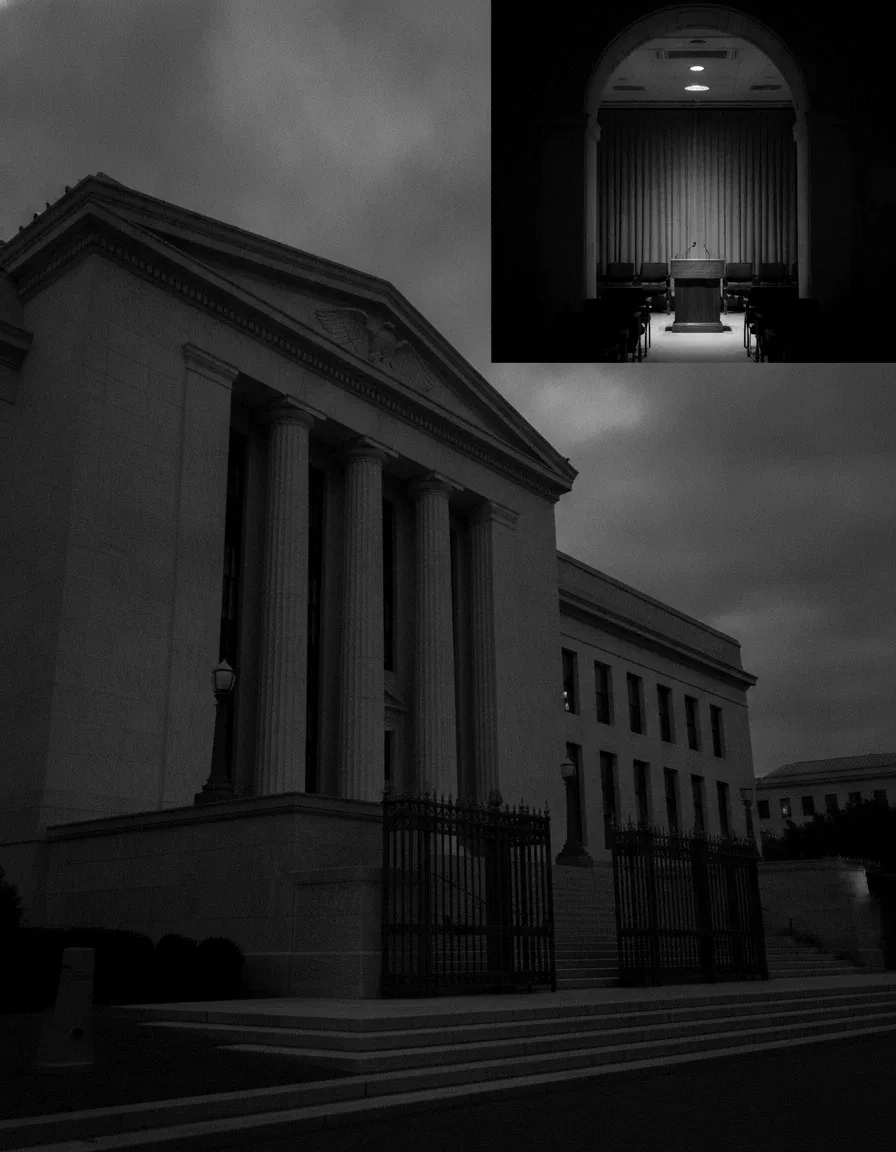
On 16 September 2026, Warsh voted with a unanimous Federal Open Market Committee (FOMC) to raise the federal funds rate by a quarter-point, to a range of 3.75% to 4%. The decision came despite repeated public calls from Trump and administration officials to cut rates or at least not raise them, warnings that continued as the committee met.
Warsh made no reference to politics at his press conference, saying instead that he was worried about inflation that remained stuck above the Fed's 2% target. Asked whether he had a message for the president, he chuckled and declined: "I've got nothing for you on a discussion with the president" (translated from the reported quote). He described the increase as a "responsible decision".
Trump, who had said he believed interest rates should be 1%, responded that he still had confidence in the chair. "He's a good man, Kevin Warsh," the president said, "but no matter how good a job, he's got a hostile board." Asked about Warsh's "responsible decision" line, Trump said he did not know what Warsh was referring to.
The context
Warsh was born on 13 April 1970 in Albany, New York. He graduated from Stanford University with a bachelor's degree in public policy in 1992 and from Harvard Law School with a Juris Doctor in 1995. From 1995 to 2002 he worked at Morgan Stanley, specialising in mergers and acquisitions, rising to vice president and executive director. He was at the firm's headquarters on the morning of the 11 September 2001 attacks, an experience he has said prompted him to pursue a government career.
In 2002, President George W. Bush named him special assistant to the president for economic policy and executive secretary of the National Economic Council, roles he held until 2006 and which included work on the response to accounting scandals and the Sarbanes-Oxley Act. Bush then nominated him to the Federal Reserve Board of Governors, where he served from 2006 to 2011 as one of the youngest members ever appointed. During the 2008 financial crisis he was the Fed's central liaison to financial markets, involved in the sale of Bear Stearns to JPMorgan Chase, the bankruptcy of Lehman Brothers and the bailout of American International Group. He resigned in 2011 after opposing a second round of large-scale asset purchases favoured by chairman Ben Bernanke.
After leaving the Fed, Warsh was a fellow at Stanford's Hoover Institution and a lecturer at the Stanford Graduate School of Business, and a partner at Duquesne Family Office. He became a consistent critic of post-crisis monetary policy, telling CNBC in 2025 that the central bank needed "regime change". Trump named him as his nominee for Fed chair in January 2026, calling him "central casting" and saying he "will never let you down". The Senate confirmed him on 13 May 2026 by 54 votes to 45, the narrowest margin for the position in the modern era, with only one Democrat, John Fetterman, crossing party lines. He was sworn in on 22 May 2026 for a four-year term as chair ending on 21 May 2030, and holds a Board seat running to 31 January 2040.
Why it matters
Warsh reached the chair with a hawkish reputation earned in his first term, when he warned that near-zero rates and large-scale asset purchases risked distorting markets and undermining price stability. He voted against the Fed's second round of bond buying. Analysts differed on how that would translate: Evercore ISI's Krishna Guha described him before confirmation as "a pragmatist not an ideological hawk", better placed to bring the committee along, while Wolfe Research's Tobin Marcus expected him to align with the administration's view that strong productivity could allow accommodative rates.
The September decision cut against both readings. Trump had written off Warsh's earlier decisions to hold rates steady in June and July as the work of other, politically motivated committee members. A unanimous vote to raise rates made that position harder to sustain and signalled that Warsh, like his predecessor Jerome Powell, intends to justify decisions by reference to the economy rather than to the White House.
Warsh has positioned himself as a defender of Fed independence while also accusing the institution of mission creep and locating a "credibility deficit" with its incumbents. His governance style contrasts with Powell's consensus-driven approach, though his first defining vote was itself unanimous. He is also the wealthiest Fed chair on record, with holdings reported well above $100m, and has had to divest many investments under a stricter conduct policy. He is married to Jane Lauder, of the Estée Lauder family. Powell remains on the board, with two years left on his term as governor.
What to watch
The immediate question is whether the September hike ends what CNBC called a tacit truce between the administration and the Fed. Trump has several levers beyond public pressure. He attempted in 2025 to fire Governor Lisa Cook, an action the Supreme Court blocked on process grounds, and last month restarted the process, leaving open the possibility of another attempt subject to court review.
Other pressure points remain live. The Department of Justice opened and then closed an investigation into Powell pending the Fed inspector general's report on renovation cost overruns, and has said it reserves the right to reopen it. A consultant is reviewing the Fed's handling of the 2023 failure of Silicon Valley Bank, which some analysts believe could provide a pretext to target Governor Michael Barr, the former supervision chief.
For Warsh himself, attention turns to the trajectory of inflation, still above the 2% target, and to whether he can hold the FOMC together at future meetings while resisting demands for the deep cuts Trump favours. Trump's own words from January frame the test: "Problem is they change once they get the job," he said of his candidates. "Sort of disloyalty, but they got to do what they think is right."