
1. What Putin signed
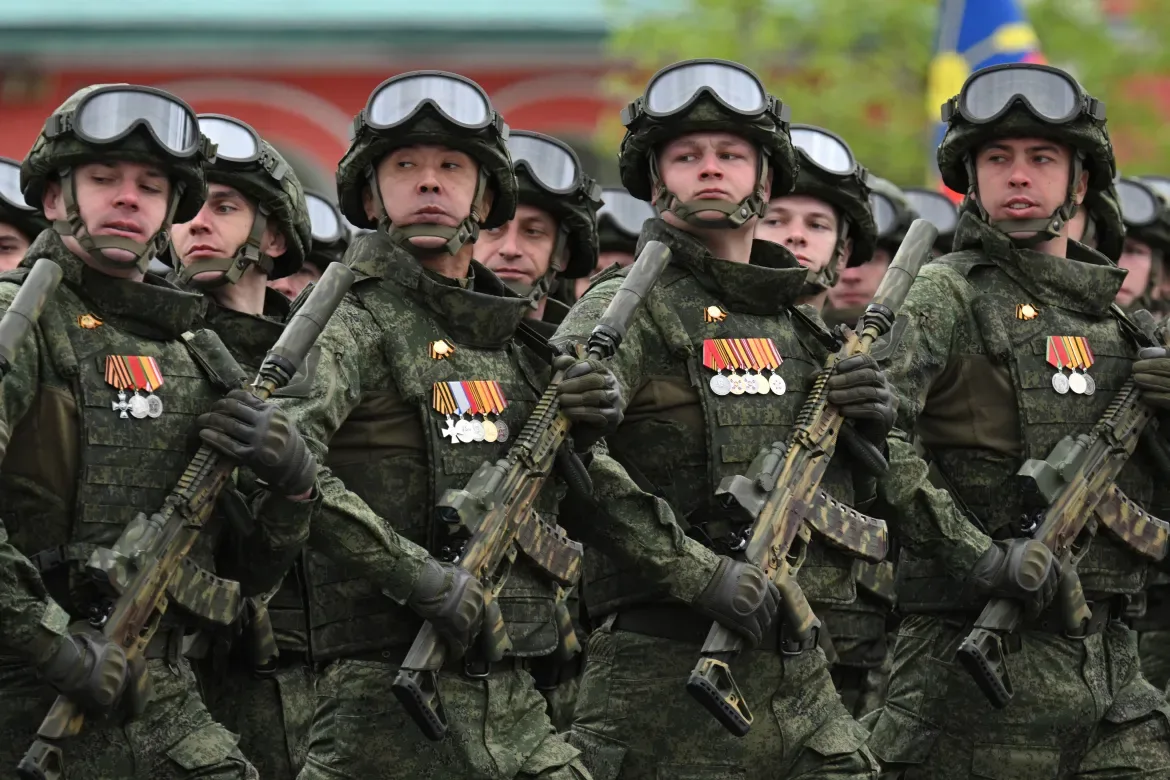
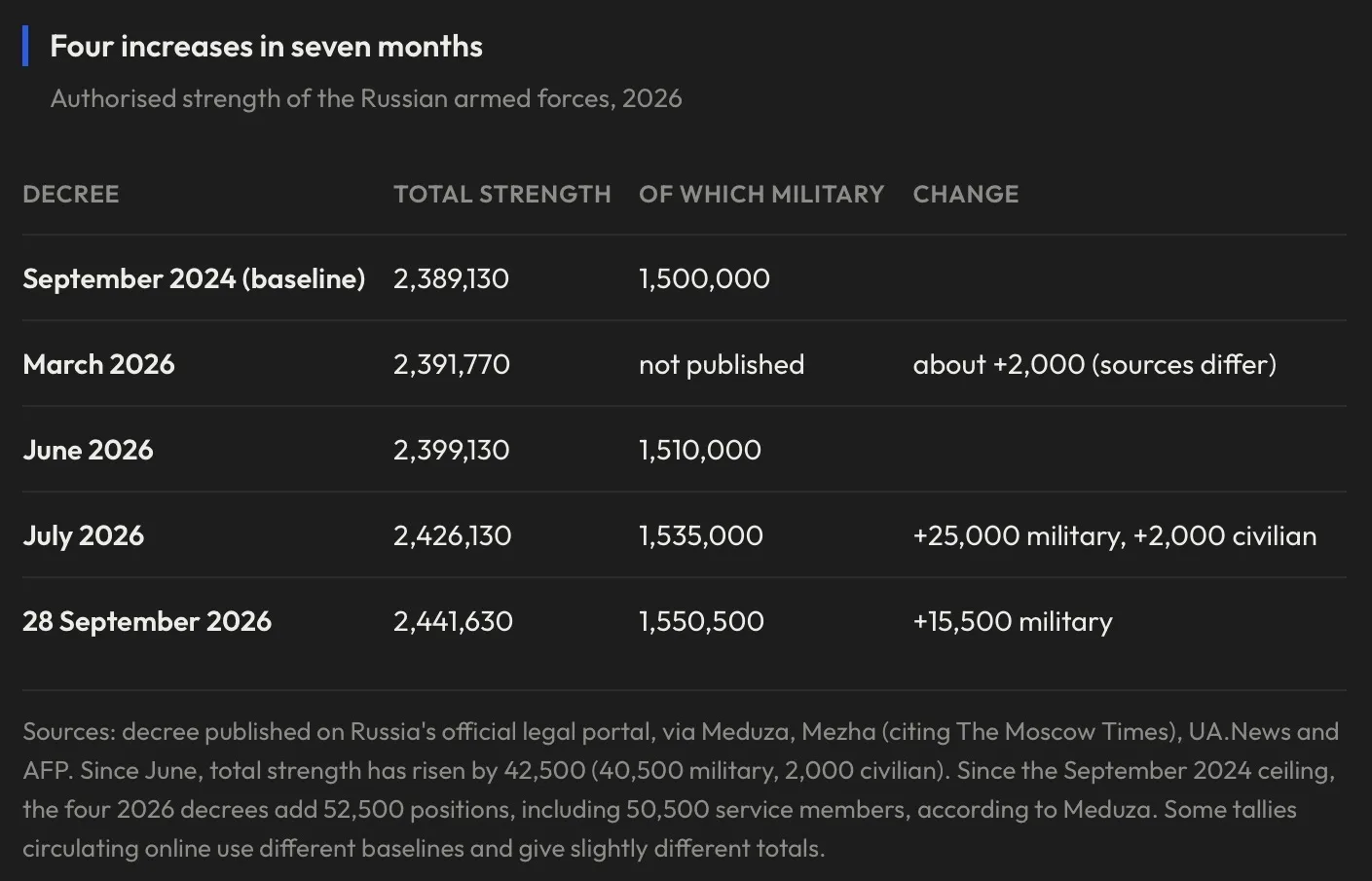
On Monday 28 September, Vladimir Putin signed a decree setting the authorised strengthof Russia's armed forces at 2,441,630, including 1,550,500 military personnel. The rest are civilian employees. The decree took effect the same day and gave no reason for the increase.
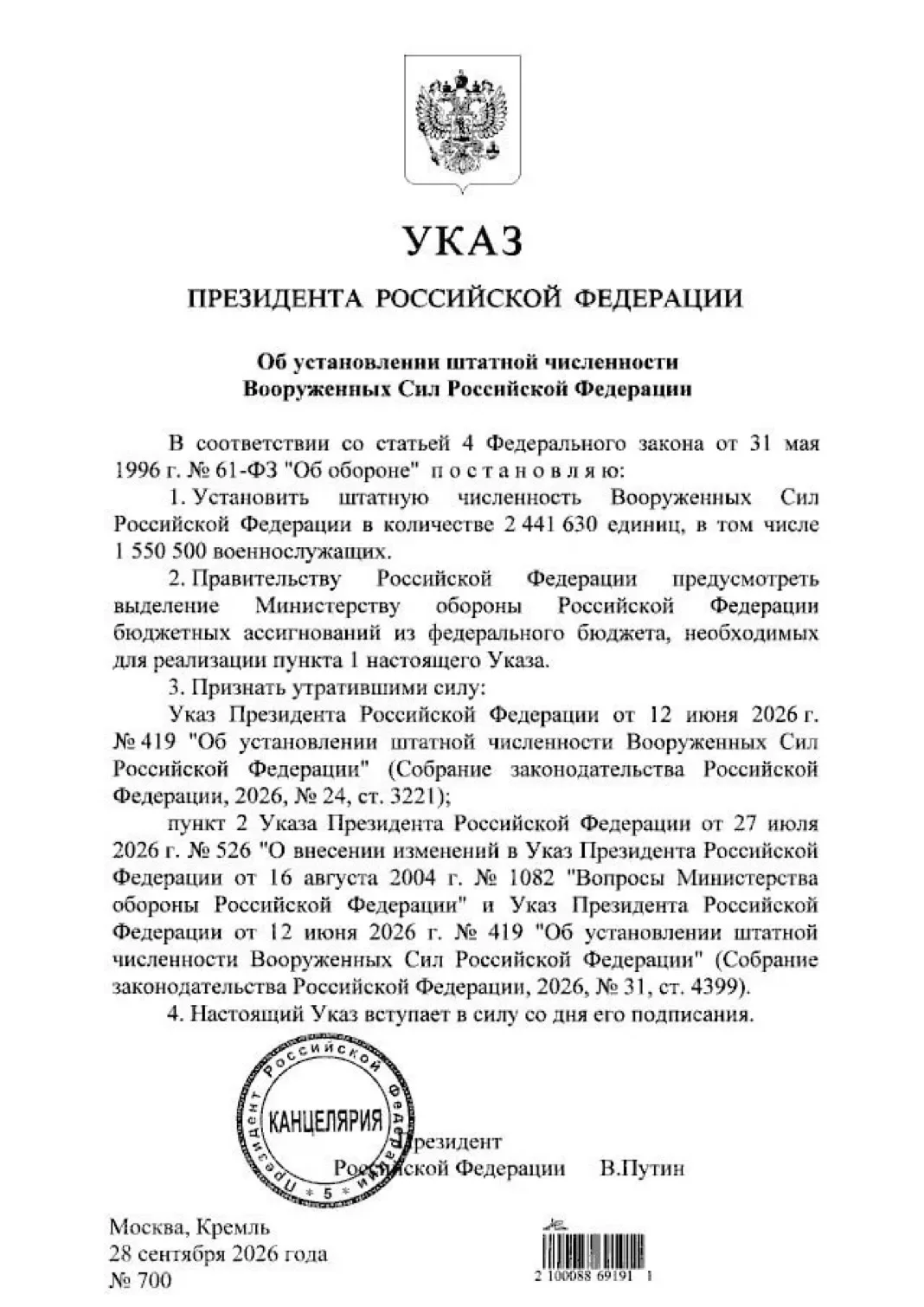
Compared with the previous ceiling, set in July, the decree adds 15,500 positions, all of them for service members. It is the fourth increase this year, after March, June and July. During the first four years of the full-scale invasion of Ukraine, Putin raised the ceiling only three times.
2. Is this a general mobilisation?
No, not in the legal sense. An authorised strength is a ceiling, not a call-up: it sets how many posts may exist, not how many people are summoned. A mobilisation, like the one Putin ordered in September 2022 for 300,000 reservists, compels men to report. This decree does not.
https://x.com/visegrad24/status/2104623208481579352?s=61
The Kremlin says it fills these posts with contract volunteers, and Putin has called Ukrainian claims that Russia is preparing a new call-up "disinformation". Analysts at the Conflict Intelligence Team attribute the repeated increases to the creation of new units and to vacancies. The July decree, for instance, created positions for military construction units.
It is not a mobilisation. It is a bet that money, and men recruited abroad, can do what a mobilisation would.
3. The bill
The decree came on the same day as a Reuters exclusive on Russia's next budget. According to government documents seen by the agency, Moscow plans to spend 17.1 trillion roubles, about $202.6 billion, on defence in 2027: around 27% more than the 13.5 trillion originally budgeted, and the highest figure since the war began. Defence spending would reach 50 trillion roubles over three years.
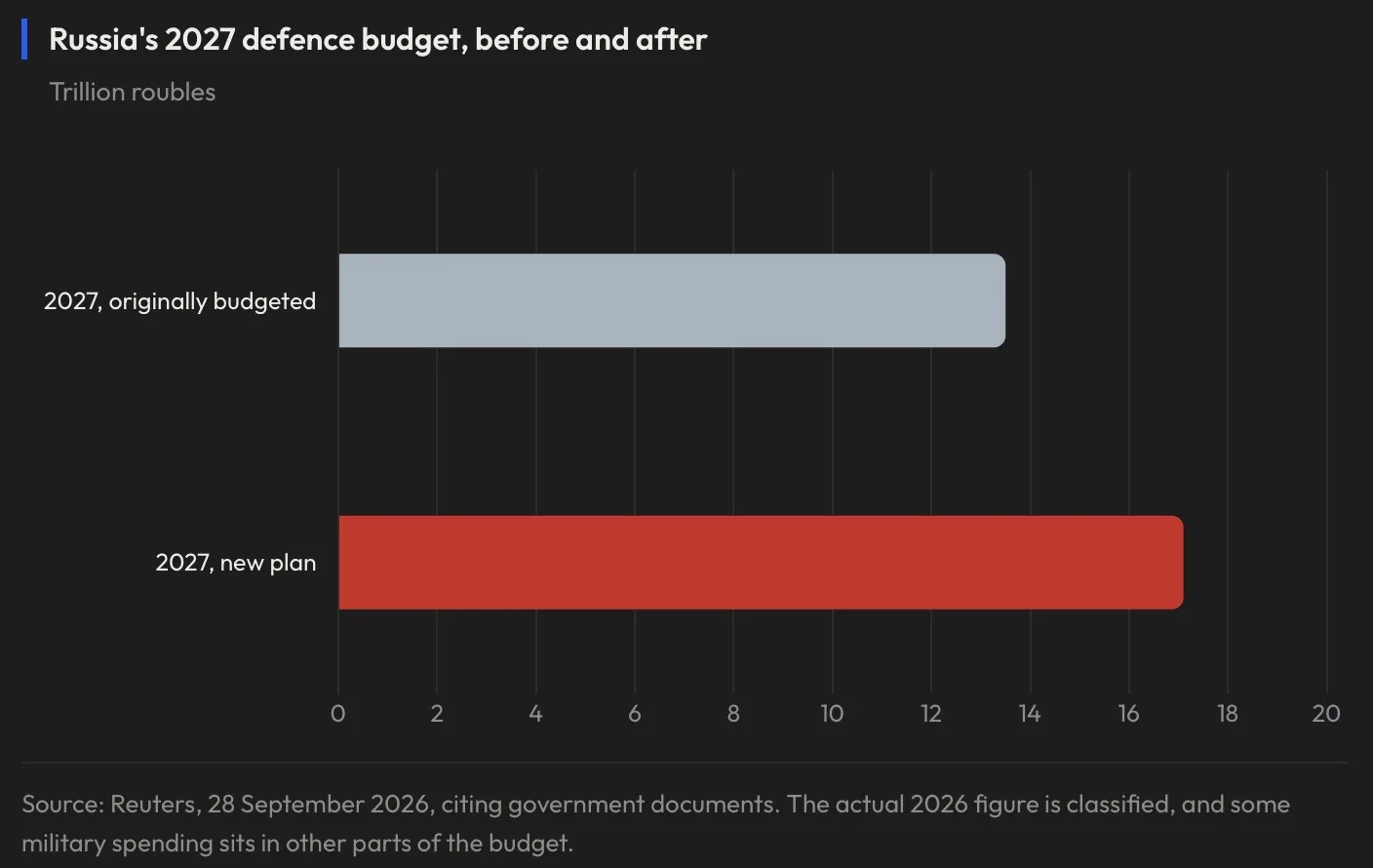
Much of that money goes to people. The Centre for European Policy Analysis notes that the spending covers arms purchases, but also higher military pay and support for soldiers' families. In August 2024, Russia raised the federal sign-on bonus for a contract soldier to 400,000 roubles, on top of which many regions add their own payments. Economist Janis Kluge estimated from budget data that Russia paid sign-on bonuses to around 400,000 soldiers in 2024.
4. Recruiting abroad
Russia also fills its ranks with foreigners. A report published on 29 April 2026 by the International Federation for Human Rights (FIDH), Truth Hounds and the Kazakhstan International Bureau for Human Rights estimated that some 27,000 citizens from more than 130 countries have been recruited into Russian ranks since late 2022, combining volunteers with coercive or deceptive recruitment of vulnerable men from Asia, Africa and Latin America. The number rose by more than 30% between September 2025 and February 2026, and Ukrainian intelligence says Moscow plans to recruit 18,500 more by the end of 2026.
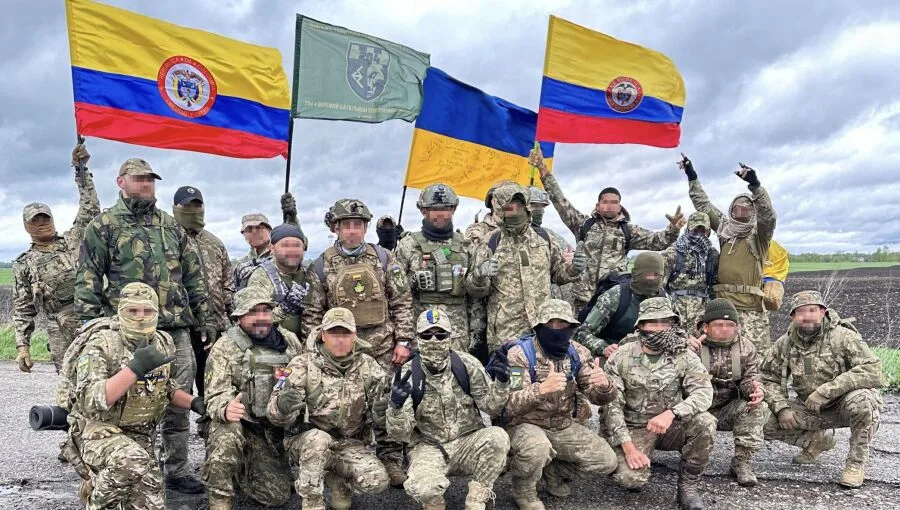
Colombians illustrate how murky this has become. They fight on both sides. In February 2026, El Espectador's investigative unit gathered documents and testimony from at least 21 families, revealing several recruitment networks for the Russian side, including a family business run by two retired Colombian army colonels. Many recruits say they were promised non-combat jobs. That same month, Kenya complained to Moscow after 30 of its citizens, recruited for what they believed was civilian work, were evacuated wounded from the front. Russia's embassy in Bogotá denies recruiting mercenaries.
5. The timing
The decree was signed eight days after Russia's Duma elections of 18 to 20 September, in which United Russia won 57.83% of the party-list vote according to preliminary results from the electoral commission, and a record number of seats. Ukrainska Pravda reported pressure on election observers and public-sector employees during the vote.
WHAT TO WATCH
The draft budget, due in the Duma by 1 October, and how much of it is classified.
Recruitment data: bonus spending in the Finance Ministry's quarterly figures is the best proxy for how many men actually sign up.
Any decree on reservists, the real signal of a mobilisation.
Foreign recruitment, and whether more governments, in Latin America and Africa, protest to Moscow.