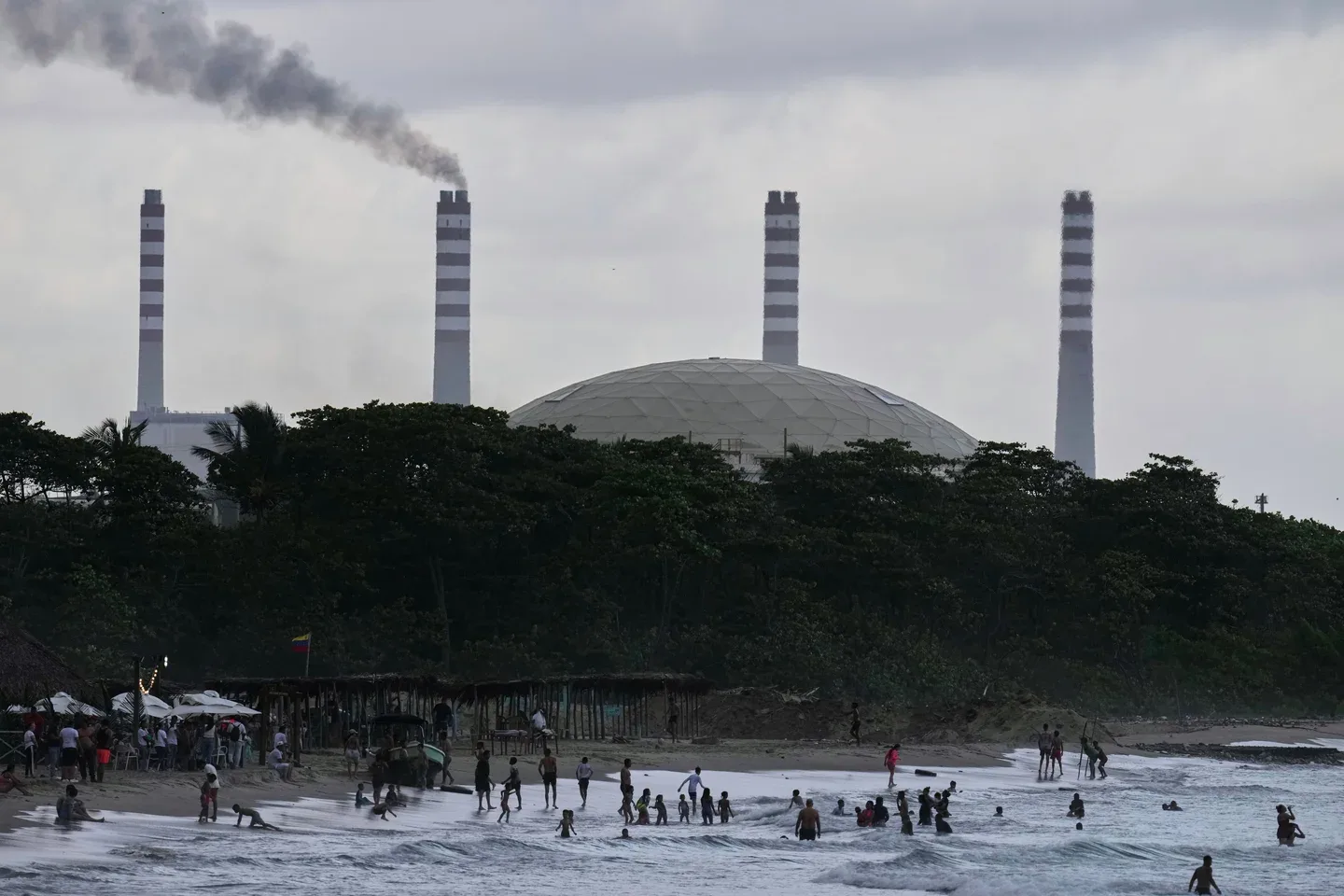
12 Billion Dollars A confidential KPMG review shows where the dollars went, and where nobody is looking
A confidential KPMG report shows $12.26bn of Venezuelan export money passed through a US-run account in nine months, almost all of it sold through local banks. Washington signs off every withdrawal; nobody publicly names the buyers.
By Le Détroit
Matias Delacroix Associated Press
$12.26bn
paid into the custody account, 3 Jan to 30 Sep
The headline figureKPMG report for the US government, as reported by The New York Times on 10 NovemberPlus about $12m of interest
61%
of it from two traders, Trafigura and Vitol
Two tradersAbout $7.48bn, Le Détroit's calculation from the share in the reportRubio called them a "short term" fix in January
97.5%
sold back as dollars through 20 Venezuelan banks
Le Détroit's calculationAuctions, electronic sales and banknotes, $11.96bn, over deposits of $12.26bnItemised by Finanzas Digital from the same report
0
buyers named in any public document
The last mileThe report, as described, names banks and sectors, not buyersCompanies bought 77% of the dollars, individuals 23%
Key judgements
Our assessment. Confidence reflects the quality of the evidence behind each judgement, not the probability of an event.
The custody account works as a ledger, not a lens: Washington controls and records each withdrawal, but its line of sight ends when the dollars reach 20 Venezuelan banks.Basis: Parts 3 and 6; Figures 1 and 7
HighHigh confidenceSeveral independent sources agree, and the inference is short
On the itemised reading of the report, almost nothing is missing from the account itself (about $11m); the open question is allocation at the bottom, not leakage at the top.Basis: Part 3; Figure 1
ModerateModerate confidenceSourced facts, but the judgement rests on our reading of how the pieces fit
The dollars bought time for the bolívar, not stability: the premium fell from its January panic, but the official rate still lost 67% of its value this year.Basis: Part 5; Figure 4
HighHigh confidenceSeveral independent sources agree, and the inference is short
Deposits look low per barrel ($55 to $61) against public export and price data, a gap that discounts and timing may explain but nobody has reconciled in public.Basis: Part 4; Figures 2 and 3
LowLow confidenceA reasoned calculation from incomplete public data; plausible, not established
From January, congressional oversight is more likely to target the buyers and the depositors than the account's arithmetic.Basis: Parts 7 and 8
ModerateModerate confidenceSourced facts, but the judgement rests on our reading of how the pieces fit
Contents8 parts, 8 figures
Part 1A ledger, not a lens
For the first time since Iraq two decades ago, the United States is holding a country's oil money and deciding, withdrawal by withdrawal, when it goes home. Now there is a number on it. A confidential report by KPMG, compiled for the US government and first reported by The New York Times on 10 November, shows that $12.26bn flowed into the "Venezuela Custody Account" between 3 January and the end of September from oil and other natural-resource exports. Almost all of it went straight back: about $11.7bn was sold through Venezuelan commercial banks to prop up the bolívar, about $130m paid foreign bills, about $170m was still there on 30 September, and the money earned about $12m in interest while it waited, according to the Times.
The report tells a story in two halves. At the top, the controls are tight: licensed buyers, a Treasury-designated account at Citibank in New York, a request from Venezuela's central bank and a signature from both the State Department and the Treasury on every transaction. At the bottom, the trail goes dark. The report does not identify who ultimately bought the dollars at the bank counter.
That asymmetry is the story. The custody account is a ledger, not a lens: Washington can account for what left New York, but no public document says who ended up holding the dollars. For an arrangement sold as the cure for a regime that Marco Rubio, the secretary of state, says was held together by "corruption and graft", the last mile is the part that matters.
The timing sharpens the point. The report, dated 29 October according to Finanzas Digital, was finished days before the midterm elections that handed Democrats both chambers of Congress, and it is the first detailed accounting of a system that ran for ten months on piecemeal briefings. In April a State Department official told Congress about $3bn had been moved to Venezuela; in July the Financial Times estimated more than $13bn had been collected. The report settles the size. It also shows, by omission, what the system was never built to see.
The account was born of a raid. On 3 January, US forces struck Caracas and seized Nicolás Maduro and his wife, Cilia Flores, who were flown to New York to face drug-trafficking charges. Venezuela's Supreme Court ordered the vice-president, Delcy Rodríguez, to take charge; she was sworn in as interim president on 5 January, with her brother Jorge re-elected speaker of the National Assembly. Ten months on she is still in office, having kept the chavista coalition together while meeting Washington's economic demands, and Donald Trump has publicly praised her work.
Six days after the raid, Mr Trump signed Executive Order 14373. It defines "Foreign Government Deposit Funds", the proceeds of Venezuelan natural-resource sales paid into designated Treasury accounts, declares them Venezuelan sovereign property held in custody, voids any attempt by creditors to seize them and gives the secretary of state the power to direct their use. The model, compliance firm K2 Integrity noted in January, is the order that shielded Iraqi oil proceeds in 2003, though Georgetown's Public Debt is Public project reads the new one as narrower. Licences followed: OFAC's General License 46 of 29 January lets established US firms trade Venezuelan oil on condition that anything owed to Venezuela or PDVSA is paid into those accounts, and later licences extend the rule to services and to BP, Chevron, Eni, Repsol, Shell and Maurel & Prom.
Mr Rubio described the plumbing to senators in late January. "The glue that held the Maduro regime together was corruption and graft," he said, adding that Washington was "dealing with people who have spent most of their lives living in a gangsters' paradise". The first oil, he said, was sold through two trading houses, Trafigura and Vitol, as a "short term" fix; proceeds went into an account in Qatar, and $300m of an initial $500m had already been handed to Caracas. Ten months later the short term looks permanent. The two traders supplied 61% of all deposits by September, about $7.48bn by Le Détroit's calculation, and Trafigura also paid about $100m for Venezuelan gold. Two producers use different arrangements and sell at least some of their oil outside the account: Chevron, and NABEP, a local company that began shipping oil to the United States last month under a deal giving the US government 35% of its shares and 20% of its output at below-market prices, the Times reports.
Follow the money and the design is clear: control is concentrated where the money is big and the parties are few. Finanzas Digital, a Caracas financial outlet that has itemised the report, dated 29 October, describes the weekly cycle. The central bank (BCV) decides how much to allocate to each participating bank and asks the State Department for approval; once State and the Treasury sign off, the money moves from the custody account to a BCV operating account and on to the banks, which have five working days, extendable by five more, to credit their clients. The BCV debits the bolívar equivalent at a rate it sets, and those bolívars help pay for the state, from public salaries down.
The mechanics changed as the year went on. In the first quarter, banks ran auctions; from 31 March the central bank switched to electronic sales, which began at $512m in March, peaked at $2.0bn in April, slowed to $765m in August and rebounded to $1.35bn in September, according to Finanzas Digital. From July, physical dollar banknotes were added to the mix. Every dollar still has to pass through US correspondent banks, which screen for sanctions and can block, reject or freeze a transfer, and buyers receive it in local foreign-currency accounts subject to identification checks. That is a real filter. It is also the last one with an American hand on it.
The itemised version closes a gap that the headline numbers leave open. On the Times's rounded figures, about $0.27bn of the money in is not accounted for. On Finanzas Digital's reading, the report lists $2.09bn of currency auctions from January to March, $9.32bn of electronic currency sales from 31 March, $550m of dollar banknotes shipped since July, $133m of payments to suppliers and $169m left on 30 September. Le Détroit's calculation: that leaves about $11m unitemised, less than 0.1% of the total and within rounding.
In other words, the account itself is not where money goes missing. The first $500m passed through a provisional central-bank account at Qatar National Bank before the arrangement moved to New York in late January; since then the books, as described, balance. Two caveats matter. KPMG says its work is not an audit, and the depositors' names are redacted in the version Finanzas Digital saw.
Figure 1
Where the $12.27bn went, and where the trail stops
The Venezuela Custody Account, 3 January to 30 September 2026: money in, money out, and who bought the dollars
Hover or tap a stream for its value, share and source
Every stream is drawn to scale: one ribbon per flow of money, from the buyers who paid for Venezuela's oil to the banks that sold the dollars. After the banks, only sector totals exist: the streams fray and fade because no public document names the buyers.
Trafigura and Vitol: $7.48bn, 61% of depositsThe two trading houses chosen to market Venezuelan oil after 3 January. Le Détroit's calculation from the 61% share in the KPMG report, as reported by The New York TimesShare and value applied to deposits of $12.26bn
Other depositors: $4.78bn, 39%Other buyers of Venezuelan oil, minerals and fertiliser; the report as described does not say which share includes Trafigura's $100m for gold. 20 depositors in all, names redacted in the public version (Finanzas Digital)
Interest: about $12mEarned while the money waited in the account (NYT)
Currency auctions, January to March: $2.09bnHeld through commercial banks (NYT) before the switch to electronic sales; amount itemised by Finanzas Digital from the KPMG report
Electronic currency sales, 31 March to 30 September: $9.32bn76% of deposits and the main channel. Peak month: April, $2.0bn. The five largest banks handled 81% (Finanzas Digital)
Dollar banknotes since July: $0.55bnOf which $357m had been distributed by 30 September (Finanzas Digital)
Foreign bills: $133mThe NYT puts it at about $130m, mostly debts to other governments and international organisations
Left in the account on 30 September: $169mAbout $170m in the NYT's rounding
Unitemised: about $11mLe Détroit's calculation: deposits plus interest minus every itemised use. On the NYT's rounded figures the gap looks like $0.27bn; on the itemised reading it is under 0.1%
Food and consumer goods: about $3.27bn35.75% of the dollars bought by companies (KPMG via Finanzas Digital). No company is namedSector shares applied to the $11.96bn sold through banks: an approximation (the recipient data mix in banknotes and IMF funds)
Business services: about $2.17bn23.69% of company purchases
Agriculture: about $1.15bn12.59% of company purchases
Health and pharmaceuticals: about $0.52bn5.67% of company purchases
Other sectors: about $2.04bnLe Détroit's calculation: the remainder of company purchases
Individuals: about $2.80bn, 23%Bought by people rather than companies. Caracas Chronicles argues that buyers with access can resell dollars on the parallel market at a premium
Values in $bn. Sector streams apply the shares in the report to the $11.96bn sold through banks. Source KPMG report for the US government, as reported by The New York Times (10 Nov 2026) and itemised by Finanzas Digital (12 Nov 2026); Le Détroit's calculationsLe DétroitBack to contents
Part 4Barrels in, dollars back
The oil side of the ledger is bigger and better than a year ago, which is why the reconciliation matters. Venezuela exported about 847,000 barrels a day of crude and fuel in 2025, according to Reuters tanker data, and only 498,000 in December, when a US blockade bottled up cargoes. Under US supervision exports recovered to 800,000 in January, passed a million in March and reached 1.23m to 1.25m b/d in April and May, the highest since late 2018. Freight costs and twin earthquakes at the end of June took some of the shine off: exports were 1.08m b/d in September and again in October. In July the United States took 786,000 b/d, its largest volume since early 2019.
Figure 2
Where the barrels start and the dollars end
Venezuela's oil machine, state by state, and the round trip of its money in 2026
Hover or tap a marker or a label for what happens there, with sources
ZuliaFalcónGuáricoBolívarAmazonasApureDelta AmacuroColombiaBrazilGuyanaTrinidad and TobagoCaribbean SeaBoyacáJunínAyacuchoCarabobo
Orinoco BeltThe Orinoco BeltAbout 600 km long and 70 km wide, north of the Orinoco river, across Guárico and southern Anzoátegui, Monagas and Delta Amacuro (Wikipedia)Divided, west to east, into Boyacá, Junín, Ayacucho and Carabobo (Oil & Gas Journal). USGS put recoverable heavy oil at 513bn barrels in 2009Band drawn schematically by Le Détroit
José terminalJoséJosé, Anzoátegui: the eastern export terminal10°06'N, 64°52'W. Loads the Orinoco grades (Hamaca, Cerro Negro, Sincor, Zuata) and can take very large tankers (Wikipedia; Marinelink)Argus called it PDVSA's "main outlet" in 2018
Paraguaná refining centreParaguanáAmuay and Cardón, Paraguaná peninsula, FalcónAmuay 11°44'N, Cardón 11°38'N: together about 940,000 b/d of capacity, the country's largest refining complex (Wikipedia)Laden tankers were anchored off Amuay Bay and Cardón on 5 January 2026 (S&P Global)
Lake Maracaibo terminalsMaracaiboLake Maracaibo, Zulia: the western terminalsLa Salina, Puerto Miranda and Bajo Grande ship oil from the lake; PDVSA put their shipping capacity at about 535,000, 570,000 and 96,000 b/d (Platts, 2014, via Tank Terminals)Exports of the Blend 22 crude are centred on La Salina (Curaçao Chronicle, 2025). Marker placed on the lake, not on a single dock
Caracas: BCVCaracasCaracas: the central bankEach week the BCV sets each bank's allocation and asks the State Department to release the money (KPMG report via Finanzas Digital)Twenty banks sell the dollars; five, led by Banco de Venezuela ($2.42bn), handled 81% of electronic sales
PetroboscánBoscánPetroboscán, western Zulia (Chevron joint venture)One of Chevron's three joint ventures with PDVSA, in western Zulia state (Offshore Technology; Al Jazeera, 2 Sep 2026)Its Boscán field lies about 40 km southwest of Maracaibo (Wikipedia). Marker shows the area, not a field outline
PetropiarPetropiarPetropiar, Orinoco Belt (Chevron joint venture)Extra-heavy oil in the Orinoco Belt; Chevron holds 30%. In April 2026 Chevron won rights to the adjacent Ayacucho 8 area, to be developed alongside Petropiar (World Oil, 13 Apr 2026; Offshore Technology)Placed in the Ayacucho area by Le Détroit: approximate
PetroindependenciaPetroindependenciaPetroindependencia, Orinoco Belt (Chevron 49%)Chevron raised its stake to 49% in April 2026; rights to the Carabobo 1 and Carabobo-2-South-A zones (Offshore Technology, 3 Sep 2026)Chevron plans to invest more than $7bn in its ventures over five years (Al Jazeera, 2 Sep 2026)
Export terminalRefining centreCentral bankChevron joint ventureOrinoco Belt (schematic)
Natural Earth borders: 23 states and two federal entities (1:10m), neighbours (1:50m), simplified.
United States 449kUnited StatesUnited States: 449,000 b/d in OctoberOctober 2026: about 449,000 b/d of crude and fuel (42% of exports); September: 629,000 b/d (Reuters tanker data)Chevron shipped about 303,000 b/d in October, under its own arrangements; since 3 January the US had taken 43% of US-controlled exports, CFR estimated in JuneArrival point drawn at the country or region, not a port
India 242kIndiaIndia: 242,000 b/d in OctoberOctober 2026: about 242,000 b/d of crude and fuel (22% of exports); September: 253,000 b/d (Reuters tanker data)India had taken 26% of US-controlled exports since 3 January, CFR estimated in JuneArrival point drawn at the country or region, not a port
Europe 235kEurope: 235,000 b/d in OctoberOctober 2026: about 235,000 b/d of crude and fuel (22% of exports); September: 86,000 b/d (Reuters tanker data)Reuters gives Europe as a region; Spain had taken 8% since 3 January, CFR estimated in June. Line ends in Spain for that reasonArrival point drawn at the country or region, not a port
Caribbean storage 83kCaribbean storage: 83,000 b/d in OctoberOctober 2026: about 83,000 b/d of crude and fuel (8% of exports); September: 76,000 b/d (Reuters tanker data)Shipments to storage hubs in the Caribbean (Reuters). A storage hub is a staging point, not a final buyerArrival point drawn at the country or region, not a port
Doha $0.5bnDoha: the first stop, January 2026The first $500m passed through a provisional central-bank account at Qatar National Bank (Finanzas Digital)Rubio told senators $300m of it had been disbursed by 28 January (Lloyd's List; CFR). The account moved to New York in late January (NYT)The arc shows the order of the stops, not a payment path; this line is drawn thicker than scale so it stays visible
New York $12.26bnCitibank, New York: the custody account$12.26bn deposited from 3 January to 30 September, 61% of it by Trafigura and Vitol (KPMG report via NYT)Each withdrawal is requested by the BCV and signed off by the State Department and the TreasuryThe Times says the account was first held in Qatar, so this total probably includes the Doha $0.5bn
Caracas $11.96bnBack to Caracas$11.96bn released for sale through Venezuelan banks: auctions, electronic sales and banknote shipments (Finanzas Digital; Le Détroit's sum)$133m paid foreign bills; $169m stayed in the account (Finanzas Digital)
End buyers? (in Venezuela, not named)Then: buyers in Venezuela, not namedCompanies bought 77% and individuals 23% (Finanzas Digital); no public document names a buyerThey are companies and individuals buying through Venezuelan banks, into local foreign-currency accounts (Finanzas Digital; Caracas Chronicles); the shares include $346m drawn from the IMF. The dotted ring and fading line stay inside the country: the public trail stops at the bank counter, and where the dollars go next is not public
Barrels, October 2026 (width to scale)Dollars (width to scale)Buyers unknownWhere the lines startVenezuela: barrels out1,080,000 b/d exported in October 2026; the four destinations shown add up to 1,009,000 b/d, the rest is not broken down (Reuters)Lines start at José, the eastern export terminal, for legibility; cargoes also leave from Paraguaná and Lake Maracaibo
Equal Earth projection, computed from Natural Earth 1:50m borders. Barrel lines: thousand barrels a day; dollar lines: totals for January to September.
Source Natural Earth; Wikipedia; Marinelink; Argus; S&P Global; Platts via Tank Terminals; Curaçao Chronicle; Oil & Gas Journal; USGS; Offshore Technology; World Oil; Al Jazeera; Reuters tanker data; CFR; KPMG report via NYT and Finanzas Digital; Lloyd's List; Caracas Chronicles; Le DétroitLe Détroit
Chevron, which exports about 0.3m b/d under its own arrangements, accounts for about a quarter of the country's exports. Strip it out, assuming none of its sales pass through the account, and Le Détroit's calculation is that other buyers loaded about 221m barrels between January and September. Oil supplied 98.74% of deposits, or $12.11bn. That is $55 to $61 per barrel, depending on whether payments lag loadings by a month, while the Venezuelan oil basket averaged about $90 this year, according to Finanzas Digital.
The gap is not proof of anything. Traders pay PDVSA less than benchmark prices to cover freight and quality, part of the volume is fuel oil and by-products, early cargoes were sold before prices rose, and deposits lag loadings. But it is precisely the sum a compliance officer would want reconciled: barrels lifted, price per cargo, deposit per cargo. In July the Financial Times estimated that the administration had collected more than $13bn and that the destination of at least $10bn was unclear. The KPMG report answers the second half of that question, down to the bank. It does not, as described, reconcile the first: what each cargo should have paid.
Figure 3
Barrels out, dollars back
Venezuela's oil exports by month, 2025 to 2026, and the dollars the custody account sold back into the economy
Hover or tap a month or a band for the figures
2025, all exportersChevron, own arrangementsEveryone elseSplit not reported
04008001,200
January 2025: 867,000 b/dCrude and fuel exports, Reuters tanker data as first reported
February 2025: 934,000 b/dCrude and fuel exports, Reuters tanker data as first reported
March 2025: 805,000 b/dCrude and fuel exports, Reuters tanker data as first reported
April 2025: 699,000 b/dCrude and fuel exports, Reuters tanker data as first reported
May 2025: 779,000 b/dCrude and fuel exports, Reuters tanker data as first reported
June 2025: 844,000 b/dCrude and fuel exports, Reuters tanker data as first reportedRevised to 807,000 b/d in the August report
July 2025: 727,000 b/dCrude and fuel exports, Reuters tanker data as first reported
August 2025: 966,000 b/dCrude and fuel exports, Reuters tanker data as first reported
September 2025: 1,090,000 b/dCrude and fuel exports, Reuters tanker data as first reported
October 2025: 808,000 b/dCrude and fuel exports, Reuters tanker data as first reportedLater Reuters reports imply about 890,000 b/d (November +3%; October 2026 +21% year on year)
November 2025: 921,000 b/dCrude and fuel exports, Reuters tanker data as first reported
December 2025: 498,000 b/dCrude and fuel exports, Reuters tanker data as first reportedDecember: the US blockade
January 2026: 800,000 b/dReuters tanker data as first reportedChevron: 220,000 b/d, sold at least partly outside the custody account (NYT)Trading houses including Vitol and Trafigura: 392,000 b/d
February 2026: 737,000 b/dReuters tanker data as first reportedChevron: 209,000 b/d, sold at least partly outside the custody account (NYT)
March 2026: 1,090,000 b/dReuters tanker data as first reportedChevron: 267,000 b/d, sold at least partly outside the custody account (NYT)Trading houses including Vitol and Trafigura: 635,000 b/d
April 2026: 1,230,000 b/dReuters tanker data as first reportedChevron: 308,000 b/d, sold at least partly outside the custody account (NYT)Trading houses including Vitol and Trafigura: 691,000 b/d
May 2026: 1,250,000 b/dReuters tanker data as first reportedChevron's share not reported this monthRevised to 1.24m b/d in the July report
June 2026: 1,200,000 b/dReuters tanker data as first reportedChevron: 293,000 b/d, sold at least partly outside the custody account (NYT)Trading houses including Vitol and Trafigura: 775,000 b/d
July 2026: 1,160,000 b/dReuters tanker data as first reportedChevron: 293,000 b/d, sold at least partly outside the custody account (NYT)Trading houses including Vitol and Trafigura: 604,000 b/d
August 2026: 1,170,000 b/dReuters tanker data as first reportedChevron: 286,000 b/d, sold at least partly outside the custody account (NYT)Trading houses including Vitol and Trafigura: 597,000 b/dRevised to 1.19m b/d in the October report
September 2026: 1,080,000 b/dReuters tanker data as first reportedChevron: 283,000 b/d, sold at least partly outside the custody account (NYT)Trading houses including Vitol and Trafigura: 637,000 b/d
October 2026: 1,080,000 b/dReuters tanker data as first reportedChevron: 303,000 b/d, sold at least partly outside the custody account (NYT)Trading houses including Vitol and Trafigura: 506,000 b/d
Thousand barrels a day. Le Détroit's calculation: from January to September 2026, buyers other than Chevron loaded about 221m barrels; oil deposits came to $12.11bn, or $55 to $61 a barrel depending on payment lags, against a Venezuelan basket of about $90.
Electronic sales, month reportedImplied monthly averageAuctions, quarterly total
0$0.5bn$1.0bn$1.5bn$2.0bn
$2.09bn in 3 monthsAuctions, January to March: $2.09bnAbout $696m a month on average (Le Détroit's calculation)Reuters counted $1.3bn of auctions from mid-January to early March, 13% less than a year earlier
$4.70bn in 3 monthsMay to July: about $4.70bn, impliedLe Détroit's calculation: $9.32bn of electronic sales minus the four months reported, about $1,567m a monthEconomist Jesús Palacios told Bloomberg Línea in July that sales had risen from about $500m a month to about $1.7bn
$0.51bnMarch 2026: $512m of electronic salesKPMG report via Finanzas DigitalThe first month of electronic sales, from 31 March
$2.0bnApril 2026: $2,000m of electronic salesKPMG report via Finanzas DigitalThe peak month
$0.77bnAugust 2026: $765m of electronic salesKPMG report via Finanzas DigitalThe low point of the summer
$1.3bnSeptember 2026: $1,345m of electronic salesKPMG report via Finanzas DigitalSintesis Financiera: government dollar sales of $1.4bn in September, the lowest since April (via Bloomberg Línea)
JanFebMarAprMayJunJulAugSep
Dollars sold from the account, 2026. The report as described gives four monthly figures; the bands spread known totals over the months they cover.
Source Reuters tanker data (monthly reports, Mar 2025 to Nov 2026); KPMG report via Finanzas Digital (12 Nov 2026); Bloomberg Línea; Finanzas Digital (oil basket, 24 Sep 2026); Le Détroit's calculationsLe DétroitBack to contents
Part 5Buying time for the bolívar
Almost every dollar that came back was spent defending the currency, and the dollars bought time rather than stability. The government has sold more than $12bn on the foreign-exchange market this year, according to Bloomberg Línea and Finanzas Digital; Sintesis Financiera, a Caracas consultancy, puts sales in the first nine months at $12.3bn, close to the report's figure, the Times reports. Sales climbed from about $500m a month at the start of the year to about $1.7bn by July, economist Jesús Palacios told Bloomberg Línea; the report puts April, at $2.0bn, as the peak. In September they fell to $1.4bn, the lowest since April, according to Sintesis.
The official rate kept sliding all the same. It ended 2025 at about 298 bolívars per dollar, on Finanzas Digital's count, and stood at 911.6 on 13 November, up 206% this year: by Le Détroit's calculation the bolívar has lost 67% of its value against the dollar since January. Prices followed. Inflation was 475% in 2025 and still ran at 225.3% in the year to September, according to the BCV.
Where the sales did work was the gap between the official rate and the street. On the peer-to-peer platforms where Venezuelans trade Tether's USDT, the dollar fetched about 560 bolívars before the raid and more than 780 within days, Decrypt reported, before falling back to 450 by 19 January. It was 710 in May, a premium of 37%, according to CriptoNoticias, and the gap fell below 20% in July. On 7 October the parallel dollar crossed 1,000 bolívars for the first time, with the premium at about 15%. Each dollar sold at the official rate is therefore worth more on the street, and that premium is what makes the question of who buys them so pointed.
Two shocks show how thin the cushion is. Monthly inflation jumped to 13.8% in June, from 6.3% in May, in a month that ended with twin earthquakes, according to Bloomberg Línea, and the government let the official rate slide by more than 8% in a single week, economist Jesús Palacios said. Then, as sales slowed after the summer, the premium crept back. The account can feed the market; it cannot by itself make the bolívar credible.
Figure 4
The bolívar's fever
Official and parallel exchange rates, December 2024 to November 2026, and the premium between them
Hover or tap a point for the date, value and source
Official rate, BCVParallel dollar (USDT quotes)The gap
501002004008003 JanMaduro capturedLate Janto Citibank31 Marelectronic salesLate JunearthquakesOfficialBCV rateParallelP2P dollar
Official rate, 2 Jan 2025: 52.03 BsSource: Finanzas Digital
Official rate, 3 Feb 2025: 58.44 BsSource: Finanzas Digital (year-on-year comparison)
Official rate, 1 Apr 2025: 69.78 BsSource: Finanzas Digital (year-on-year comparison)
Official rate, 5 May 2025: 88.64 BsSource: Finanzas Digital (year-on-year comparison)
Official rate, 3 Jun 2025: 97.31 BsSource: Finanzas Digital (year-on-year comparison)
Official rate, 1 Jul 2025: 108.19 BsSource: Finanzas Digital (year-on-year comparison)
Official rate, 4 Aug 2025: 126.28 BsSource: Finanzas Digital (year-on-year comparison)
Official rate, 1 Sep 2025: 148.44 BsSource: Finanzas Digital (year-on-year comparison)
Official rate, 1 Oct 2025: 177.61 BsSource: Finanzas Digital (year-on-year comparison)
Official rate, 31 Dec 2025: 298.14 BsSource: BCV close of 2025, from Finanzas Digital
Official rate, 2 Jan 2026: 301.37 BsSource: Finanzas Digital
Official rate, 2 Feb 2026: 370.25 BsSource: Finanzas Digital
Official rate, 2 Mar 2026: 419.99 BsSource: Finanzas Digital
Official rate, 1 Apr 2026: 473.92 BsSource: Finanzas Digital
Official rate, 4 May 2026: 489.55 BsSource: Finanzas Digital
Official rate, 1 Jun 2026: 554.43 BsSource: Finanzas Digital
Official rate, 1 Jul 2026: 633.36 BsSource: Finanzas Digital
Official rate, 3 Aug 2026: 748.79 BsSource: Finanzas Digital
Official rate, 1 Sep 2026: 798.33 BsSource: Finanzas Digital
Official rate, 1 Oct 2026: 860.18 BsSource: Finanzas Digital
Official rate, 2 Nov 2026: 889.58 BsSource: Finanzas Digital
Official rate, 13 Nov 2026: 911.62 BsSource: Finanzas Digital
Parallel dollar, 16 Dec 2024: about 59 BsSource: CriptoNoticias, informal rateOfficial rate that day: about 50 Bs; gap 18% (Le Détroit's calculation)
Parallel dollar, 19 Feb 2025: about 80 BsSource: La PatillaOfficial rate that day: about 62 Bs; gap 29% (Le Détroit's calculation)
Parallel dollar, 31 Aug 2025: about 210 BsSource: Ecoanalítica via Finanzas Digital, end-August closeOfficial rate that day: about 148 Bs; gap 42% (Le Détroit's calculation)
Parallel dollar, 26 Sep 2025: about 300 BsSource: CriptoNoticias, Binance P2P buy priceOfficial rate that day: about 174 Bs; gap 73% (Le Détroit's calculation)
Parallel dollar, 2 Jan 2026: about 560 BsSource: Decrypt, before the capture (EFE: above 560 at the end of 2025)Official rate that day: about 301 Bs; gap 86% (Le Détroit's calculation)
Parallel dollar, 7 Jan 2026: about 780 BsSource: Decrypt: "over 780" within days; some trades above 900Reported peaks of the gap differ: 75% (Decrypt), above 100% (Bloomberg Línea)
Parallel dollar, 19 Jan 2026: about 450 BsSource: Decrypt, week of 19 JanuaryOfficial rate that day: about 344 Bs; gap 31% (Le Détroit's calculation)
Parallel dollar, 18 May 2026: about 710 BsSource: CriptoNoticias, P2P buy averageOfficial rate that day: about 518 Bs; gap 37% (Le Détroit's calculation)
Parallel dollar, 3 Jul 2026: about 740 BsSource: CriptoNoticias, P2P averageOfficial rate that day: about 653 Bs; gap 13% (Le Détroit's calculation)
Parallel dollar, 7 Oct 2026: about 1,000 BsSource: CriptoNoticias and Bloomberg LíneaBloomberg Línea put the gap at 15% on 8 October, as government dollar sales fell to $1.4bn in September (Sintesis Financiera)
Jan 2025AprJulOctJan 2026AprJulOct
Bolívars per dollar, log scale. The official line joins the BCV rates we could source; the parallel line joins peer-to-peer quotes reported on the dates shown. Since the end of 2025 the official rate is up 206%: the bolívar has lost 67% of its value.
Parallel premium over the official rate, %
0%25%50%75%100%Early Jan panicreported peak 75% to 100%+31 Marelectronic sales startLate Junearthquakes
16 Dec 2024: parallel dollar 18% above the official rateLe Détroit's calculation from the quotes in view AParallel quote: CriptoNoticias, informal rate
19 Feb 2025: parallel dollar 29% above the official rateLe Détroit's calculation from the quotes in view AParallel quote: La Patilla
31 Aug 2025: parallel dollar 42% above the official rateLe Détroit's calculation from the quotes in view AParallel quote: Ecoanalítica via Finanzas Digital, end-August close
26 Sep 2025: parallel dollar 73% above the official rateLe Détroit's calculation from the quotes in view AParallel quote: CriptoNoticias, Binance P2P buy price
2 Jan 2026: parallel dollar 86% above the official rateLe Détroit's calculation from the quotes in view AParallel quote: Decrypt, before the capture (EFE: above 560 at the end of 2025)
19 Jan 2026: parallel dollar 31% above the official rateLe Détroit's calculation from the quotes in view AParallel quote: Decrypt, week of 19 January
18 May 2026: parallel dollar 37% above the official rateLe Détroit's calculation from the quotes in view AParallel quote: CriptoNoticias, P2P buy average
3 Jul 2026: parallel dollar 13% above the official rateLe Détroit's calculation from the quotes in view AParallel quote: CriptoNoticias, P2P average
7 Oct 2026: parallel dollar 15% above the official rateBloomberg Línea, 8 OctoberParallel quote: CriptoNoticias and Bloomberg Línea
Jan 2025AprJulOctJan 2026AprJulOct
The fever chart. Dollar sales from the custody account pulled the premium down from its January panic; it never closed. Inflation still ran at 225.3% a year in September (BCV, via Bloomberg Línea).
Source BCV via Finanzas Digital (daily rates); CriptoNoticias; La Patilla; Decrypt; Ecoanalítica via Finanzas Digital; EFE; Bloomberg Línea; Le Détroit's calculationsLe DétroitBack to contents
Part 6Who bought the dollars
The buyers are known by category, not by name. According to Finanzas Digital's reading of the report, companies bought 77% of the dollars and individuals 23%, figures that also include $346m drawn from the IMF, with no disbursements to government entities. Among companies, food and consumer goods took 35.75%, business services 23.69%, agriculture 12.58% and health and pharmaceuticals $531.7m. Twenty banks did the selling, and five of them, Banco de Venezuela, Banesco, Mercantil, BBVA Provincial and Banco Nacional de Crédito, handled 81% of the electronic sales. Banco de Venezuela alone sold $2.42bn.
Earlier reporting points the same way. Earlier Times reporting indicates that a large share of the dollars went to a small group of agribusiness and consumer companies while many smaller firms struggled to get hard currency. In March, five sources told Reuters that large food, healthcare, beverage and chemical companies enjoyed preferred access to the auctions while medium-sized firms went home empty-handed; one businessman in the chemicals sector said "the auctions have been very limited, reaching only a few companies, and are discretionary". Ecoanalítica, a consultancy, estimated in April that 20% to 30% of allocations went to individuals' retail accounts, according to Caracas Chronicles, which argued that buyers with access could resell the dollars on the parallel market at a premium. It also noted that only buyers with foreign accounts able to receive international transfers could take part, which shuts out many small firms by design.
None of this shows wrongdoing. Importers of food and medicine are exactly whom a stabilisation programme would serve first, and big buyers are easier for banks to vet. The problem is verification. Le Détroit's calculation is that, of every $100 paid into the account, about $97.55 was sold through banks, about $75 went to companies and about $27 to food and consumer-goods firms. The amount that went to a buyer named in any public document is zero.
Figure 5
In, out, and to whom
The custody account sliced four ways, January to September 2026. Slices are offset, not exploded for effect: each gap is a boundary in the report
Switch the view; hover or tap a slice or a line
$12.27bnpaid in, 3 Jan to 30 Sep
61%$7.48bn from Trafigura and Vitol
39%$4.78bn from others
$12minterest, 0.1%
98.74%of deposits came from oil
1.26%gold, minerals, fertiliser
Trafigura and Vitolthe two licensed trading houses61%Trafigura and Vitol: $7.48bn61% of deposits by the end of September (KPMG report via The New York Times)Value: Le Détroit's calculation from the share
Other depositorsnames redacted in the public version39%Other depositors: $4.78bn20 depositors in all; names redacted in the public version (KPMG report via Finanzas Digital)Trafigura also deposited about $100m for gold (NYT); which share it sits in is not reported
Interestearned in the account$12mInterest: about $12m0.1% of the money in; drawn six times its size so it can be seenKPMG report via The New York Times
Oil and derivativesinner ring98.74%Oil and derivatives: 98.74% of depositsKPMG report via Finanzas Digital
Gold, minerals, fertiliserinner ring1.26%Other natural resources: 1.26%Minerals and fertiliser, including about $100m of gold bought by Trafigura (NYT)Much of Venezuela's gold still leaves informally for the Middle East, the NYT reports
97.5%of deposits sold as dollars through banks
76%$9.32bn electronic sales
17%$2.09bn auctions
4.5%$0.55bn in banknotes
1.1%$133m foreign bills
1.4%$169m left
0.1%about $11m unitemised
Electronic salesfrom 31 March76%Electronic sales: $9.32bn76.0% of the money in; April peak $2.0bn (KPMG report via Finanzas Digital)
AuctionsJanuary to March17%Auctions: $2.09bnHeld through commercial banks in the first quarter (NYT)KPMG report via Finanzas Digital
Cash dollarssince July4.5%Banknotes: $0.55bn$357m distributed by 30 SeptemberKPMG report via Finanzas Digital
Foreign billsdebts to governments, agencies1.1%Foreign bills: $133mAbout $130m in the NYT's rounding
Left in the accounton 30 September1.4%Balance: $169mAbout $170m in the NYT's rounding
UnitemisedLe Détroit's calculation0.1%Unitemised: about $11mDeposits plus interest minus itemised uses; drawn larger than scale so it can be seenOn the NYT's rounded figures: $0.27bn
0buyers named in any public record
77%bought by companies
23%bought by individuals
36%of company dollars: food and consumer goods
24%of company dollars: business services
13%of company dollars: agriculture
6%of company dollars: health and pharmaceuticals
22%of company dollars: other sectors
Companiesby tax number (RIF)77%Companies: $9.37bn in the recipient data77% of dollars bought (KPMG report via Finanzas Digital)No company is named in any public document
Individuals23%Individuals: $2.87bn in the recipient data23% of dollars boughtEcoanalítica estimated in April that 20% to 30% went to retail accounts (via Caracas Chronicles)
Food and consumer goodsinner ring: companies36%Food and consumer goods: $3.35bn35.75% of company purchases (KPMG report via Finanzas Digital)
Business servicesinner ring: companies24%Business services: $2.22bn23.69% of company purchases (KPMG report via Finanzas Digital)
Agricultureinner ring: companies13%Agriculture: $1.18bn12.59% of company purchases (KPMG report via Finanzas Digital)
Health and pharmaceuticalsinner ring: companies6%Health and pharmaceuticals: $0.53bn5.67% of company purchases (KPMG report via Finanzas Digital)
Other sectorsinner ring: companies22%Other sectors: $2.09bnLe Détroit's calculation: the remainder
81%of electronic sales went through five banks
26%$2.42bn via Banco de Venezuela
14%$1.35bn via Banesco
14%$1.28bn via Mercantil
14%$1.26bn via BBVA Provincial
14%$1.26bn via Banco Nacional de Crédito
19%$1.75bn via 15 other banks
Banco de Venezuela26%Banco de Venezuela: $2.42bn25.9% of electronic sales, 31 March to 30 September (KPMG report via Finanzas Digital)
Banesco14%Banesco: $1.35bn14.5% of electronic sales, 31 March to 30 September (KPMG report via Finanzas Digital)
Mercantil14%Mercantil: $1.28bn13.8% of electronic sales, 31 March to 30 September (KPMG report via Finanzas Digital)
BBVA Provincial14%BBVA Provincial: $1.26bn13.6% of electronic sales, 31 March to 30 September (KPMG report via Finanzas Digital)
Banco Nacional de Crédito14%Banco Nacional de Crédito: $1.26bn13.5% of electronic sales, 31 March to 30 September (KPMG report via Finanzas Digital)
15 other banks19%15 other banks: $1.75bn18.8% of electronic sales, 31 March to 30 September (KPMG report via Finanzas Digital)
Source KPMG report via The New York Times (10 Nov 2026) and Finanzas Digital (12 Nov 2026); Le Détroit's calculationsLe DétroitFigure 6
Follow $100 down the chain
Of every $100 paid into the custody account, how much reaches each step, and how much reaches a buyer anyone can name
Choose a step
$100.00
Every dollar the buyers of Venezuela's oil, gold and fertiliser paid into the custody account between 3 January and 30 September.
$97.55
Sold as dollars through Venezuelan banks: auctions, electronic sales and banknotes. The other $2.46 paid foreign bills or stayed in the account.
$74.68
Bought by companies, on the 77% share in the recipient data. Le Détroit's approximation: the shares include banknotes and IMF money.
$26.70
Bought by food and consumer-goods companies, the largest sector in the report: 35.75% of company purchases.
$0.00
Bought by a company or person named in any public document. The report, as described by those who read it, names banks and sectors, not buyers.
$0$50$100
BasisBasisDeposits of $12.26bn, 3 January to 30 September 2026 (KPMG via NYT)Uses itemised by Finanzas Digital from the same reportMethodMethodSteps 3 and 4 apply the recipient shares (companies 77%, food and consumer 35.75% of companies) to the dollars sold in step 2Le Détroit's calculationThe five banksConcentration at the counterThe five largest banks sold 81% of electronic sales: $61.75 of every $100 deposited went through themKPMG via Finanzas DigitalCaveatCaveatKPMG says its work is not an audit; recipient data are reported by the banks to the central bank (Finanzas Digital)
Source KPMG report via The New York Times and Finanzas Digital; Le Détroit's calculationsLe DétroitBack to contents
Part 7The compliance officer's questions
Read with an anti-money-laundering eye, the arrangement inverts the usual risk map. Controls cluster at the top, where a handful of licensed traders pay into one account and every withdrawal needs two US signatures. They thin out exactly where the risk concentrates: at the auction, where scarce dollars are sold at an official rate below the street rate, in a country the Financial Action Task Force has kept under increased monitoring since June 2024. A compliance officer would ask five questions. Who are the 20 depositors, and do their payments reconcile with barrels and prices? What are the "financial integrity criteria", in the Times's phrase, applied to each withdrawal? Does anyone aggregate purchases by beneficial owner across the 20 banks? How much of the individuals' 23% was resold on the parallel market? And are any large buyers politically exposed or linked to sanctioned networks?
Figure 7
Seven steps from barrel to buyer
Where each check sits in the chain, and where visibility stops. Scores are Le Détroit's assessment, on a scale of 0 to 4
Hover or tap a step for what is checked and what can be seen
StepThe checkUS controlPublic view
1BarrelPDVSA loads crude for a licensed buyerUS licence: GL 46 and successors1. BarrelOFAC General License 46 (29 January) lets established US firms trade Venezuelan oil; GL 48 and 50A extend the same terms to services and to BP, Chevron, Eni, Repsol, Shell and Maurel & PromPublic view: tanker-tracking data from Reuters; PDVSA has published no revenue data since 2016 (CFR)
2Buyer paysinto Treasury-designated accounts onlyPayment condition, US-law contracts2. Buyer paysPayments owed to Venezuela, PDVSA or other blocked persons must go into the accounts created by Executive Order 14373; contracts with PDVSA must be under US law (GL 46)Public view: totals only. 20 depositors; names redacted in the public version of the report (Finanzas Digital)
3Custody accountQatar first, then Citibank in New YorkTreasury custody, immune from seizure3. Custody accountThe first $500m passed through a provisional account at Qatar National Bank; the account moved to Citibank in New York in late January. EO 14373 shields it from creditorsPublic view: a KPMG report, not an audit (KPMG's own caveat), seen only through the press
4Central bank asksweekly, bank by bankState approval, Treasury sign-off4. Central bank asksEach week the BCV decides how much to allocate to each bank and asks the State Department; with State and Treasury approval, money moves to a BCV operating account and on to the banks (Finanzas Digital, from the report)Public view: none. The budget requests and the "financial integrity criteria" applied are not published
5Banks sell20 banks; five handle 81%Correspondent banks screen sanctions5. Banks sellUS correspondent banks can block, reject or freeze transactions. Banco de Venezuela alone handled $2.42bn, about a quarter of electronic salesPublic view: totals by bank, as reported by the banks to the BCV
6At the counterdollars credited in 5 to 10 working daysLocal KYC on foreign-currency accounts6. At the counterThe BCV debits the banks the bolívar equivalent; banks credit a local foreign-currency account, subject to identification and monitoring. Venezuela has been on the FATF grey list since June 2024 (FATF)Public view: totals by type and sector only (companies 77%, individuals 23%)
7End buyercompanies and individualsNo public check7. End buyerEarlier NYT reporting: a large share to a small group of agribusiness and consumer firms. Reuters (March): large food, health, beverage and chemical companies got preferred access, per five sourcesPublic view: no names, no beneficial owners, no thresholds. This is where the trail stops
US control: how directly Washington can stop or trace the moneyPublic view: what an outsider can verify
Source EO 14373; OFAC GL 46, 48, 50A (Mayer Brown, Morgan Lewis); KPMG report via Finanzas Digital and The New York Times; Reuters; FATF; CFR; Le Détroit's assessmentLe Détroit
History suggests where custody fails. In Iraq, the Development Fund held oil money at the New York Fed and was audited by KPMG, yet the US inspector general found that $8.8bn handed to Iraqi ministries lacked adequate controls, with payrolls padded by ghost guards. Under the UN's Oil-for-Food programme, about 2,200 companies paid $1.8bn in kickbacks and surcharges in a programme that sold $64.2bn of Iraqi oil, the Volcker inquiry found, while nearly $11bn more came from smuggling outside it. Afghanistan and Libya show the opposite failure: money so tightly frozen that it bleeds value. Half of Afghanistan's $7bn at the New York Fed went to a Geneva fund in 2022 that had disbursed nothing by March 2023; Libya's sovereign fund says the freeze cost it $4.1bn in forgone returns by 2020. Venezuela's account avoids both traps at the top, since money moves fast and the ledger balances. Its exposure sits where Iraq's did, at the point of disbursement.
Figure 8
Custody has a history
Four earlier attempts to hold a country's money for it, and this one. Rings are sized by money held or traded
Hover or tap a row for sources
Ring area: money in custody or programme sizeShare that went wrong or out of sightShare moved to a new fund
Development Fund for Iraq $23bn2003 to 2006 · New York Fed · audited by KPMG$8.8bn of $23bn disbursed lacked adequate controls; payrolls padded with ghost guardsDevelopment Fund for IraqUS Special Inspector General for Iraq Reconstruction, January 2005 (via Al Jazeera); $23bn disbursed per SIGIR (via Wikipedia)One payroll listed 8,206 guards; 603 could be counted (CPA inspector general draft, via NBC News)The 2004 audit reports, including KPMG's, flagged incomplete DFI records and unreconciled oil exports (UN News, May 2005)
UN Oil-for-Food $64bn1996 to 2003 · UN escrow$1.8bn in kickbacks and surcharges from about 2,200 firms; $11bn more from smuggling outside itUN Oil-for-FoodIraq sold $64.2bn of oil under the programme (Volcker inquiry, via The Irish Times, 28 Oct 2005)Heritage Foundation summary of the final report: $1.55bn in kickbacks, $228.8m in oil surcharges
Afghan central bank reserves $7bn2021 onwards · New York Fed, then Geneva$3.5bn moved to a Swiss-based fund in 2022; no disbursement by March 2023; the rest tied up in courtAfghan central bank reservesTreasury, 14 September 2022: the Afghan Fund, a Geneva foundation with an account at the BISCongressional Research Service, March 2023: no disbursements yet; 9/11 judgment creditors seek the remainder
Libyan Investment Authority $67bn2011 onwards · UN asset freeze$12.7bn of cash frozen and idle; the fund put forgone returns at $4.1bn by 2020Libyan Investment AuthorityReuters via Al Jazeera, 14 August 2020: assets valued at $67bn in 2012; about $23m of negative-rate chargesUN Panel of Experts reviewing the true value of frozen assets (Libya Herald, March 2018)
Venezuela Custody Account $12bn2026 · Citibank, New York · KPMG reportsEvery withdrawal signed off; 98% sold to buyers whose names are not publicVenezuela Custody Account$12.26bn of deposits in nine months (KPMG via NYT)The red arc: dollars sold through banks to unnamed buyers (Le Détroit's calculation)
Source SIGIR via Al Jazeera; CPA IG via NBC News; Wikipedia (DFI); UN News; Volcker inquiry via The Irish Times and Heritage; US Treasury; CRS; Reuters via Al Jazeera; Libya Herald; KPMG via NYT; Le Détroit's calculationsLe DétroitBack to contents
Part 8Le Détroit's reading
The custody account solves the problem Washington feared and leaves the one a compliance officer would fear. It keeps creditors' hands off the cash and the Maduro-era middlemen out of the oil trade, and its books, as described, close to within $11m. But it feeds dollars into the oldest rent machine in Venezuela: the sale of scarce hard currency at an official rate below the market. Caracas Chronicles called this official-rate allocation "the very mechanism that wrecked Venezuela's economy in the first place". With the premium at 15%, every $1m bought at the official rate is worth about $150,000 more on the street.
Our reading is that the account's arithmetic will matter less from January than the names at the end of it. Democrats, who won both chambers in the midterms, take over the committees from which their members have spent the year asking for the KPMG contract, the audits and a full accounting of disbursements; in September Rubio said the audits were not yet ready, according to NTN24. Three disclosures would turn the ledger into a lens: the depositors' names with a barrel-by-barrel reconciliation, aggregate purchases by beneficial owner above a threshold, and a genuine audit rather than a review. Until then, the most closely supervised oil money in the world ends its journey in the least visible place: a bank counter in Caracas.
There is a case for patience. Building beneficial-ownership data across 20 banks in a sanctioned economy is slow, and publishing buyers' names could expose firms to pressure. But the alternative is worse for everyone, Washington included. If the dollars it releases end up concentrated in a few hands, the custody account will have financed, under American signatures, the very kind of rent that Mr Rubio says held the old regime together. Verification is the only defence the arrangement has against that charge.
January: the gavels change hands. Democrats take the House and Senate committees. Joaquín Castro and Gregory Meeks asked in September for the KPMG contract, every audit and a full accounting of disbursements; with chairmanships come subpoenas.
The next KPMG review. The State Department promised quarterly retrospective reviews; the first known one is dated 29 October, weeks after Democrats complained it was overdue. Watch whether the next one names depositors, reconciles barrels with dollars or says anything about buyers.
Dollar sales against spending. Sales fell to $1.4bn in September while Sintesis Financiera expects public spending to rise 20% in the fourth quarter. Fewer dollars and more bolívars would widen a premium that stood at 15% in October.
Creditors at the gate. On 27 October a US appeals court upheld the PDVSA 2020 bonds, secured on 50.1% of Citgo; OFAC had pushed the date from which bondholders could act to 5 November. The sale of Citgo's parent to an Elliott affiliate, approved by a Delaware judge in November 2025, still awaits the Treasury, and a May licence lets Caracas hire advisers to restructure $150bn to $200bn of debt.
The second channel. NABEP's shipments to the United States, under a deal giving Washington 35% of the company, began in October. The Times says NABEP and Chevron use different financial arrangements for at least some of their oil.
Figures attributed to the KPMG report come from The New York Times, which reviewed it, and Finanzas Digital, which itemised it; Le Détroit has not seen the document. Figures labelled as Le Détroit's calculations are ours. Naming a bank, trader or sector in this article implies no wrongdoing by it. No company is accused of any offence.