
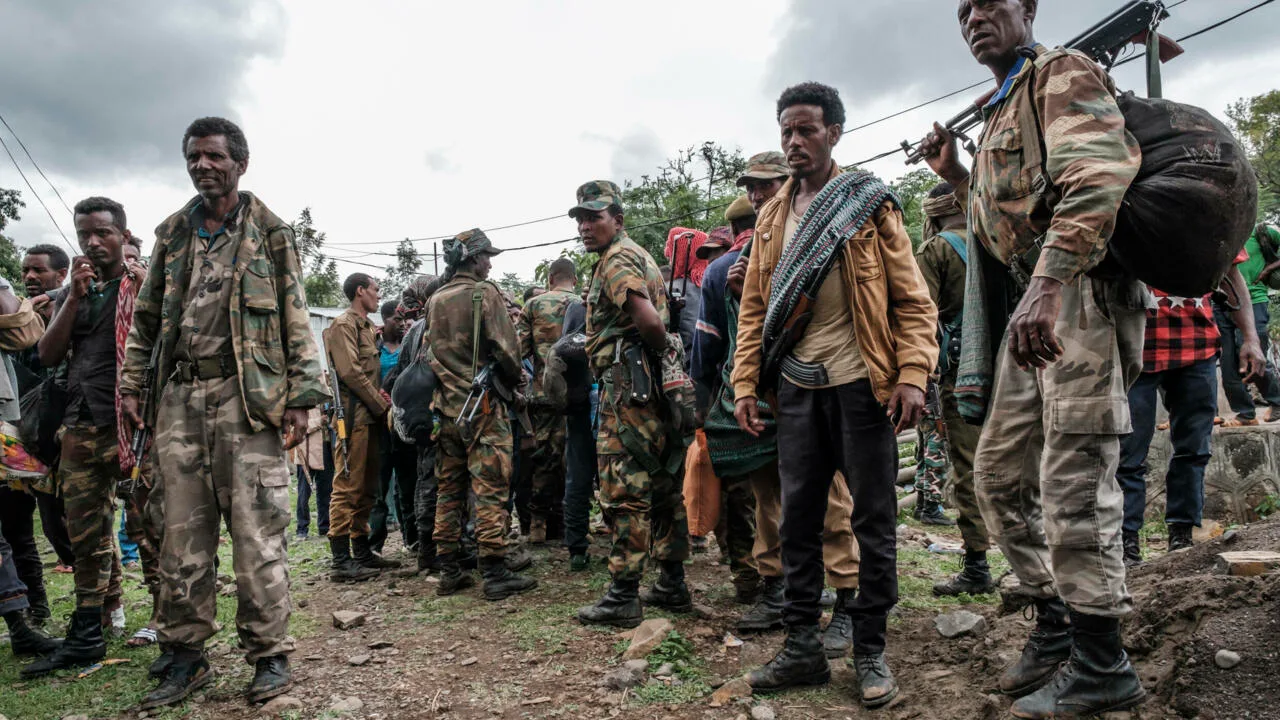
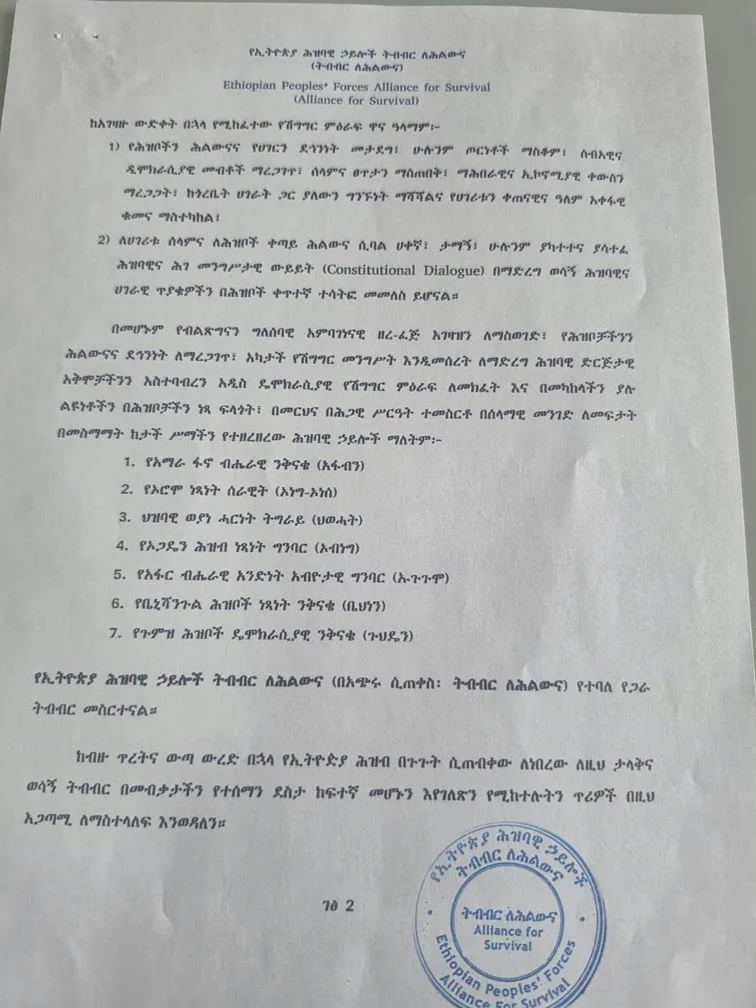
Seven Ethiopian armed movements announced on Saturday that they have formed an alliance to bring down the federal government. Amanuel Assefa, vice-president of the Tigray People's Liberation Front, told AFP the objective was to remove the regime and set up a transitional government, that the groups had been talking for more than a year, and that the alliance would be chaired by Zemene Kasse, leader of the Amhara Fano militias. Addis Ababa had not responded to AFP by Saturday evening.
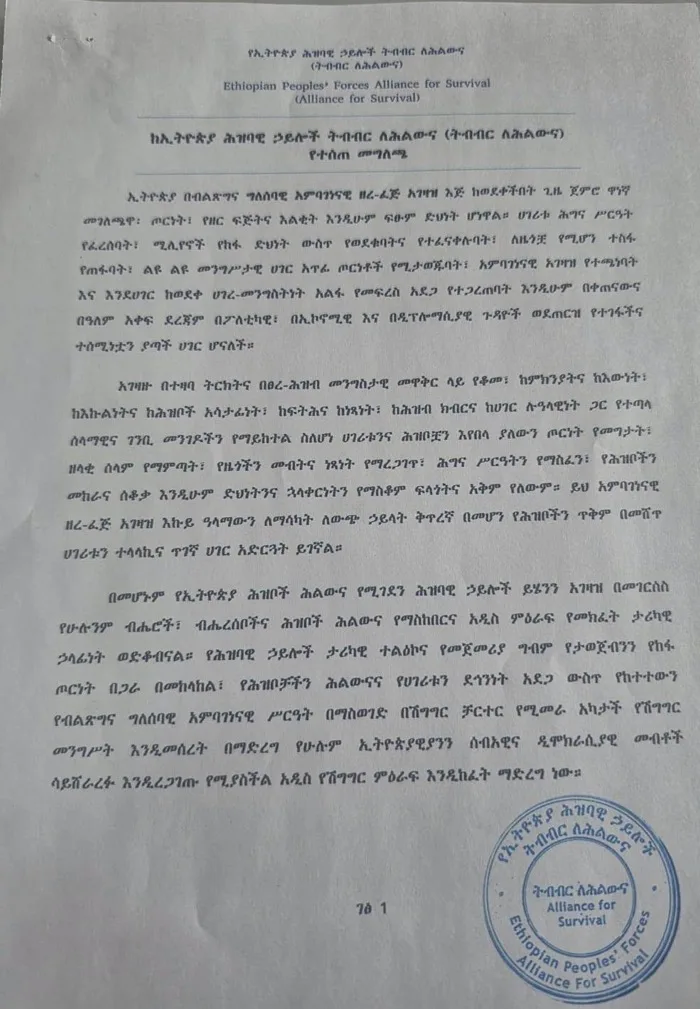
The three forces that matter militarily are all in. The TPLF, which fought the federal army to a stalemate in the 2020 to 2022 war that killed an estimated 600,000 people. The Fano, who fought alongside Addis Ababa in that war, turned against it in 2023 over disarmament, and unified their factions under a single command in January. And the Oromo Liberation Army, an active insurgency in the country's most populous region. The four other signatories are smaller movements from the Somali, Afar, Benishangul and Gumuz regions, according to the list circulated by the groups; AFP did not name them.
That is the significance, and also the fragility. The alliance was first floated by Zemene Kasse in mid-August in an interview with Le Temps, after coordination meetings reported to have taken place in Port Sudan. On 10 September, TPLF chairman Debretsion Gebremichael described it as institutionalised and irreversible. On 18 September, the OLA described the same arrangement as a procedural consensus, not a political agreement, and said no member had authority to decide the country's future. Two of the three main partners are not describing the same thing.
The federal government's position is that this alliance already existed covertly. In October 2025, Ethiopia's foreign minister wrote to the UN secretary-general accusing the TPLF's hardline faction and Eritrea of financing, mobilising and directing Fano forces, including in an attempt to seize Weldiya. The Pretoria agreement that ended the Tigray war has since broken down in practice, with clashes in Tigray in January and February 2026, and the African Union reports that both federal forces and the TPLF have massed troops along the region's border in recent months.
Kjetil Tronvoll of Oslo New University College told AFP he doubted the rebels could sustain what he called a sacrificial war against a government with a large drone fleet, while noting that a coordinated military command opening four or five fronts at once would be a different problem for Addis Ababa than the separate insurgencies it has fought so far.
What to watch. Whether a joint command actually issues joint orders, or whether this remains a communiqué. Whether Asmara's role, alleged by Addis Ababa and denied by Eritrea, becomes visible. And whether the government answers with negotiation or with the drones Tronvoll refers to. In the Horn, the second has been the pattern.