
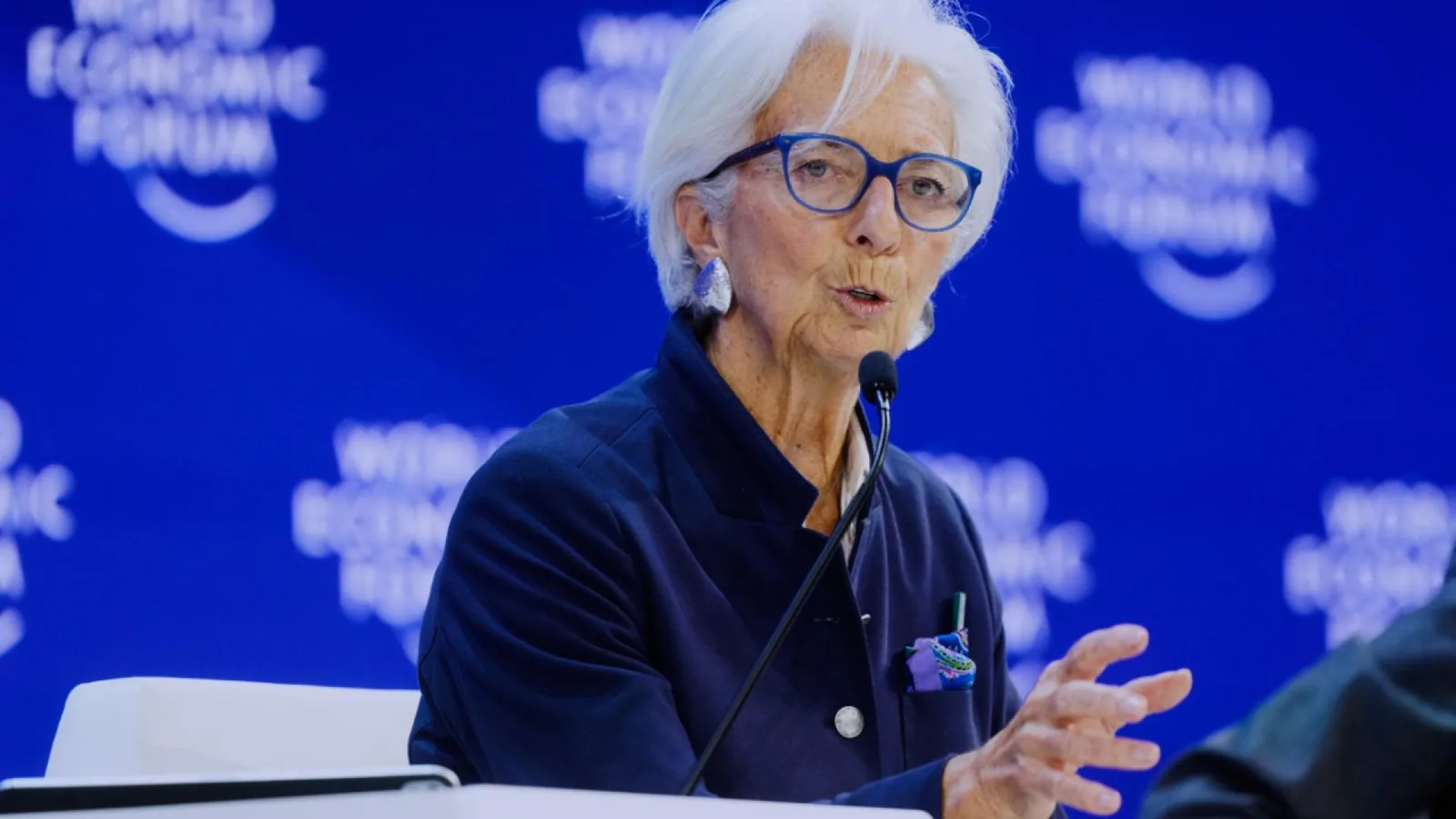
1. The ECB puts central bank money on-chain
The Eurosystem launched Pontes on Monday, letting banks settle tokenised securities in central bank money. Thirteen market participants, including Deutsche Bank, Santander, Société Générale, Caisse des Dépôts and the European Investment Bank, plus four blockchain operators such as Clearstream, are connected from day one. The ECB also said it is preparing to invest a small part of its own funds in tokenised securities, starting with euro area public debt. The context is the dollar: ECB figures put dollar stablecoins at around 99 percent of a market close to 300 billion dollars, against about 500 million euros for euro stablecoins.
2. United Russia takes a record Duma majority
With 95 percent of ballots counted, the Central Election Commission gave United Russia 57.83 percent of the party-list vote and a projected 355 of 450 seats, beating its 2016 record of 343 and well above the 301 needed to amend the constitution alone. The Communists took 13.81 percent, the LDPR 8.98, New People 7.96; A Just Russia sat at 4.96, just below the 5 percent threshold. Official turnout was 59.32 percent. Yabloko, the only registered party opposed to the war, was not on the federal ballot after the Supreme Court annulled its list in August. Final results are due later this week.
3. Brussels trades two oligarchs for three years of sanctions
EU ambassadors agreed on Monday to a compromise proposed by the Irish presidency: renew sanctions on more than 2,600 Russian people and entities for three years, far longer than the usual six or twelve months, in exchange for delisting Alisher Usmanov and Mikhail Fridman, provided no government objected within hours. France had joined Slovakia in pushing for Usmanov; three diplomats told Reuters Paris acted under pressure from Azerbaijan, which is detaining at least two French nationals. A senior Azerbaijani diplomat rejected that account. Luxembourg then demanded Fridman's removal, arguing its defence against his 16 billion dollar arbitration claim would be weakened if Usmanov alone were delisted. The current listings expire at midnight on 22 September.
4. Meta lays a petabit cable to France
Meta announced Petal, a roughly 7,000 kilometre subsea cable between the United States and France's Atlantic coast, carrying 1 petabit per second, double today's best transoceanic cables, from 2029. It will be the first to use multi-core fibre across an ocean, built with NEC and Sumitomo Electric, with Orange supporting the French landing. Meta shares rose nearly 7 percent on Monday, but market coverage tied the move to a Wells Fargo price target raise, its Muse AI agent and its Connect event on 23 and 24 September, not the cable.
5. Wall Street rallies into the Trump-Xi summit
The Nasdaq jumped about 2 percent to a record close on Monday, led by chipmakers; AMD briefly reached a 1 trillion dollar market value during the session. Oil eased: Brent and WTI futures both traded below 100 dollars during the US session. The focus is Thursday: Xi Jinping's visit to Washington, with tariffs, critical minerals and AI on the agenda and a White House dinner attended by AI executives. Treasury Secretary Scott Bessent met Vice Premier He Lifeng in New York on Sunday; the US side said it proposed an AI safety notification mechanism.
6. Saudi Arabia quietly left China's mBridge
The Financial Times revealed on Sunday that the Saudi central bank is no longer part of mBridge, the multi-central-bank settlement platform led by the People's Bank of China. SAMA said it completed its proof of concept on 13 May 2025 and ceased to be a member afterwards, as originally planned; a source said it would be inaccurate to draw any wider inference. The exit had not been made public. mBridge was designed to let central banks settle cross-border payments in their own digital currencies, outside dollar correspondent banking.