
1. Trump gives Iran a choice from the UN rostrum
Addressing nearly 130 heads of state at the opening of the General Debate of the 81st General Assembly, Donald Trump threatened to "annihilate" Iran if it does not reach a deal with Washington, framing the choice as an agreement after the US midterm elections or destruction. He also said the United States would encourage artificial intelligence rather than rein it in, and called the International Court of Justice "evil". The session runs under the theme Restoring trust, managing transformation: A United Nations that delivers for all, with two wars running and oil markets already unsettled.
2. Macron's last UN speech is a rebuttal
In his final address before leaving office next May, Emmanuel Macron dismissed Trump's claim to have secured peace in Gaza, noting that not a single humanitarian corridor has reopened in the enclave, and said the world was watching a spectacle that should shame everyone. He pledged continued French support for the International Court of Justice hours after Trump attacked it, and called for a double moratorium on strikes against energy infrastructure and on shipping through the Black Sea. Britain's new prime minister, Andy Burnham, gave his first UNGA speech the same day.
3. Washington gets the Arctic it wanted, without the annexation
Trump signed a trilateral security agreement with Denmark and Greenland on the sidelines of the General Assembly. The White House says it gives the United States permanent basing rights, at no cost to American taxpayers, and bars any US adversary from establishing a base, military presence or sensitive investment without American approval. Greenland remains Danish territory. Prime Ministers Mette Frederiksen and Jens-Frederik Nielsen both framed it as strengthening NATO. ABC News, reading the text, reports it does not appear to materially advance the privileges already granted by the 1951 defence pact, and bars non-NATO states from military installations unless all three parties agree. A Danish Institute of International Studies researcher called it a way of ending the crisis without compromising sovereignty, while warning that the lost trust will take decades to rebuild.
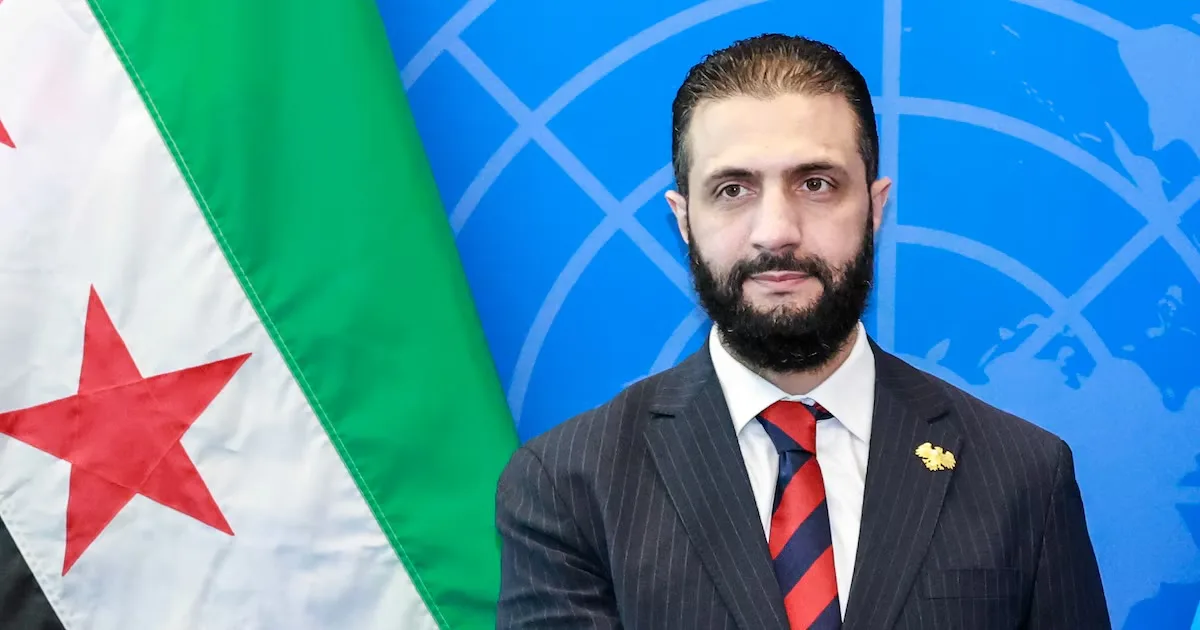
4. Syria's president returns to the UN for a second year
Ahmed al-Sharaa led Syria's delegation at the opening of the General Debate, with Foreign Minister Asaad Hassan al-Shaibani and Syria's permanent representative Ibrahim Olabi. He met Emmanuel Macron on the sidelines, along with members of the US Congress and the Syrian community in the United States, where he discussed reconstruction. He is due to address the Assembly today. Last year he became the first Syrian head of state to speak at the UN since 1967.
5. Brussels frees two oligarchs to lock sanctions for three years
The EU renewed sanctions on roughly 3,000 Russian individuals and entities for three years, instead of the usual six months, and removed Alisher Usmanov and Mikhail Fridman from the list. Their asset freezes and travel bans are lifted. France pushed for Usmanov's delisting, which Euronews links to a prisoner release with Azerbaijan, where at least two French nationals are detained; Reuters reports Paris privately said Baku was using the case to blackmail it, which Baku rejects. Luxembourg then demanded Fridman's removal, citing his 16 billion dollar arbitration claim against it. Latvia was the last holdout and abstained rather than block, and its cabinet has instructed its foreign ministry to prepare national sanctions on both men. Volodymyr Zelenskyy called for a rollover without political delistings. The Irish presidency said the 36-month renewal enhances durability and predictability.
6. Xi Jinping lands in Washington tomorrow
The Chinese leader arrives Thursday for talks with Donald Trump and a White House dinner attended by AI executives, with tariffs, critical minerals and artificial intelligence on the agenda. Treasury Secretary Scott Bessent met Vice Premier He Lifeng in New York on Sunday, and the US side said it proposed an AI safety notification mechanism.