
1. What the imagery shows
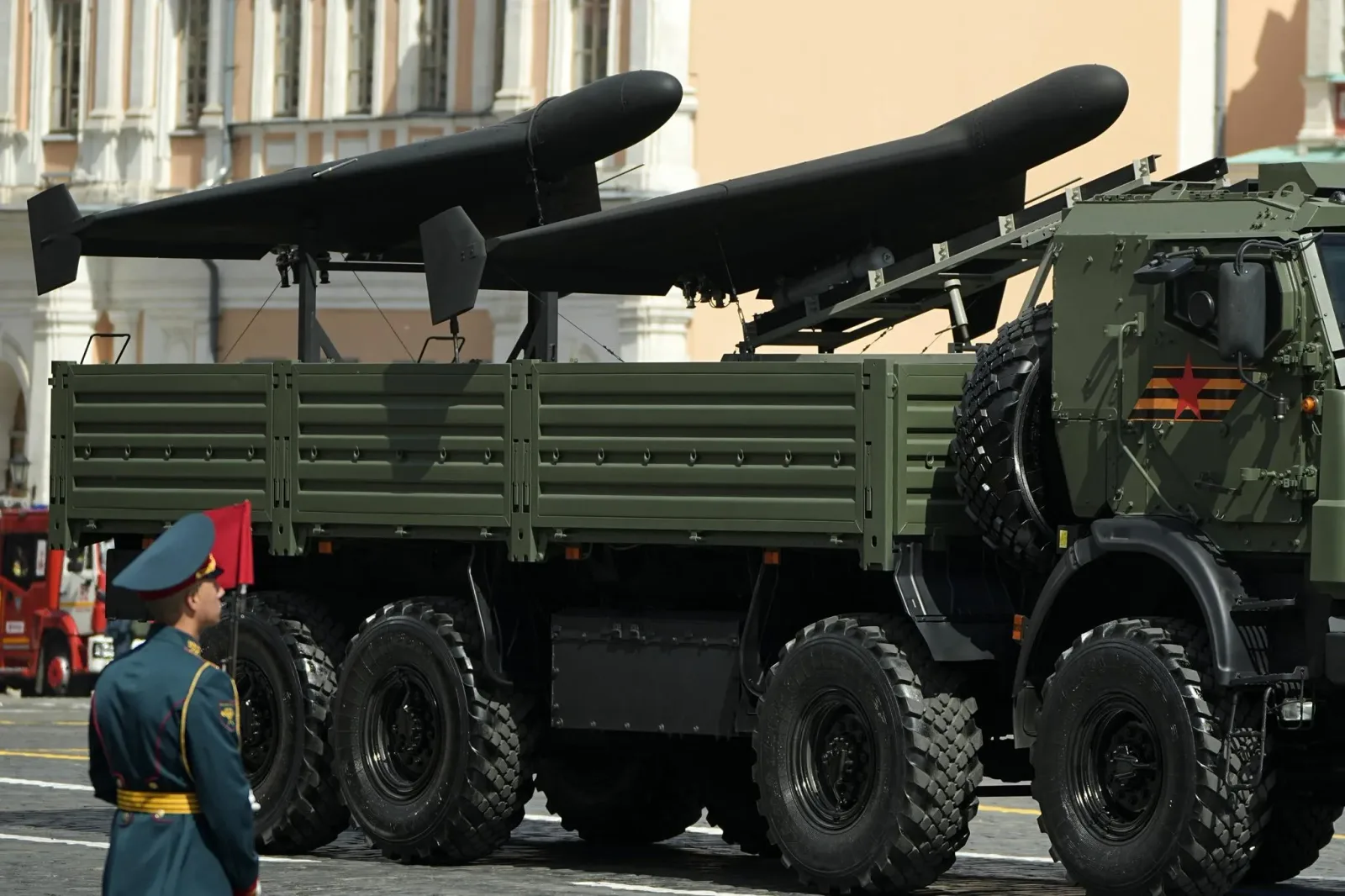
On 19 September, the Ukrainian OSINT project Dnipro Osint published satellite images of the Alabuga Special Economic Zone in Tatarstan, Russia's main production site for the Geran-2, its licensed version of Iran's Shahed-136. The analyst estimates roughly 42,000 square metres of underground production space has already been built, at coordinates 55.8087, 52.0267, and reads the excavation as future workshops. That reading is his, not an official confirmation.
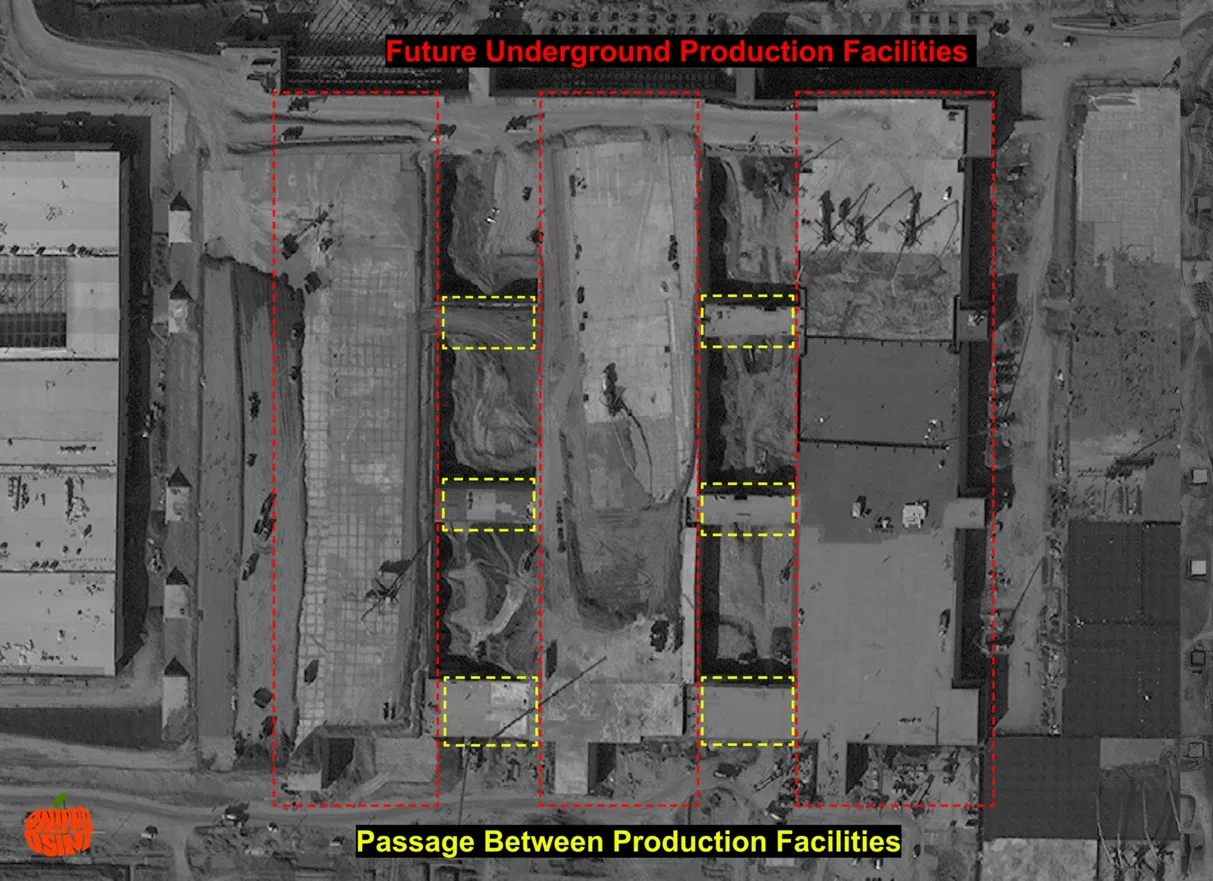
The surrounding picture is better established. Radio Liberty, citing satellite imagery, reports the zone's footprint grew by 340 hectares between May 2025 and May 2026, with new hangars, dormitories for foreign workers and a 450-hectare construction area south of the M-12 motorway. Ukrainian analysts counted at least ten new workshops going up in late August. And Spencer Faragasso of the US-based Institute for Science and International Security identified the construction of a large counter-drone defence system around the complex, lattice towers that could shield it from drones and cruise missiles.
Alabuga sits roughly 1,200 kilometres from the Ukrainian border. Ukraine first struck it in April 2024, hitting a dormitory at the Alabuga Polytech college. The move underground appears to date from after that.
2. The invasion question, and the wrong answer
The framing that dominates European commentary is whether Russia will attack a NATO member. The military arithmetic argues against it: the overwhelming bulk of Russian ground forces, aviation, recruits and munitions is committed in Ukraine, Kaliningrad holds no major offensive grouping, and recruitment is already strained. Ukraine fields something on the order of a million men that no European army could replace at short notice. As long as that front holds, a conventional move west is a losing proposition.
That is also why the Alabuga imagery is the more useful indicator. What Russia is industrialising is not an invasion force. It is a volume weapon, cheap per unit, delivered at scale, usable below the threshold of war, and increasingly hard to destroy at source.
3. The financial dimension, which is the real one
This is where the story becomes economics rather than strategy.
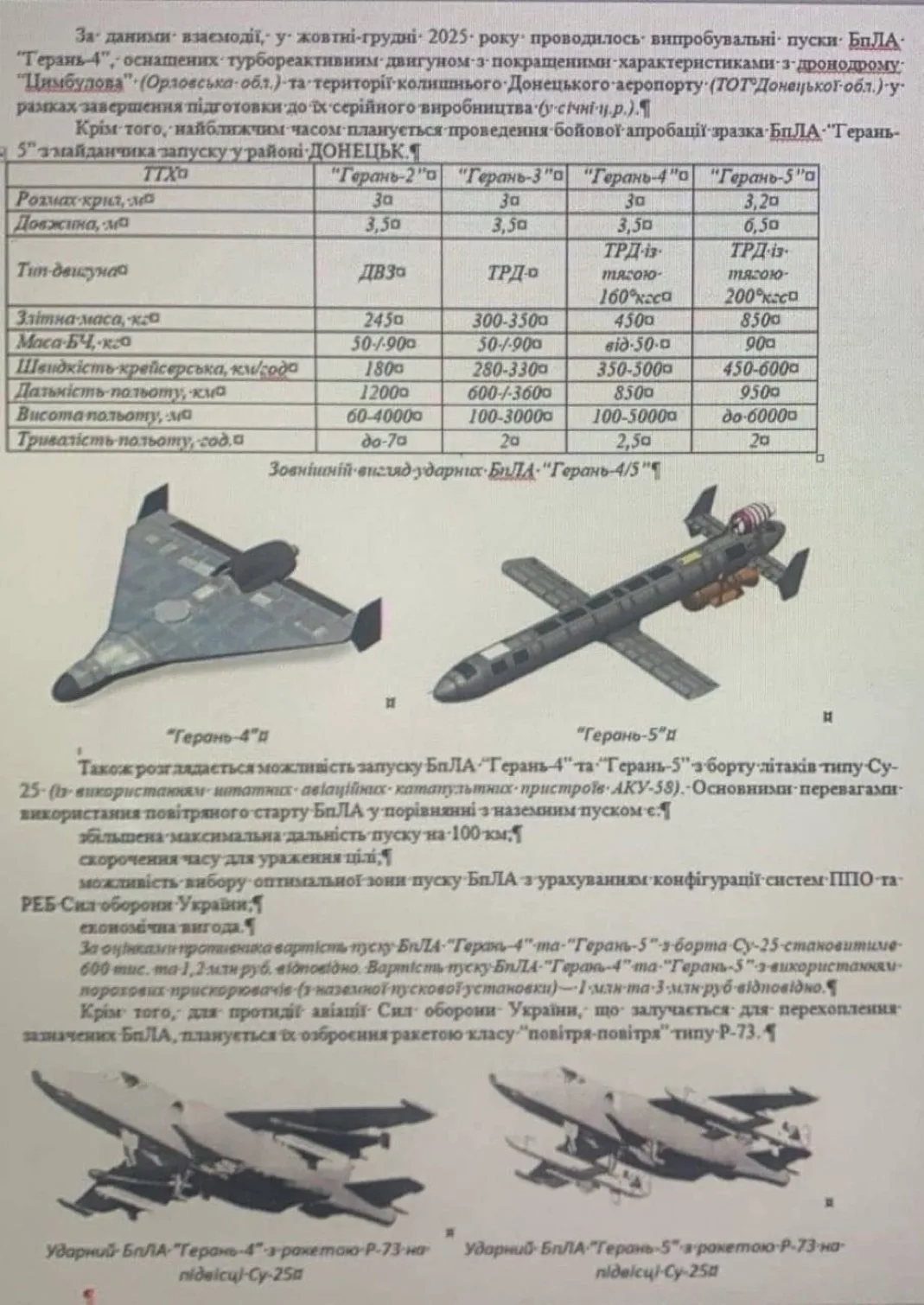
A Geran-2 costs somewhere between 25,000 and 80,000 euros depending on the estimate. Alabuga targeted 48,000 dollars a unit and, after engine and navigation upgrades, was assessed at around 80,000 by April 2024. European and American analysts commonly work with a 35,000 dollar figure. Whatever the exact number, it is in the tens of thousands.
Now the other side of the ledger. When Russian drones entered Polish airspace on 10 September 2025, Dutch F-35s engaged them with AIM-9 Sidewinders. Bild reported the cost at more than 400,000 euros per missile, against drones worth a fraction of that; a senior NATO official told the paper that using F-35s against drones makes no long-term military sense. A Patriot interceptor costs over three million dollars. An interceptor drone of the kind Ukraine mass-produces costs around 5,000.
Ten to one against you is a bad exchange rate. Eighty to one is a strategy someone else has chosen for you.
Europe's answer is being bought at defence-industrial prices. Romania has contracted 5.7 billion euros with Rheinmetall for 24 Skyranger and seven Skynex systems plus Israeli Spyder launchers. Poland's Eastern Shield includes SAN, 18 counter-drone batteries combining 30 mm guns, interceptor drones and guided rockets, developed with Norway's Kongsberg. Poland's PGZ signed with Estonia's Frankenburg Technologies in March 2026 for the Mark 1, a small solid-fuel interceptor explicitly designed to bring the cost per kill down. The EU's European Drone Defence Initiative, the so-called drone wall, is meant to layer radars, jammers and cheap interceptors across the eastern flank.
There is a second financial thread, and it runs through European companies. Ukrainian military intelligence, dissecting downed Geran-2s, found that of the hundreds of components inside, only a few dozen are of Russian origin. An OCCRP-led investigation published in February found European-made parts still reaching Russian drones despite EU export bans, alongside Chinese navigation antennas labelled as agricultural equipment parts. Every sanctions gap is a subsidy to the exchange ratio above.
4. What to watch
Whether the underground halls become production halls. Excavation is not a line. Confirmation would mean strikes on Alabuga stop being a viable Ukrainian option.
The jet-powered variants. Faster Geran models compress interception windows and make cannon and short-range systems less effective. Any European counter-drone procurement sized against a 180 km/h target is sized against yesterday's weapon.
The cost per kill, published. No European government currently reports what it spends per drone destroyed. Until one does, the drone wall will be assessed on delivery dates rather than on the ratio that actually decides this.
Component flows. Sanctions enforcement is the cheapest counter-drone measure available, and the only one that raises Russia's unit cost instead of Europe's.