Not One Vote For: France's Budget Goes Back to the Government's First Draft
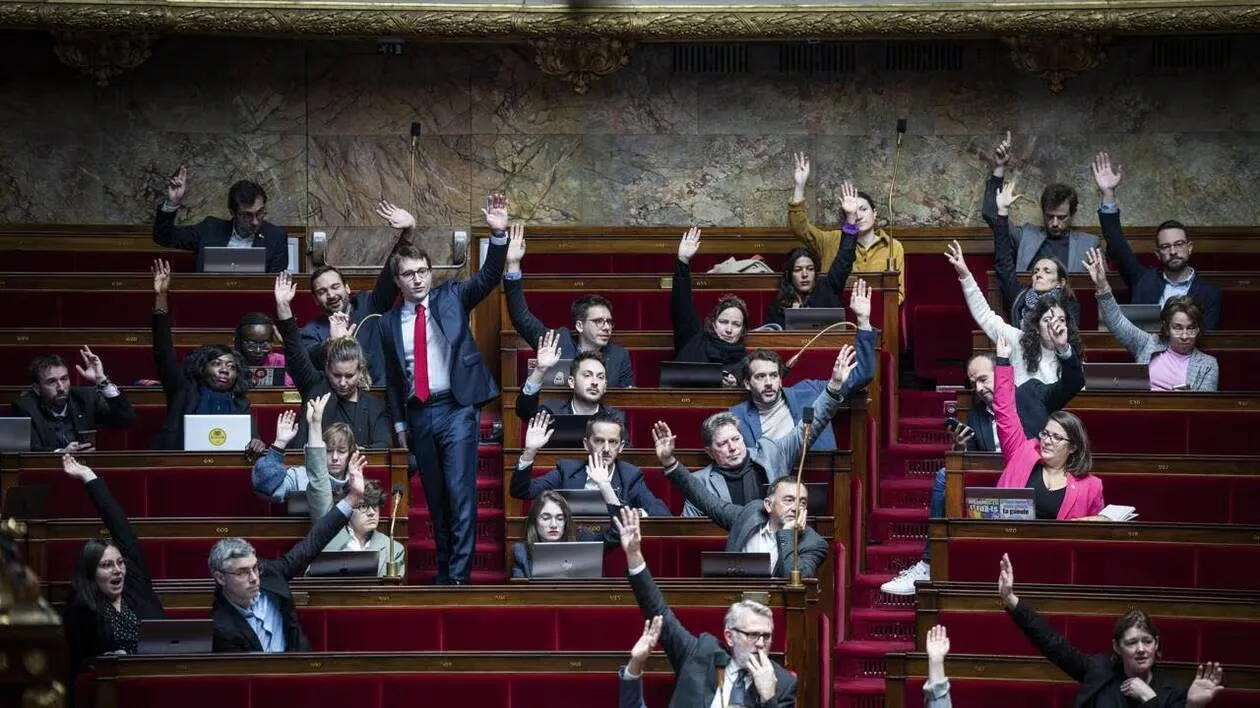
On 4 November, not one French deputy backed the revenue part of the 2027 budget: 458 voted against. Every change they made, the 0.5% share tax included, is gone, and the government's draft now goes to the Senate.
By Le Détroit
HANS LUCAS VIA AFP
The essentials
The vote. On the evening of 4 November the Assemblée nationale rejected the revenue part of the 2027 budget bill by 458 votes to none, with 2 abstentions. Every group voted against, the government's camp included; 114 deputies did not vote.
The effect. The rejection brings down the whole bill at first reading, before deputies reached the spending side. The Senate will examine the government's original text, so every amendment adopted since 13 October falls, among them the 0.5% share tax.
The clock. Senators open their debate on 20 November and are due to vote on 9 December. Parliament has until midnight on 17 December; after that the government may enact its bill by ordinance, a route never used for a budget.
The precedent. Deputies also rejected the revenue part in November 2024 and November 2025. Both times France began the year under a stopgap special law and adopted its budget only in February.
0
deputies voted for the revenue part of the 2027 budget; 458 voted against and 2 abstained
114
deputies did not vote, among them 41 of the 68 Socialists and the Speaker, who by custom does not vote
€20.7bn
how much wider the state deficit would have been under the amended text, by the government's count; the left disputes it
17 Dec
midnight deadline for Parliament to pass the budget; after it, the government may enact its bill by ordinance
1. Nobody's budget
The unanimous vote was the last of three defeats in a single sitting. Deputies first threw out article 57, the balance article that sets the budget's bottom line, by 157 votes to 86; apart from two deputies, only the government's camp and the Droite républicaine backed it. A government amendment to the opening article, which sets out the deficit path, then fell by 168 to 80. On the final vote the government's own deputies joined everyone else, and the revenue part fell by 458 votes to none. The only abstentions came from two GDR deputies elected overseas, Mereana Reid Arbelot and Emmanuel Tjibaou.
Chart 1
Not one hand raised for it
The vote on the revenue part of the 2027 budget, 4 November 2026. Each figure is one deputy
Voted againstAbstainedDid not voteVacant seat
Hover or tap a group to see how its deputies voted. The Speaker, on the podium, does not vote by custom.
LFI-NFP La France insoumise, Nouveau Front populaire · 70 deputies: 68 against, 2 did not vote. Earlier the same sitting, on the balance article: 0 for, 32 against.
GDR Gauche démocrate et républicaine · 17 deputies: 15 against, 2 abstained, 0 did not vote. Earlier the same sitting, on the balance article: 0 for, 10 against.
EcoS Écologiste et social · 38 deputies: 27 against, 11 did not vote. Earlier the same sitting, on the balance article: 0 for, 18 against.
SOC Socialistes et apparentés · 68 deputies: 27 against, 41 did not vote. Earlier the same sitting, on the balance article: 0 for, 15 against.
LIOT Libertés, indépendants, outre-mer et territoires · 24 deputies: 20 against, 4 did not vote. Earlier the same sitting, on the balance article: 1 for, 7 against, 1 abstained.
Dem Les Démocrates · 37 deputies: 27 against, 10 did not vote. Earlier the same sitting, on the balance article: 13 for, 0 against.
EPR Ensemble pour la République · 90 deputies: 63 against, 27 did not vote (including the Speaker). Earlier the same sitting, on the balance article: 33 for, 0 against.
HOR Horizons et indépendants · 35 deputies: 35 against, 0 did not vote. Earlier the same sitting, on the balance article: 20 for, 0 against, 1 abstained.
DR Droite républicaine · 46 deputies: 38 against, 8 did not vote. Earlier the same sitting, on the balance article: 18 for, 0 against, 1 abstained.
UDR Union des droites pour la République · 17 deputies: 14 against, 3 did not vote. Earlier the same sitting, on the balance article: 0 for, 5 against.
RN Rassemblement national · 121 deputies: 117 against, 4 did not vote. Earlier the same sitting, on the balance article: 0 for, 67 against.
NI Non-attached deputies · 11 deputies: 7 against, 4 did not vote. Earlier the same sitting, on the balance article: 1 for, 3 against.
Groups run left to right of the political spectrum, not the seating plan; figures do not sit on the deputies' own seats. The Assemblée counts 574 of its 577 seats as filled; three are vacant.
Source Assemblée nationale, analyse du scrutin public no 9759 (4 November 2026, second sitting) and scrutin no 9757 (balance article, same sitting)Le Détroit
The unanimity hides opposite complaints. For La France insoumise's Eric Coquerel, who chairs the finance committee, "ce budget était mauvais à l'origine, il le reste", bad at the start and still bad. For Philippe Juvin of the Droite républicaine, the rapporteur général, it offered "ni les garanties budgétaires, ni les perspectives", neither budgetary guarantees nor prospects. Turnout says as much as the tally: 114 deputies did not vote, including 41 of the 68 Socialists.
Chart 2
Three defeats in one sitting
The last three votes on the revenue part of the 2027 budget, 4 November 2026, in the order of the Assemblée's record
Hover or tap the shapes for details
1Article 57, the balance article, which sets the budget's bottom lineRejected, 86 to 157
8686 forEPR 33, HOR 20, DR 18, Dem 13, LIOT 1, NI 1All but two came from the government's camp and the Droite républicaine.
322322 did not vote252 deputies voted in all; the Speaker and the deputy chairing the sitting do not vote.
3 vacant seatsThe bar counts all 577 seats.
3The whole revenue part of the billRejected, 0 to 458
458458 againstRN 117, LFI-NFP 68, EPR 63, DR 38, HOR 35, SOC 27, EcoS 27, Dem 27, LIOT 20, GDR 15, UDR 14, NI 7Every group voted against, the government's own included.
2 abstainedMereana Reid Arbelot and Emmanuel Tjibaou, both GDR
114114 did not vote113 deputies, 41 of them Socialists, and the Speaker, who by custom does not vote.Two of them, Arnaud Bonnet and Damien Girard, later said they had meant to vote against.
3 vacant seatsThe bar counts all 577 seats.
ForAgainstAbstainedDid not voteVacant seatBar length: the 577 seats
Scrutin numbers follow the order of the votes. "Second deliberation": a fresh vote, before the final one, on part of a text already voted. The opening article (article liminaire) sets out the forecast deficit; article 57 sets the balance of the state budget.
Source Assemblée nationale, analyses des scrutins publics no 9757, 9758 and 9759 (4 November 2026, second sitting)Le Détroit
2. What the vote erased, and what it brought back
Because the Senate starts again from the government's draft, the rejection works as an eraser. The 0.5% share tax that La France insoumise pushed through on 2 November, which Le Détroit analysed this week, is gone, and the rate stays at 0.4%. So are a tax on some conversions of crypto into stablecoins, a duty to declare self-custody crypto wallets holding €100,000 or more, and a five-year extension of the Girardin tax break for overseas investment. The eraser works both ways: measures deputies had removed come back, such as the government's cut to the tax allowance on pensions.
Chart 3
One vote, two erasers
What happens to the deputies' changes now that the Senate takes up the government's draft
Hover or tap the shapes for details
Adopted 2 NovGone
Share tax lifted to 0.5% and widened to ETFs, bonds and day tradesLa France insoumise's amendment I-2527. The rate stays at 0.4% on purchases of large French companies' shares.Financial transaction taxAdopted on 2 November by 33 votes to 26, with 37 abstentions (scrutin no 9521).Le Détroit analysed it on 3 November.
Adopted 16 OctGone
A tax on some conversions of crypto-assets into stablecoinsVoted by deputies on 16 October.Crypto conversionsReported by Cryptoast, which lists it among the measures that fall with the vote.
Adopted 3 NovGone
Declaration of self-custody crypto wallets holding €100,000 or moreVoted on 3 November, to complement the EU's DAC8 reporting rules.Crypto walletsReported by Cryptoast.
Adopted 30 OctGone
Girardin tax break for overseas investment extended to 2034Amendment no 1993. The deadline stays at 31 December 2029.Girardin industrielAdopted on 30 October by 24 votes to 15, according to France Épargne.
Struck out by deputiesBack in the text
A cut to the tax allowance on pensionsArticle 3 of the government's draft, which deputies struck out.Pensioners' allowanceDeputies struck it out in the chamber on 15 October, by 116 votes to 30.Article 3 of the bill reduces the allowance; with the deindexation of some pensions, the government expects €5.5bn from the two measures, according to Meilleurtaux.Socialist Estelle Mercier counted its removal among the debate's few gains.
A selection of the changes adopted since 13 October; all fall with the rejection, and senators may write any of them back in.
Source Assemblée nationale (scrutin no 9521); Cryptoast, Daf Mag, France Épargne, LCP (5 November 2026); Meilleurtaux (18 October 2026); Sud Radio (15 October 2026)Le Détroit
The government argues that the deputies' version could not have stood. David Amiel, the minister for public action and public accounts, said that had the revenue part been adopted as amended, the state's deficit would have reached €177.1bn, €20.7bn worse than in the government's draft. The left disputed his figures.
3. A race against 17 December
The calendar is now tight. Senators open their debate on 20 November and are due to vote on 9 December; a joint committee of seven deputies and seven senators then looks for a compromise, and if it fails, the Assemblée gets the last word. The Constitution gives Parliament 70 days, which run out at midnight on 17 December. After that the government may enact its own bill by ordinance, a route never used for a budget. Its other tools are article 49.3, which lets it pass the text without a vote at the risk of a censure motion, and a stopgap special law that keeps taxes flowing but allows no new spending, which Sébastien Lecornu said in July he did not intend to use.
France has been here before. The Assemblée rejected the revenue part on 12 November 2024 and again on 22 November 2025; both times the country entered January under a special law and adopted its budget only in February, after a 49.3. This year's rejection came earlier and was total.
Chart 4
Third November, third rejection
How long France waited for its budget after the Assemblée rejected the revenue part, budget by budget. Each lane runs from 1 November to the end of February
Hover or tap the shapes for details
NovDecJanFeb
2025 budgetRevenue part rejected on 12 November 2024, 362 to 19286 days
12 November 2024Assemblée rejects the revenue part, 362 votes to 192. The Senate takes the government's text.4 December 2024Michel Barnier's government falls to a censure motion.20 December 2024Special law promulgated, so the state can collect taxes and pay its way into 2025.6 February 2025Senate adopts the budget for good, after François Bayrou used article 49.3 on 3 February and survived the censure motion on 5 February. It is promulgated on 14 February.
12 Nov6 Feb
2026 budgetRevenue part rejected on 22 November 2025, 404 to 1, with 84 abstentions72 days
22 November 2025Assemblée rejects the revenue part overnight, 404 votes to 1, with 84 abstentions.23 December 2025After the joint committee fails, Parliament unanimously adopts a special law; it is published on 27 December.2 February 2026Budget adopted after the government used article 49.3 and two censure motions failed.
22 Nov2 Feb
2027 budgetRevenue part rejected on 4 November 2026, 458 to 0?
?4 November 2026Assemblée rejects the revenue part, 458 votes to 0, with 2 abstentions.20 November 2026The Senate opens its debate on the government's original text.9 December 2026Scheduled Senate vote on the whole bill, then a joint committee of seven deputies and seven senators.17 December 2026, midnightEnd of the 70 days Parliament has to decide. After that the government may enact its bill by ordinance.
4 Nov17 Dec
From the Assemblée's rejection to final adoptionNew year begun without a finance lawStill ahead
Day counts run from the Assemblée's rejection to final adoption by Parliament. Dates after 5 November 2026 are scheduled, not certain.
Source Légifiscal (12 November 2024 and 2025 timeline); Hespress with AFP (22 November 2025); Moneyvox (27 December 2025); Al Jazeera (2 February 2026); Assemblée nationale (scrutin no 9759; organisation of the 2027 budget debate); L'Express via Orange (5 November 2026); LCP (2 November 2026)Le Détroit
4. Le Détroit's reading
The vote is less a verdict on the budget than a sign that no group wanted to own it. For the government, rejection is a tidier outcome than the tally suggests: its draft reaches the Senate, where the right and centre hold the majority, without the deputies' additions and with its own measures restored. The cost is time. The Assemblée keeps the last word if the two chambers cannot agree, and no camp has a majority there, so the endgame looks like the last two years: a 49.3 and a censure motion to survive, or a special law that carries France into 2027 without a budget, which Lecornu has so far ruled out.
For the share tax, the vote settles nothing for good. It now needs senators to revive it, or a government using 49.3 to keep it, and the government opposed it.
What to watch
20 November: the Senate opens its debate on the government's text. Whether senators write back any of the deputies' measures, the share tax included, will show how much of the Assemblée's work survives.
9 December: the Senate's vote on the whole bill, then the joint committee of seven deputies and seven senators. If it fails, the Assemblée has the last word.
17 December, midnight: the end of the 70-day window. Sébastien Lecornu will have to choose between article 49.3, which exposes his government to censure, an ordinance and the stopgap special law he has so far ruled out.
The social security budget, which deputies also rejected on 23 October, is before the Senate from 9 November, on the same track.
This article reports parliamentary votes and public statements. In the chamber chart, the position of each figure within its group is illustrative and does not show where individual deputies sit. French quotations are translated by Le Détroit.