
1. What happened
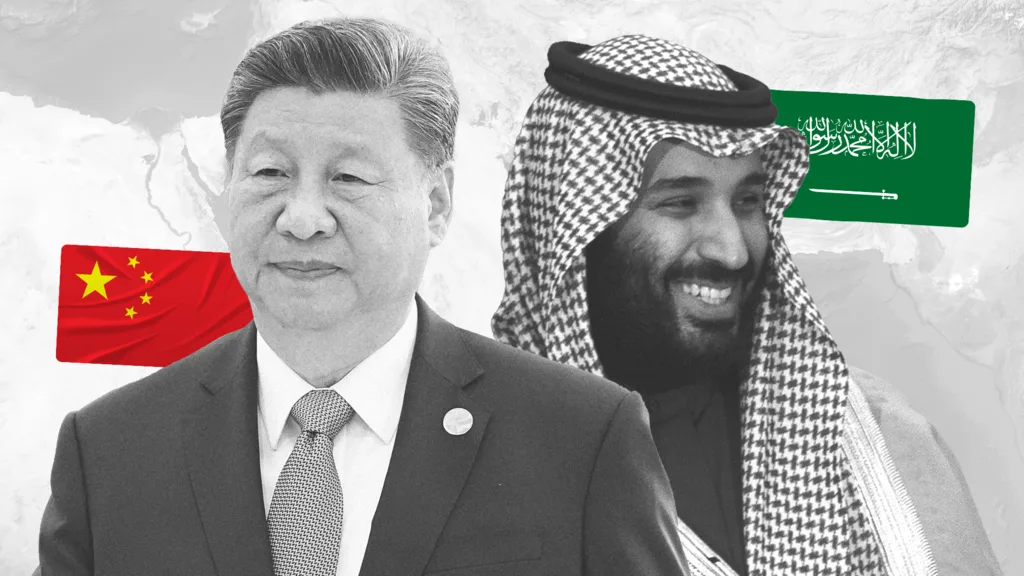
The Saudi Central Bank is no longer part of mBridge, the multi-central-bank digital currency platform led by the People's Bank of China. SAMA told the Financial Times it completed its proof of concept on 13 May 2025 and ceased to be a participating member after that date, in line with its original plan. A person familiar with the matter said it would be inaccurate to draw any wider inference from the exit.
The timeline is the story. Saudi Arabia joined mBridge as an observer in 2023 and became a full participant in June 2024, when the Bank for International Settlements announced the platform had reached minimum viable product and invited further members. Its departure eleven months later was never announced. Through 2026, analyses, press coverage and at least one policy paper published this month were still listing the kingdom among the participants.
What remains of mBridge is its founding core: China's Digital Currency Institute, the Hong Kong Monetary Authority, the Bank of Thailand and the Central Bank of the UAE, with the BIS having "graduated out" in October 2024.
2. Why it matters: the petroyuan lost its test case
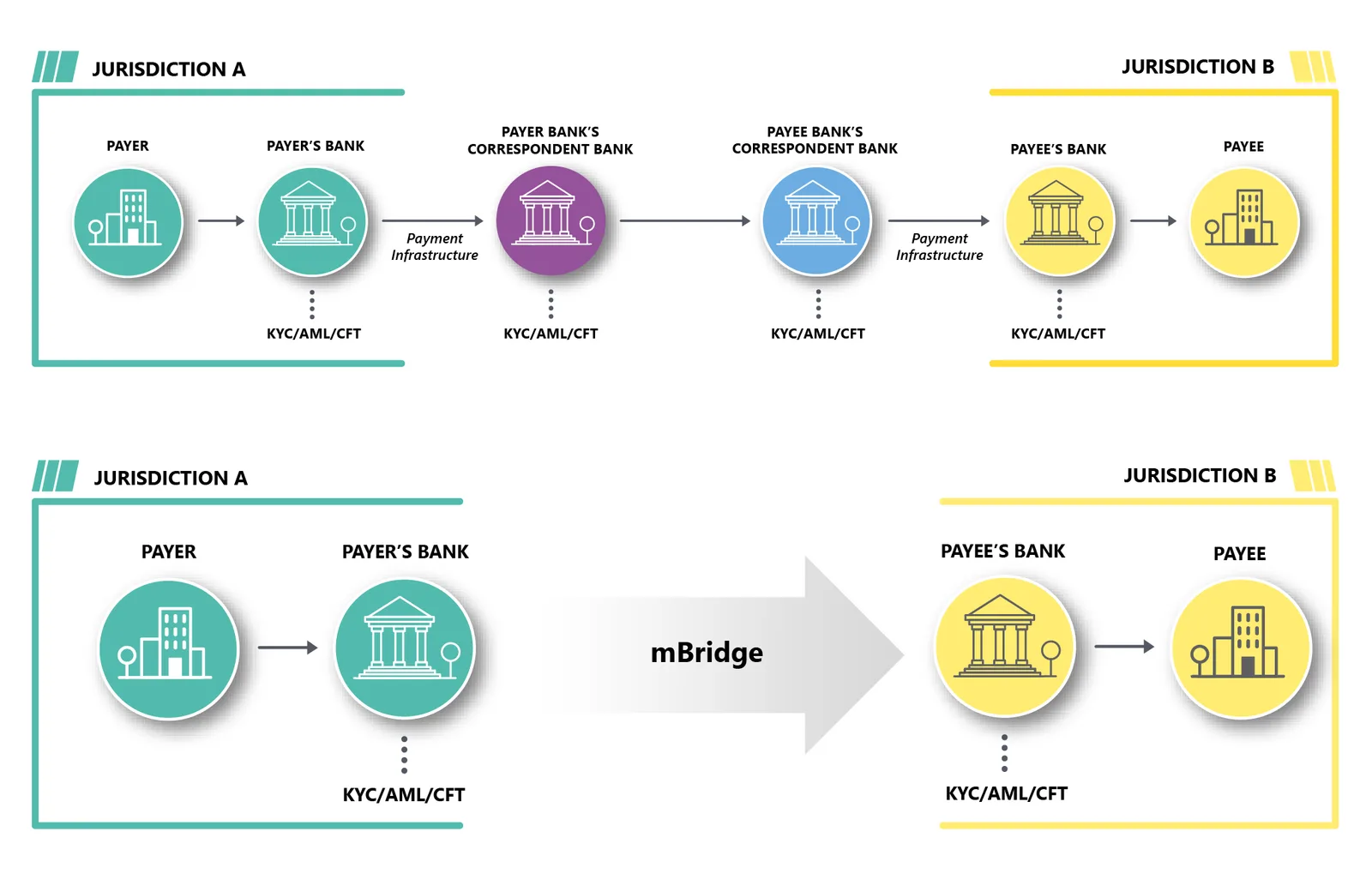
mBridge is the only operational infrastructure that could, in principle, allow a Chinese refiner to pay a Gulf producer in digital yuan with final settlement and no correspondent bank in between. Saudi participation was what made that scenario more than a slide. Washington's stated concern was never volume, it was standards: who sets the rules on security, interoperability and, above all, sanctions screening inside a network run from Beijing. When the BIS stepped back, Agustín Carstens went out of his way to say the platform was not a BRICS instrument and had to comply with international sanctions.
Riyadh's exit does not answer that concern; it removes the reason to have it. Whether the decision was technical, as SAMA says, or political, as the timing invites people to assume, is not established, and the FT's source explicitly warns against the second reading. Two facts sit alongside it without proving anything. Saudi Arabia was invited to join BRICS in 2023 and has never formalised membership. And the current US president has threatened 100 percent tariffs on any BRICS country pursuing a dollar alternative.
What is not in doubt is the market signal. The kingdom is selling its crude this month ship-to-ship off Oman, largely to Asia, at the same time as it confirms it has no stake in the one settlement rail designed for that trade to bypass the dollar. The barrels went east. The money still clears through New York.
3. What to watch
The UAE. Abu Dhabi is now the only Gulf central bank inside mBridge. If it stays, the platform keeps a Gulf anchor; if it follows Riyadh, the project becomes a China-Hong Kong-Thailand system.
SAMA's next move. The bank says the exit is not a rejection of digital currencies. Watch whether it joins a Western-aligned wholesale CBDC project, which would settle the "technical versus political" question.
Oil invoicing. Any Saudi-Chinese contract priced or settled in yuan outside mBridge would show the bypass never needed the platform.
Beijing's response. China has said nothing. The absence of a comment on losing the world's largest crude exporter is itself worth noting.