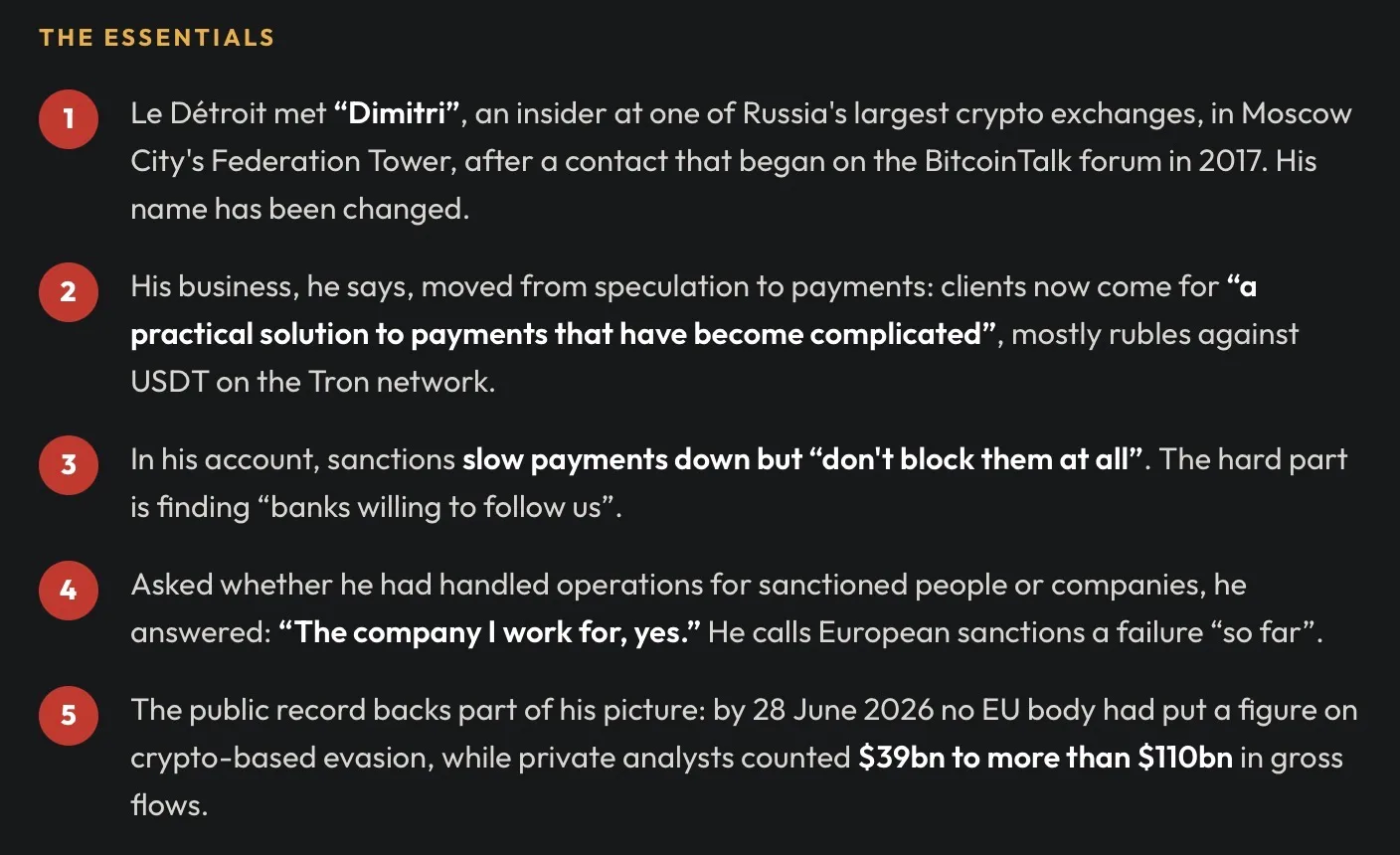
A conversation that started in 2017
The story starts on BitcoinTalk, the original Bitcoin forum, founded by Satoshi Nakamoto in 2009. In 2017, at the height of the first great crypto boom, Le Détroit's reporter began exchanging messages there with a Russian user. Neither of them was anyone in particular yet. There was no journalistic purpose: the point was simply to learn, to understand how Bitcoin worked, what crypto-assets were and how the whole sector fitted together. The conversations ran for years, and a real bond formed, the slow kind that online trust is made of.
Then came February 2022. Russia invaded Ukraine, and Western sanctions cut its largest banks off from much of the global financial system. By then, the man on the other end of the thread had made his way in the industry. He now worked for one of the largest crypto exchanges in Russia, a company whose activity, he says, ”exploded” when the war began and then changed shape entirely. We saw an opening, and asked.
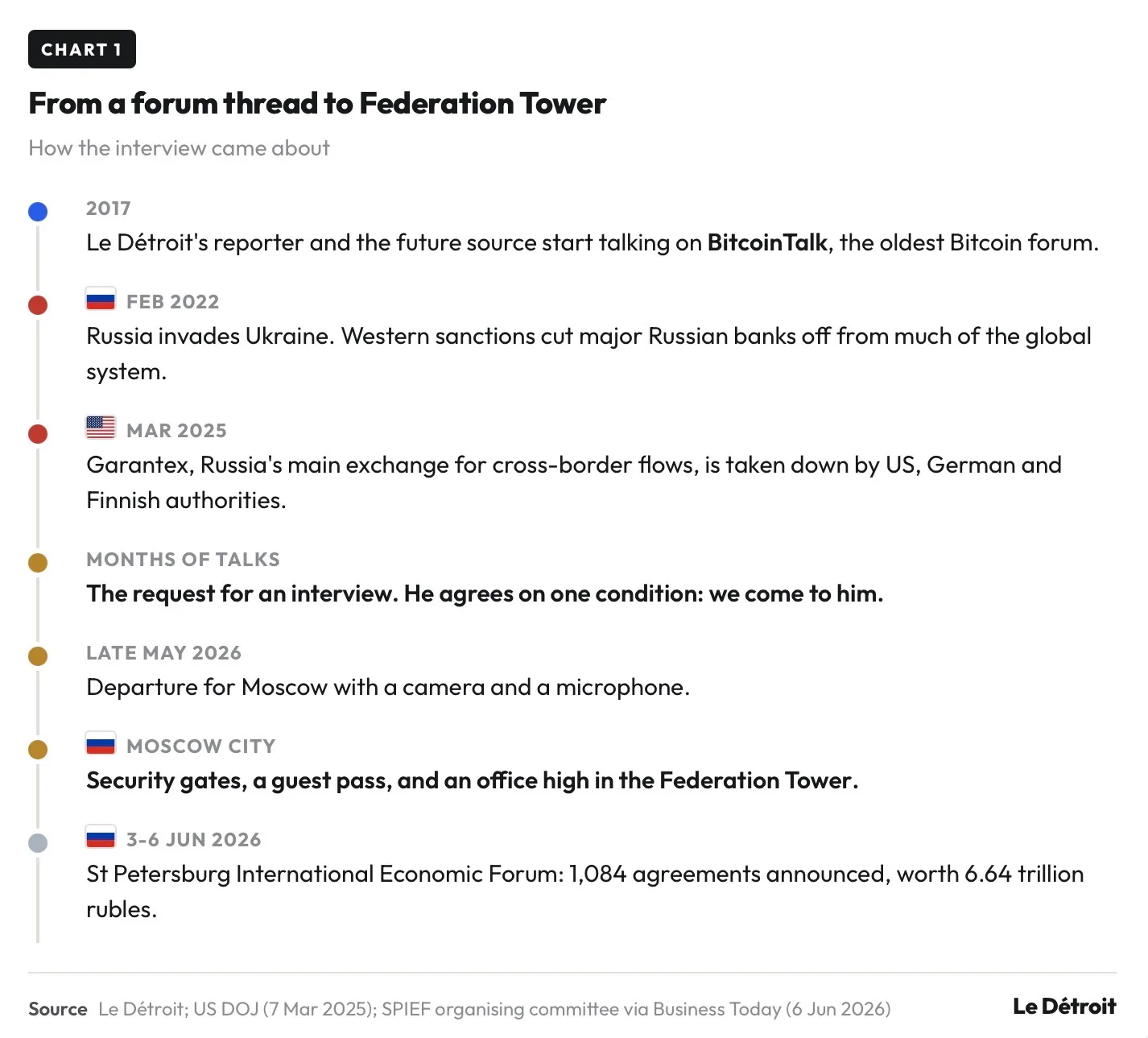
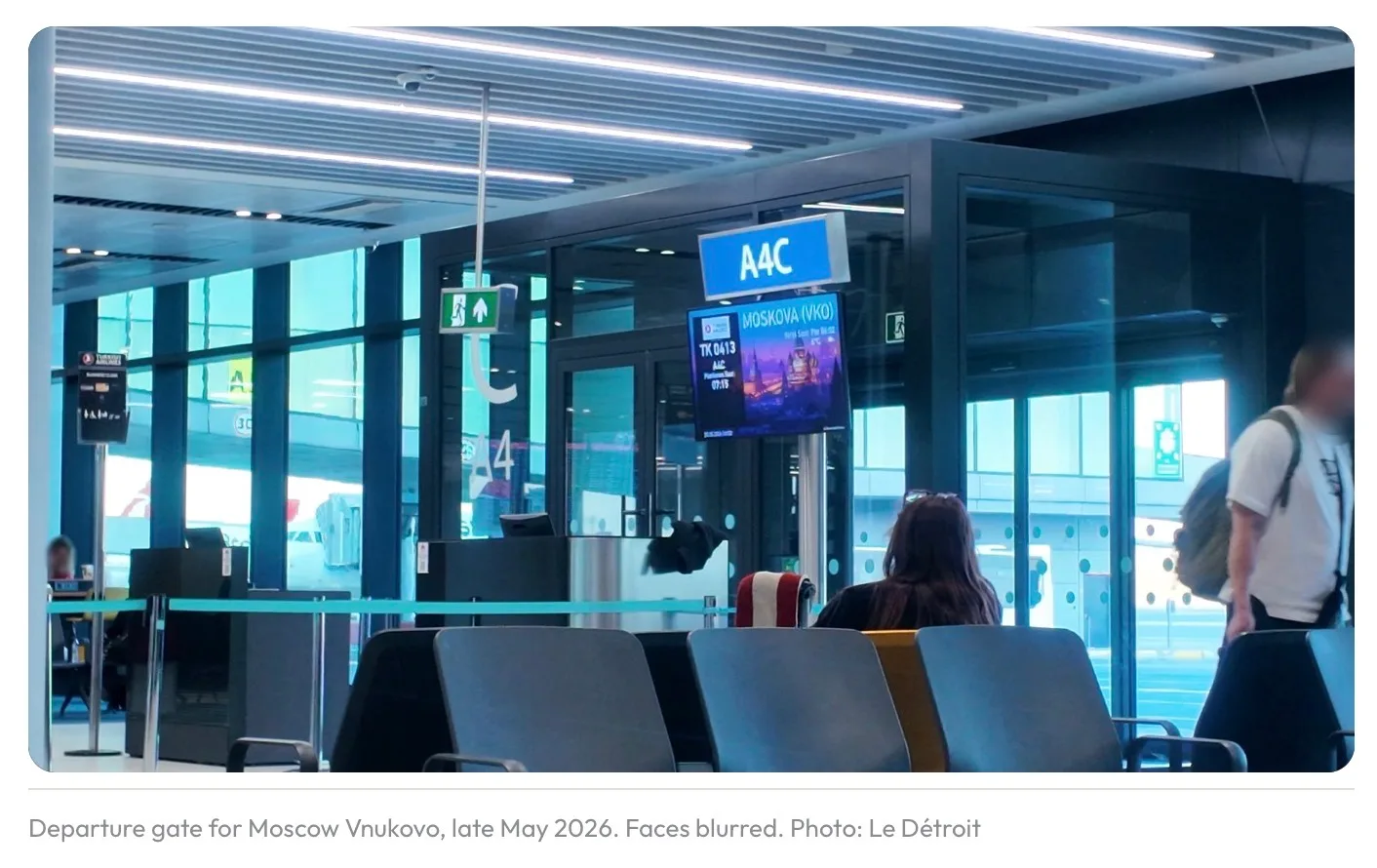
Moscow, late May
We packed a camera and a microphone and boarded a flight to Moscow.
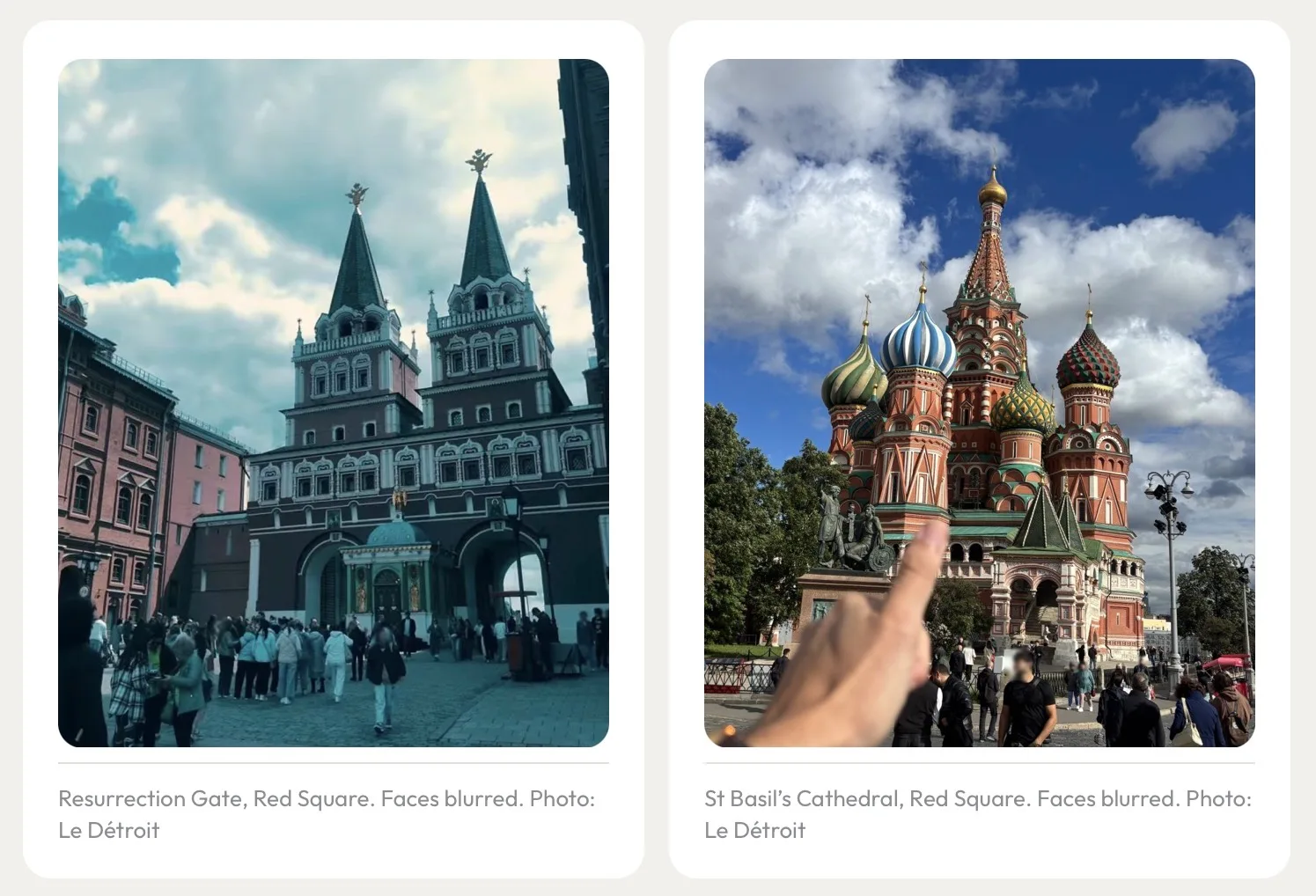
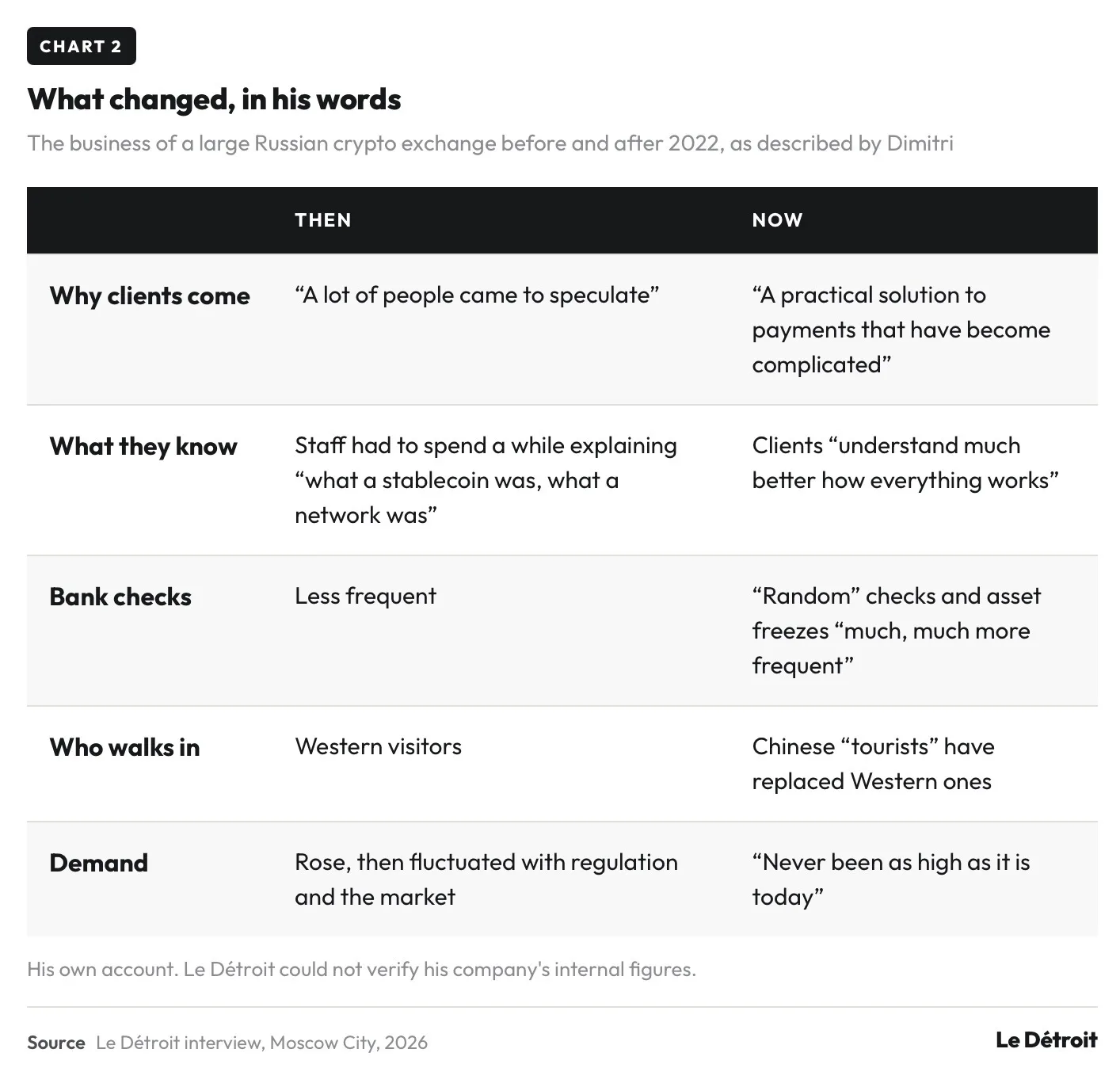
At street level, Moscow in late spring did not look like a capital under sanctions: crowds on Red Square, tour groups at the Resurrection Gate. What had changed, in part, was who made up the crowds. “Chinese ‘tourists’ have replaced Western ones,” our source would tell us later.
Federation Tower
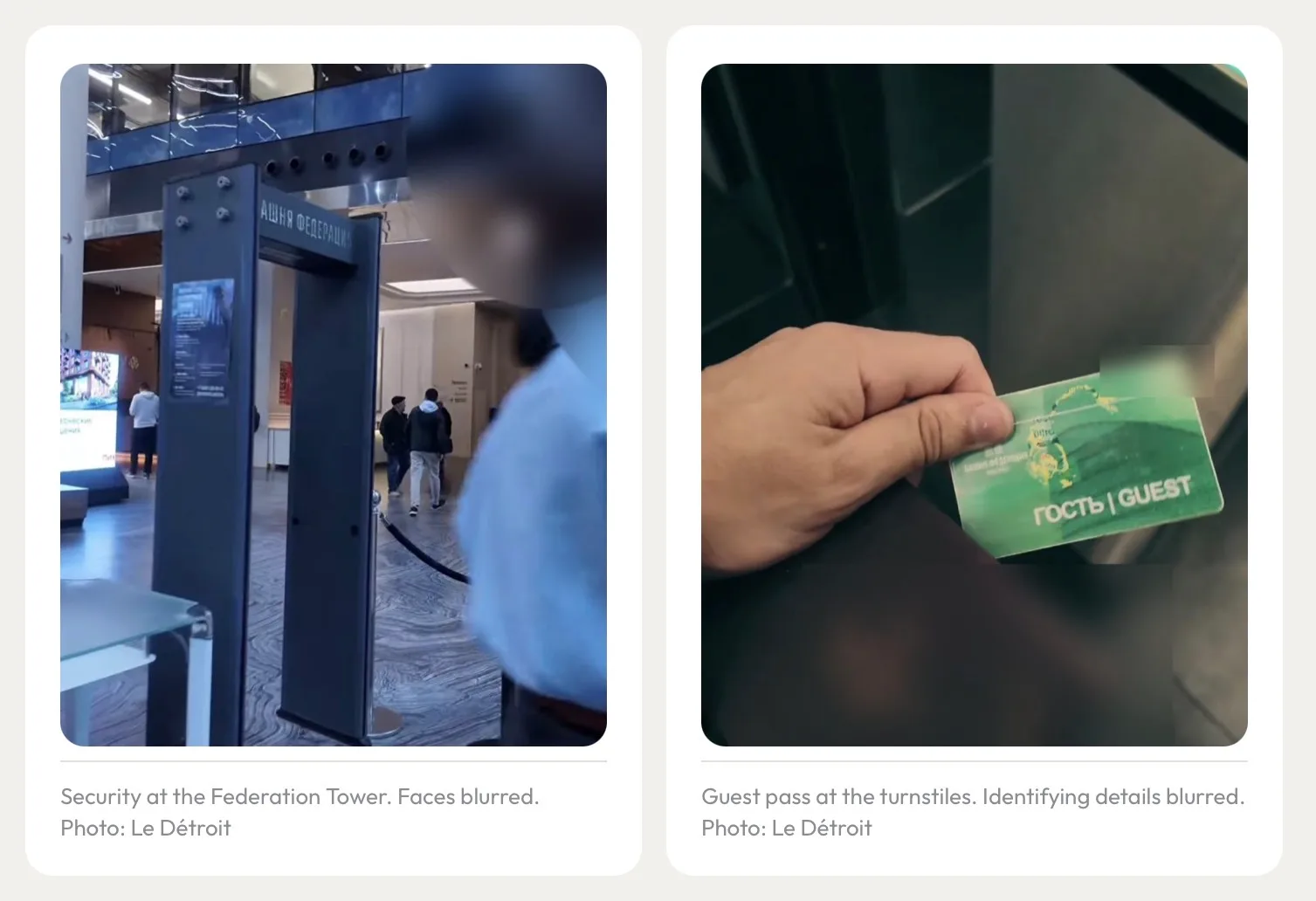
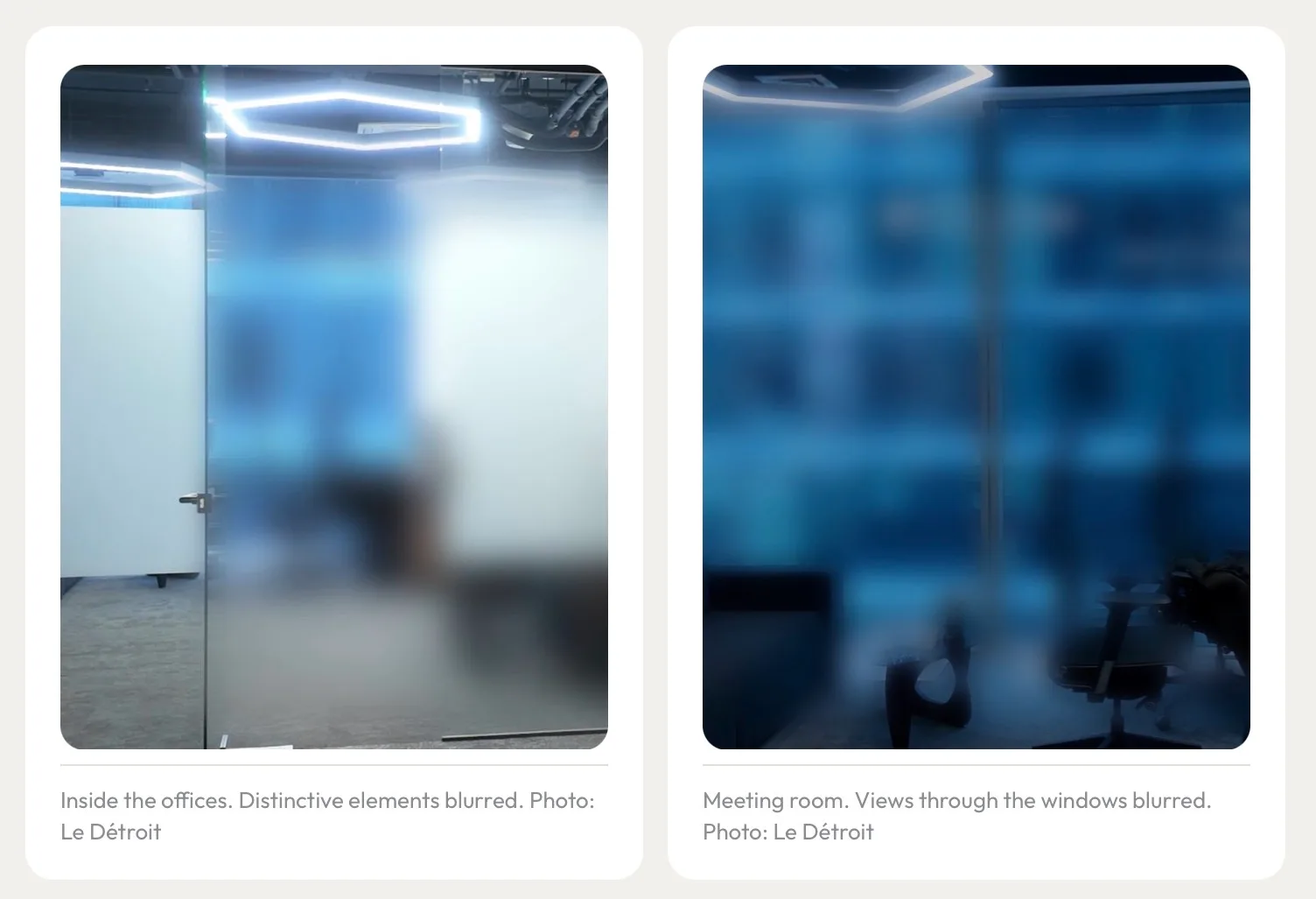
The meeting took place in Moscow City, the cluster of glass towers west of the Kremlin that houses much of Russia's financial and tech sector. Entry to the Federation Tower means a metal detector, an identity check and a green guest pass.
Who is “Dimitri”
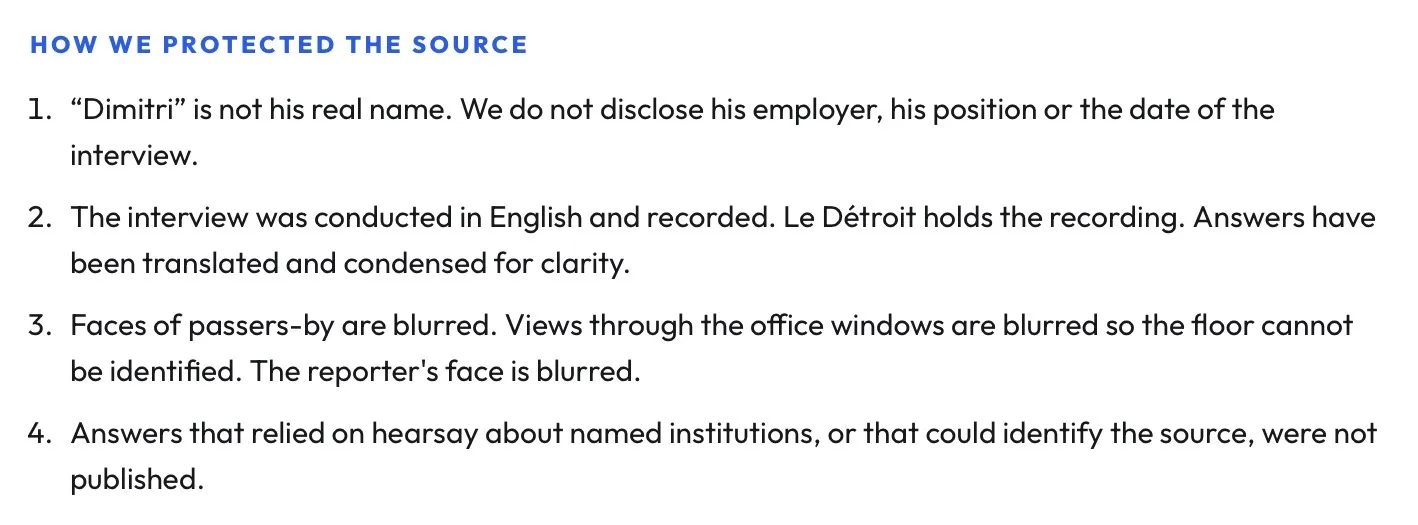
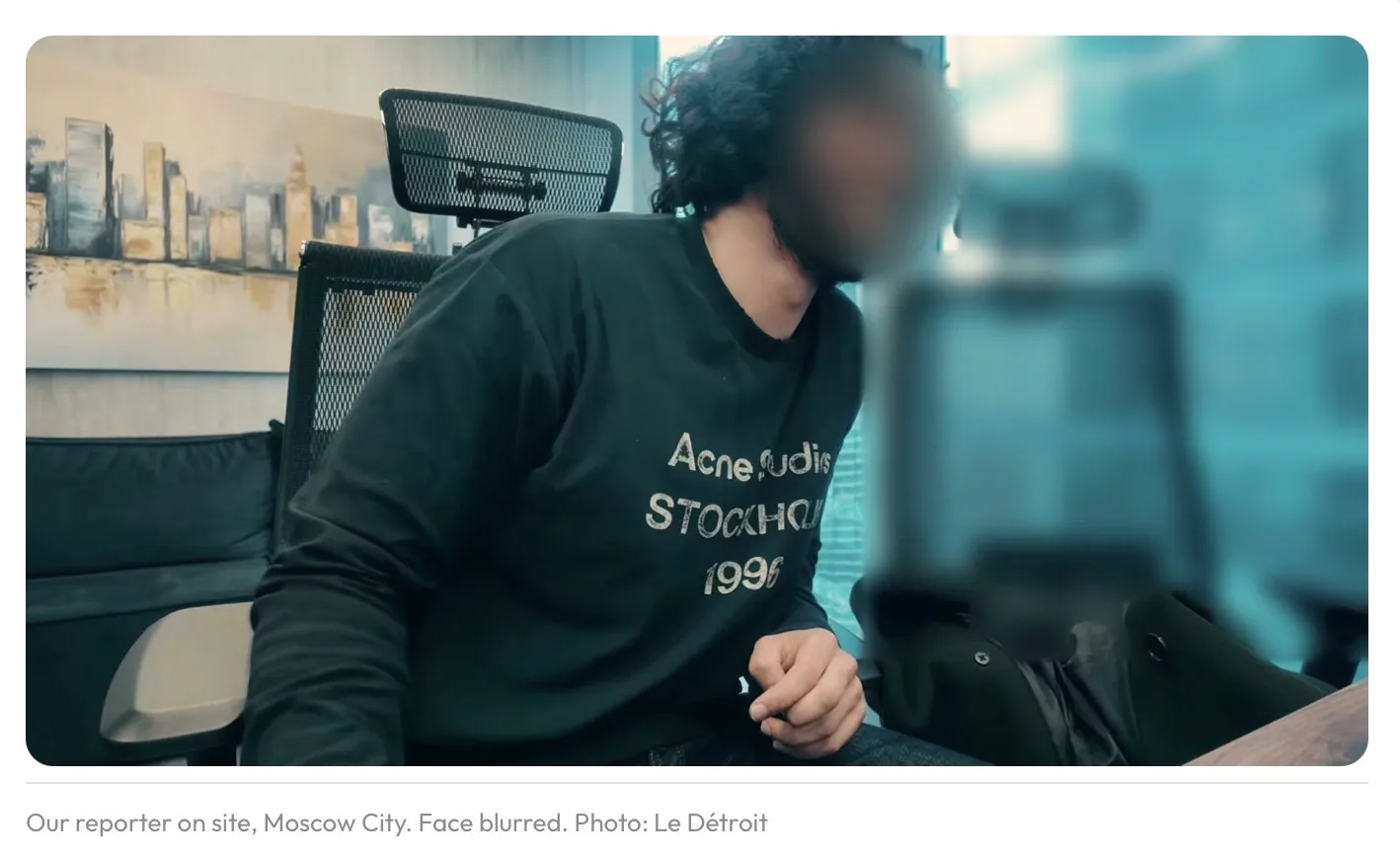
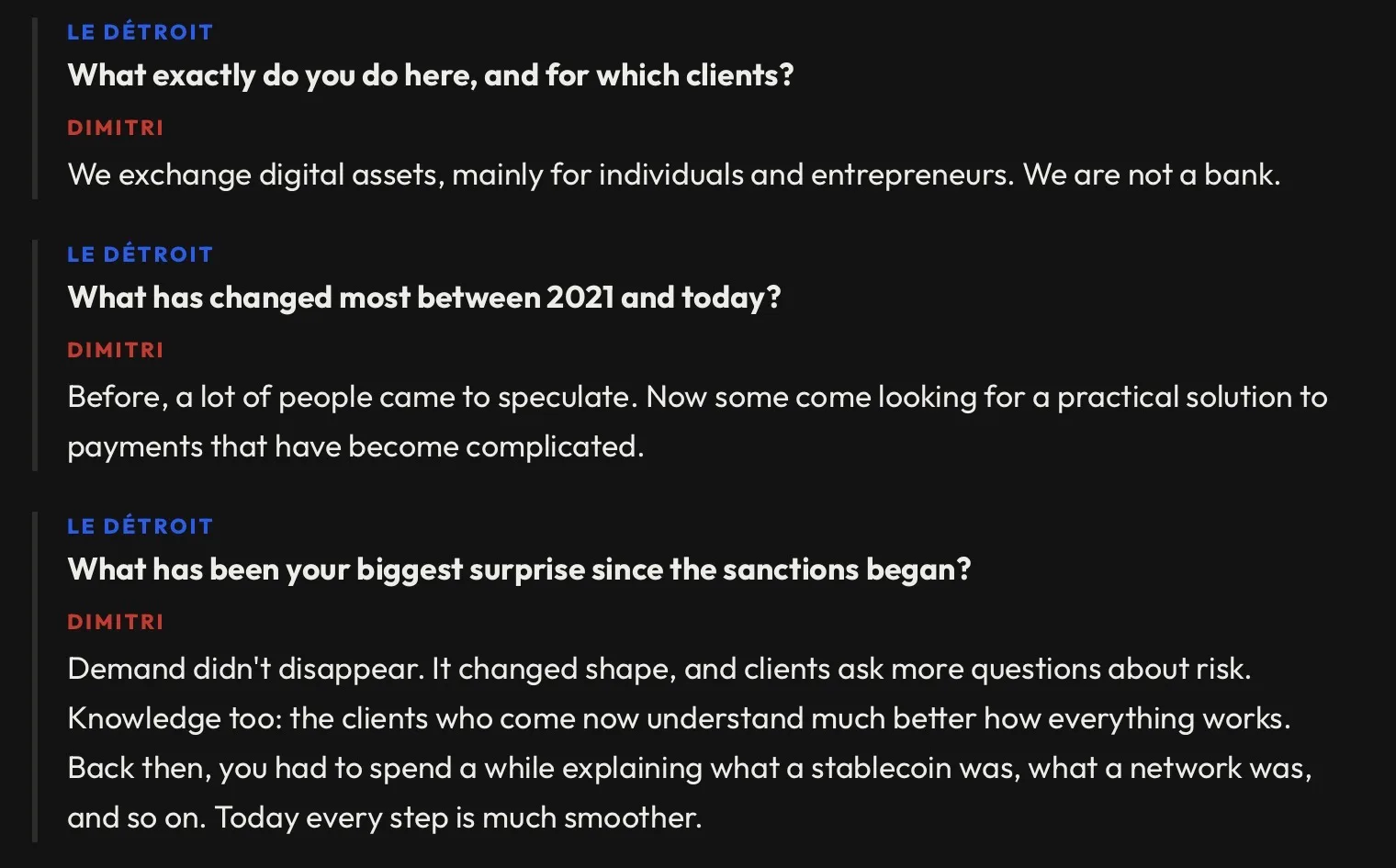
We call him Dimitri. It is not his name. He works for one of the largest crypto exchanges in Russia, and we do not disclose which one, his position or any detail that could identify him. He spoke in English, on the record but anonymously, and the conversation was recorded. His answers below have been translated and condensed for clarity.
1. From speculation to payments
2. How big is it?
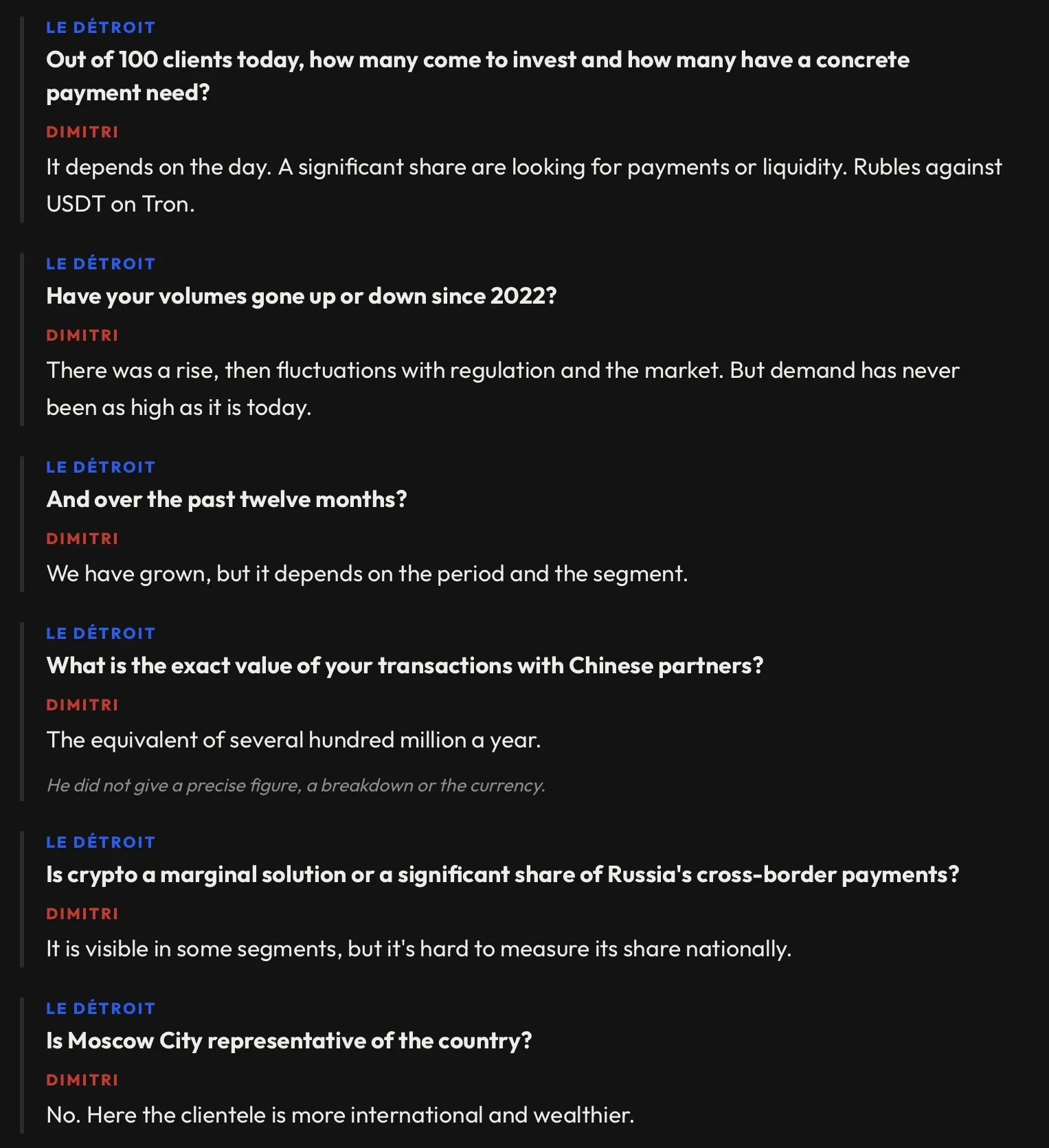
“Demand has never been as high as it is today.”
Dimitri, insider at a large Russian crypto exchange
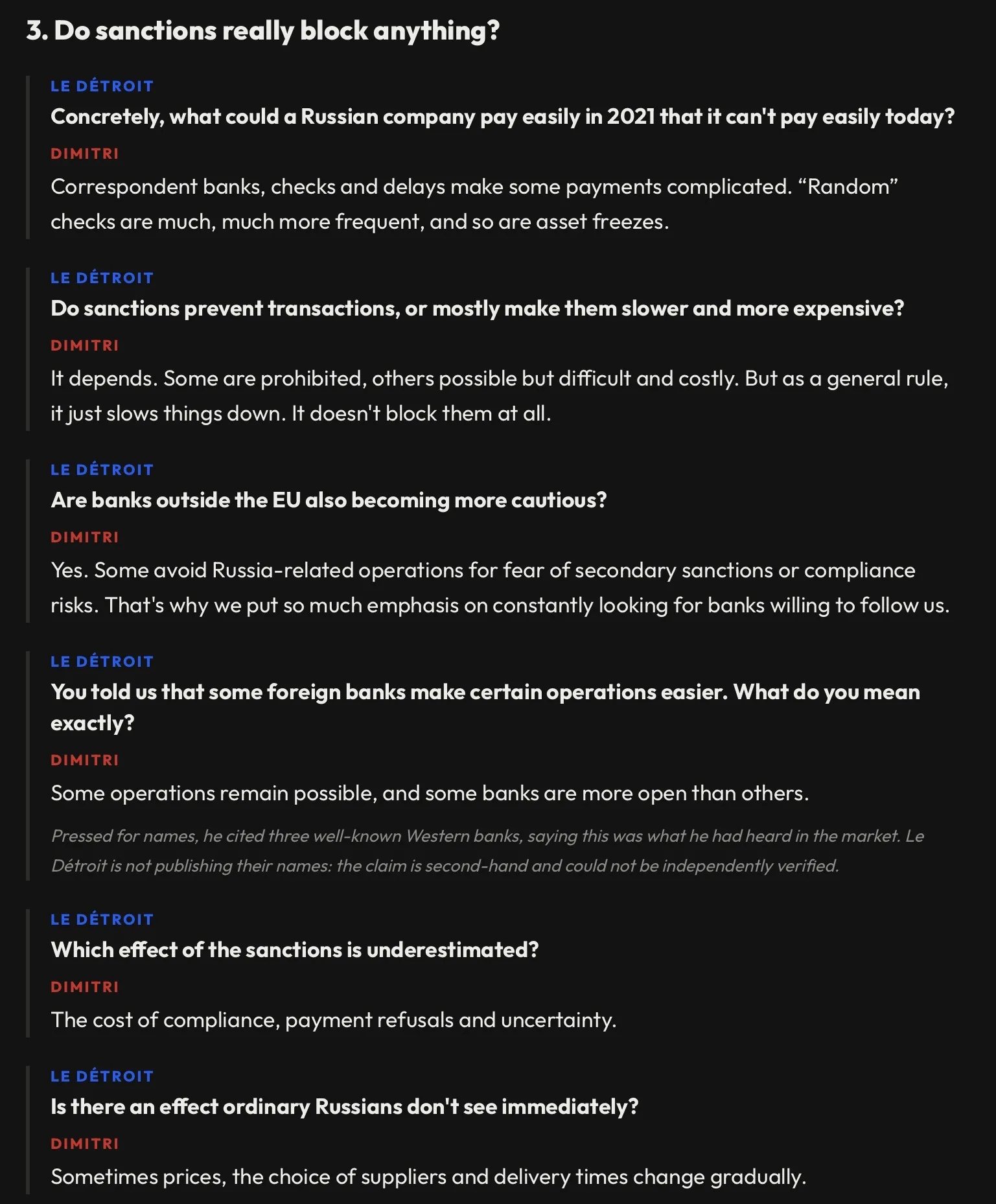
3. Do sanctions really block anything?
4. Crypto: a solution or an illusion?
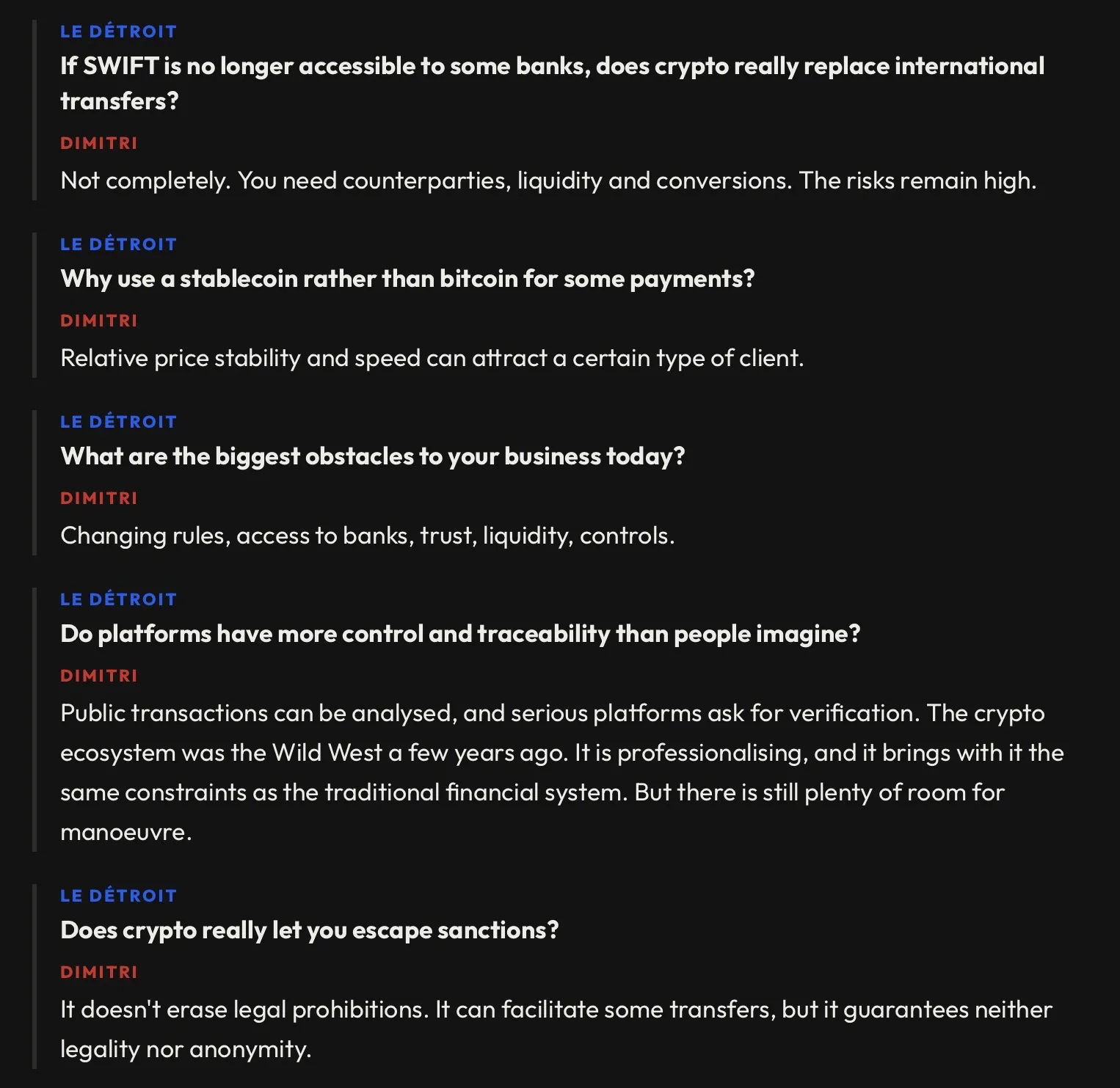
“Crypto's main strength is also its biggest weakness: transparency.”
Dimitri
5. Who wins, who pays
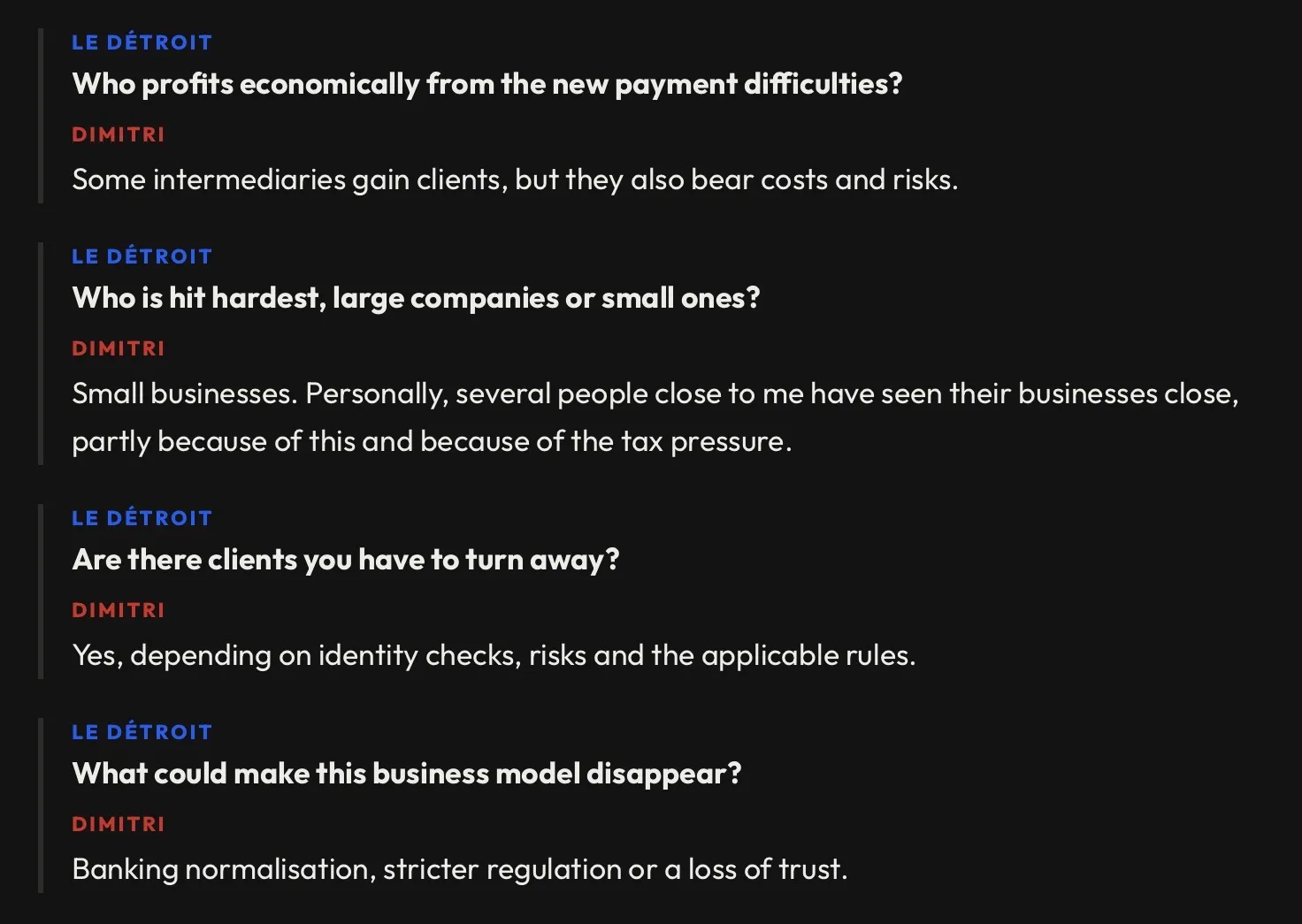
6. Cat and mouse
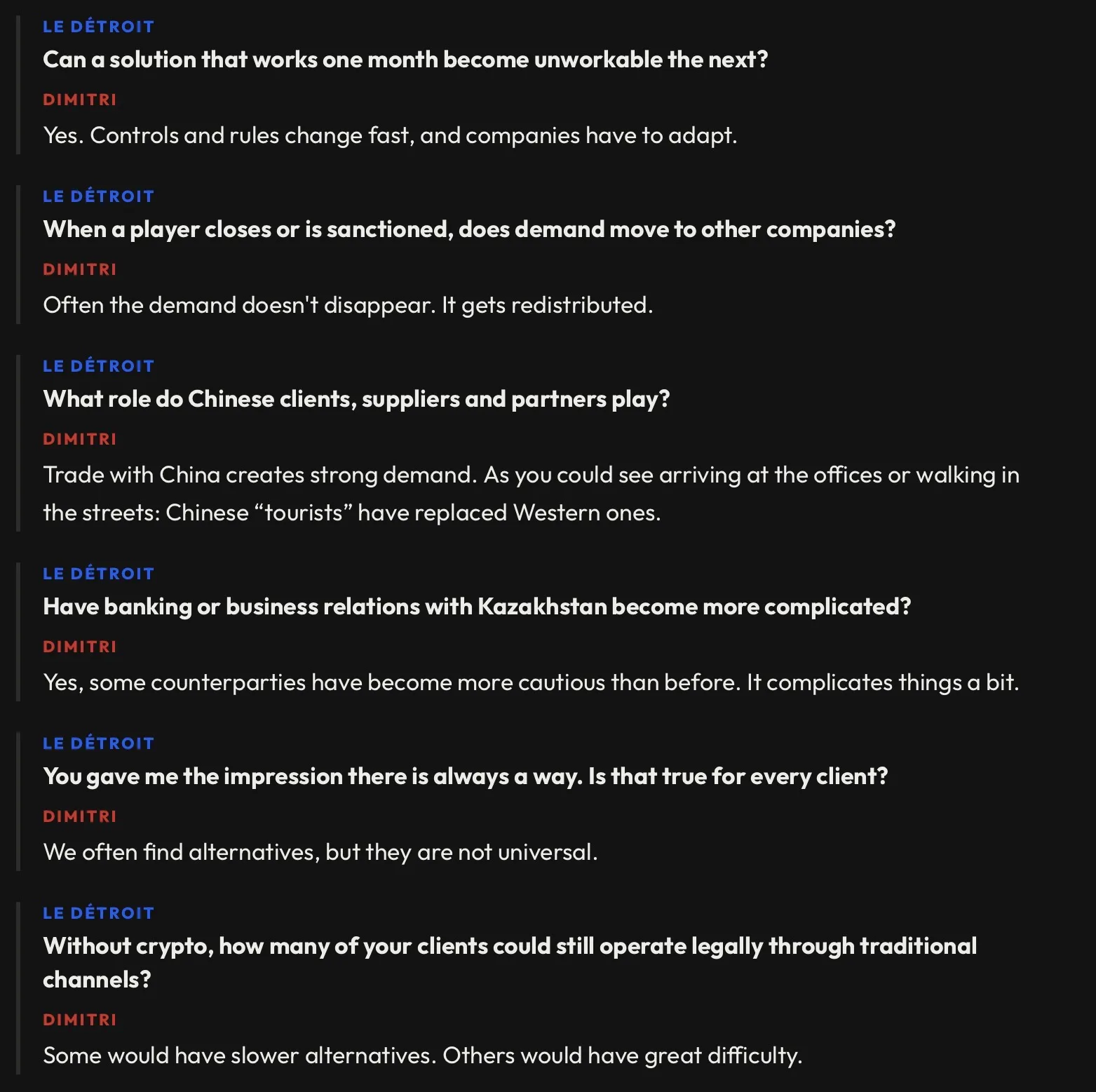
7. The hard questions
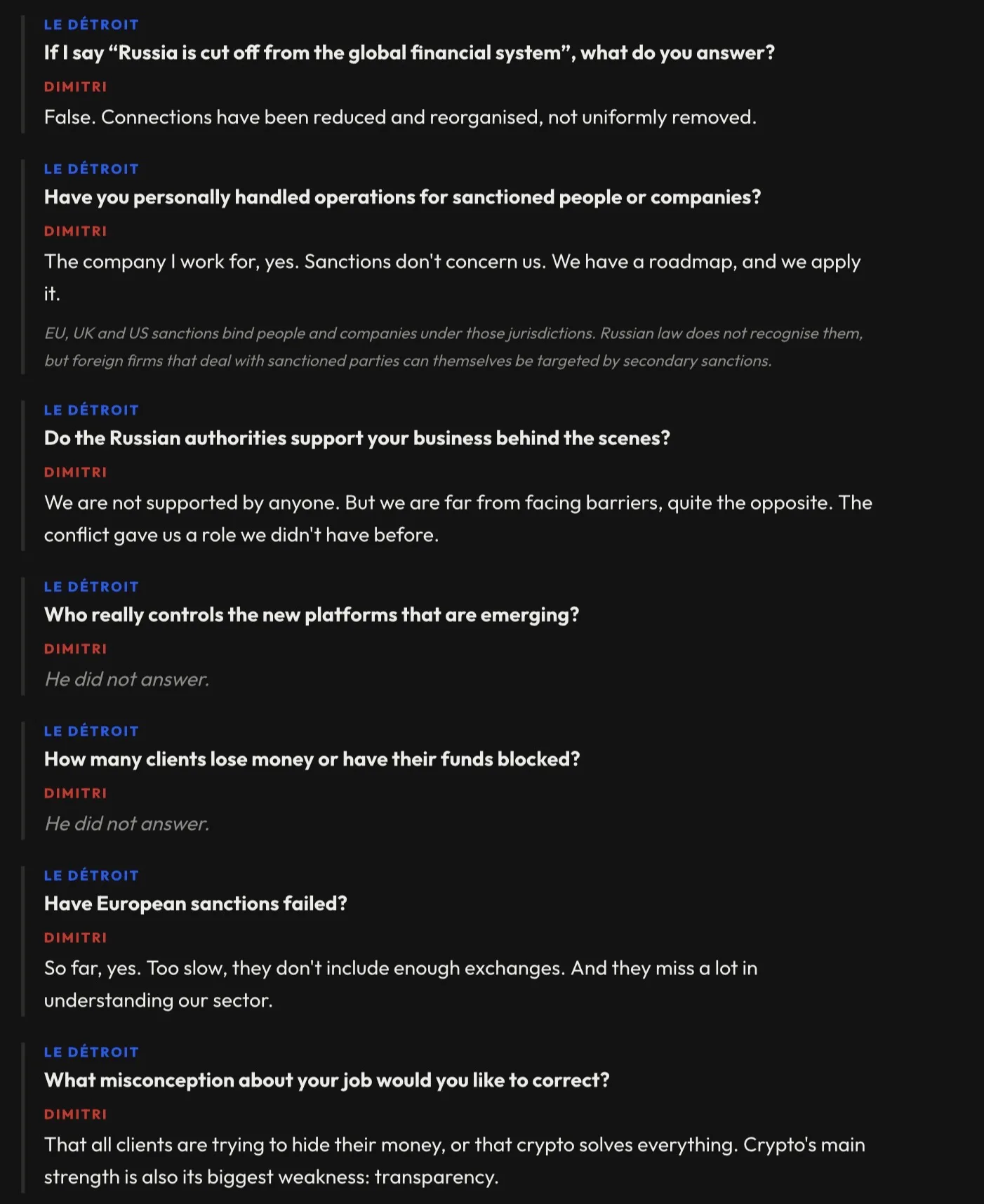
“The conflict gave us a role we didn't have before.”
Dimitri
WHAT THE PUBLIC RECORD SAYS
Testing his account
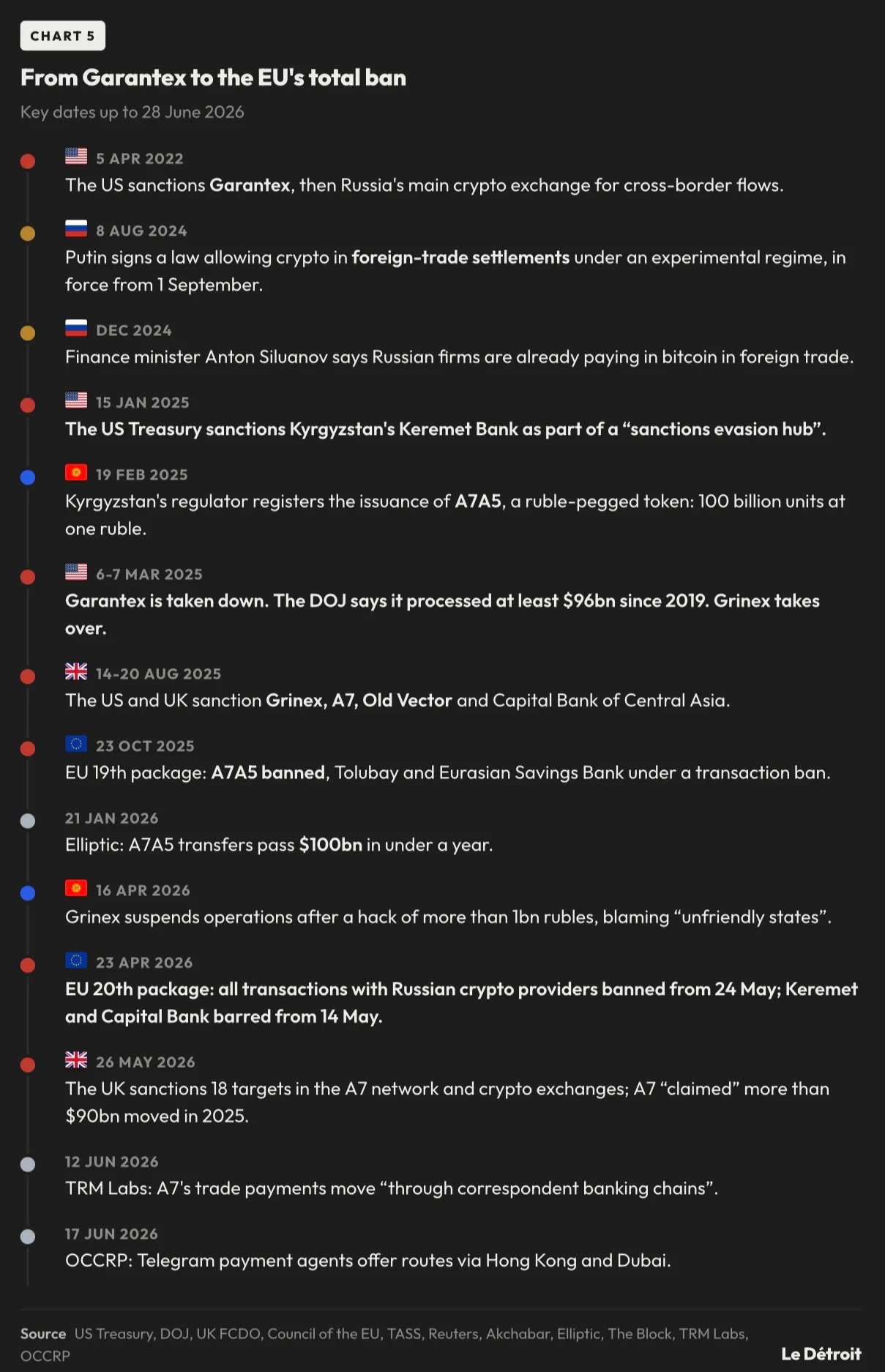
Dimitri's picture of a market that adapts faster than the rules is consistent with what was public by 28 June 2026. When Garantex was taken down in March 2025, Grinex took over; when Grinex suspended operations after a hack in April 2026, analysts tracked the flows moving on. His complaint that European sanctions “don't include enough exchanges” came just as the EU's broadest measure yet took effect: since 24 May 2026, EU persons may no longer transact with any crypto provider established in Russia.
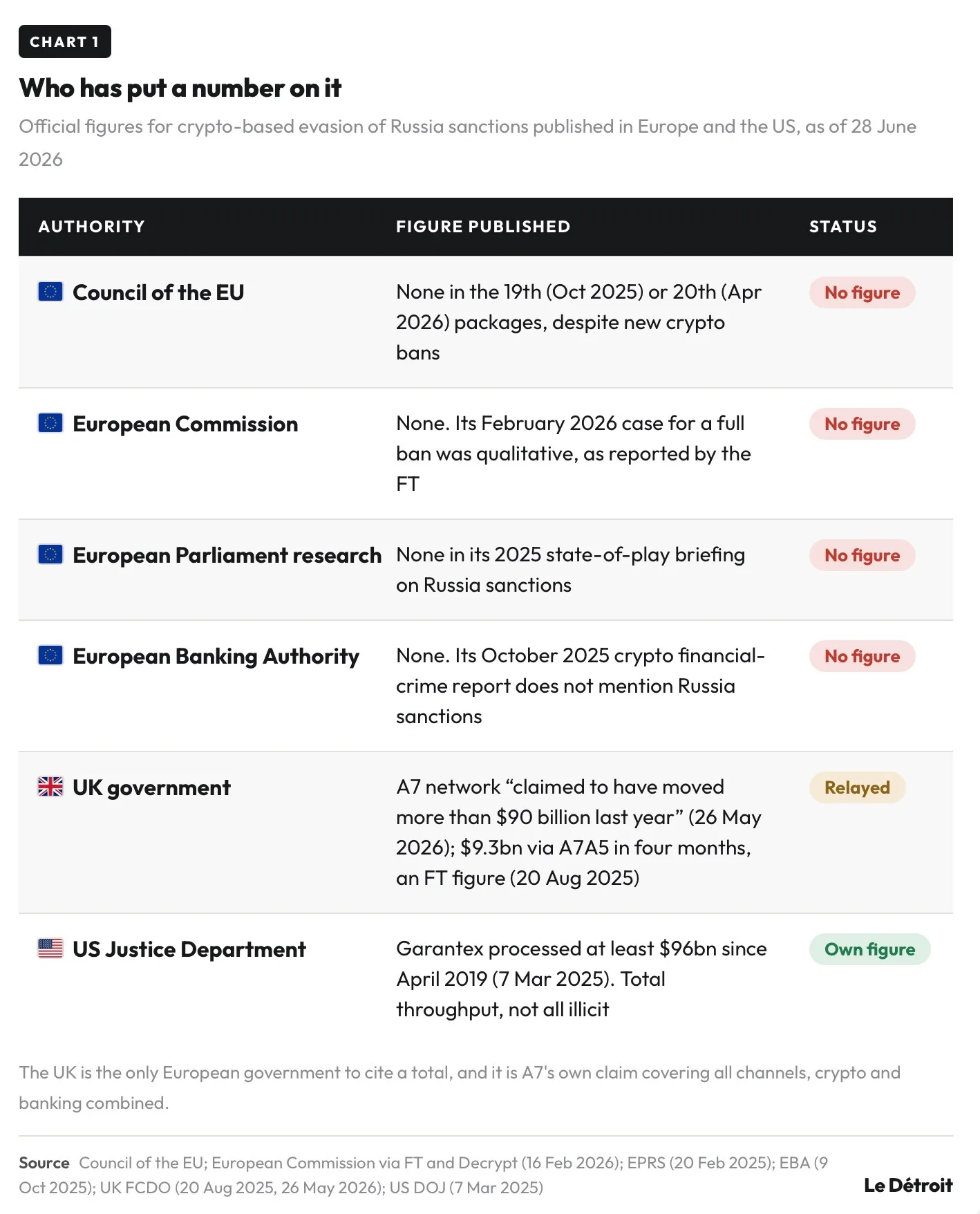
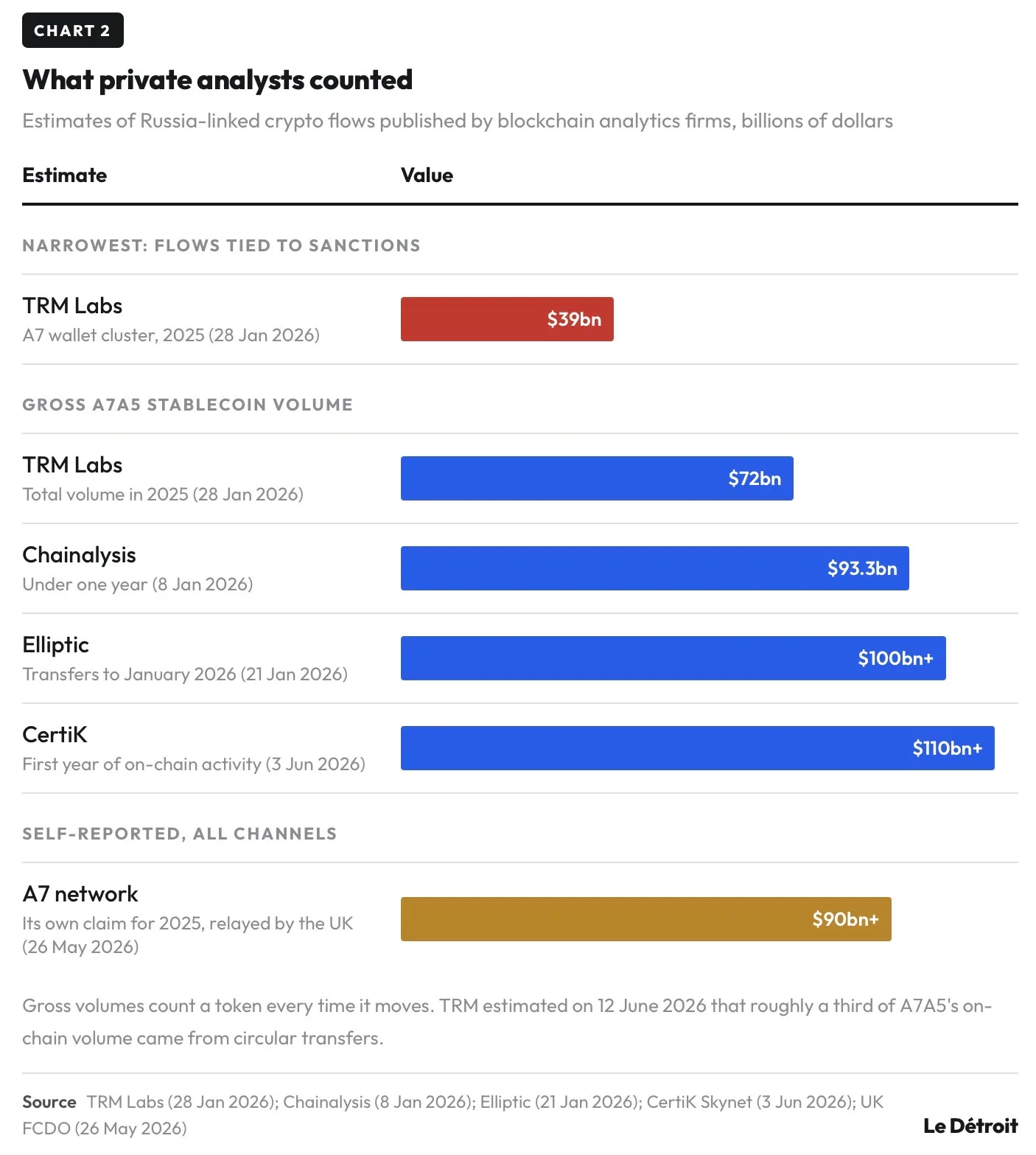
Private analysts count far more, but they count every on-chain movement, so the same money is counted each time it changes hands. Their estimates for A7A5, the ruble-pegged stablecoin issued in Kyrgyzstan, range from $72 billion to more than $110 billion.
Dimitri's search for “banks willing to follow us” also matches the record. Banks in Kyrgyzstan, China, Laos and Azerbaijan were sanctioned or barred by the US, UK or EU for their role in Russia-linked payments, and investigators described payment agents offering routes through Hong Kong and Dubai.
THEN, ST PETERSBURG
The forum of “pragmatic dialogue”
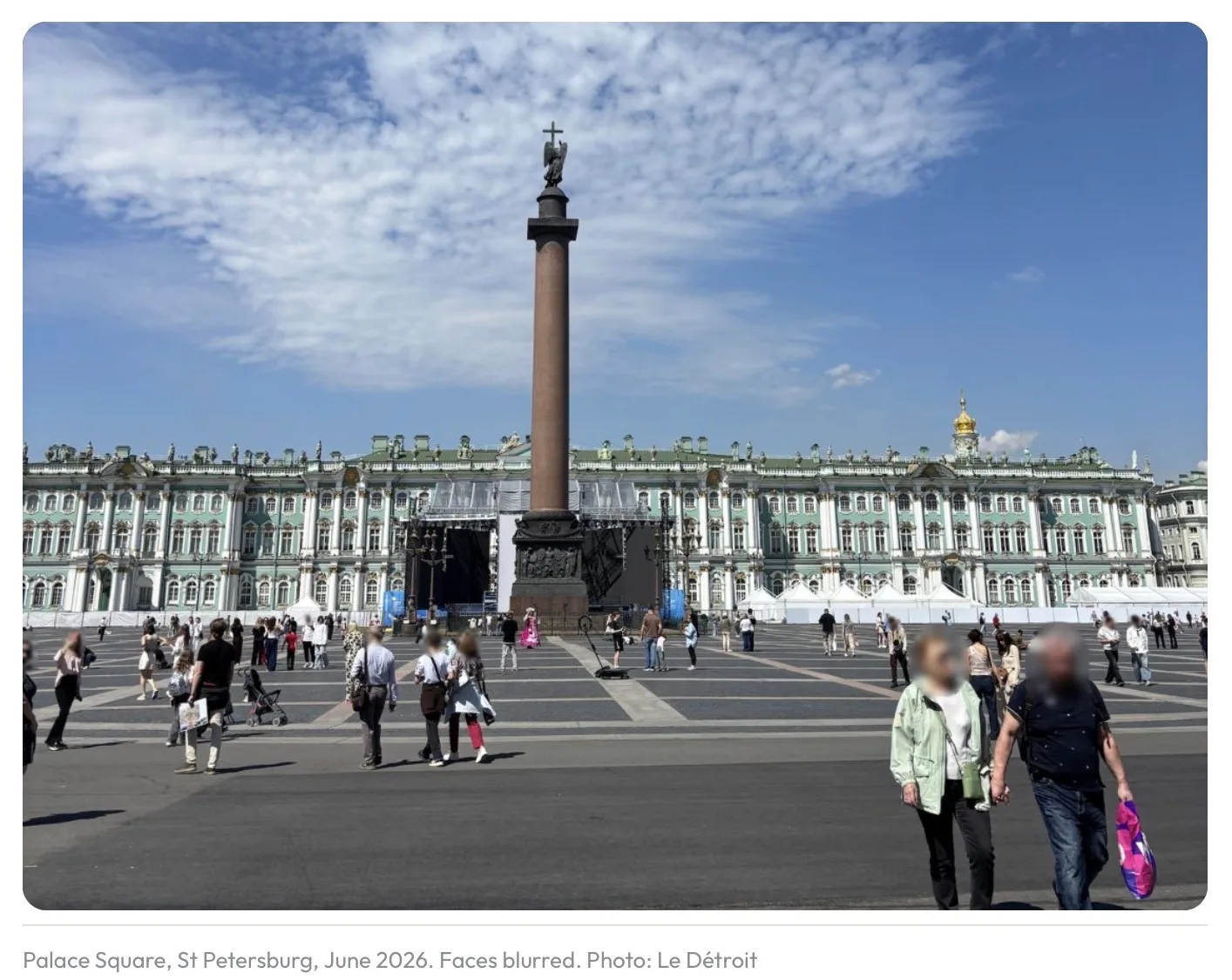
From Moscow, Le Détroit travelled to St Petersburg for the St Petersburg International Economic Forum, held from 3 to 6 June 2026 under the theme “Pragmatic dialogue: the path to a stable future”. Vladimir Putin addressed the plenary session on 5 June.

The organisers announced 1,084 agreements worth 6.64 trillion rubles, about $84 billion, and more than 24,500 participants from around 100 countries. Official data told a more mixed story: days before the forum, Rosstat showed fixed investment down 14.3% year on year in the first quarter, a fall the economy minister called a statistical anomaly, according to the Peace Research Institute Oslo.