1. What happened
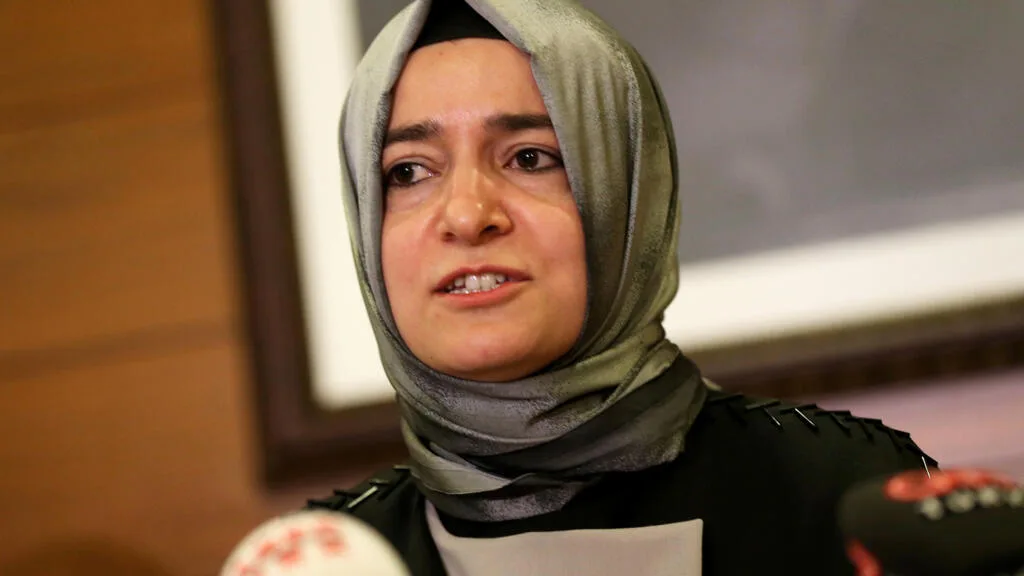
Fatma Betül Sayan Kaya, a deputy chair of the ruling AKP and family minister from 2016 to 2018, asked President Recep Tayyip Erdoğan on Saturday 26 September to relieve her of all her party duties. On Sunday, AKP spokesman Ömer Çelik said Erdoğan had accepted her resignation. She did not address the allegations directly, saying she was stepping down so that they could be investigated without her political position overshadowing them.
The allegations come from Zeynel Emre, spokesman for the opposition Yeni Party. According to him, Kaya invested 63.4 million lira ($1.3 million) in April, mainly in shares of the shipbuilder Özata Denizcilik, and sold them for about 1.3 billion lira ($27.5 million)shortly before the market plunged. Emre says her husband, İlyas Kaya, turned 99.7 million lira into 826 million. Together, the couple would have invested 163 million lira ($3.3 million)and received about 2.17 billion ($44 million). These are accusations, not established facts.
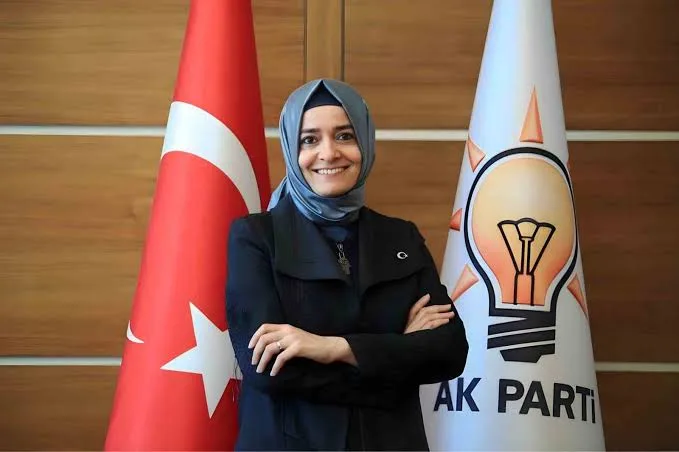
"We declare that all those who are involved in irregularities, corruption, abuse or anything that causes harm will be held accountable." Ömer Çelik, AKP spokesman
2. The share at the centre of the case
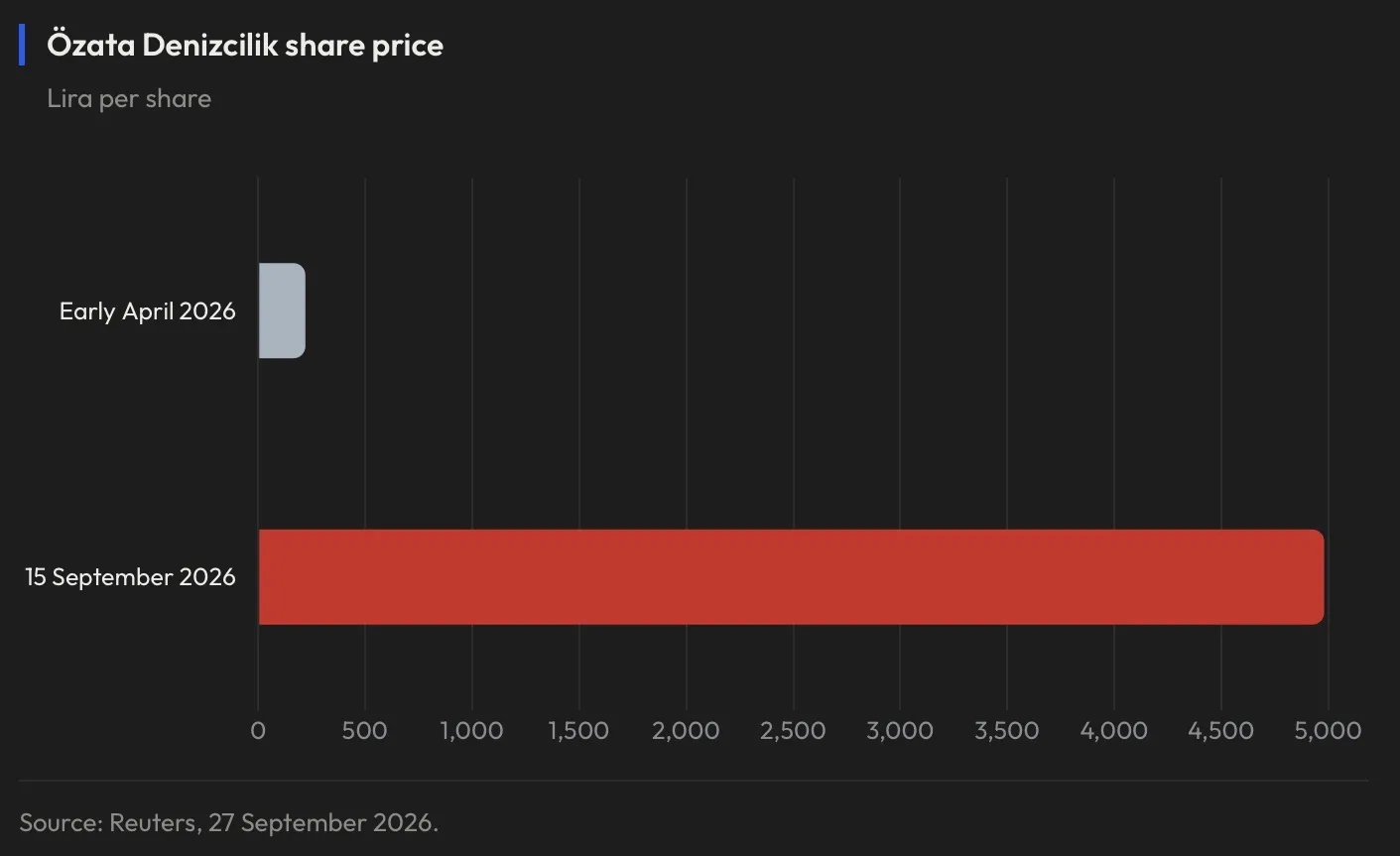
Özata Denizcilik stock traded at around 220 lira in early April and reached 4,980 lira on 15 September, the day before the crash: a 22-fold increase in five months.
Regulator. On 25 September, the Capital Markets Board (SPK) filed criminal complaints against 11 people over trading in the stock and imposed two-year trading bans, including on firms linked to the broker Tera.
Company. Özata said on Friday that its chairman and vice chairman had been jailed pending trial as part of the investigation.
3. The fund crisis, and what to watch
The crisis began on 16 September, when funds run by Tera Portföy and Pusula Portföycould not pay investors who wanted their money back. The funds held large stakes in thinly traded shares that could not be sold quickly without crashing their price. The benchmark BIST 100 fell by more than 7.5% at one point.
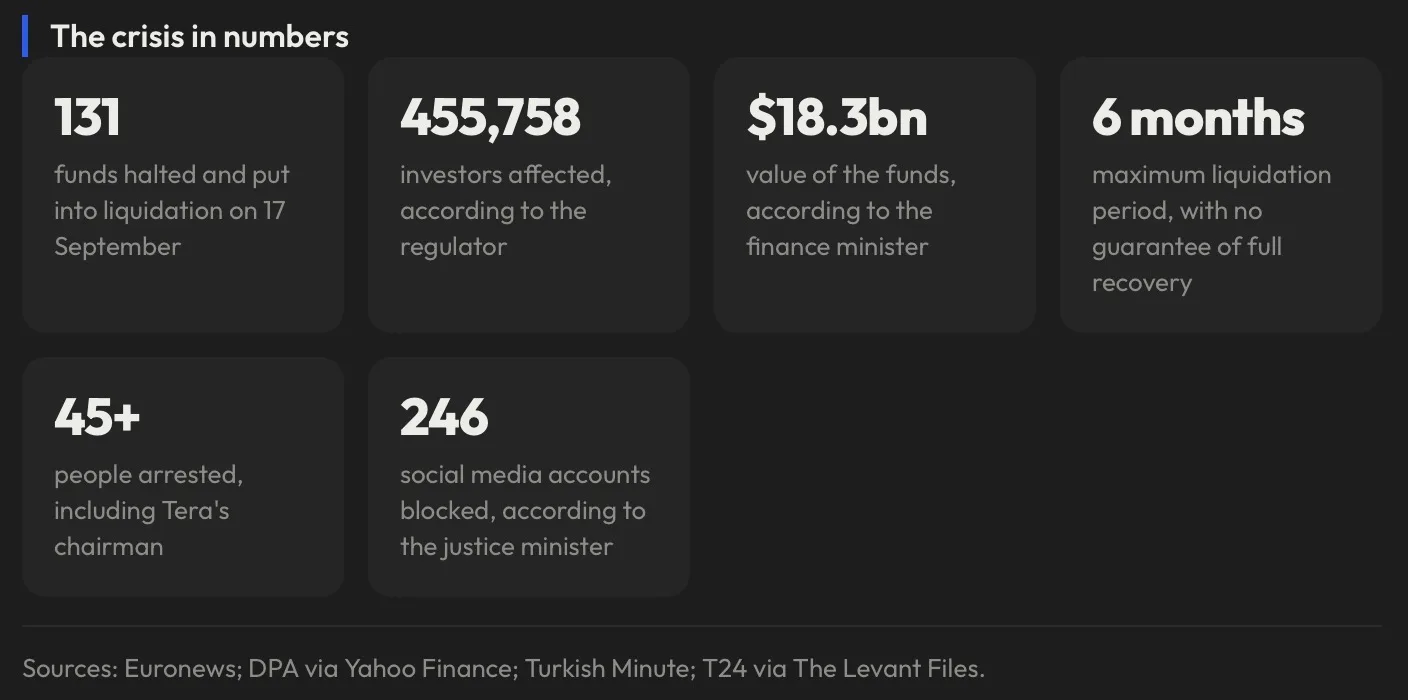
The liquidation is overseen by İşbank and state-owned Ziraat Bank.
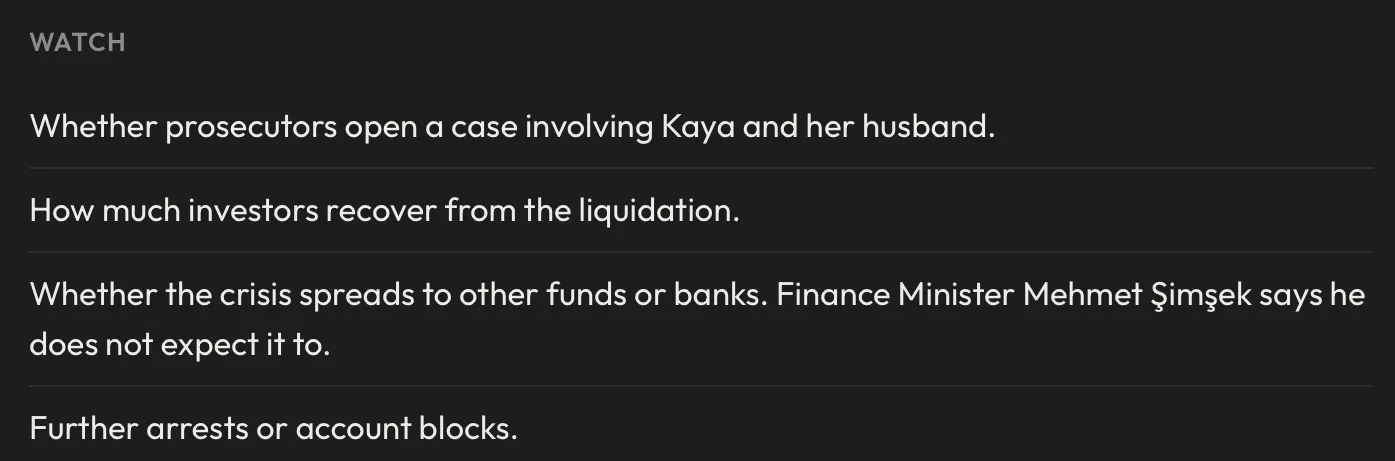
Prosecutors are investigating suspected fraud, market manipulation and a criminal organisation. Eight more people were detained on Monday. On Sunday, prosecutors lifted asset freezes on 45 companies and 19 funds, but restrictions on individuals remain.
The crackdown on commentary. Justice Minister Akın Gürlek said access to 246 social media accounts had been blocked over allegedly panic-inducing posts, and 16 people were remanded over posts allegedly aimed at manipulating markets. The Freedom of Expression Association (İFÖD) counted 194 X accounts blocked, with about 12 million followers combined, including those of economists and journalists, as well as news articles about the crisis.