
1. What happened
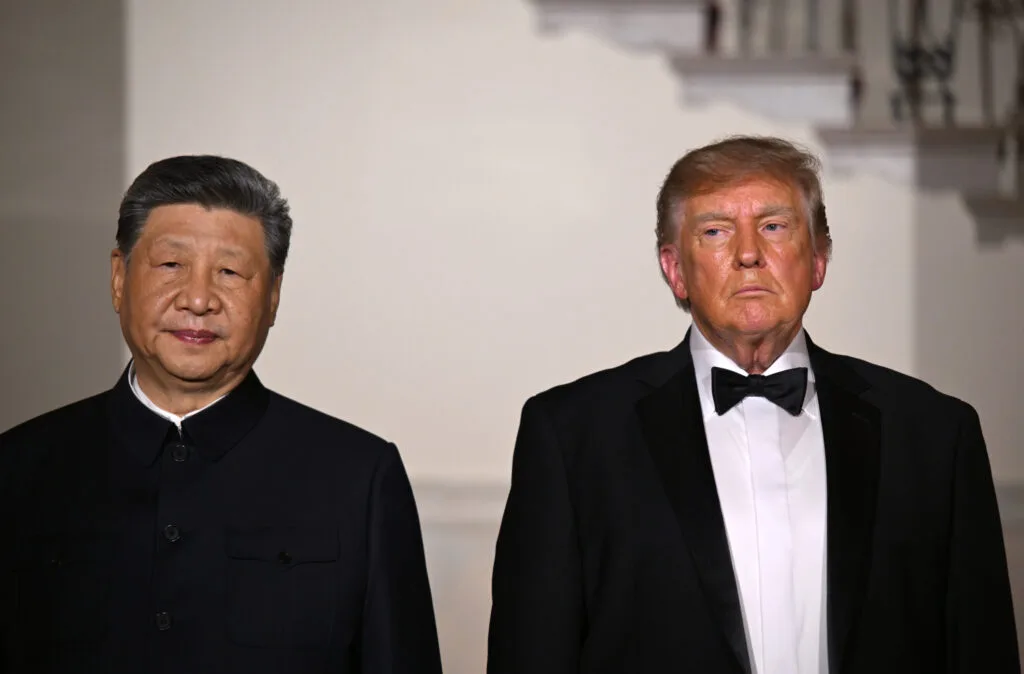
At the close of Xi Jinping's state visit to Washington, the White House published a fact sheet stating that, under the new US-China Board of Trade, the two countries "reached consensus on recommendations for more favorable tariff treatment" for $30 billion of non-sensitive goods in each direction. The Chinese foreign ministry confirmed the arrangement on Saturday.
On the American side, the goods covered are agricultural products, fish and seafood, logs and wood products, cosmetics and medical devices. On the Chinese side, small appliances, toys, holiday decorations and children's car seats. No new rates and no start date have been published: the changes are not in force.
2. What is in it, and what is not
The fact sheet says China "will import at least 10 million metric tons of coal from the United States in 2027 and again 2028". Beijing's statement does not mention the coal commitment. A Board of Trade working group will address market-access barriers for US farm goods, and a separate Board of Investment is meant to give both sides a regular channel for investment disputes.
Beijing presented the deal as part of an eight-point consensus. It lists a new trade council, an extension of the outcomes of the Kuala Lumpur talks, and an AI dialogue on the technology's risks and benefits, with a next round set for November and a channel for AI-related incidents, which the White House also announced. Both sides said Iran must not develop nuclear weapons and that no country should impose tolls on international waterways.
The coal pledge would revive a trade the tariff war erased. US coal exports to China fell 92 percent in 2025 after Beijing imposed an additional 15 percent tariff on US coal in February and a 34 percent reciprocal tariff in April, according to the US Energy Information Administration.
A recommendation is not a tariff schedule. Until rates and dates are published, importers pay what they paid last week.
3. The context, and what to watch
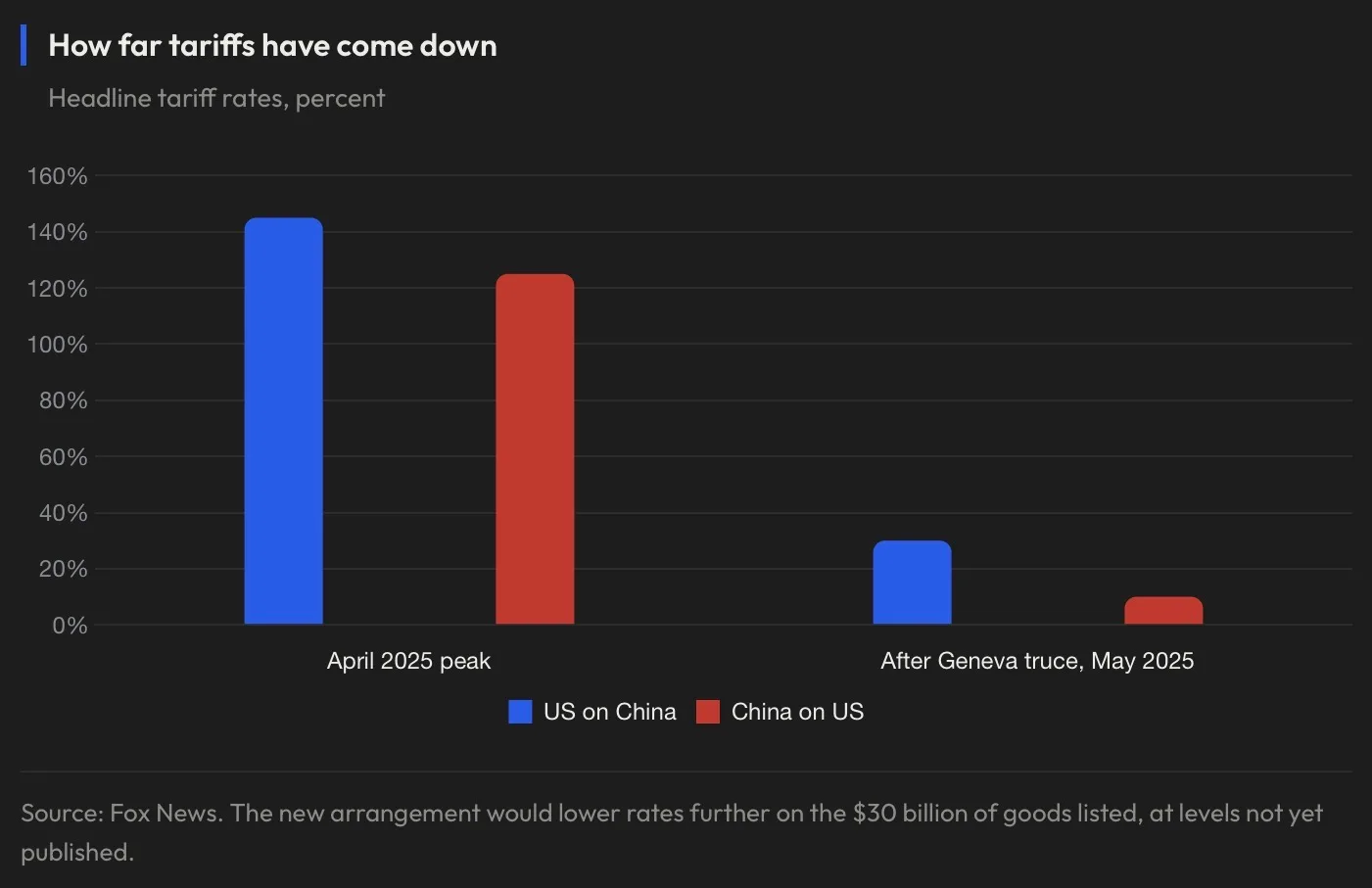
US tariffs on Chinese goods peaked at 145 percent in April 2025, against 125 percent from China, before a truce agreed in Geneva in May 2025 brought them down to 30 and 10 percent. Days before the visit, Treasury Secretary Scott Bessent said the current truce, due to expire on 10 November, had been extended by two months.