
1. The handover
When Laura Codruța Kövesi leaves the European Public Prosecutor's Office (EPPO) at the end of October, she will hand over an institution that did not exist in practice when she arrived. At the end of 2025, it was running 3,602 investigations into fraud against EU and national budgets, with estimated damage of €67.27 billion.
2. From Rostock to Luxembourg
Ritter joined Germany's prosecution service in 1995. In 2008 he became Deputy Prosecutor General of the state of Mecklenburg-Vorpommern, on the Baltic coast. From 2013 to 2020 he ran the specialised public prosecution office for economic crime and cybercrime in Rostock, a team of about 130 people that also handled offences against state security. Earlier in his career he also worked at the European Commission, which, he says, deepened his international experience.
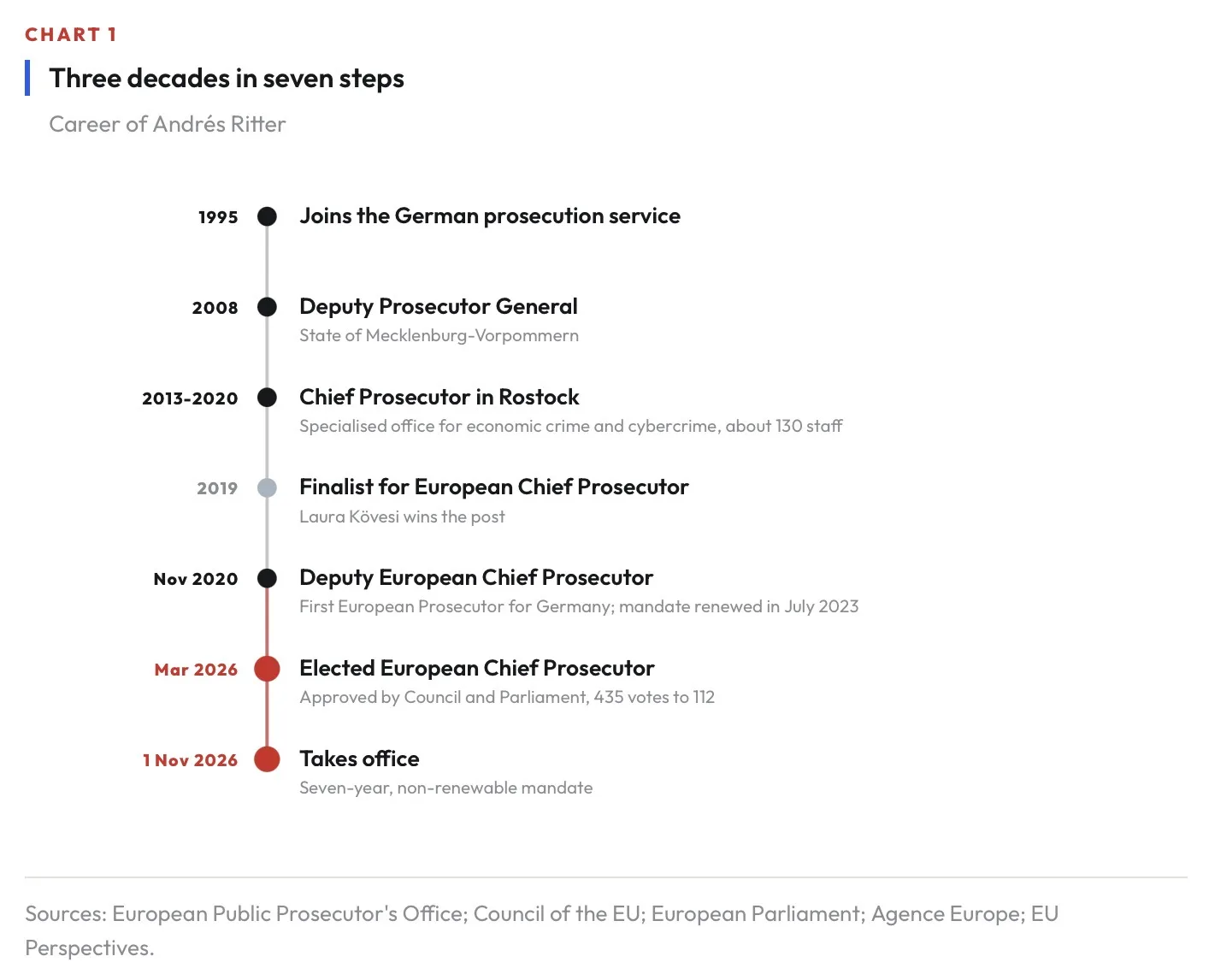
His road to the top job took seven years. In 2019, he was one of the three finalists for the post of first European Chief Prosecutor, alongside Kövesi and France's Jean-François Bohnert. Kövesi won. A year later, she proposed him as one of her two deputies, and the EPPO's College appointed him alongside Italy's Danilo Ceccarelli.
"I firmly believe that EPPO will be a cornerstone in the fight against fraud and corruption in the European Union," he said then. "It is an honor and a privilege for me to shape this mission."
3. The architect behind the founder
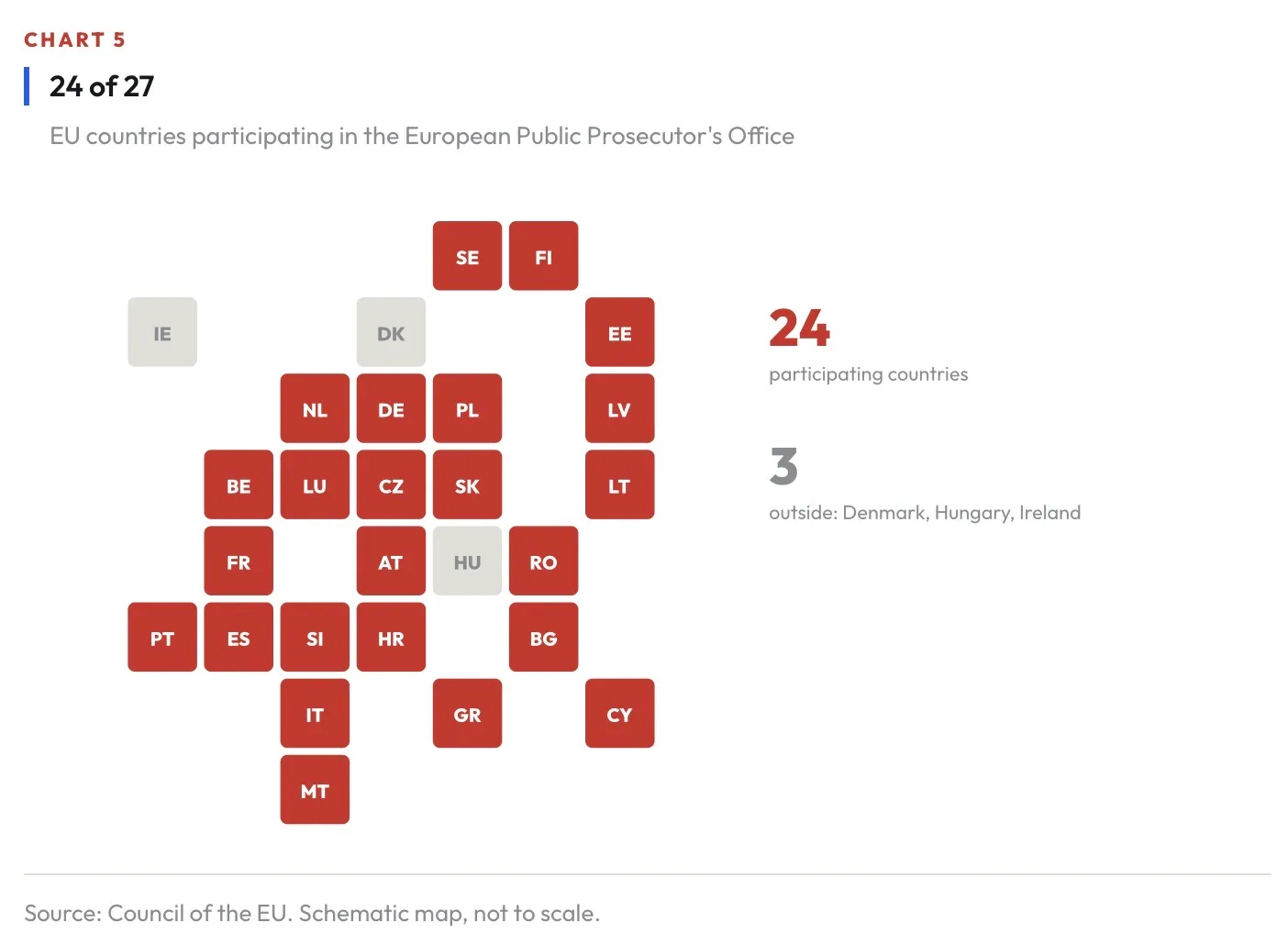
If Kövesi was the face of the EPPO, Ritter was among its builders. As deputy, he took part in shaping the office's long-term strategy, its prosecution policy and its outreach to EU institutions and national authorities. He helped design its case-management system, the digital backbone that allows prosecutors in 24 countries to work on the same files, and chaired the permanent chambers that oversee investigations, including one that filed a €93 million VAT fraud indictment in Düsseldorf.
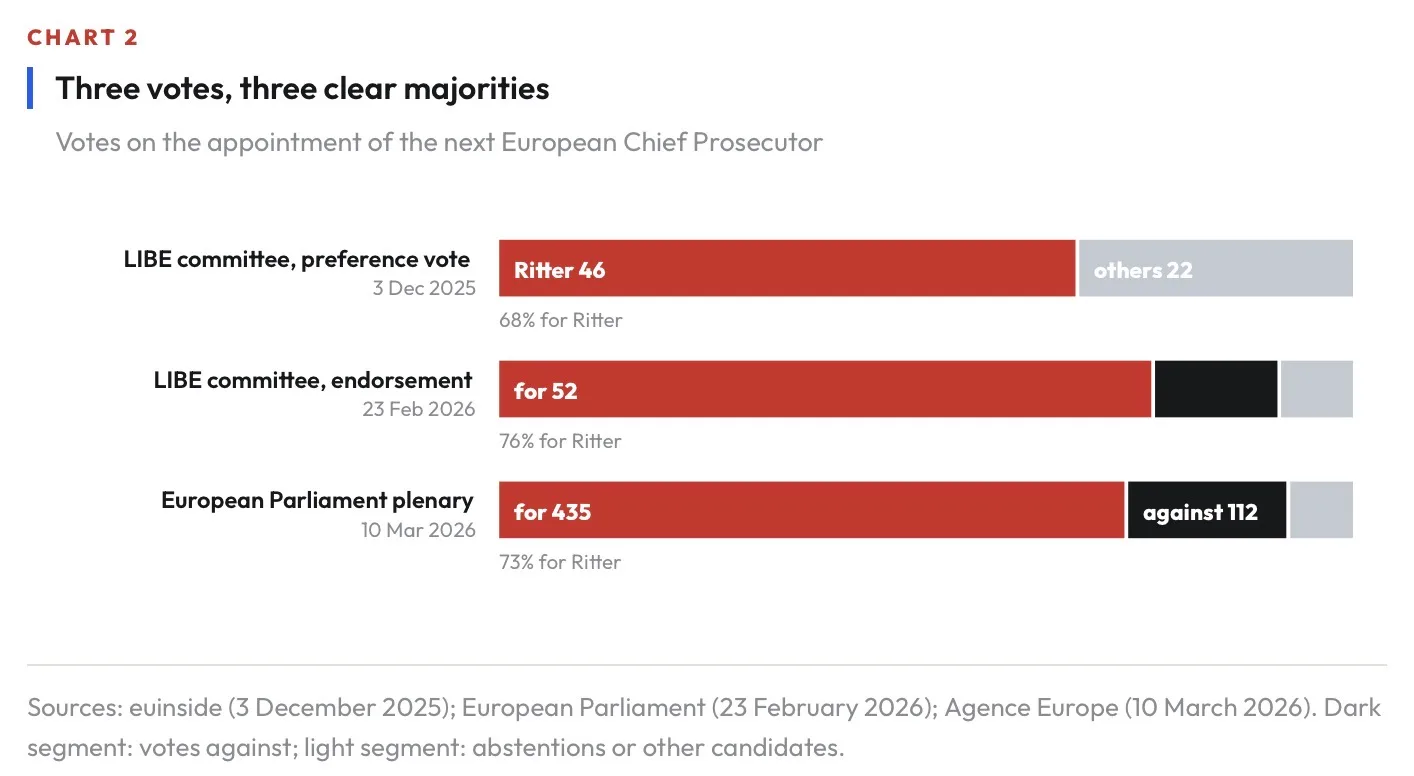
When the time came to choose Kövesi's successor, MEPs made him their clear favourite. In December 2025, he won the preference vote in the Civil Liberties Committee by a wide margin over the three other shortlisted candidates, from Austria, Spain and Italy. The full Parliament confirmed him in March.
4. What he inherits
The office Ritter takes over has changed in nature. Its first cases were mostly about misused EU subsidies. Today, the money is elsewhere: in the VAT and customs fraud schemes run by organised crime across borders.
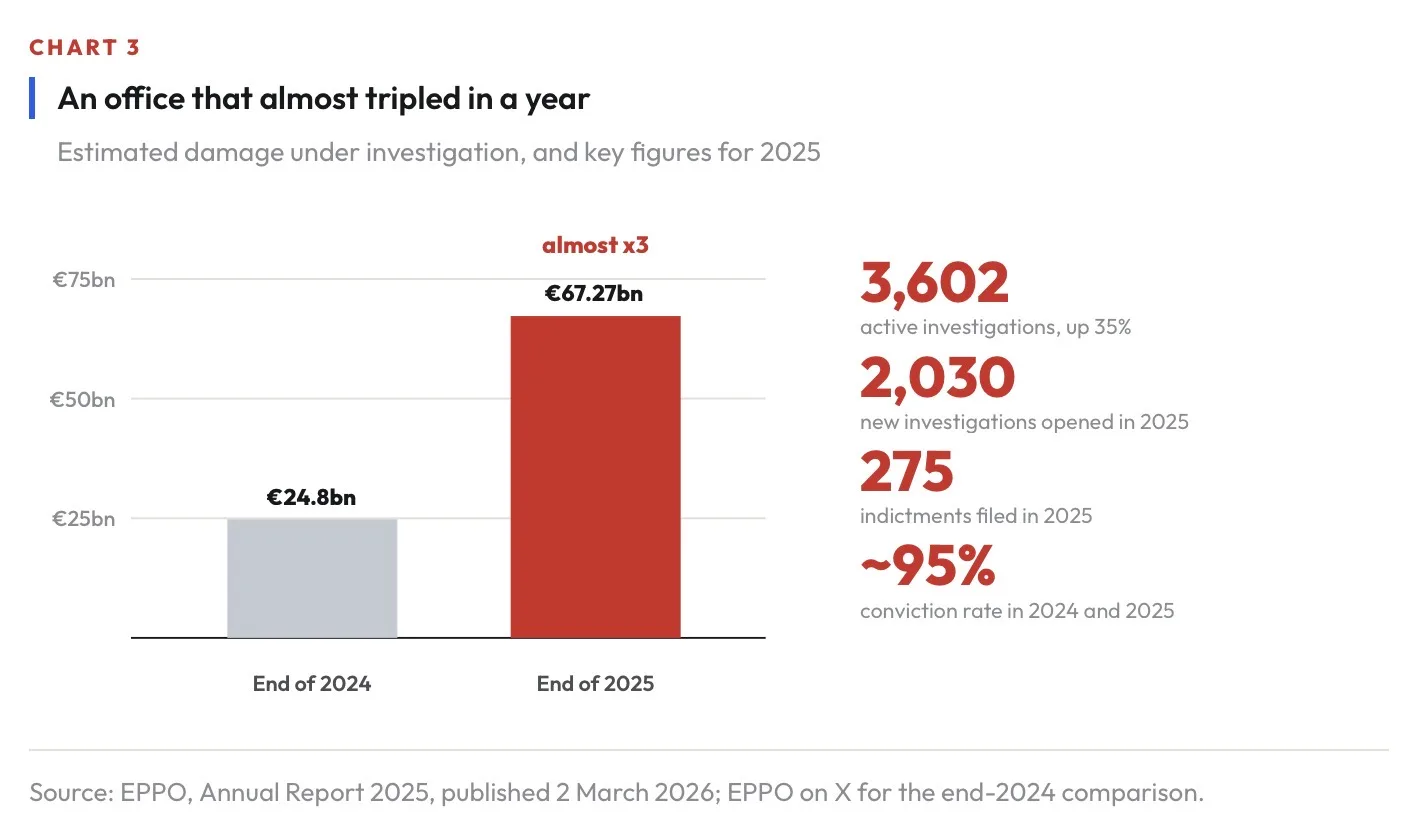
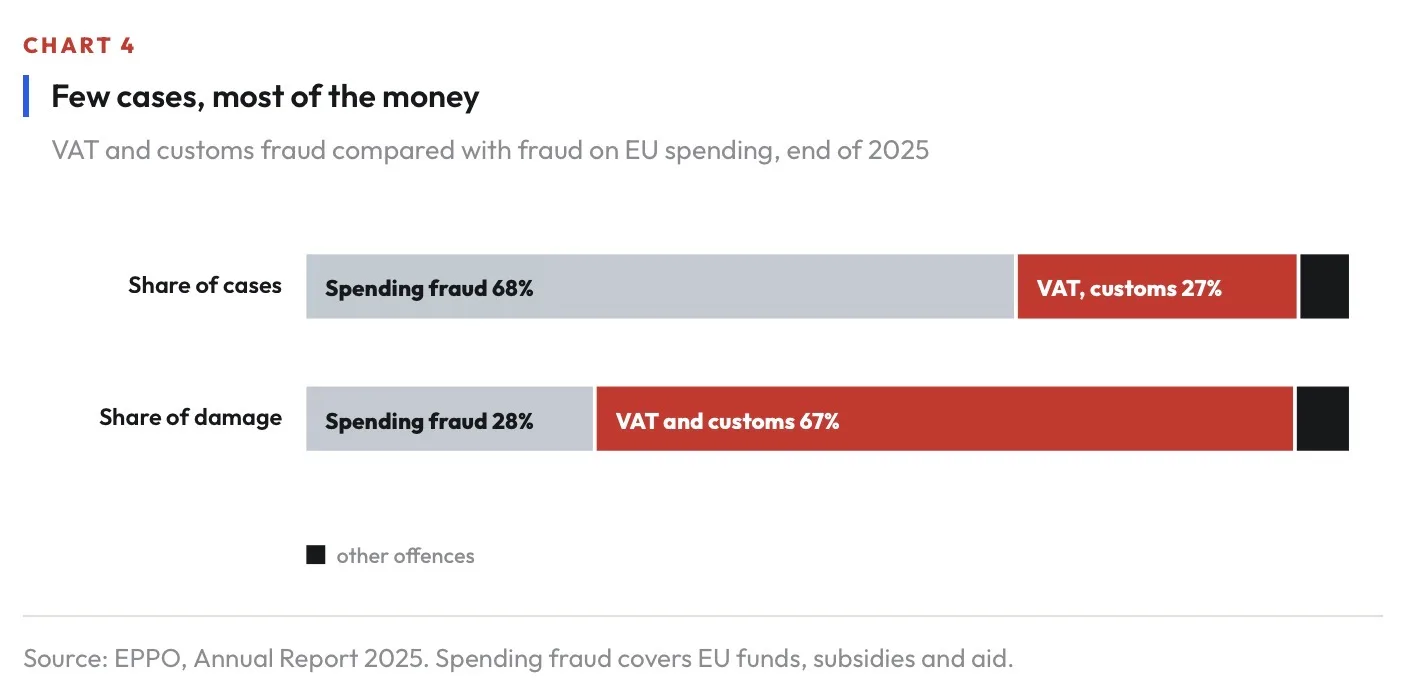
VAT and customs fraud accounted for only 27% of investigations at the end of 2025, but for €45 billion, two-thirds of the estimated damage. The EPPO has flagged the role of Chinese criminal networks in some of these schemes, and the abuse of e-commerce channels to evade import duties. Another front is the EU's post-Covid recovery fund: more than 500 cases, with some €5 billion in estimated damage. In 2025, judges granted €1.13 billion in freezing orders in EPPO cases, and the office's conviction rate in 2024 and 2025 was close to 95%.
5. A different style
Kövesi, a former anti-corruption chief in Romania, is known as a firebrand who never shied away from confrontation. Ritter is described as her opposite: an "unobtrusive" technocrat who "prefers quiet nudges", according to EU Perspectives, which summed up his approach as "continuity over fireworks". Kövesi herself expects her successor to focus less on building the institution and more on its operations, including organised crime and Chinese networks.
In his hearing before MEPs, asked whether he would have Kövesi's courage, he turned the spotlight on others: it is the European Delegated Prosecutors in each country, he said, who are on the front line, facing direct pressure and even personal threats. In his written answers, he described the EPPO he wants as "an impactful team player" in the protection of the EU's financial interests.
A founder builds an institution by fighting for it. A successor proves it can last. That is the job Andrés Ritter takes on.
6. The seven years ahead
Independence. Keeping the office free from pressure by national governments and EU institutions, the test on which Kövesi built her legacy.
Scale. Handling a caseload that grew by 35% in a year, with resources that grow more slowly.
Organised crime. Following VAT and customs fraud into the laundering networks that feed on it.
Technology. Using digital tools to analyse massive volumes of financial data across borders.
Recovery. Turning freezing orders into money actually returned: €1.13 billion ordered in 2025, €289 million actually frozen.