1. The market's verdict
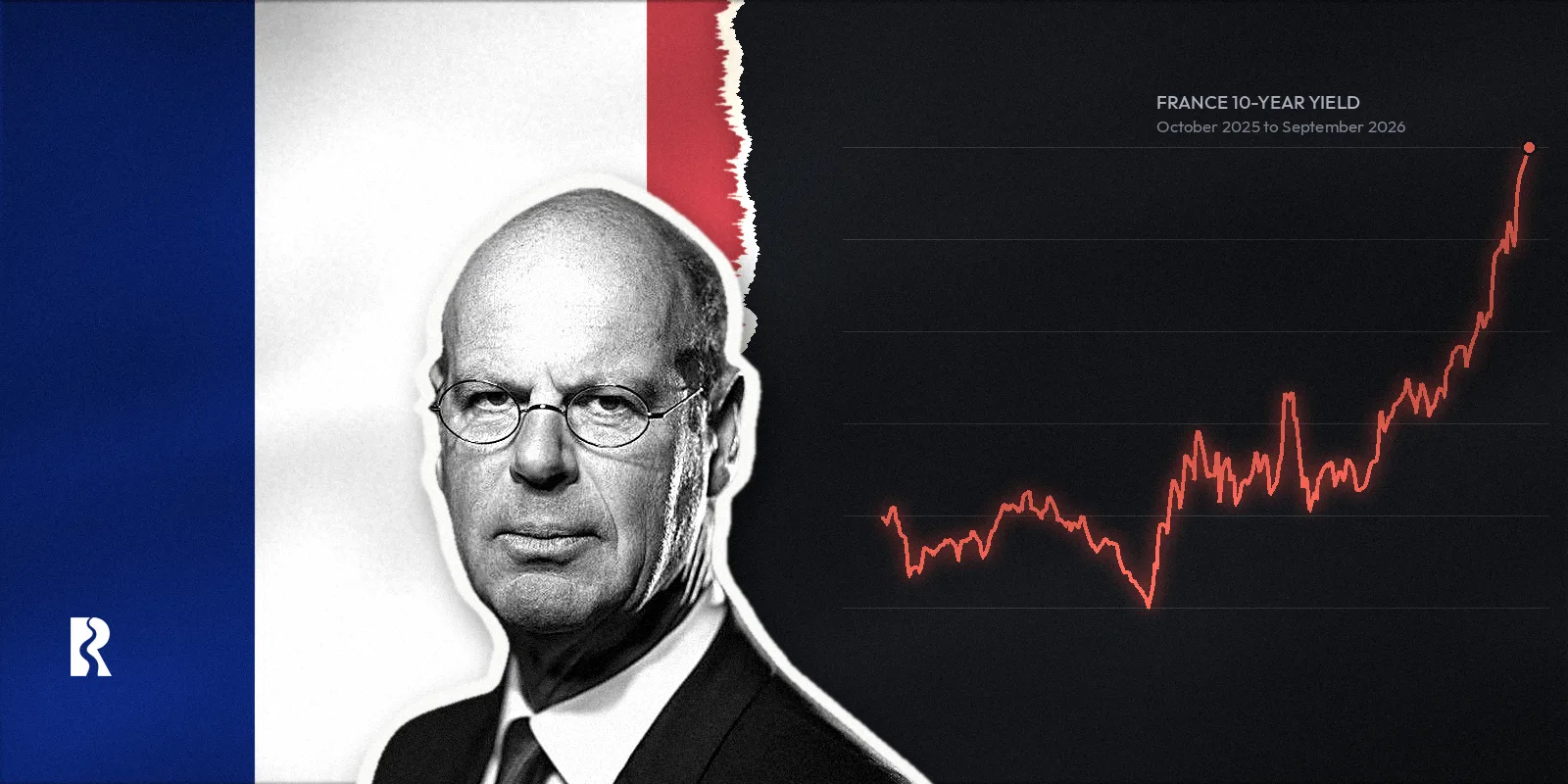
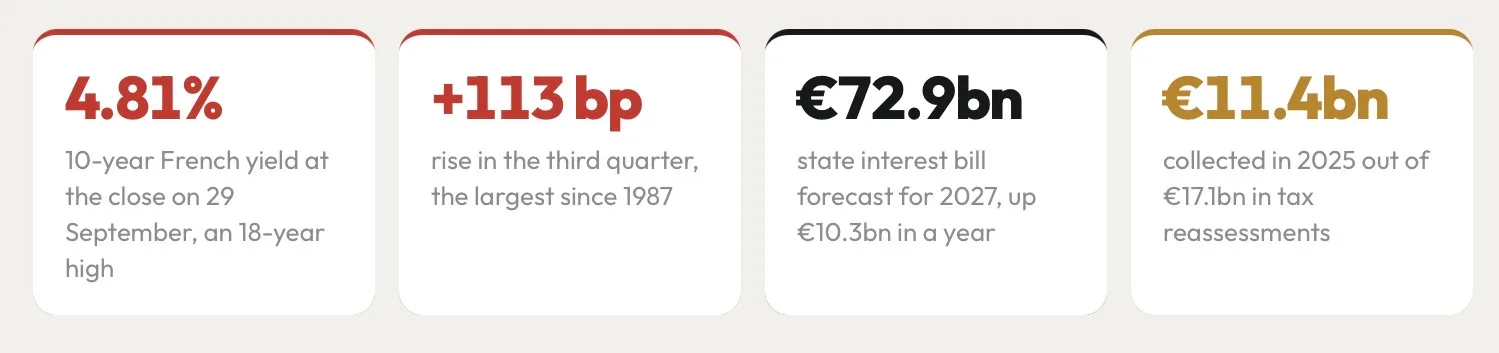
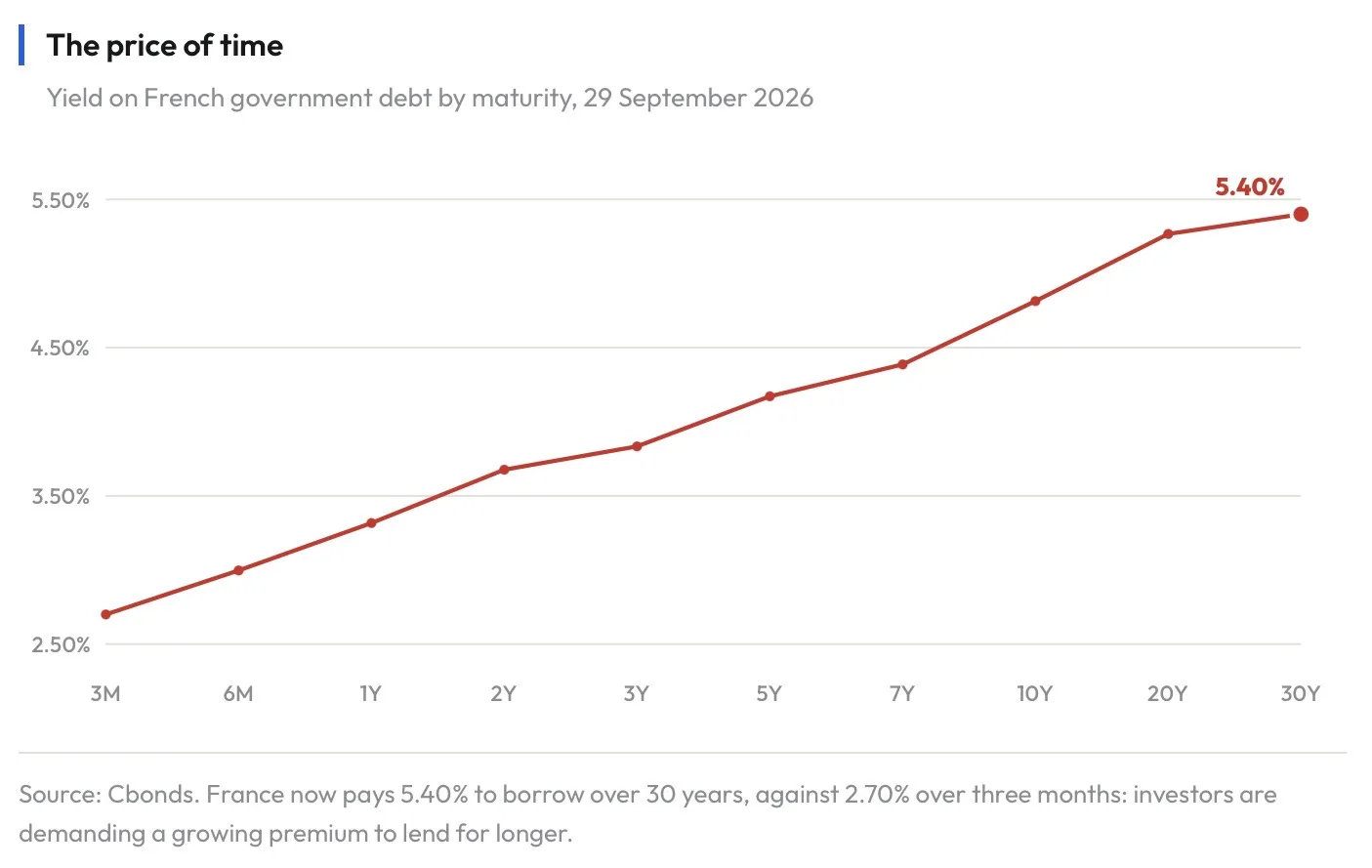
The yield on France's 10-year government bond, the OAT, closed at 4.81% on 29 September, its highest level in 18 years. It rose by 61 basis points in September alone and by 113 basis points over the third quarter, the largest quarterly increase since 1987, according to Reuters.
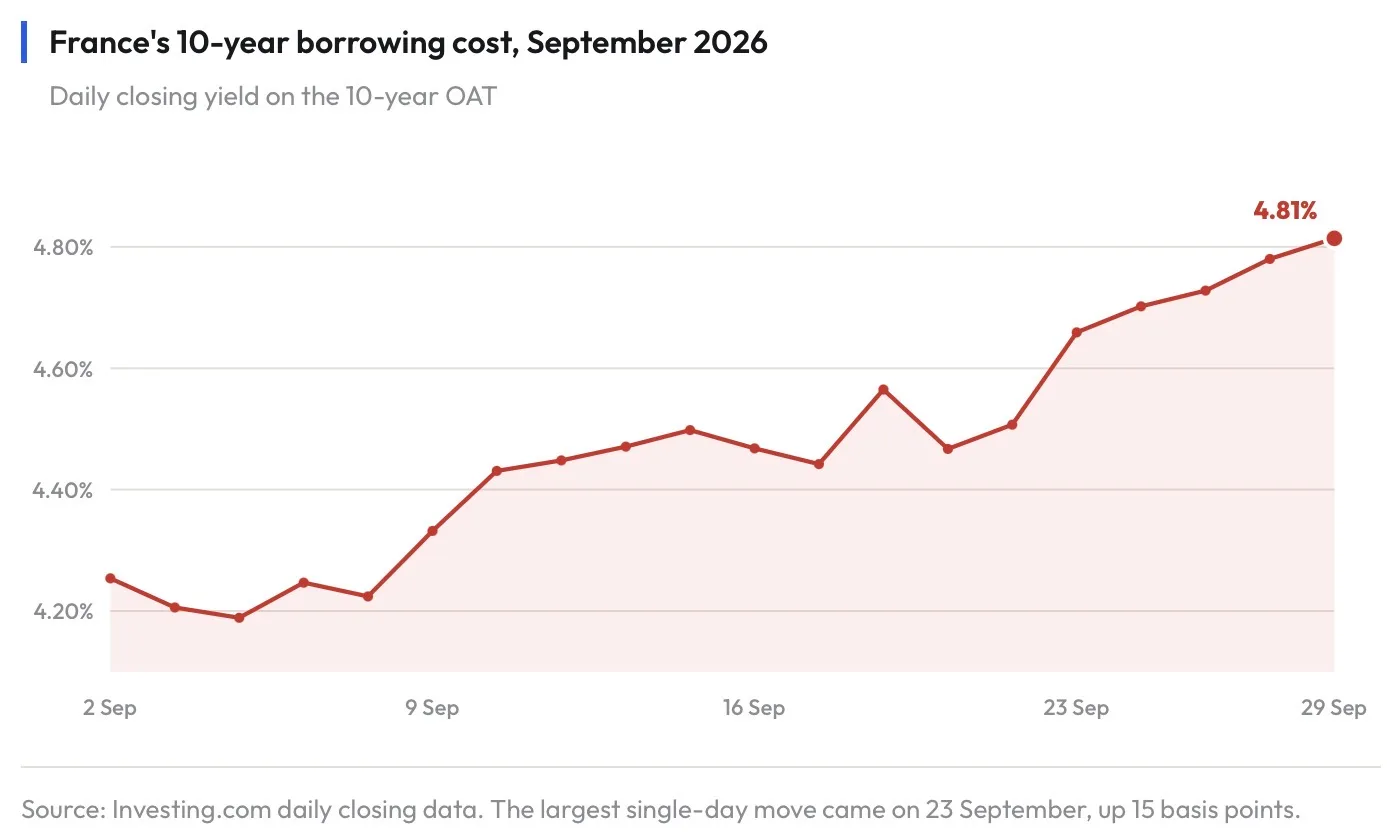
The more telling signal is the gap with Germany. The extra yield investors demand to hold French rather than German debt reached 120 basis points, the widest since the euro crisis of 2012, according to Reuters. Banque de France data put it at 111 basis points on 29 September; the difference comes from the benchmark bonds used, not from the direction of travel.
Several forces are at work: a public deficit still at 5.1% of GDP in the second quarter, according to Insee; an economy that did not grow in the same period; a parliament without a majority six months before the 2027 presidential election; and an inflation shock from the war with Iran that has pushed markets to expect higher interest rates from the European Central Bank.
Who is betting against France
Short positions. "Some investors are clearly positioning for further France-specific stress," Théophile Legrand, a rates strategist at Natixis, told Reuters, including by selling OAT futures, contracts that gain when French bond prices fall.
Insurance against default. The cost of credit default swaps on French sovereign debt has reached its highest level in almost a decade, according to LSEG data cited by Reuters.
A dependence on foreign money. Non-residents held 56% of France's negotiable state debt at the end of 2025, according to the Agence France Trésor, up from about 50% at the end of 2022. The more of its debt a country places abroad, the faster sentiment can turn its borrowing costs.
2. The bill
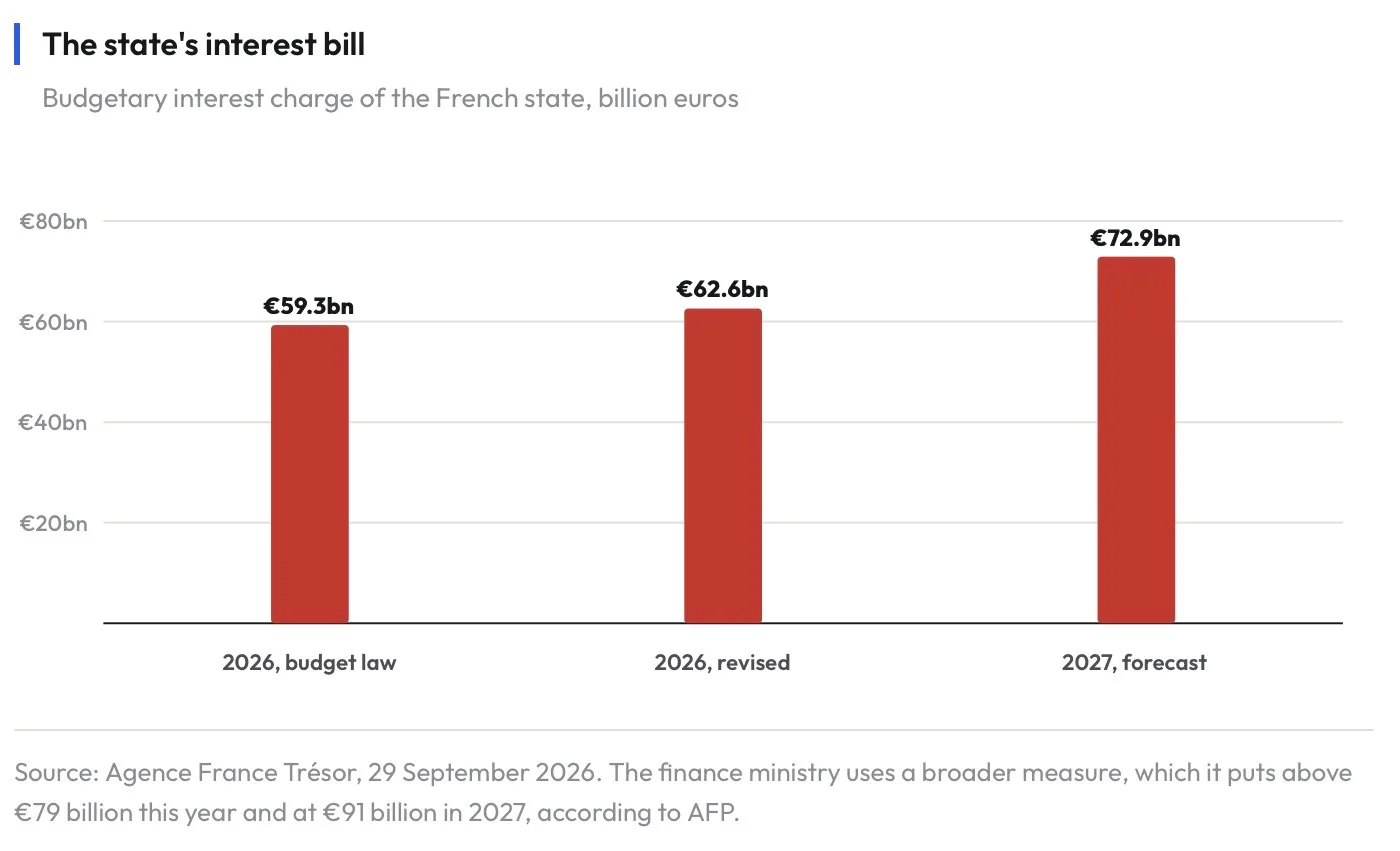
Higher rates feed through to the budget slowly, then relentlessly, as old debt is refinanced at new prices. On 29 September, the Agence France Trésor (AFT), which manages the state's debt, raised its estimate of the 2026 interest bill to €62.6 billion, against €59.3 billion in the budget law, and forecast €72.9 billion for 2027. To finance itself next year, the state will issue a record €340 billion of medium and long-term bonds, against €310 billion this year.
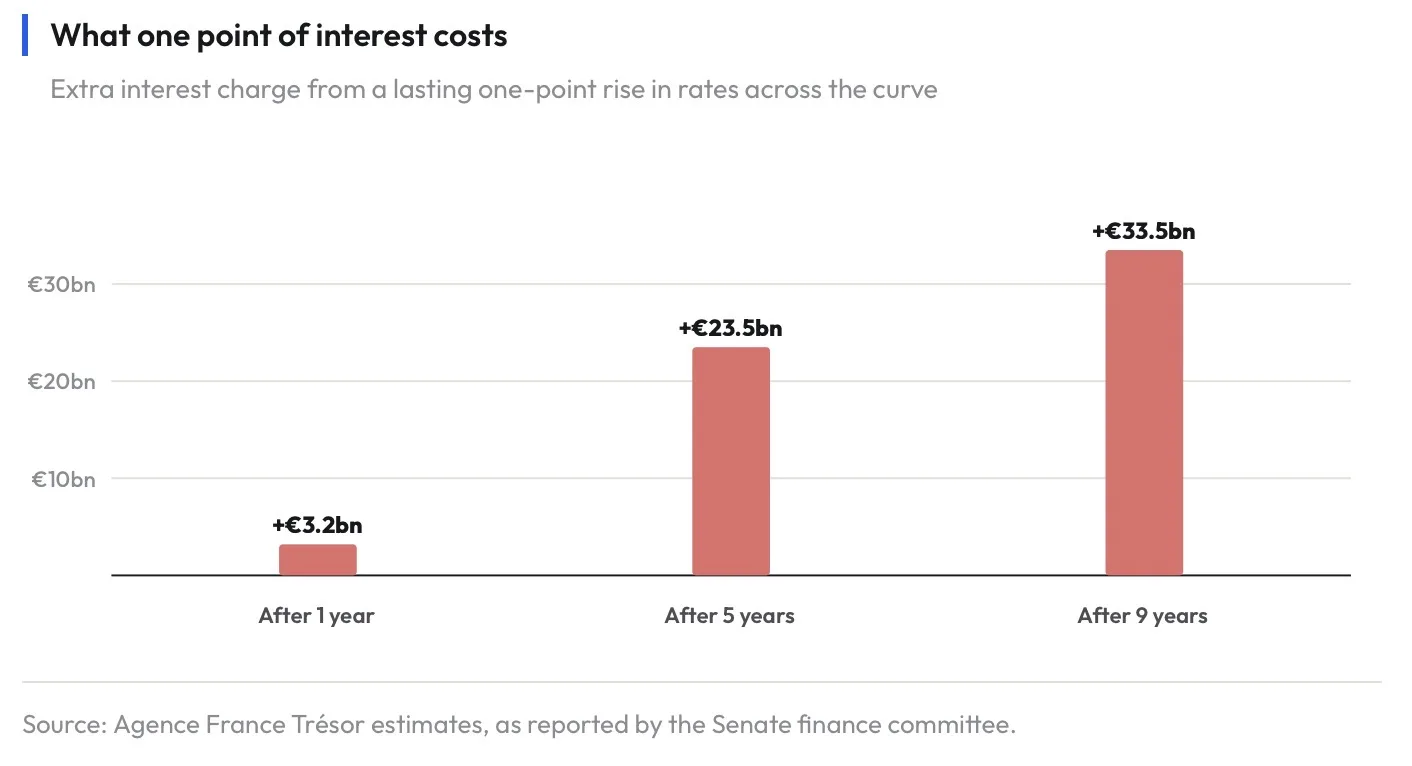
The 2027 budget bill, obtained by AFP on 1 October, plans €43 billion of "recovery measures" to bring the deficit down to 5% of GDP, including measures on pensions. Prime Minister Sébastien Lecornu has promised "fiscal stability" and ruled out significant new taxes on capital and very high incomes.
3. The other bill
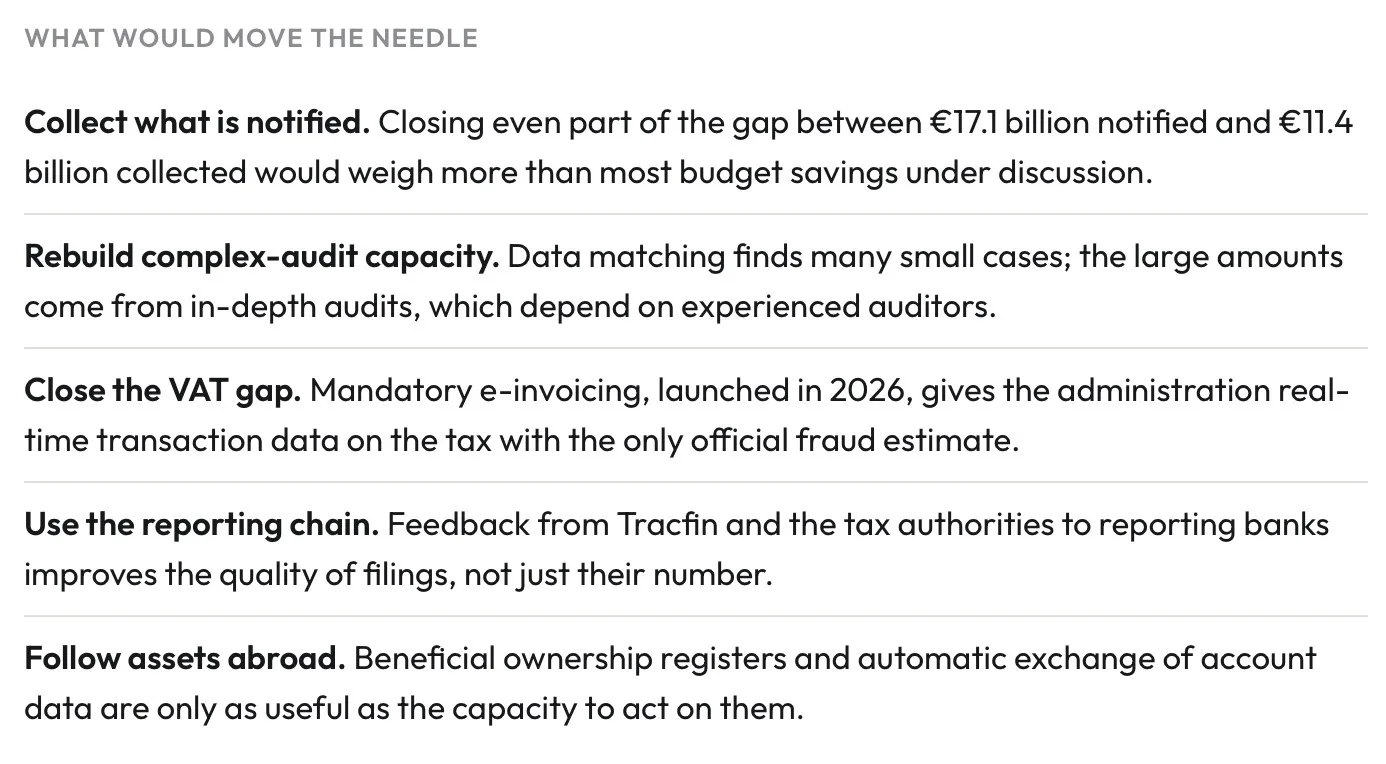
Every euro of tax that is owed but never paid is a euro the state must borrow, now at close to 5%. How many euros that represents is the first problem: France publishes no official estimate of total tax fraud.
The only official measure covers one tax. The European Commission estimates that France failed to collect €12 billion of VAT in 2023, 6% of what was due, the third largest gap in the EU in absolute terms. Figures of €100 billion or more for all tax fraud are regularly cited in parliamentary debates, but they are extrapolations that the administration does not endorse. Le Détroit uses them only as an outer bound.
What is known for certain is what the tax authorities catch, and what they actually cash.
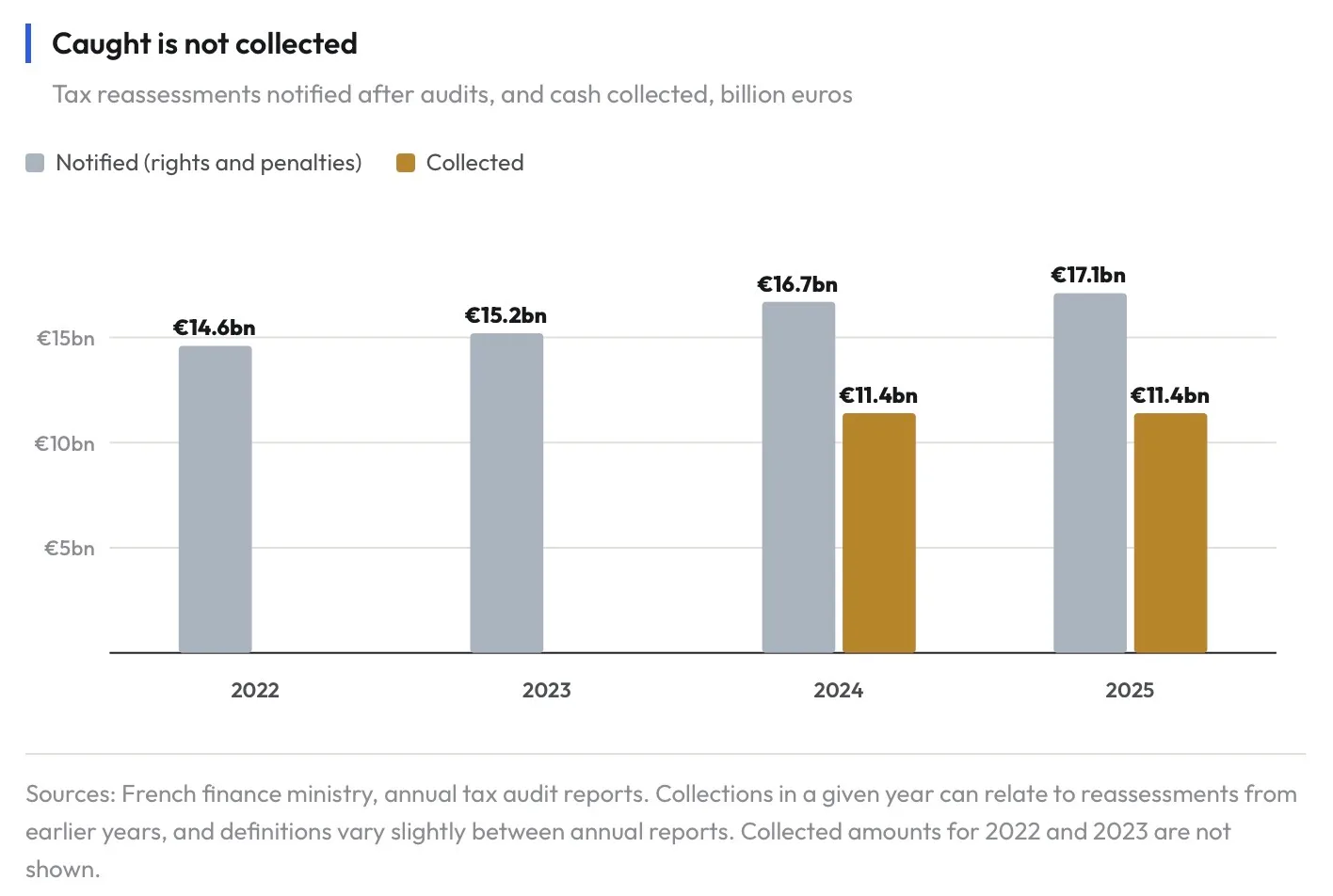
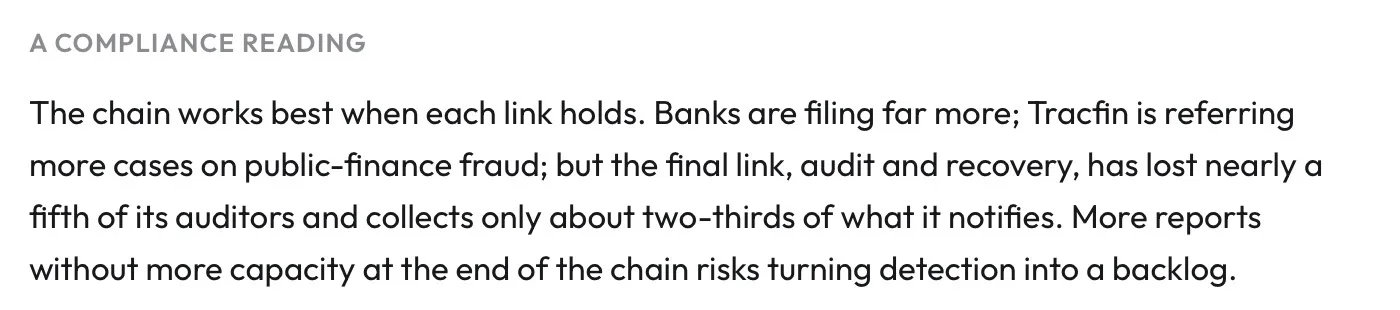
In 2025, the tax administration (DGFiP) notified a record €17.1 billion in tax and penalties, but collected €11.4 billion, the same as the year before. Detected social fraud added €3 billion. Data mining, which the ministry presents as the engine of modern audits, brought in €2.8 billion.
Fewer auditors, weaker results
A parliamentary information report, drawing on the Cour des comptes, describes the trend over a decade. Between 2015 and 2024, tax revenue collected by the DGFiP rose by 44%, while the results of tax audits fell by 5.4%, from €21.2 billion to €20.1 billion. Staff dedicated to tax audits fell by nearly 20%. Penalties imposed have dropped by more than 40% in ten years, according to the Cour des comptes, which also found in 2023 that audits triggered by data matching made up 44% of all audits but less than 14% of the amounts reassessed.
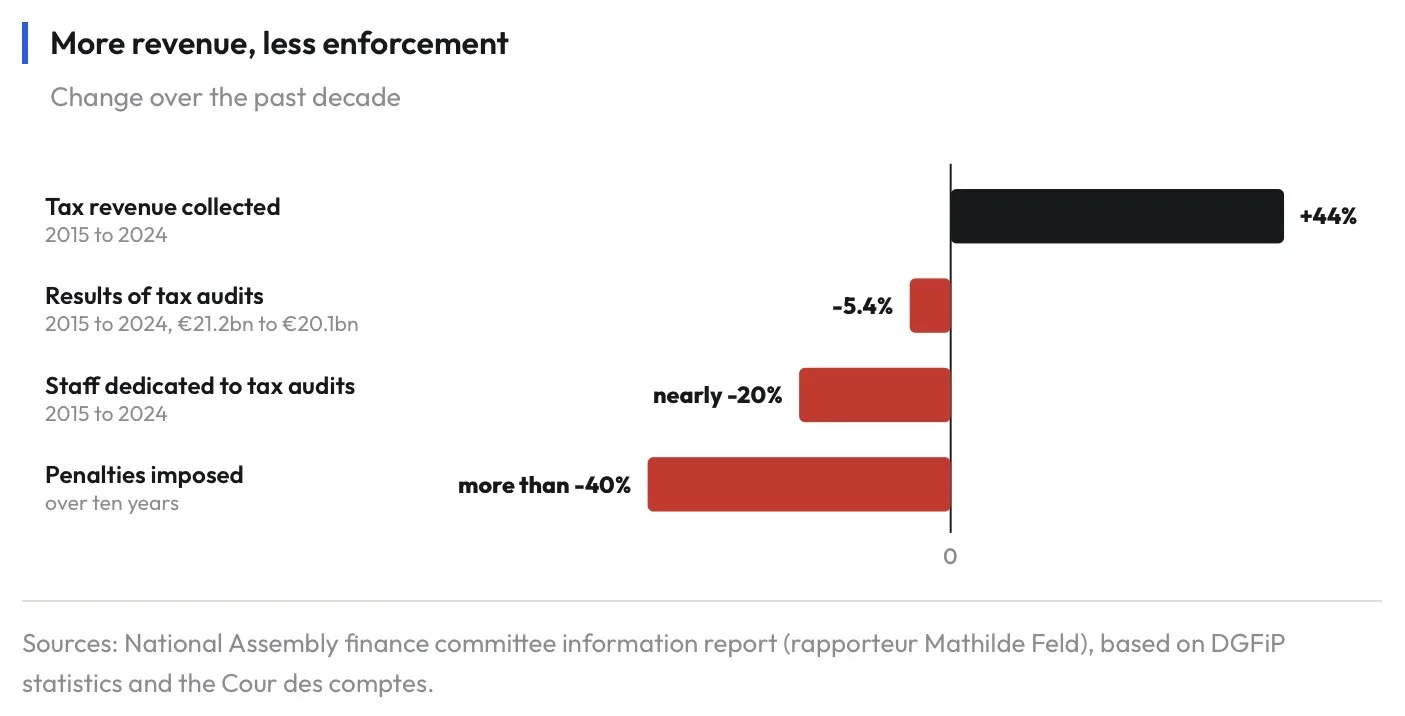
The return on enforcement is well documented elsewhere. A study published by the US National Bureau of Economic Research found that each dollar spent auditing the top 10% of earners in the United States brings in about $12.50, a figure now cited in French parliamentary debates.
4. Following the money: the banks' role
The state does not hunt fraud alone. Banks, notaries, crypto platforms and other regulated professions must report suspicious flows to Tracfin, France's financial intelligence unit. Their filings have exploded.
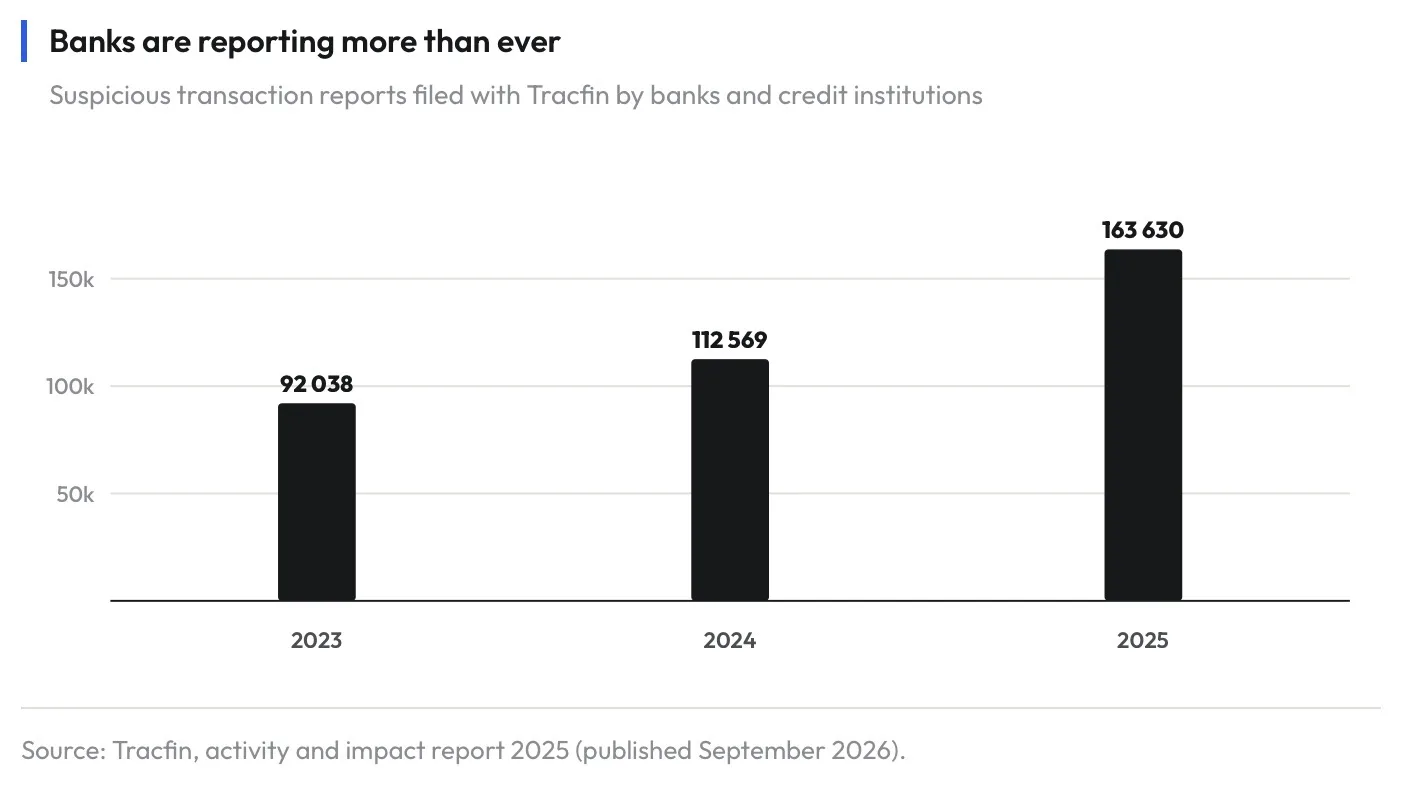
278,484 suspicious transaction reports in 2025, up 32% in a year and six times the 2015 level. The financial sector accounts for 93% of them.
Reports from banks rose by 45%, to 163,630; those from crypto-asset service providers by 58%, to 4,850.
Tracfin sent 740 referrals on suspected fraud against public finances, covering about 3,400 individuals and companies and some €3.2 billion at stake.
The DGFiP sent 7,145 requests to foreign tax authorities in 2025, under information-sharing agreements with more than 160 countries.
5. The equation
Put side by side, the numbers do not suggest that fraud alone could pay for France's debt. They suggest something narrower and more useful: the sums at stake in enforcement are of the same order as the extra interest France will pay next year.
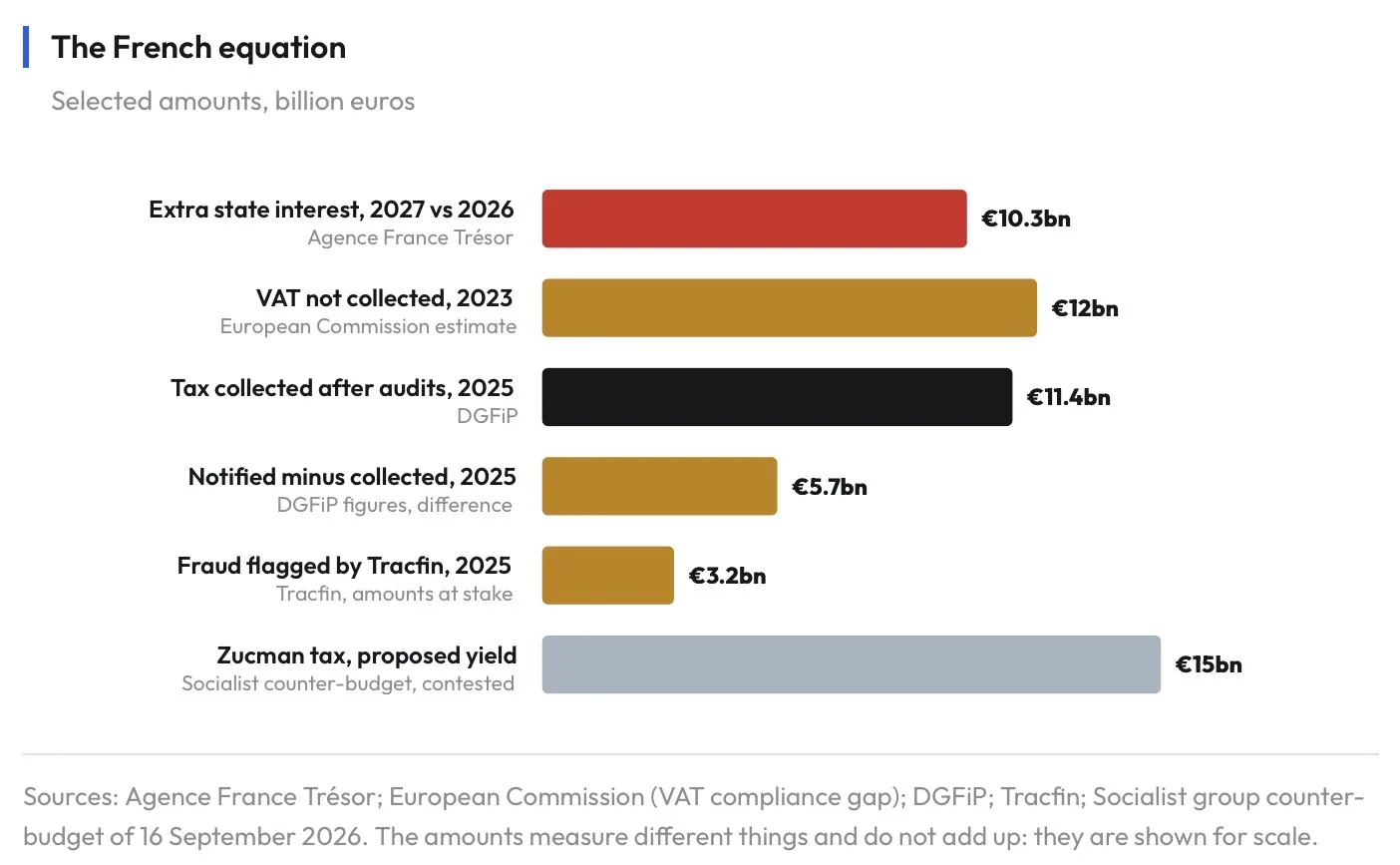
The political debate has already split along this line. The Socialist group's counter-budget would raise €39.5 billion, including a minimum tax of 2% on fortunes above €100 million, the "Zucman tax", estimated at €15 billion; the National Assembly rejected that tax in October 2025 by 228 votes to 172. The government, which says no high-yield tax would survive the Constitutional Council, is betting on spending restraint instead. Enforcement has one advantage over both: it raises money from those who are already supposed to pay.