1. What Tether announced
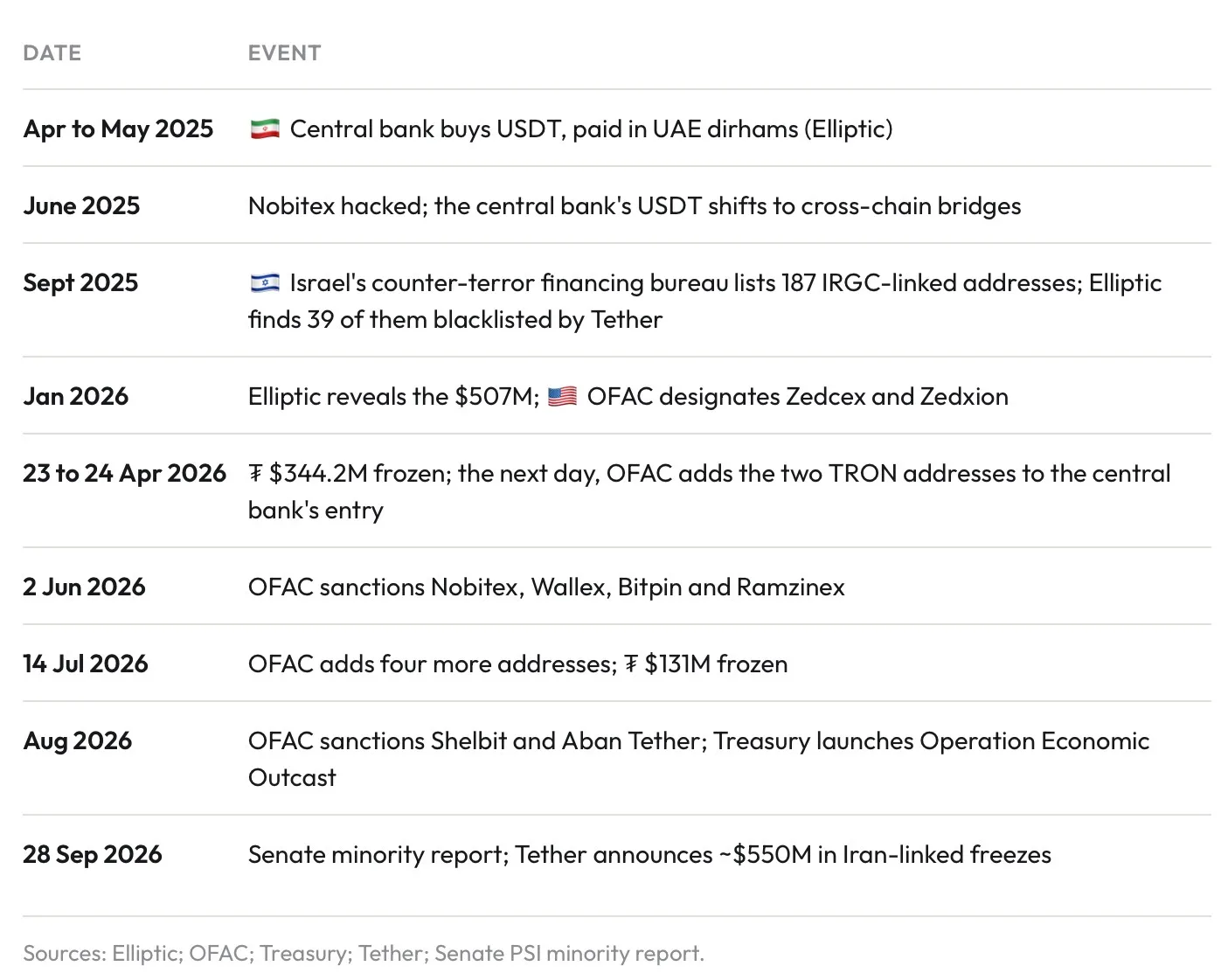
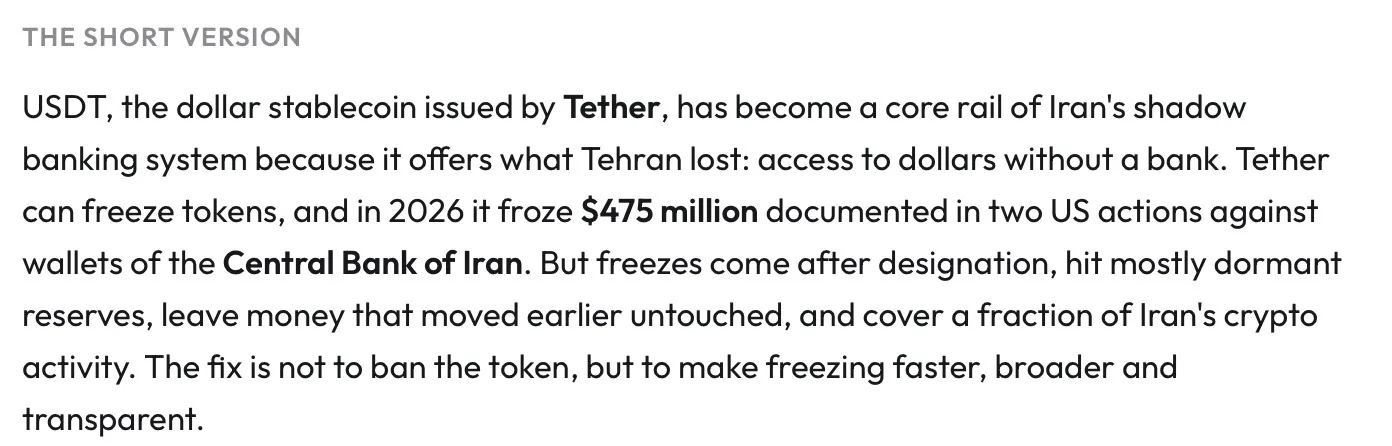
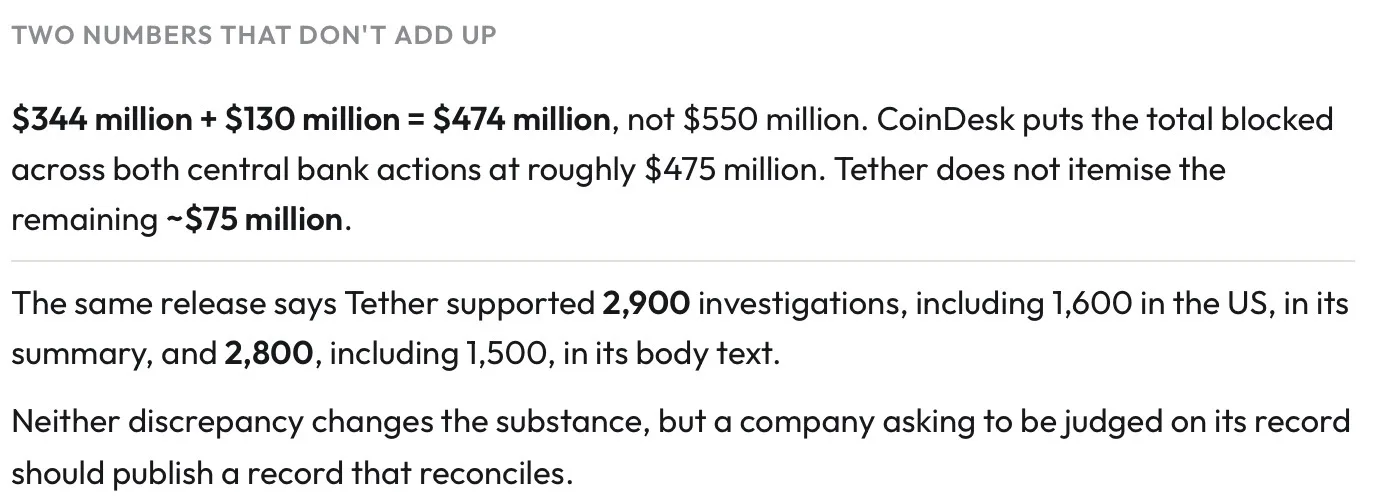
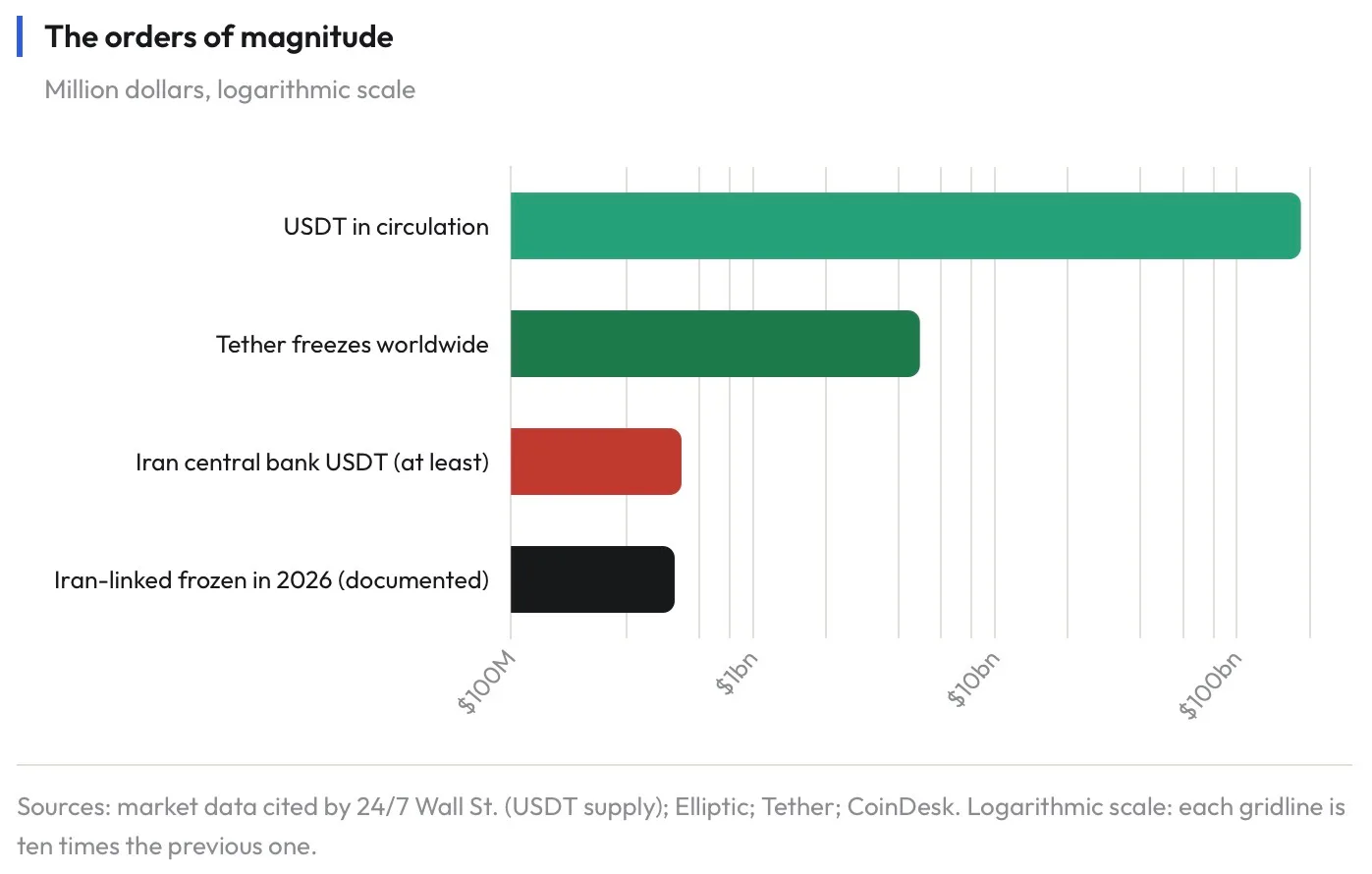
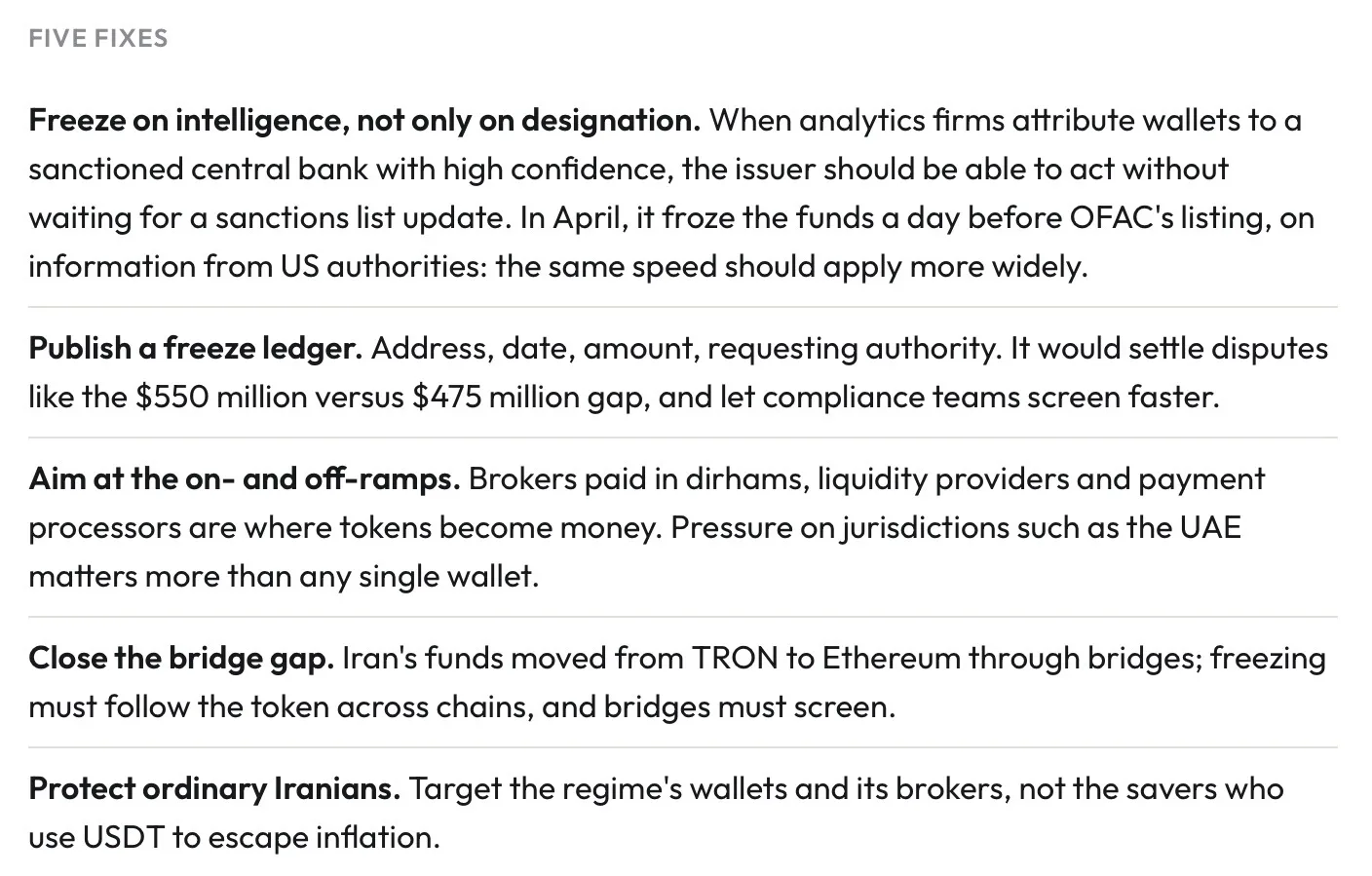
On 28 September, Tether said that actions involving USDT had frozen about $550 millionin 2026 across wallets that US authorities linked to the Central Bank of Iran and Iranian sanctions networks. It detailed two operations:
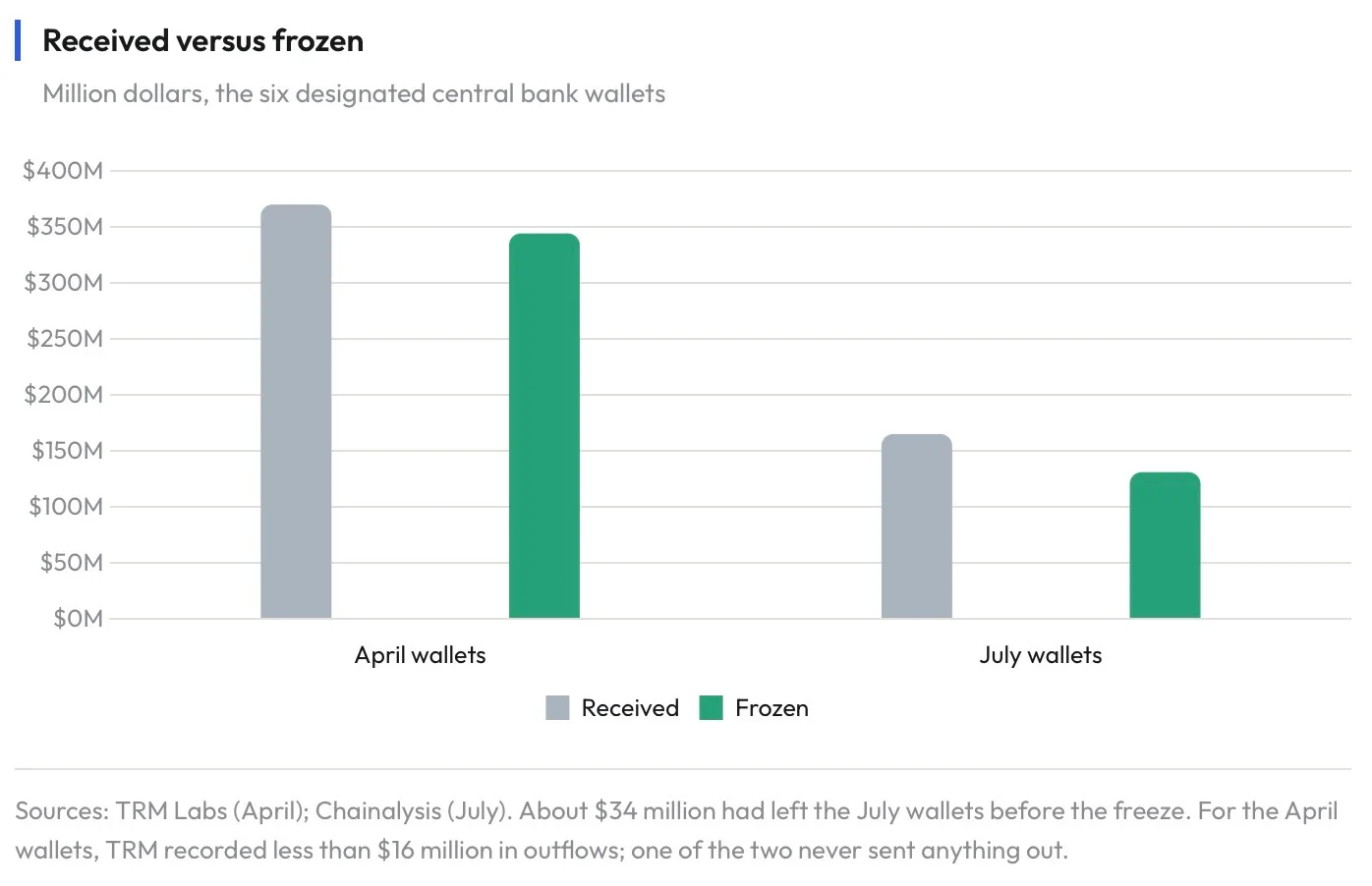
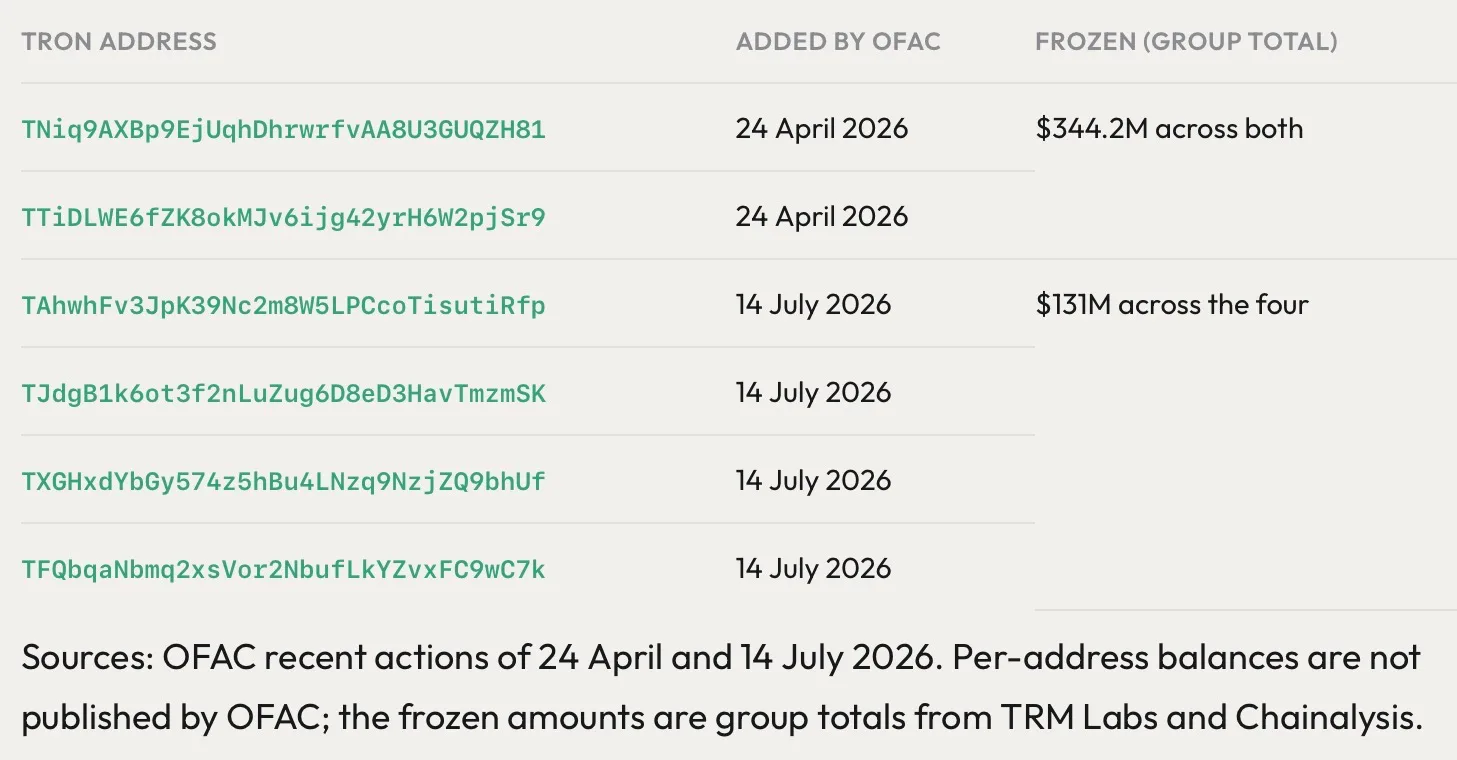
April: more than $344 million across two addresses, frozen on information from the Treasury's Office of Foreign Assets Control (OFAC) and US law enforcement. OFAC added both addresses to the central bank's sanctions entry the next day.
July: more than $130 million across four wallets on the TRON network, as Treasury expanded the same designation.
Tether also said it works with more than 340 law enforcement agencies in 67 countries and has helped freeze more than $4.9 billion worldwide, including more than $2.4 billion connected to US authorities.
2. Why Tether matters so much
USDT is a token pegged one-to-one to the US dollar and backed, according to Tether, by reserves largely held in US Treasury bills. With about $184 billion in circulation and roughly $70 billion traded daily, it is the largest dollar stablecoin in the world. Much of it moves on TRON, a blockchain where transfers are fast and cheap.
For a country cut off from dollar clearing and correspondent banks, that is decisive. Tether's token offers a dollar without a bank account, transferable in minutes, and accepted by brokers and exchanges across the region, from Dubai onwards. For Iranians facing a collapsing rial, it is also a lifeline. Any response has to separate the regime's use from ordinary savers'.
3. How Iran uses it
The central bank as a buyer
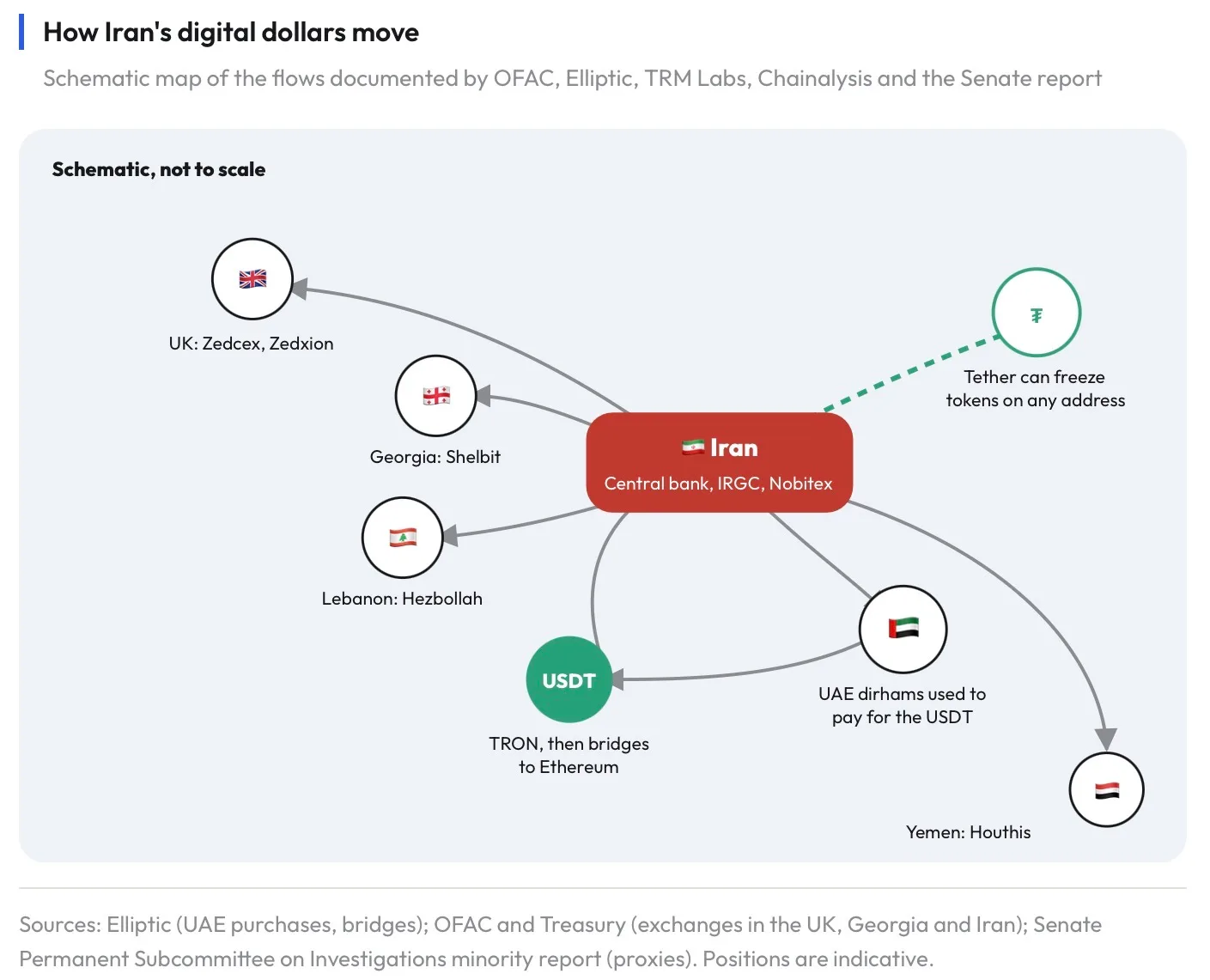
In January, Elliptic revealed that the Central Bank of Iran had acquired at least $507 million in USDT, which it calls a lower bound. Leaked documents describe two purchases in April and May 2025, paid in UAE dirhams through an intermediary called Modex. The aim, according to Elliptic, was to supply dollar liquidity and support the rial, which had lost about half its value in eight months.
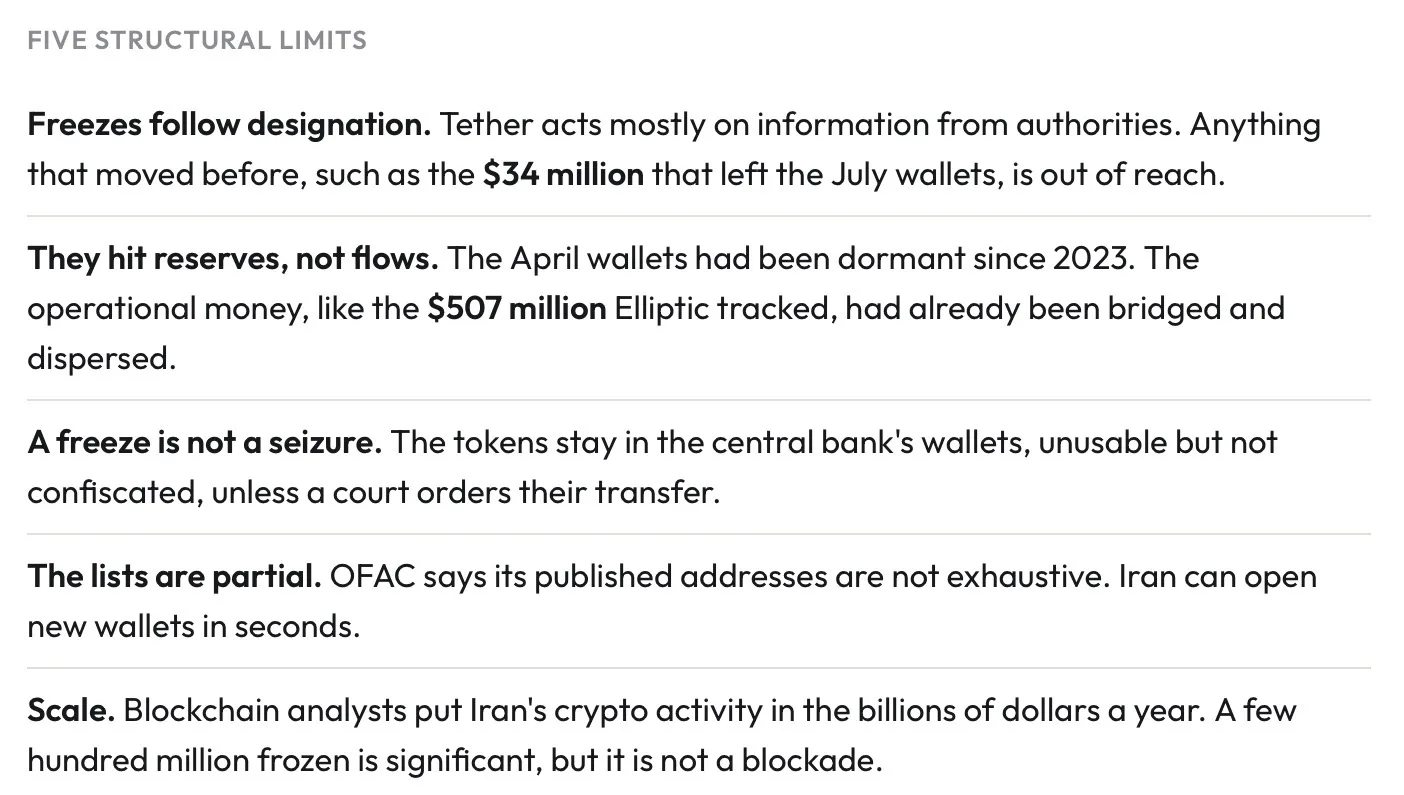
Until June 2025, most of the tokens went to Nobitex, Iran's largest exchange. After Nobitex was hacked that month, the flows changed: the central bank's USDT went through cross-chain bridges from TRON to Ethereum. By the end of 2025, the full $507 million had left the wallets Elliptic could attribute to the bank.
The reserve wallets
TRM Labs found that the two wallets frozen in April had received about $370 million across roughly 1,000 transactions since March 2021. Accumulation largely ended in late 2023, after which the balances sat untouched: "a profile consistent with sovereign reserve storage". Both wallets transacted directly with accounts at the exchange HTX.
The network around it
Chainalysis traced the four July wallets to an institutional liquidity provider and an Asia-based payment processor. OFAC has also sanctioned the exchanges at the heart of the system: Nobitex, Wallex, Bitpin and Ramzinex on 2 June, and Shelbit (Georgia) and Aban Tether in August. In January, it had designated two UK-registered exchanges, Zedcex and Zedxion, as the first IRGC-linked exchange infrastructure ever sanctioned.
4. The Senate's charge
On the same day as Tether's statement, the Democratic staff of the Senate Permanent Subcommittee on Investigations, led by ranking member Richard Blumenthal, published a 28-page preliminary report titled "Tethered to Terrorism". It is not a bipartisan finding of the full Senate.
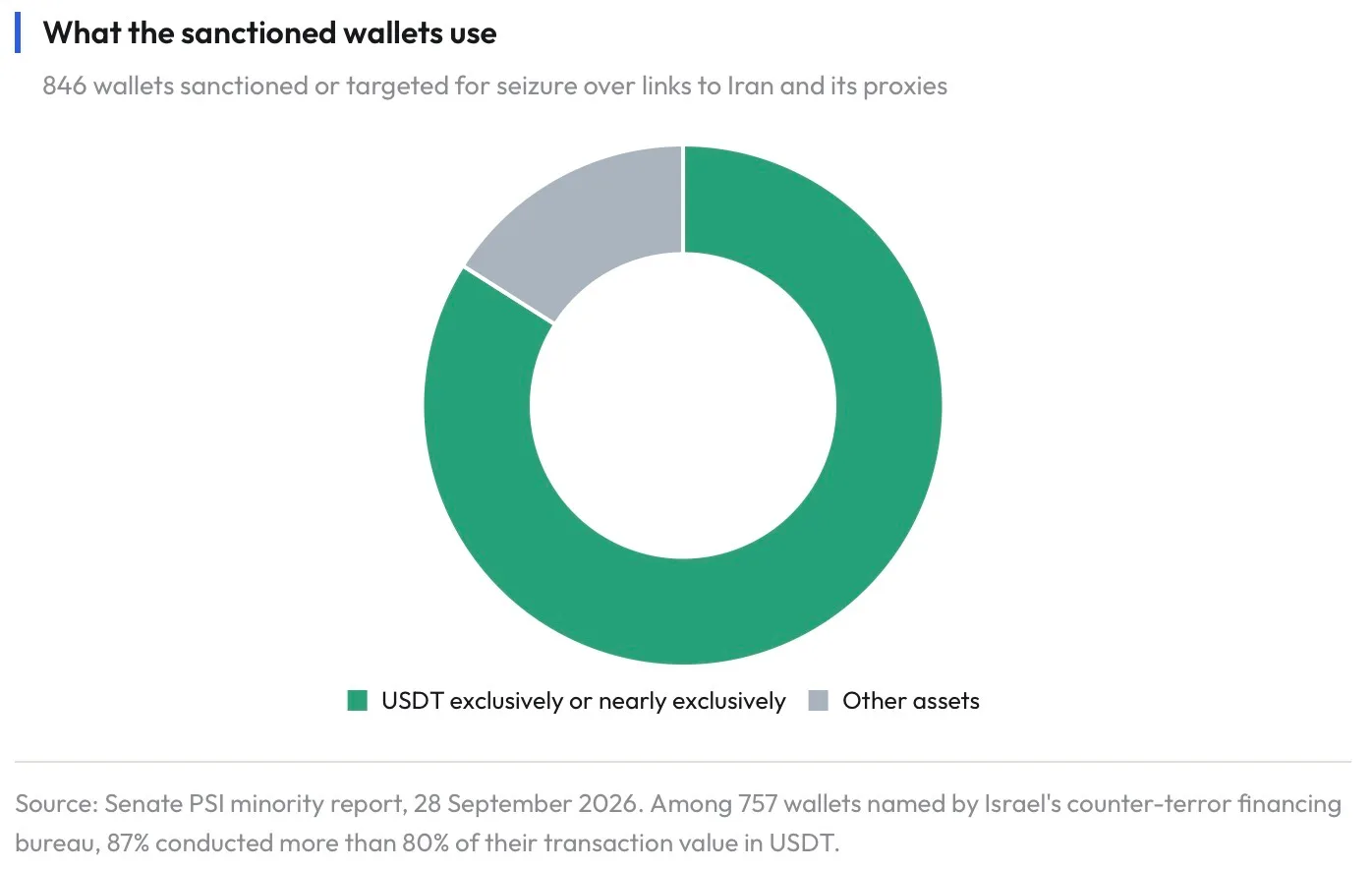
Before 2024, the report says, Tether did not "comprehensively and consistently" freeze wallets designated by counter-terrorism agencies.
In one case, $34.6 million kept moving through sanctioned wallets after designation.
It says Tether still fails to proactively block "clearly illicit" wallets, which it argues encouraged groups such as Hamas to shift from bitcoin to USDT.
Tether had not answered the subcommittee's June request for records when the report was published. Blumenthal referred the findings to the Treasury and the Justice Department.
5. The limits of freezing
6. How to do better
7. The sanctioned wallets
All six addresses are listed by OFAC as identifiers of the Central Bank of Iran's sanctions entry. They are public on the TRON blockchain.
8. Timeline