
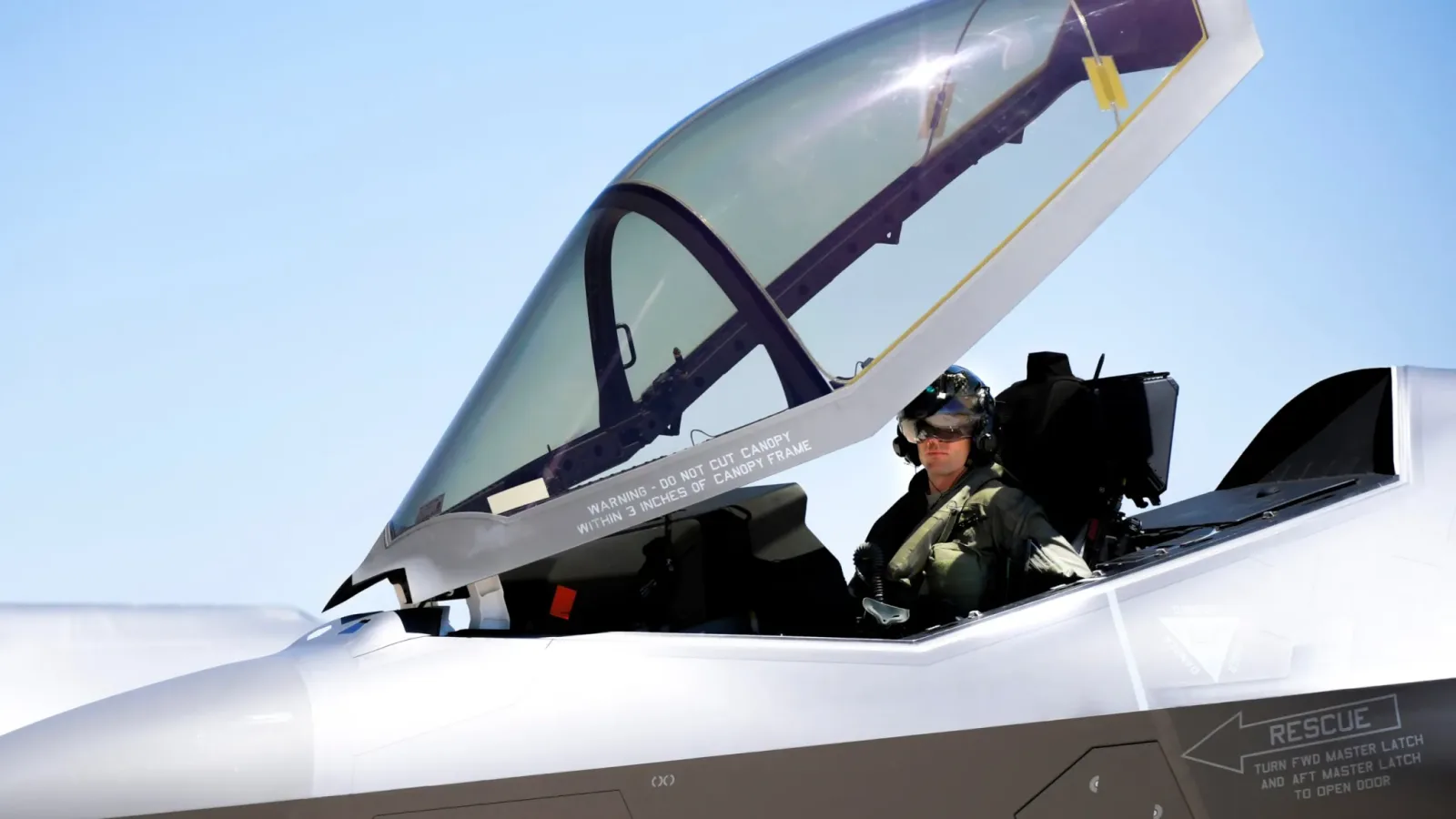
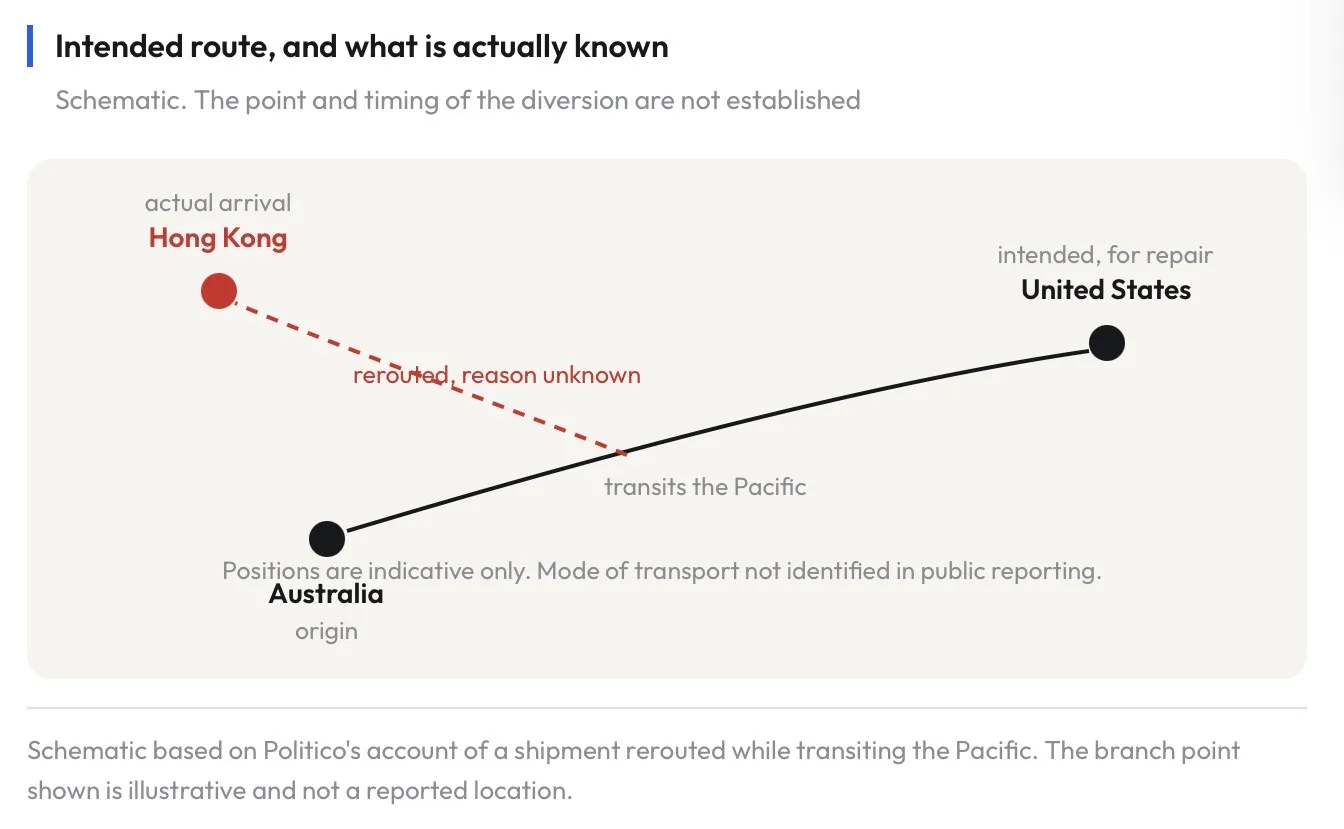
Politico reported on Friday, citing three people granted anonymity, that a shipment of F-35 parts left Australia for repairs in the United States, was rerouted while crossing the Pacific, and arrived in Hong Kong. Two of those people said it included one of the aircraft's canopies, the cockpit enclosure that carries low-observable materials restricted to the United States and its programme partners. An intermediary was transporting the parts on behalf of Lockheed Martin, the prime contractor
The Pentagon's F-35 Joint Program Office confirmed it was aware of a shipment issue involving unserviceable components and said it is working with US authorities and industry to retrieve them, investigate, and put safeguards in place. State Department and Pentagon officials began briefing congressional staff in June, with further briefings expected.
What is not known is almost everything else: why the shipment was rerouted, whether by error or by an unauthorised act, who holds the parts now, and even how they travelled. FreightWaves noted the mode of transport has not been identified. There is no public indication that Chinese authorities have obtained the components. The Chinese embassy in Washington said it was unaware of the incident, the State Department declined to comment, and Lockheed said it could not discuss shipment status for security reasons.
The destination matters for a legal reason, not a speculative one.
Since June 2020, the State Department has treated exports of US defence articles to Hong Kong under a presumption of denial, and since December 2020 Commerce has applied China's licensing rules to the territory. Commerce's own guidance to exporters describes Hong Kong as a frequent transshipment point and warns that delivery to a logistics provider rather than an end user is a diversion red flag. A US-origin defence article sitting in Hong Kong is, by American licensing policy, sitting where it is not supposed to be, whatever the reason it got there.
The incident also lands on a documented weakness. In May 2023 the Government Accountability Office found that roughly one million F-35 spare parts worth at least 85 million dollars had been recorded as lost, damaged or destroyed, and that the Pentagon had reviewed the circumstances of only two percent of those losses since 2018. The programme office holds no independent record of the global spares pool; the prime contractors keep it.
The route itself was deregulated two years ago. Since 1 September 2024, an ITAR exemption allows licence-free movement of most defence articles between approved parties in Australia, the United Kingdom and the United States, valid only inside the three countries' territory. Whether this shipment moved under that exemption, and whether a canopy falls on the Excluded Technology List that sits outside it, are the two questions the congressional briefings should be able to answer.