1. What happened
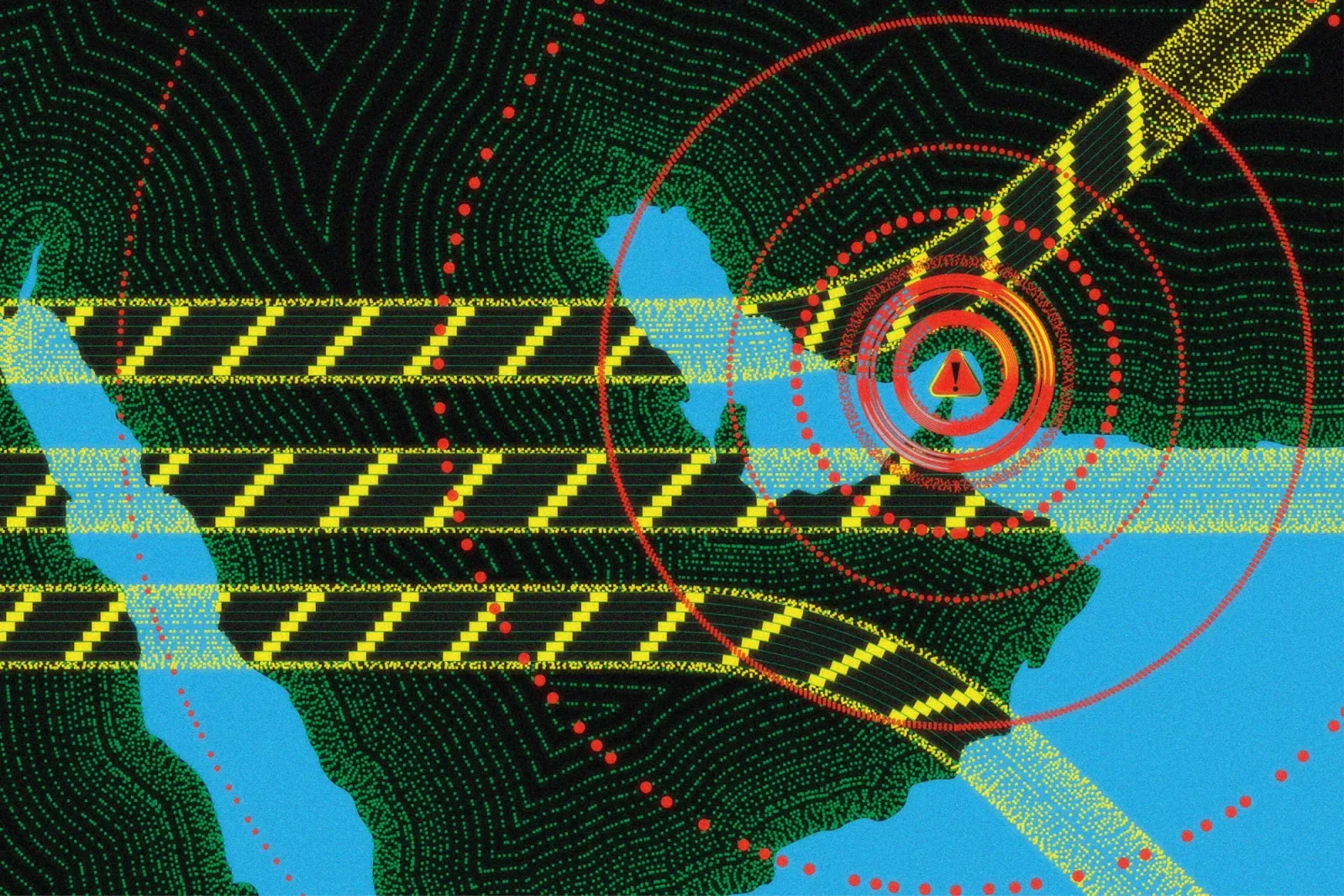
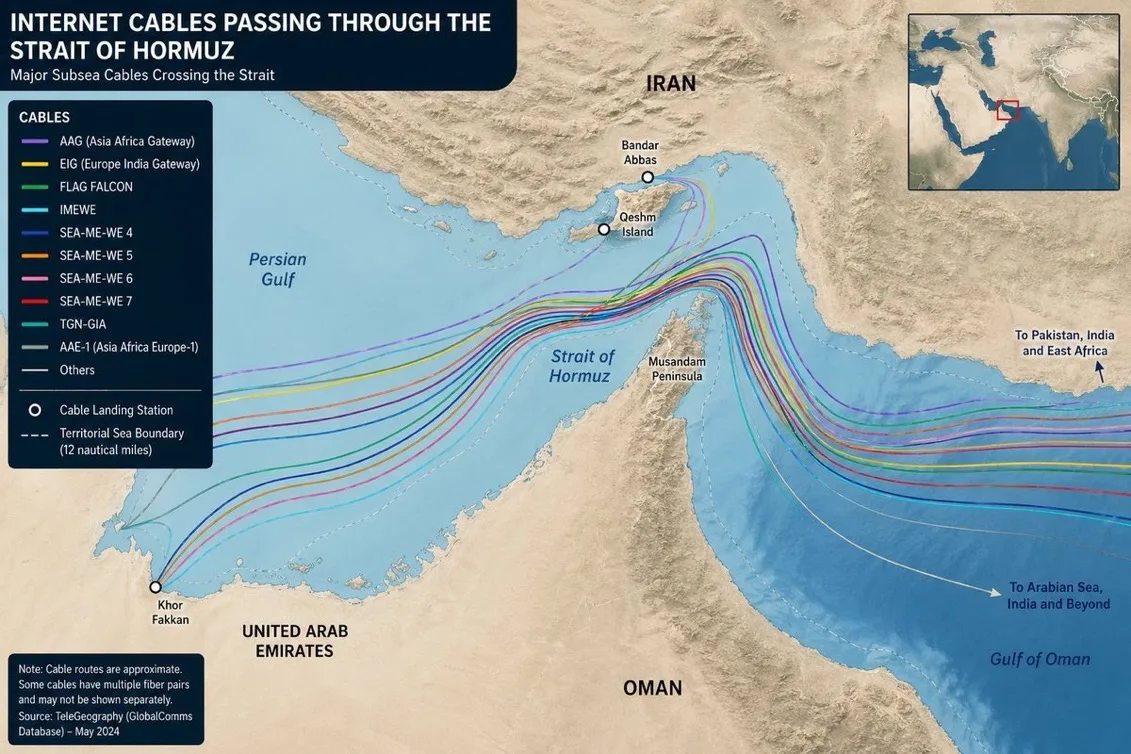
On Monday, Tasnim, a news agency affiliated with Iran's Islamic Revolutionary Guard Corps (IRGC), argued that Iran should apply its domestic laws to two undersea cable systems, FALCON and Gulf Bridge International (GBI), which it says pass through Iranian territorial waters in the Strait of Hormuz. Google, Meta, Microsoft and Amazon, it said, should "obtain passage permits and pay operating licenses and fees", according to Benzinga's account of the article. Other summaries of the piece also mention technical inspections. Tasnim invoked the UN Convention on the Law of the Sea, arguing that a coastal state is sovereign over the seabed within 12 nautical miles of its coast.
This is a proposal in IRGC-linked media, not a government decision, and we found no decree, law or fee schedule. The idea is also not new. In May, Tasnim and Fars outlined licensing fees, an obligation for the four companies to operate under Iranian law and exclusive Iranian control of cable repairs, and military spokesman Ebrahim Zolfaghari wrote on X: "We will impose fees on internet cables."
2. The threat that came first
The proposal came a day after a warning from Mohsen Rezaei, secretary of Iran's Supreme National Security Council, who spoke to Iranian state media on Sunday. Rezaei also called Washington's reply to Iran's seven conditions for reopening the strait "INADEQUATE" and said there would be "no return to the status quo ante". Deputy Foreign Minister Kazem Gharibabadi described Hormuz as an Iranian waterway that Tehran would use against its adversaries.

Tehran is presenting itself as both the possible attacker and the toll collector of the same infrastructure. Isik Mater, director of research at the internet monitor NetBlocks, put it this way in May: Iran's demand "comes off as more of a 'protection' fee, similar to what they've been doing with tankers".
3. How much of the internet really passes there
Undersea cables carry more than 99% of intercontinental data traffic, TeleGeography confirmed in 2023. But Hormuz is a minor route for that traffic. Five commercial cable systems cross the strait, and operators deliberately routed most of them through Omani waters in the south, TIME reported. Only FALCON and GBI also run through Iranian waters, according to TeleGeography, and cables through the strait carry less than 1% of global international bandwidth.

The exposure is regional. These cables serve the Gulf states, India and parts of East Africa, and they connect the data centers the Gulf has built for artificial intelligence, including Microsoft's $15 billion investment in the United Arab Emirates. Cut them, and those facilities "would be effectively isolated", an analyst told TIME in May.
4. Why it would be hard to collect
Two obstacles stand out. The first is legal: legal experts quoted by Gulf News in May said Hormuz is an international strait under the Law of the Sea, not a national canal like Suez, which Iranian media had used as a comparison. The second is American: US sanctions prohibit US companies from making payments to Iranian state entities, Tech Times noted in May, so the four companies could not pay without breaking federal law. Fees on cables are not unheard of in themselves: TeleGeography's Alan Mauldin told TIME that some countries, including the United States, charge regulatory fees for cable permits. Iran's leverage is therefore less legal than physical. Analysts point to the IRGC's combat divers, mini-submarines and underwater drones.