1. An exporter signs up to buy
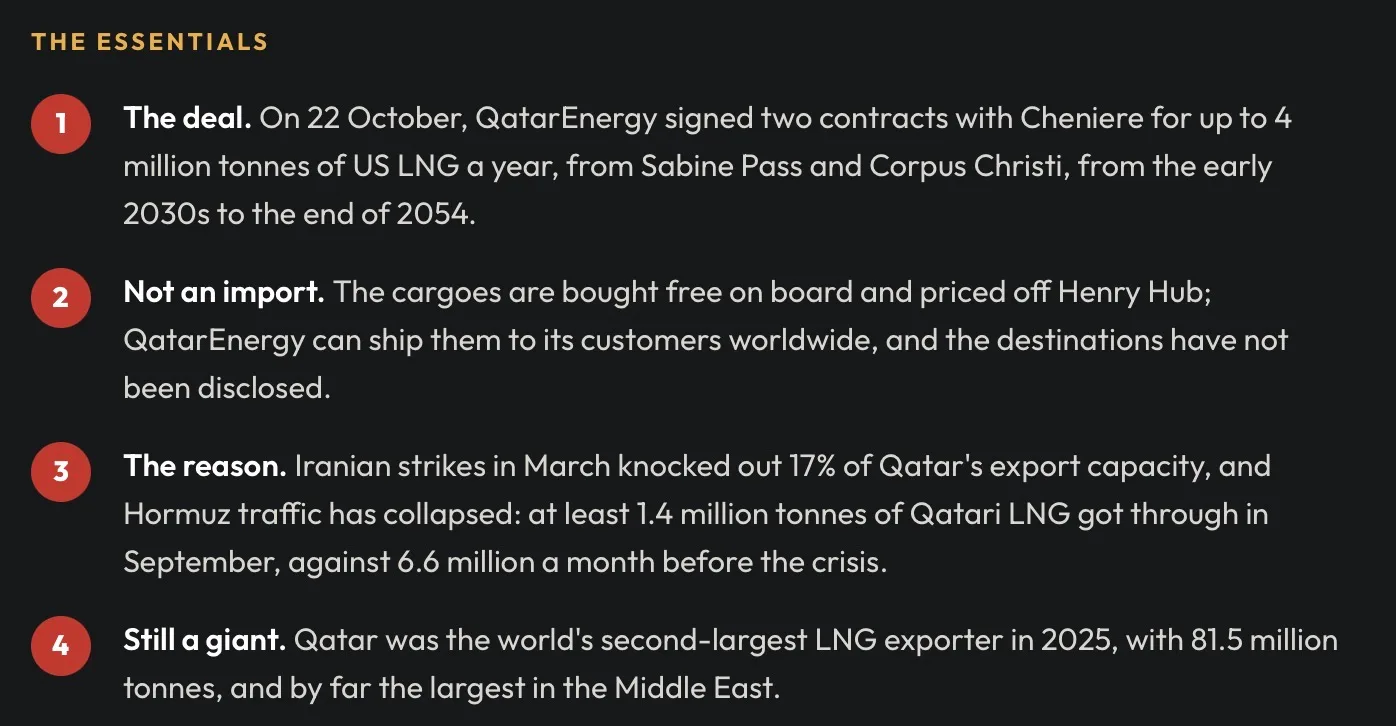
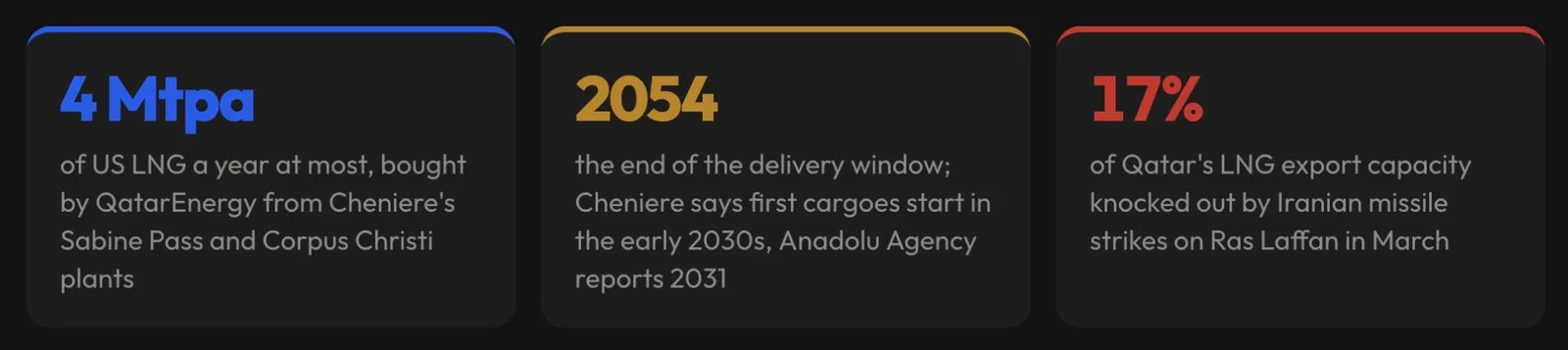
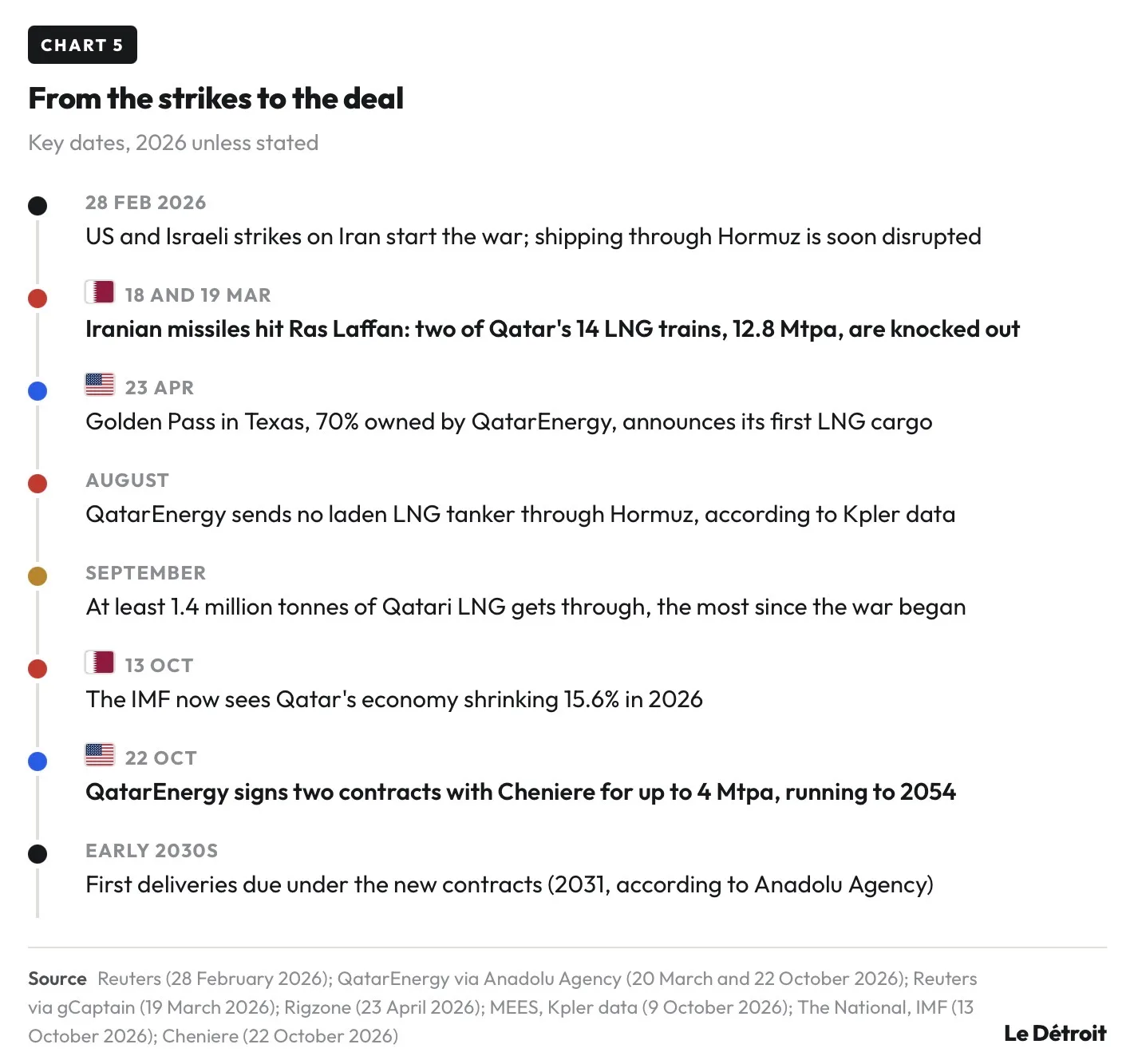
QatarEnergy, the state company of the country that shipped more liquefied natural gas than any nation but the United States last year, has agreed to buy American LNG until 2054. On 22 October, Cheniere Energy said its Sabine Pass plant in Louisiana and its Corpus Christi plant in Texas had each signed a long-term sale and purchase agreement with QatarEnergy for 2 million tonnes a year, or up to 4 million tonnes in total. Bloomberg described it as Qatar's first such US offtake deal. It is not QatarEnergy's first US gas, though: its trading arm takes 70% of the output of Golden Pass, a Texas plant it part-owns, and Reuters reported in July, citing trade sources, that QatarEnergy had bought 33 one-off spot cargoes of US LNG so far this year to supply customers in Asia.
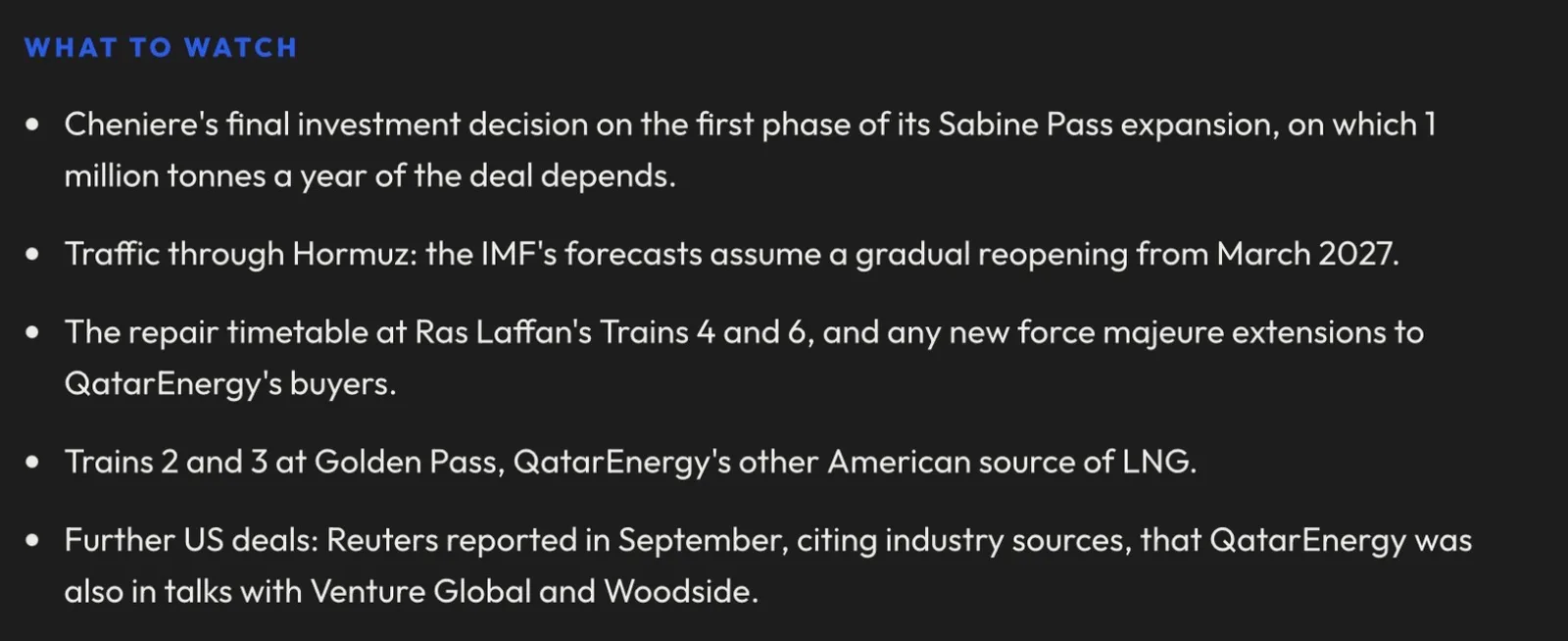
The cargoes will be sold free on board, at a price linked to the US Henry Hub benchmark plus a fixed fee, from the early 2030s to the end of 2054. One million tonnes a year of the Sabine Pass contract is conditional on Cheniere taking a final investment decision on the first phase of its planned expansion there.
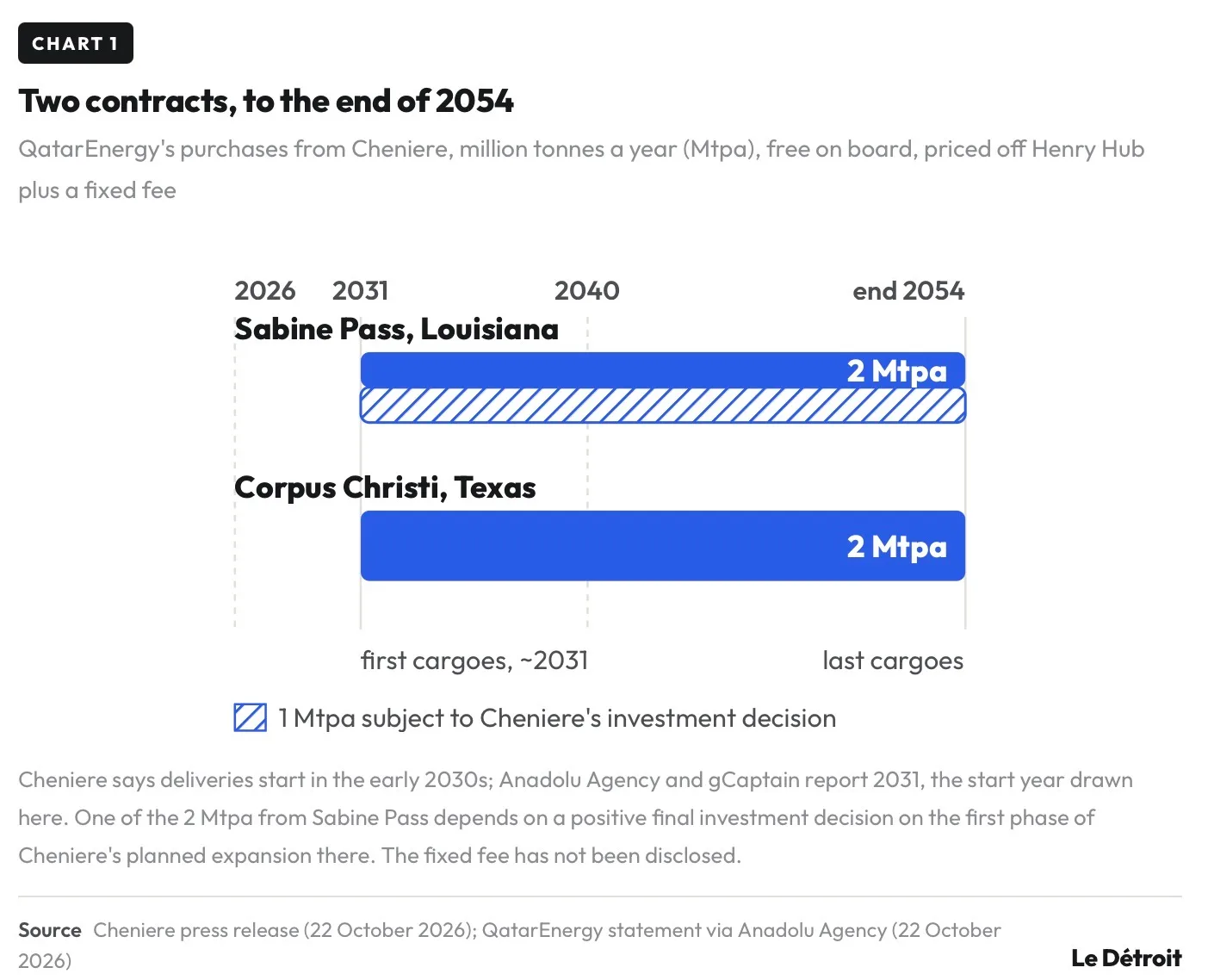
The gas is not meant for Qatar itself. Free-on-board cargoes become QatarEnergy's at the loading port, to ship to its own customers; the destinations have not been disclosed. "This major long-term purchase will expand and diversify our global LNG portfolio and advance our ability to meet the evolving requirements of the market," said Saad Sherida al-Kaabi, Qatar's minister of state for energy affairs and QatarEnergy's chief executive, according to Anadolu Agency. "We look forward to reliably supplying QatarEnergy from both Sabine Pass and Corpus Christi into the second half of this century," said Jack Fusco, Cheniere's chief executive, in the company's announcement.
2. Why Qatar needs a second door
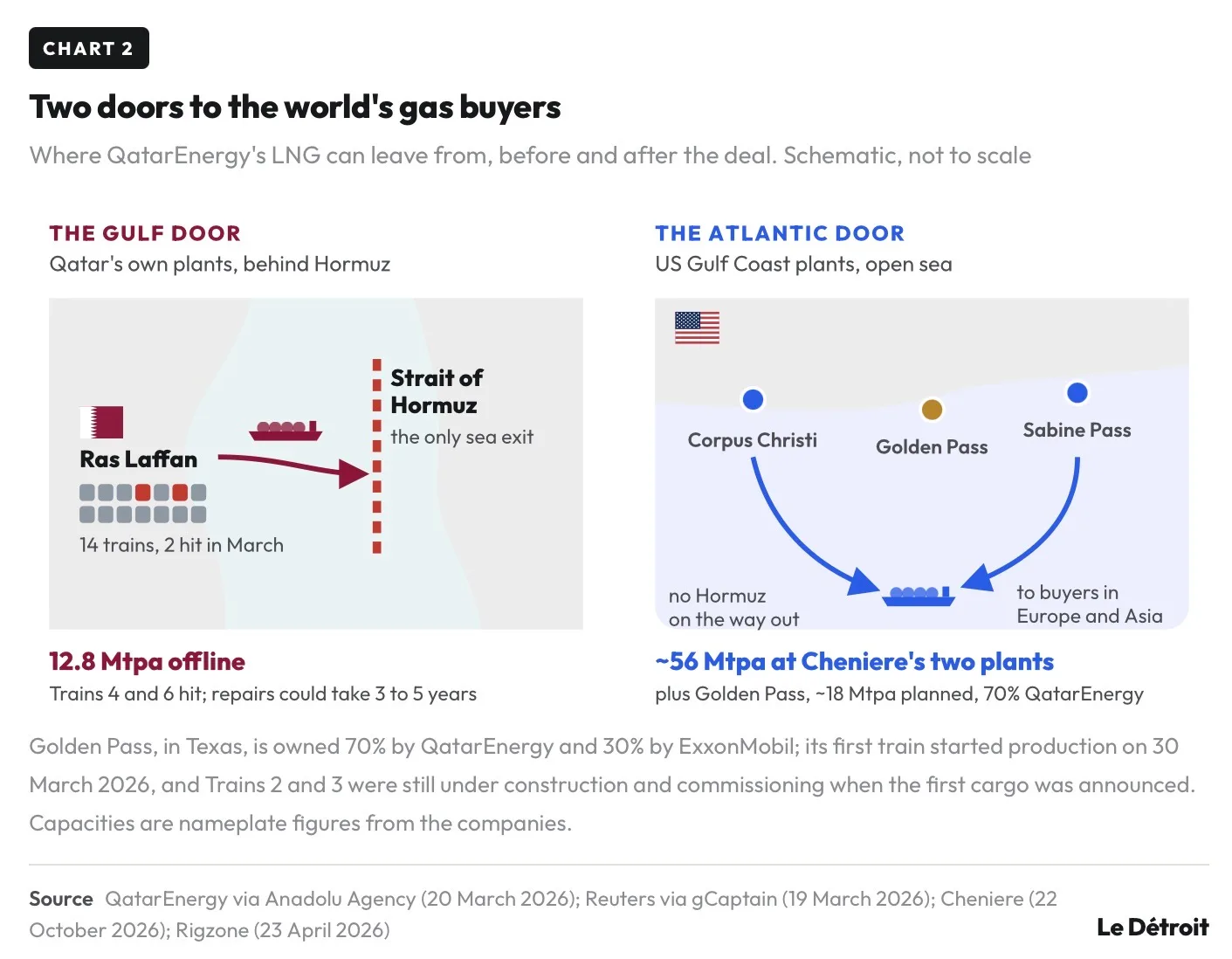
Every tonne of LNG made in Qatar has to leave through the Strait of Hormuz. The war that began on 28 February, when the United States and Israel struck Iran, has turned that strait into a bottleneck. On 18 and 19 March, after Israeli attacks on Iran's own gas infrastructure, Iranian missiles hit Ras Laffan, Qatar's export hub, Reuters reported. Two of its 14 liquefaction trains, with 12.8 million tonnes a year of capacity, were knocked out: about 17% of Qatar's export capacity. QatarEnergy said repairs could take three to five years, cost it about $20 billion a year in lost revenue and force it to declare force majeure on some long-term contracts for up to five years, with buyers in China, South Korea, Italy and Belgium among those affected.
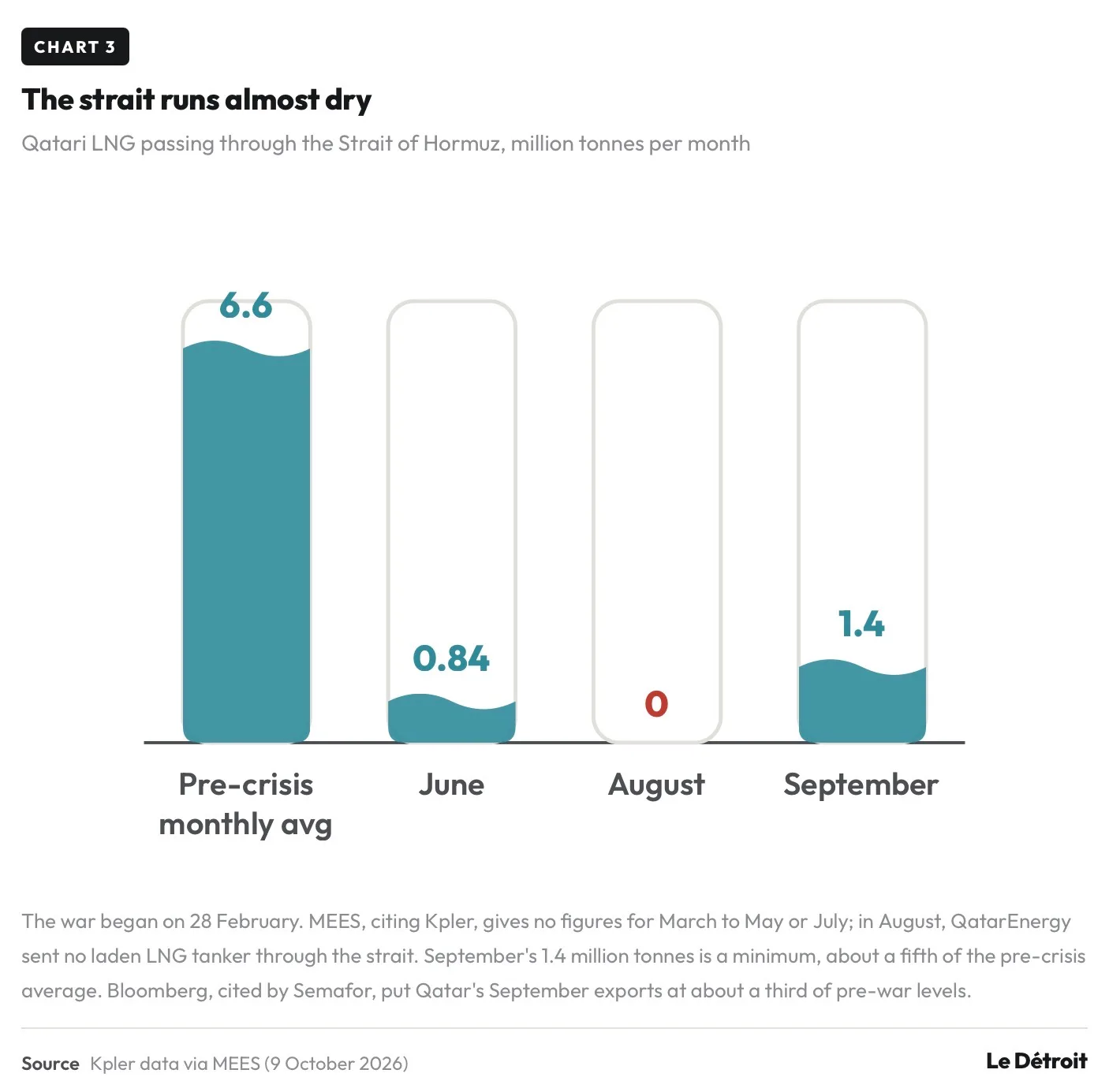
Even the plants that still work struggle to get gas out. In August, QatarEnergy sent no laden LNG tanker through the strait, and in September at least 1.4 million tonnes of Qatari LNG got through, about a fifth of the pre-crisis monthly average, according to Kpler data cited by MEES. The International Monetary Fund now expects Qatar's economy to shrink by 15.6% this year.
3. Still a giant, for now
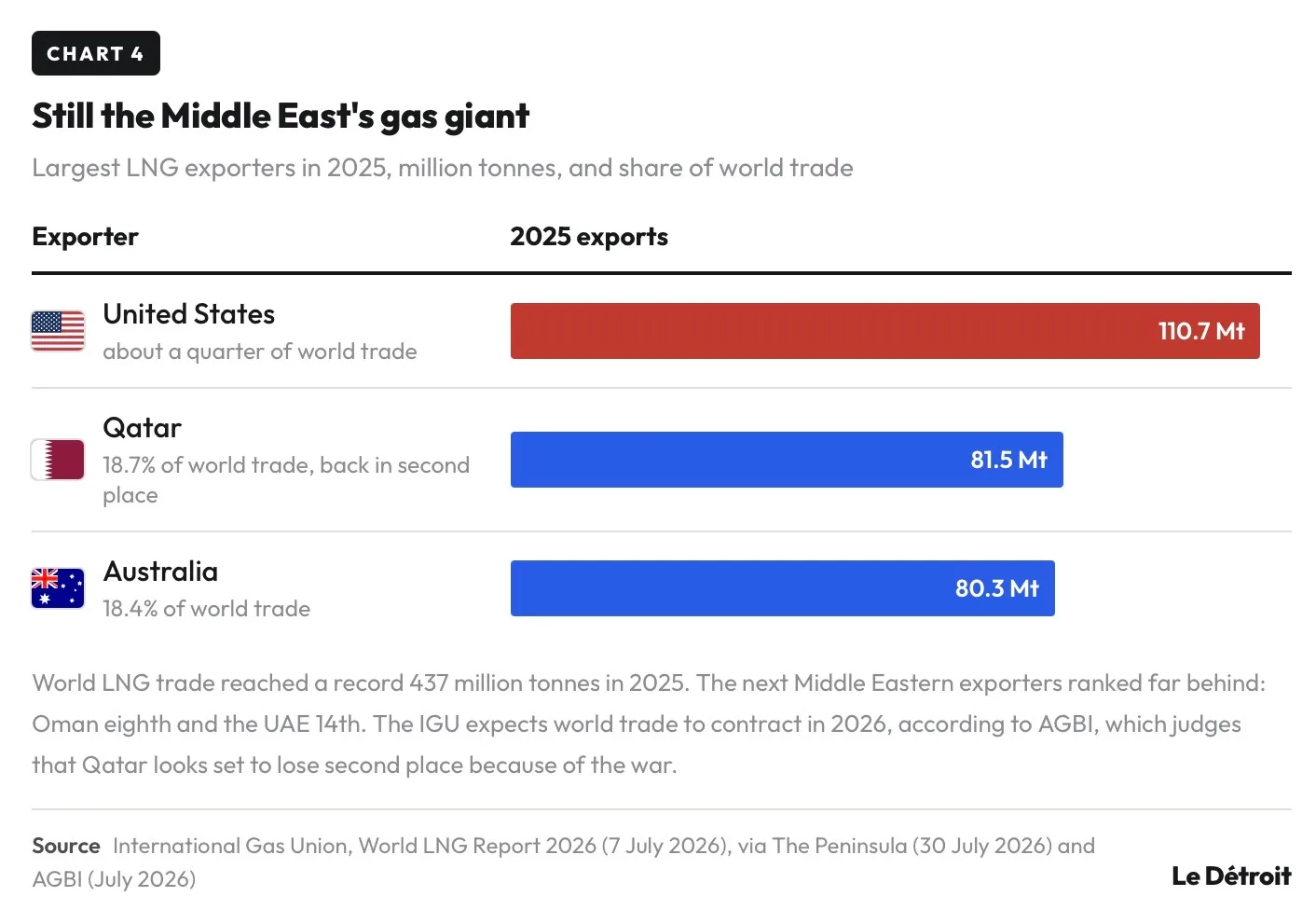
Qatar exported 81.5 million tonnes of LNG in 2025, 18.7% of world trade, and regained second place behind the United States, just ahead of Australia, according to the International Gas Union. No other Middle Eastern exporter comes close: Oman ranked eighth and the United Arab Emirates 14th. QatarEnergy is also already an American exporter: it owns 70% of Golden Pass in Texas, alongside ExxonMobil, and the plant's first cargo was announced on 23 April.
4. Le Détroit's reading