
1. What launched
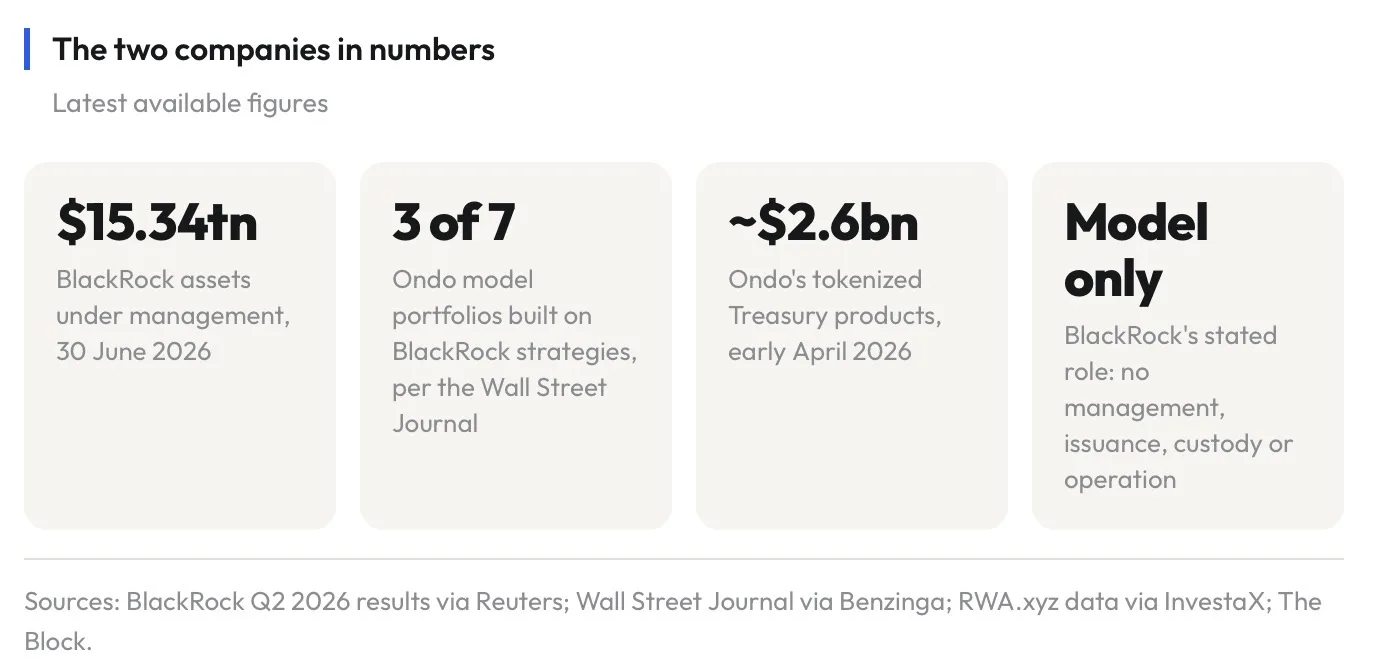
On 24 September, Ondo Finance launched Ondo Intelligent Portfolios, portfolios delivered as a single transferable token. The first three are based on strategies developed by BlackRock for Ondo: BLKHIon (high income), BLKDIGon (diversified growth) and BLKGRWon (high growth). According to the Wall Street Journal, they are three of seven tokenized model portfolios Ondo is rolling out, and the portfolios hold a mix of stock, bond and bitcoin ETFs. They are open only to eligible investors outside the United States.
The mechanism, as Ondo describes it: a buyer mints one token and receives economic exposure to a weighted basket of Ondo Stocks, Ondo's tokenized equities and ETFs. Assets and target weights are set at launch; rebalancing runs on a fixed schedule, encoded in smart contracts. Holdings, weights and rebalances are visible onchain.
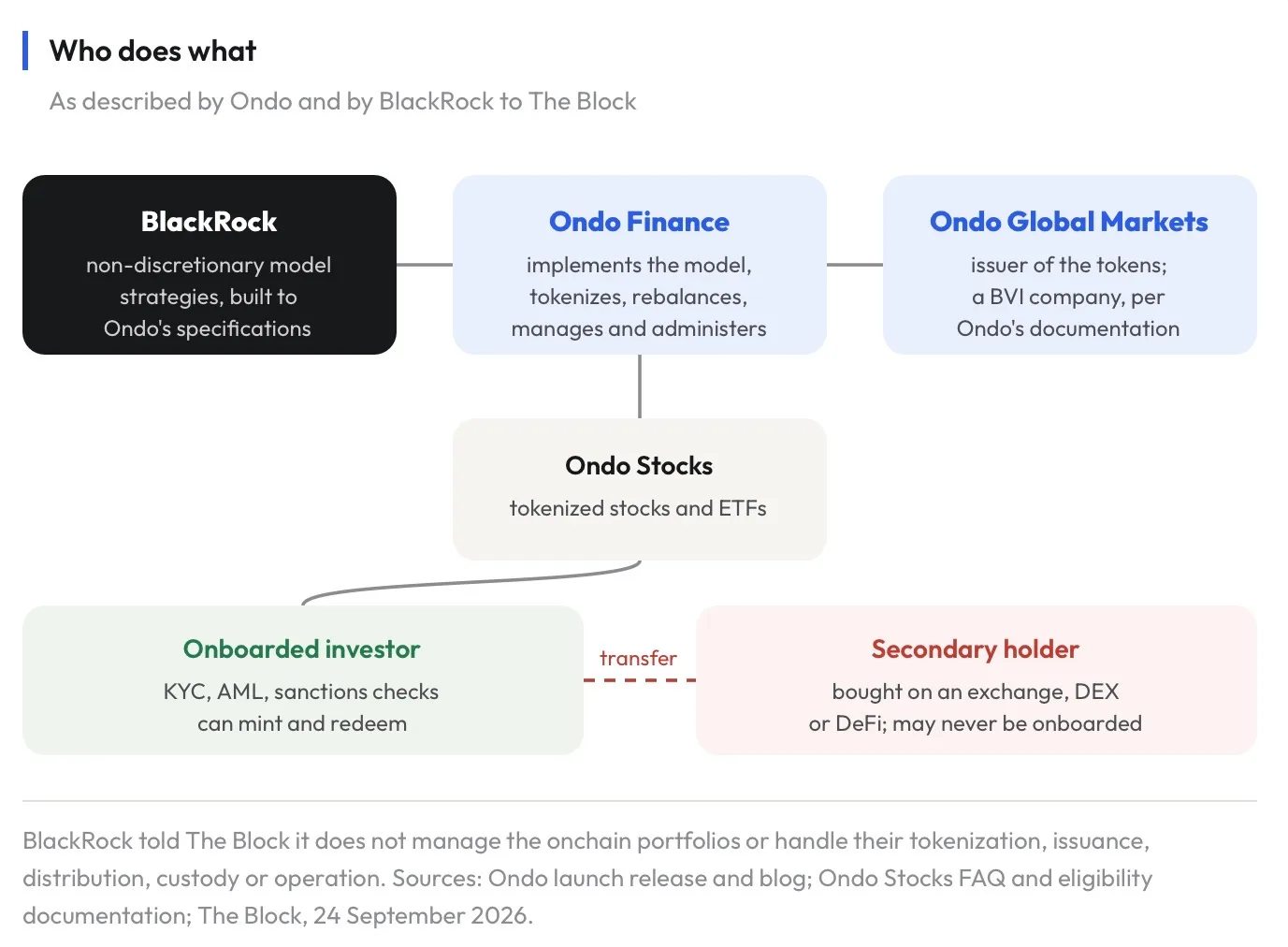
"Powered by BlackRock" is in the product name. BlackRock's operational role is not in the product.
2. What it is for
The pitch is real. Model portfolios are preset strategies that financial advisers use instead of building portfolios from scratch, typically implemented in brokerage accounts during market hours. Ondo turns it into one token that can be held in a self-custodied wallet, transferred peer to peer, used as collateral in DeFi lending or perpetuals, and inspected onchain. Ondo argues this combines the diversification of an institutional portfolio with the openness of onchain assets
For BlackRock, the logic is distribution. It already manages its own tokenized fund, BUIDL; here, reportedly for the first time, it has designed portfolios for another firm to tokenize. It reaches a crypto-native, non-US audience without issuing a token itself.
3. Where it fits in the tokenized market
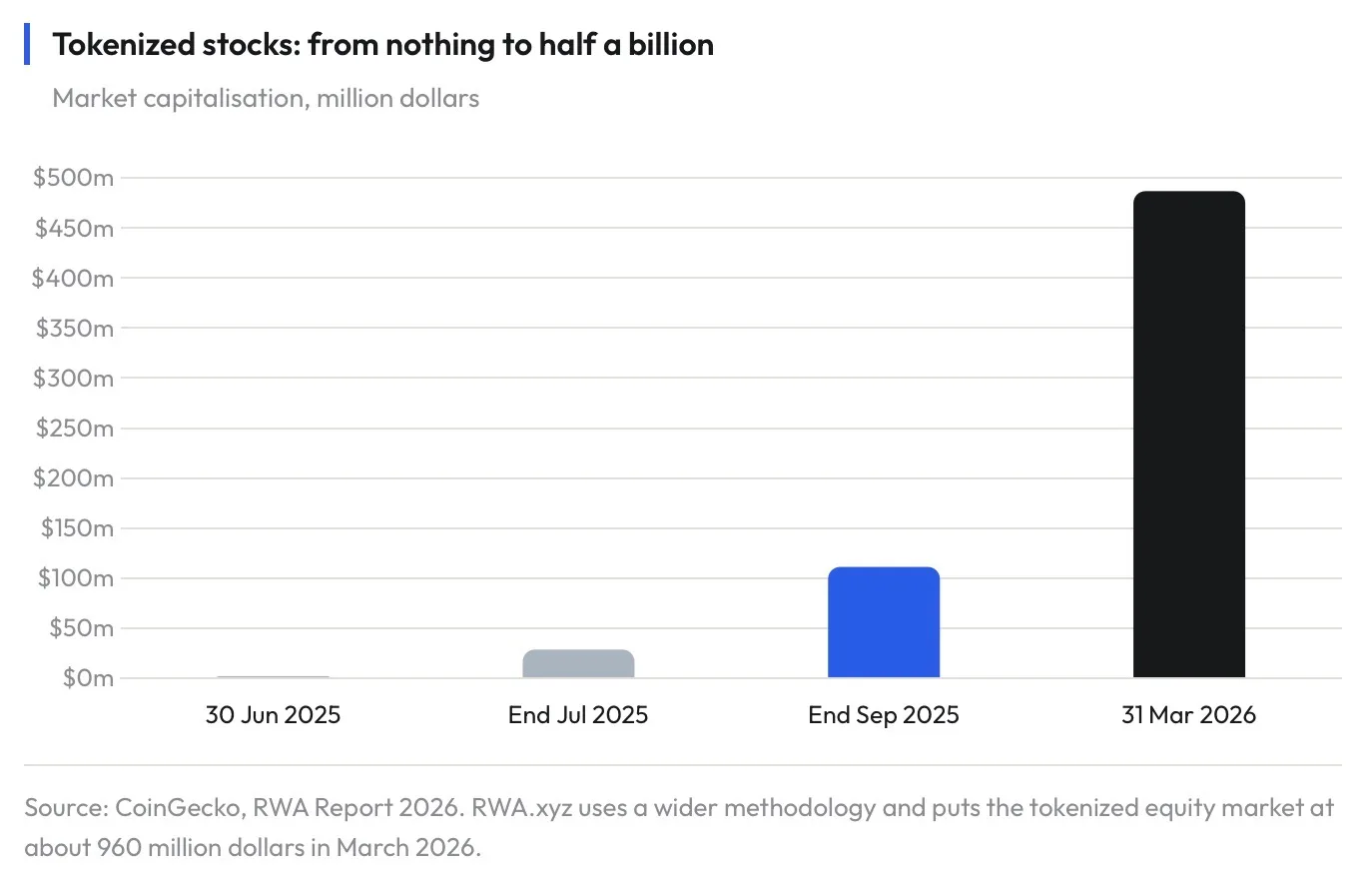
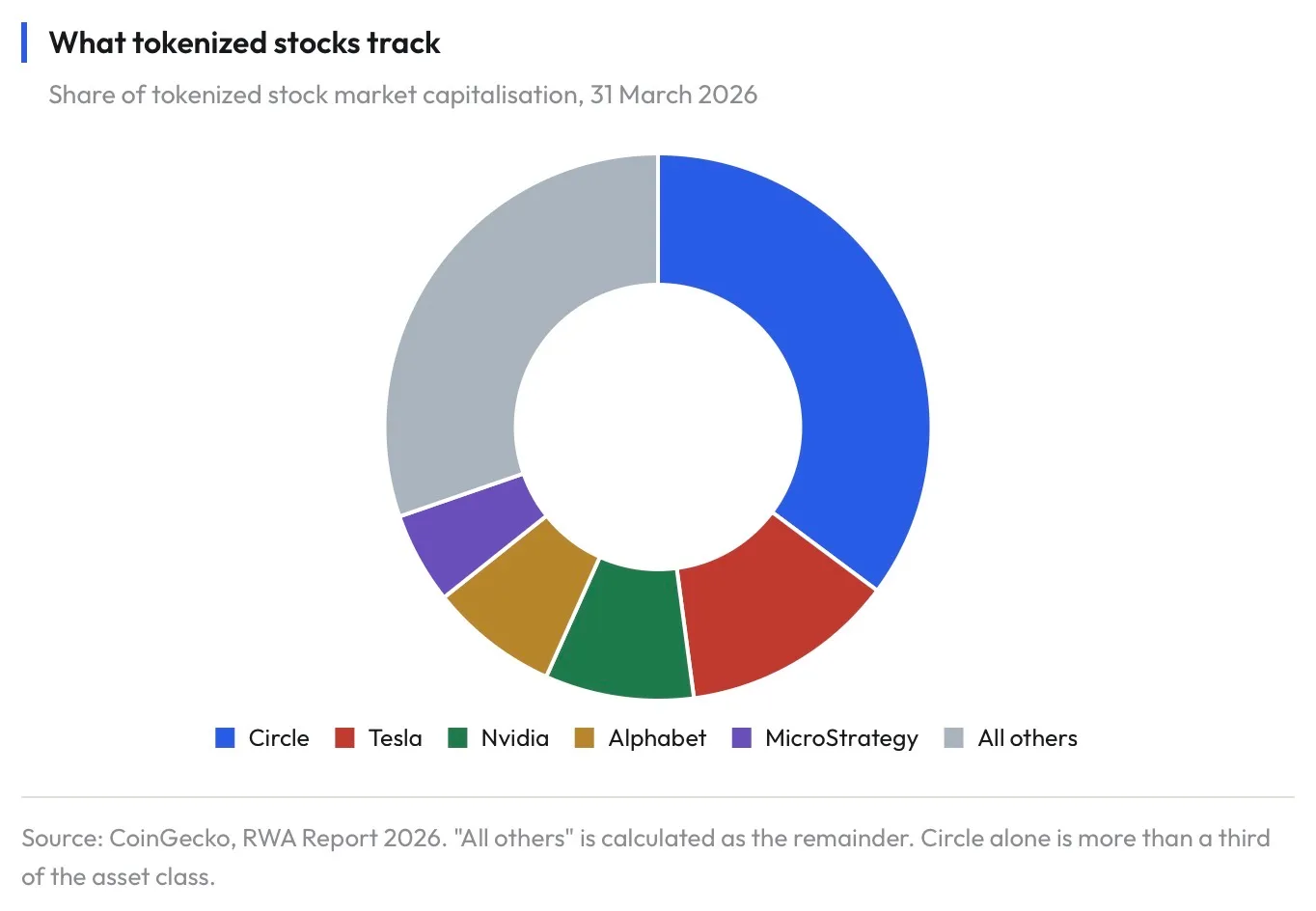
Tokenized stocks are among the newest parts of the real-world-asset market, and still small next to tokenized Treasuries. CoinGecko's RWA report tracks them from about 2 million dollars at the end of June 2025 to about 487 million by the end of March 2026, with Ondo's launches tripling the market in September 2025.
4. The AML question: KYC at the gate, not in the corridor
Ondo's documentation for its tokenized stocks, issued by the same entity as the portfolio tokens, is precise about how access works. To mint or redeem directly, an investor must complete onboarding: confirmation of non-US status, that they are not in a restricted jurisdiction and not a sanctioned person, plus standard KYC and AML checks. The issuer, Ondo Global Markets (BVI) Limited, lists prohibited jurisdictions that include occupied regions of Ukraine.
But the same documentation states that because those tokens are freely transferable onchain, subject to some restrictions, it is possible to hold them without having onboarded, for example after buying on a third-party exchange, wallet or DeFi protocol. Such a holder cannot redeem with the issuer, but can keep the token, sell it or transfer it. Ondo describes the portfolio tokens as freely transferable peer to peer.
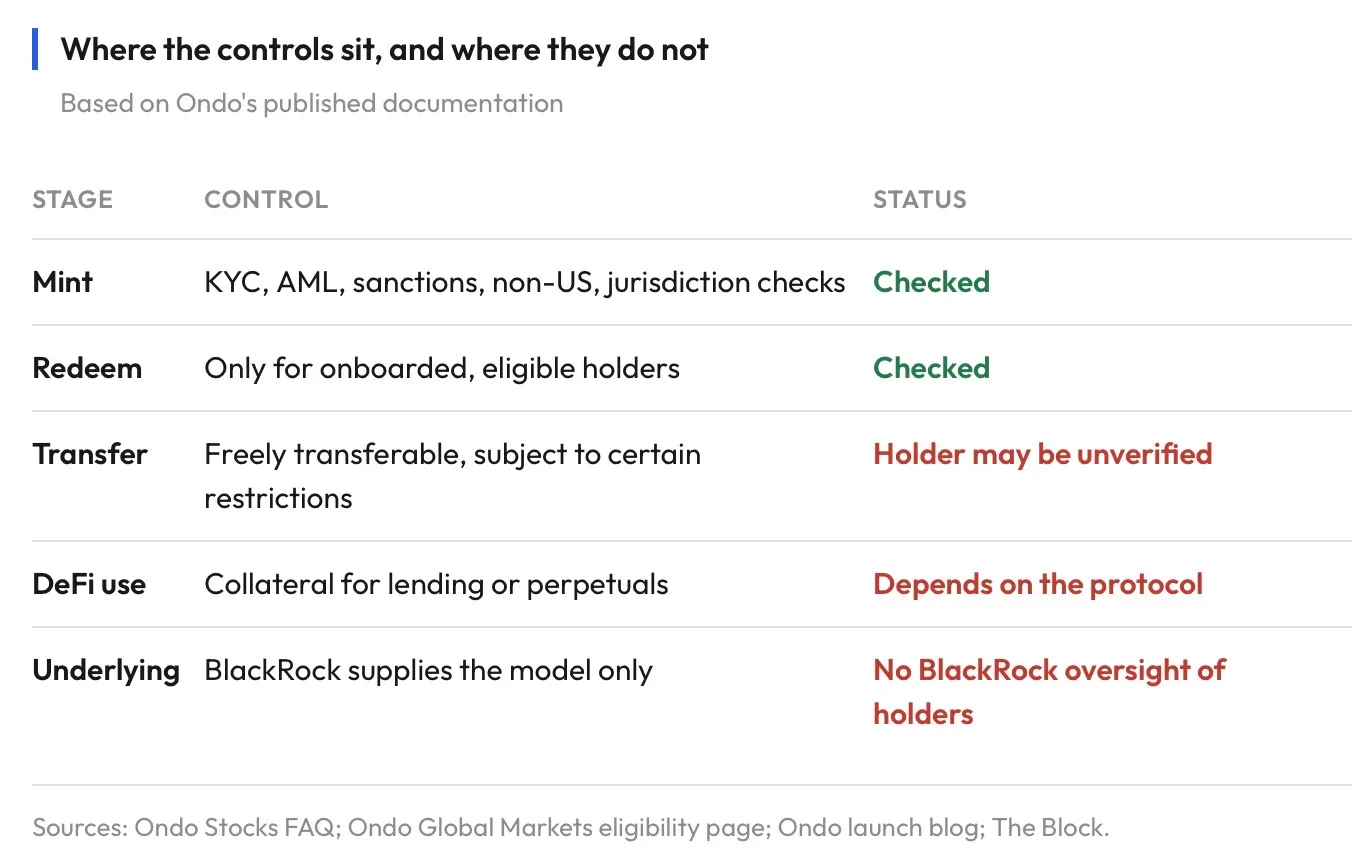
Gating at the issuer is common in tokenized finance, and it is a choice: Ondo's own Treasury fund, OUSG, goes further and restricts transfers to onboarded investors. For its tokenized stocks, the issuer screens the people who create and destroy tokens; the chain handles everything in between. What changes here is the wrapper. A portfolio token is an unusually convenient store of value: diversified, liquid around the clock, carrying a household-name brand and usable as collateral. That is what makes it useful to investors, and what makes it attractive to anyone who needs to hold or move value outside the banking system.
Two mitigants are real. Every holding and transfer is public onchain, which can give investigators more visibility than an omnibus brokerage account. And the issuer controls redemption: tokens held by an ineligible person cannot be turned back into underlying assets through Ondo.
5. The other risks
Exposure, not ownership. Holding a portfolio token gives economic exposure to the basket, not direct ownership of the underlying securities. The tokens are issued by Ondo Global Markets, which Ondo's documentation identifies as a British Virgin Islands company, not by BlackRock or by the funds in the basket.
The brand gap. BlackRock's name is in each ticker, but by its own account it holds no operational role. In a failure, whether a smart-contract exploit, a rebalancing error or an issuer problem, the investor deals with Ondo's issuing entity, not BlackRock.
What the wrapper could hold next. Ondo's launch blog describes a future in which one portfolio token could combine ETFs with leverage, perpetuals, options, prediction-market bets and even a small memecoin allocation. That is a legitimate product ambition. It also means the same "portfolio" label could one day cover very different risk profiles.
The token is transparent. The chain of responsibility behind it is not, unless you read the documentation.
WHAT TO WATCH
Onchain weights. The actual allocation of each portfolio, including its bitcoin ETF share, once analysts publish it.
Secondary distribution. How much supply ends up in wallets that never onboarded.
DeFi listings. Which lending protocols accept the tokens as collateral, and on what terms.
Regulators outside the US. Whether any authority in a market where the tokens are sold treats them as collective investment schemes.
The rest of the lineup. The Wall Street Journal reported seven portfolios; Ondo's announcement details three. Whose strategies the others use.