
1. What is being claimed
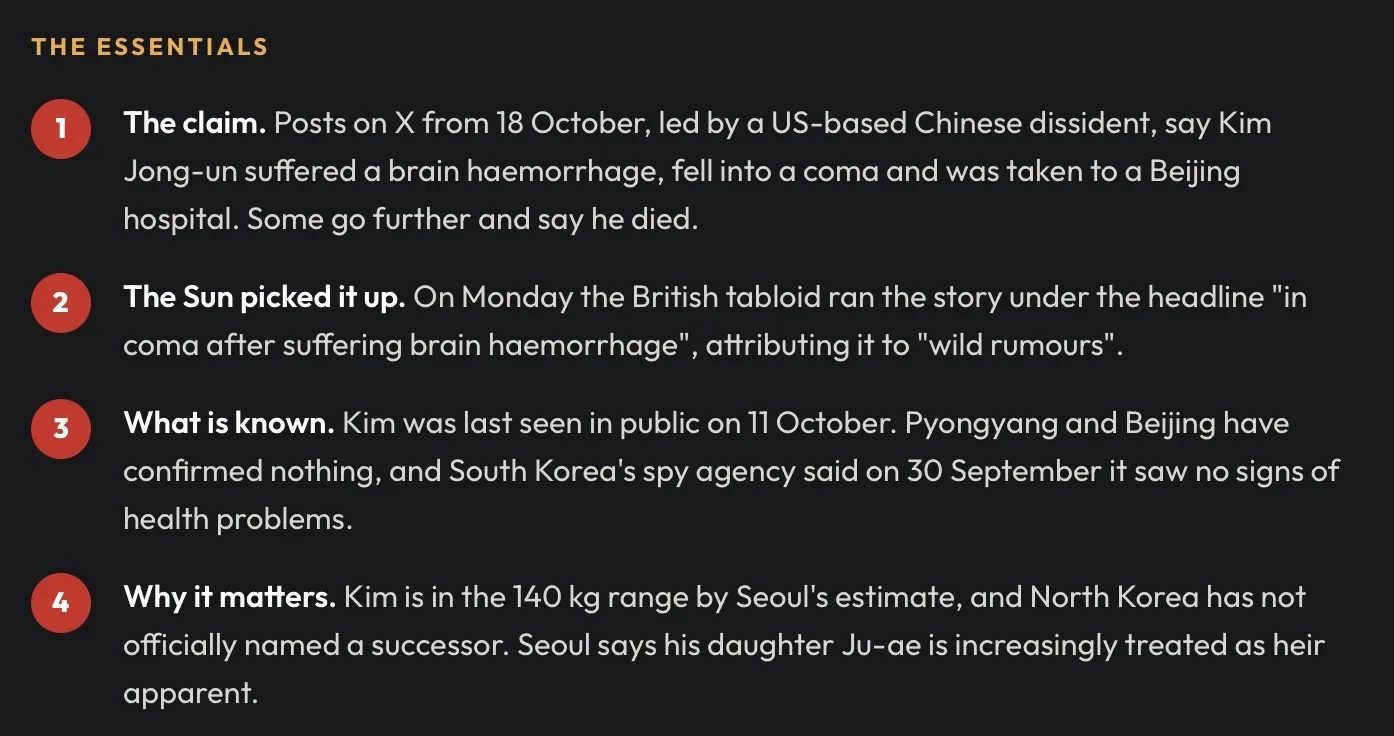
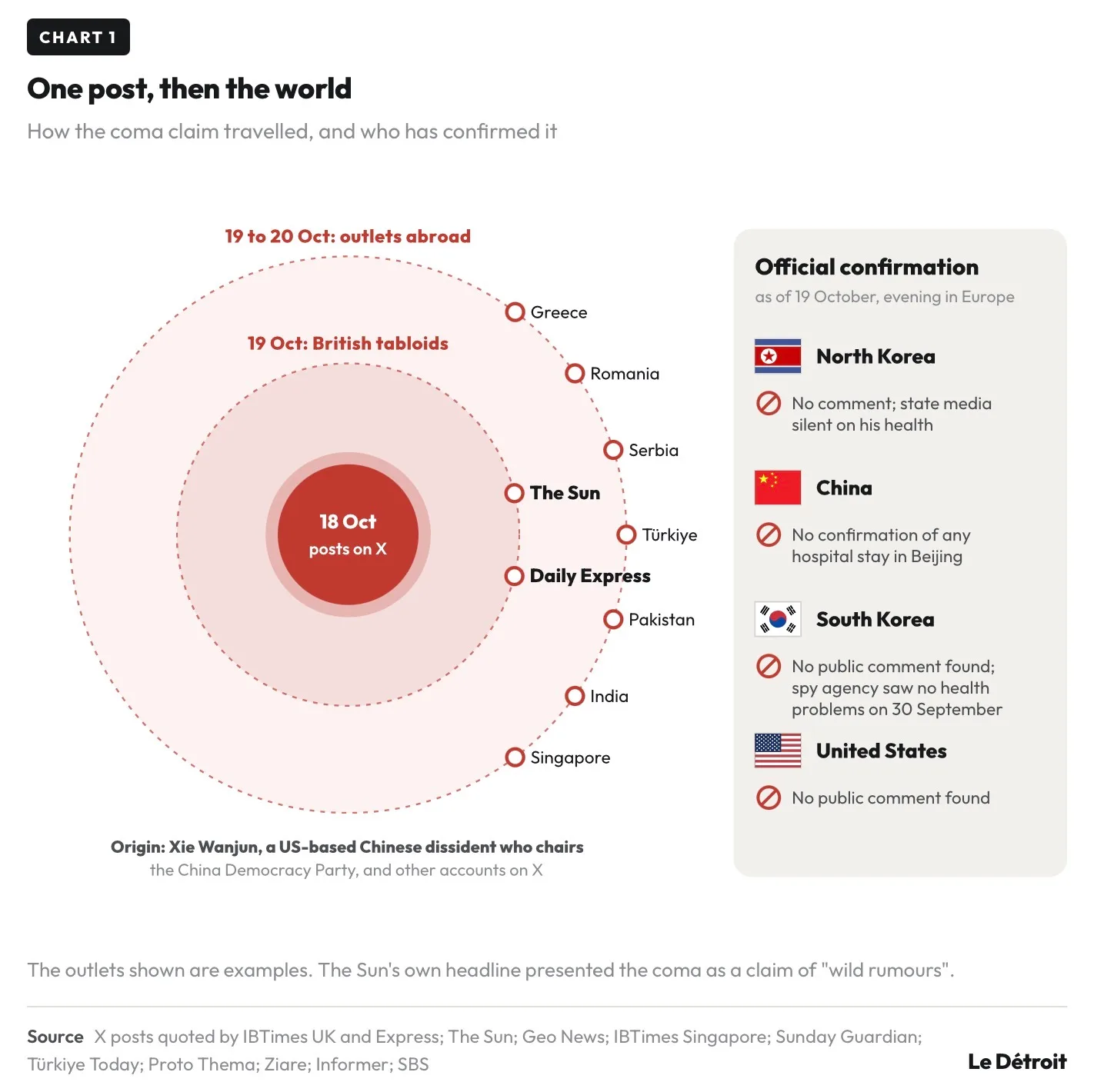
On 18 October, posts on X claimed that Kim Jong-un had suffered a severe brain haemorrhage, fallen into a coma and been taken to Peking Union Medical College Hospital in Beijing. The most widely shared came from Xie Wanjun, a Chinese dissident living in exile in the United States who chairs the China Democracy Party, a pro-democracy group banned in China. He went further, saying Kim had died, that his body was being secretly returned to North Korea and that China had sent 9,000 troops to Pyongyang to secure the succession. None of his posts offered independently verifiable evidence, IBTimes UK noted.
On Monday the claims reached The Sun, which ran them under a headline that began "Kim Jong-un 'in coma after suffering brain haemorrhage', wild rumours claim". The Daily Express followed, and outlets from Greece to Pakistan and Singapore repeated the story, all of those we reviewed stressing that it was unverified.

2. What is actually known
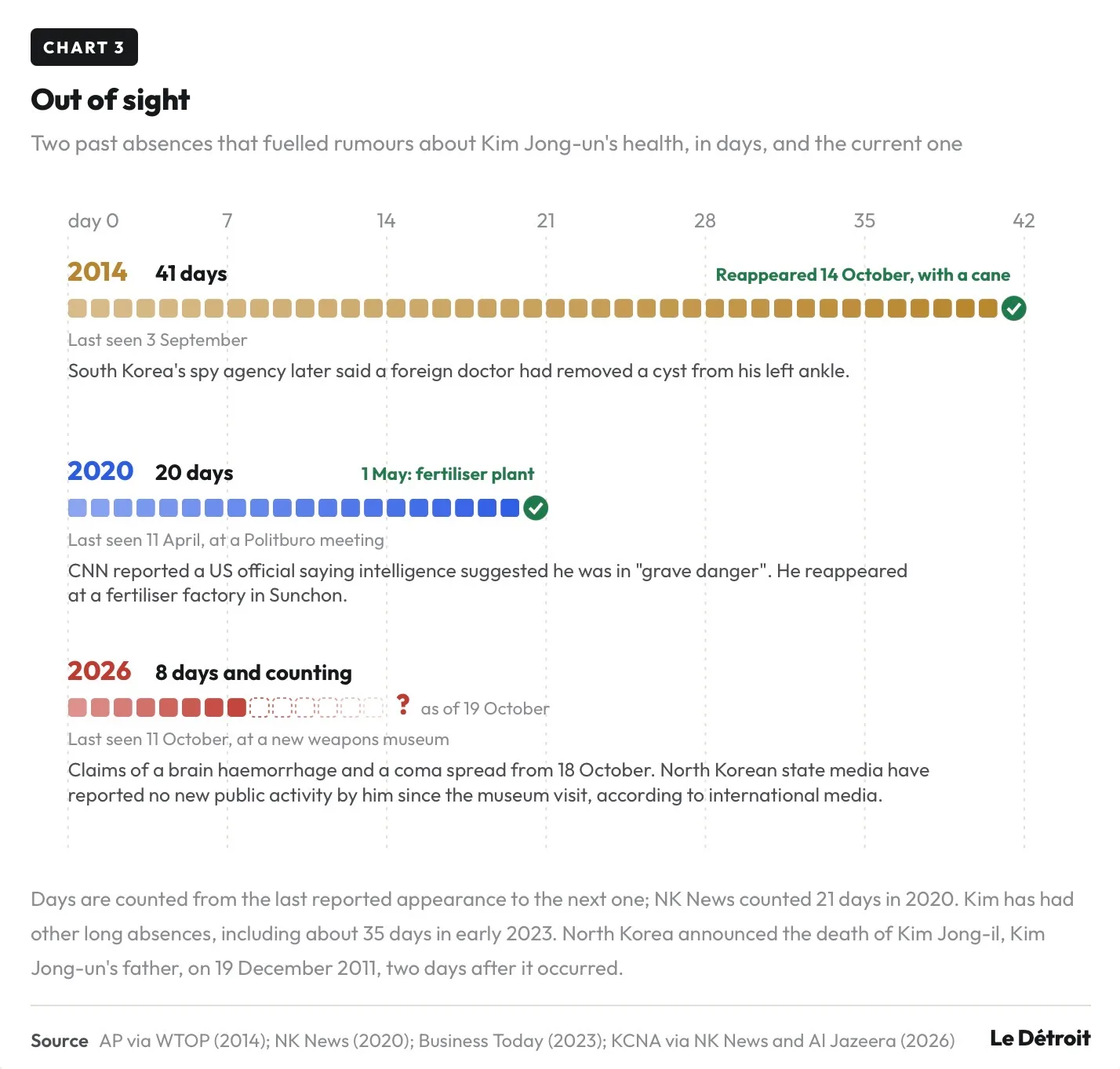
Kim was last seen in public on 11 October, when he opened the new National Defence Revolution Museum with his wife, Ri Sol-ju, and his daughter, Kim Ju-ae, to mark the 81st anniversary of the ruling party; state media reported the visit two days later. North Korea fired ballistic missiles the next day, one of which flew more than 900 km, in what state media called a tactical missile test. It fired two submarine-launched missiles on 14 October, and senior military officers, not Kim, were reported to have observed the launches; a torpedo test reported on 17 October did not mention him either. On 19 October state media carried a statement by his sister, Kim Yo-jong, on tensions at the border, which said nothing about his health.
Neither Pyongyang nor Beijing has confirmed a hospital stay; China's foreign ministry was not asked about it at its 19 October briefing, and we found no public comment from Seoul or Washington by Monday evening in Europe. The last official assessment dates from 30 September, when South Korea's National Intelligence Service told lawmakers that Kim weighed around 140 kg and was at high risk of cardiovascular disease, but showed "no signs of health problems" and was followed by a dedicated medical team.
The main source also invites caution. In 2022 a viral post by Xie about an 80-kilometre military convoy heading to Beijing was cited in rumours of a coup against Xi Jinping; PolitiFact rated the coup claim false. And one of his claims this time, that Kim Yo-jong had ordered loudspeaker broadcasts and warning shots, is not what her statement said: it accused South Korean troops of firing warning shots, and said Pyongyang was considering resuming the broadcasts.

3. Why rumours about Kim keep coming back
North Korea says nothing about its leader's health, so his absences fill the gap. In 2014 Kim vanished for 41 days and returned with a cane; Seoul later said he had had an ankle cyst removed. In 2020, after he missed his grandfather's birthday celebrations, a US official told CNN that Washington was monitoring intelligence suggesting he was in "grave danger"; he reappeared after 20 days at a fertiliser plant. Silence is not proof either way: the regime announced the death of Kim Jong-il two days after it happened.
The stakes explain the attention. North Korea has never officially named a successor. South Korea's spy agency judged in February that Kim's daughter Ju-ae had entered the "successor designation stage", and said on 30 September that her standing "as heir apparent is being solidified", noting her 30 public appearances this year, the most to date. A sudden vacancy at the top of a nuclear-armed state, on a border Kim Yo-jong herself calls "very unstable", is what makes a viral rumour worth checking, and not repeating as fact.