
What happened
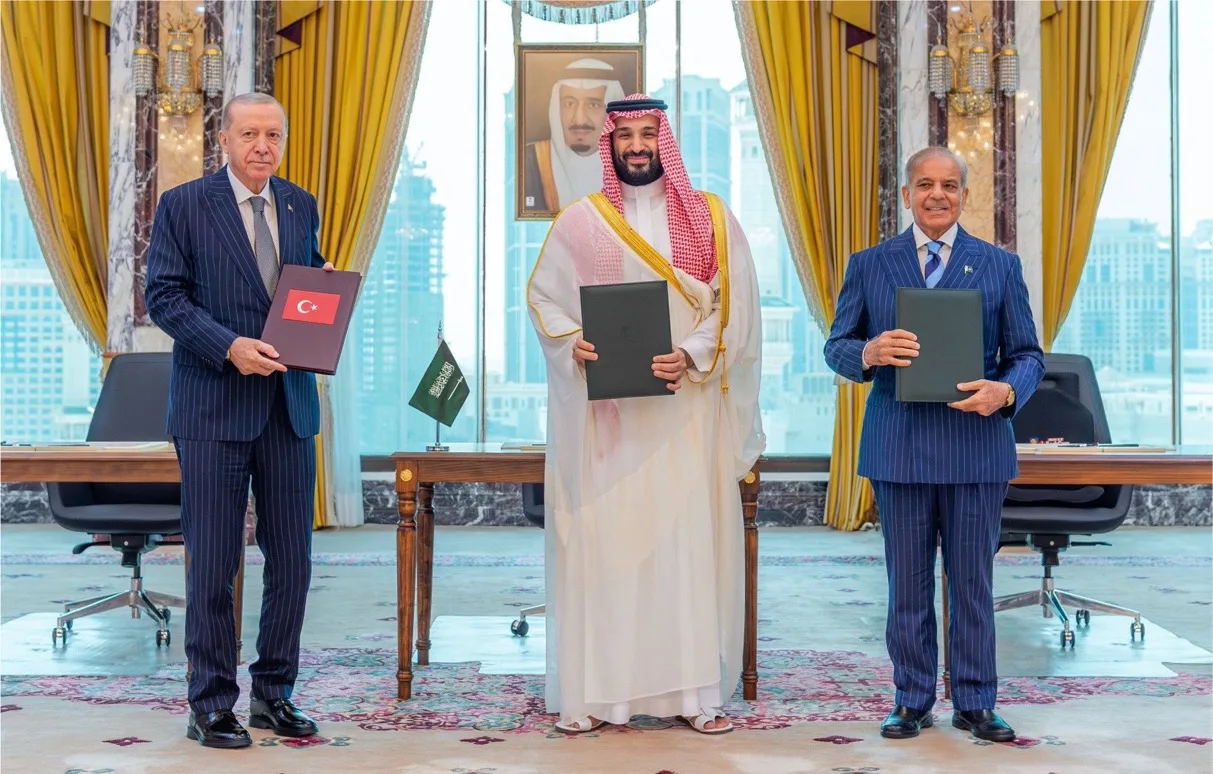
Saudi Arabia, Turkey and Pakistan agreed on Monday to activate the collective deterrence measures of the Mecca Alliance, the mutual defence pact the three countries signed on 7 August. Meeting in emergency session in Riyadh, the alliance's strategic political and defence committee decided to "provide the agreed military forces and capabilities and ensure their rapid deployment" to the kingdom, according to Pakistan's foreign ministry. The talks brought together Turkish Foreign Minister Hakan Fidan, Pakistan's Deputy Prime Minister and Foreign Minister Ishaq Dar, and Saudi Foreign Minister Prince Faisal bin Farhan.
https://x.com/i24news_en/status/2107197448661909809?s=61
Saudi Defence Minister Khalid bin Salman said the members had agreed to trigger the alliance in response "to the attacks and all those responsible for them". The three countries discussed recent attacks on Saudi Arabia, including incidents targeting the holy cities of Mecca and Medina, but their joint statement did not name the Houthis. It gave no troop numbers and did not say what the Turkish and Pakistani forces would do on arrival.
A pact under pressure
The activation follows weeks of doubts. After waves of Houthi attacks in September, Ankara and Islamabad said they had not received any Saudi request for help, and on 10 September Pakistan said it was not considering an immediate military response. On 25 September, the three countries' military chiefs met in Riyadh and pledged to "immediately translate" their commitments into military cooperation. The Houthis have warned Turkey and Pakistan that they would face an "iron fist" if they entered the war.
On the ground, the Saudi-backed Yemeni government has launched a counteroffensive, dubbed "Dawn of Yemen", to push the Houthis back from territory they captured last month. Its spokesman said government forces had "succeeded in controlling Bab al-Mandeb" and retaken the road between Dhubab and the port town of Mocha. The Saudi-led coalition said it hit 324 targets with 100 aircraft at the start of the operation.
The economic stakes: Saudi Arabia's last open door
Why it matters for the Horn of Africa
Bab al-Mandeb separates Yemen from Djibouti and Eritrea. A military escalation in the strait directly affects Djibouti, a logistics hub and host of several foreign military bases, and the shipping routes that serve the whole Horn of Africa.