
1. The upset
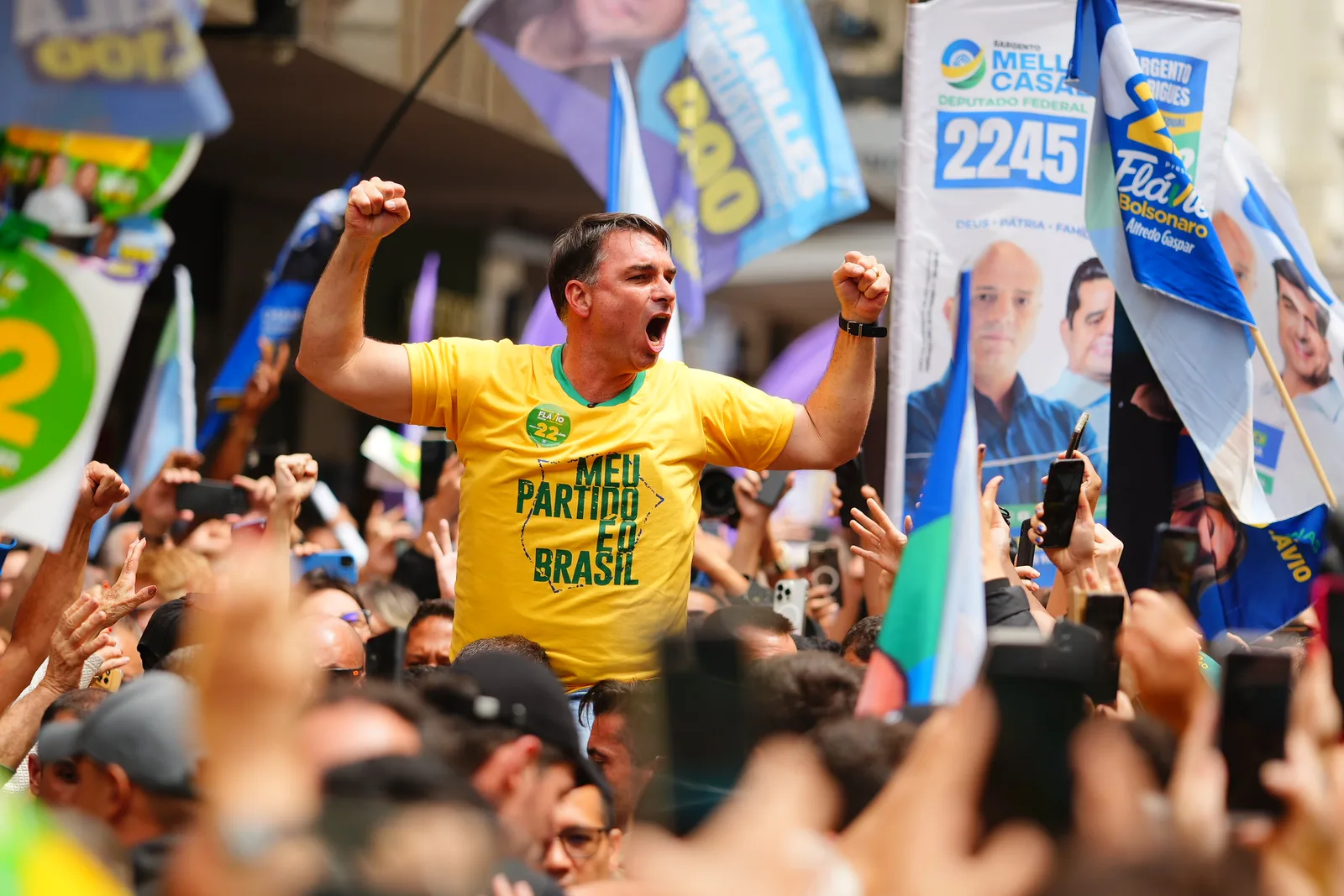
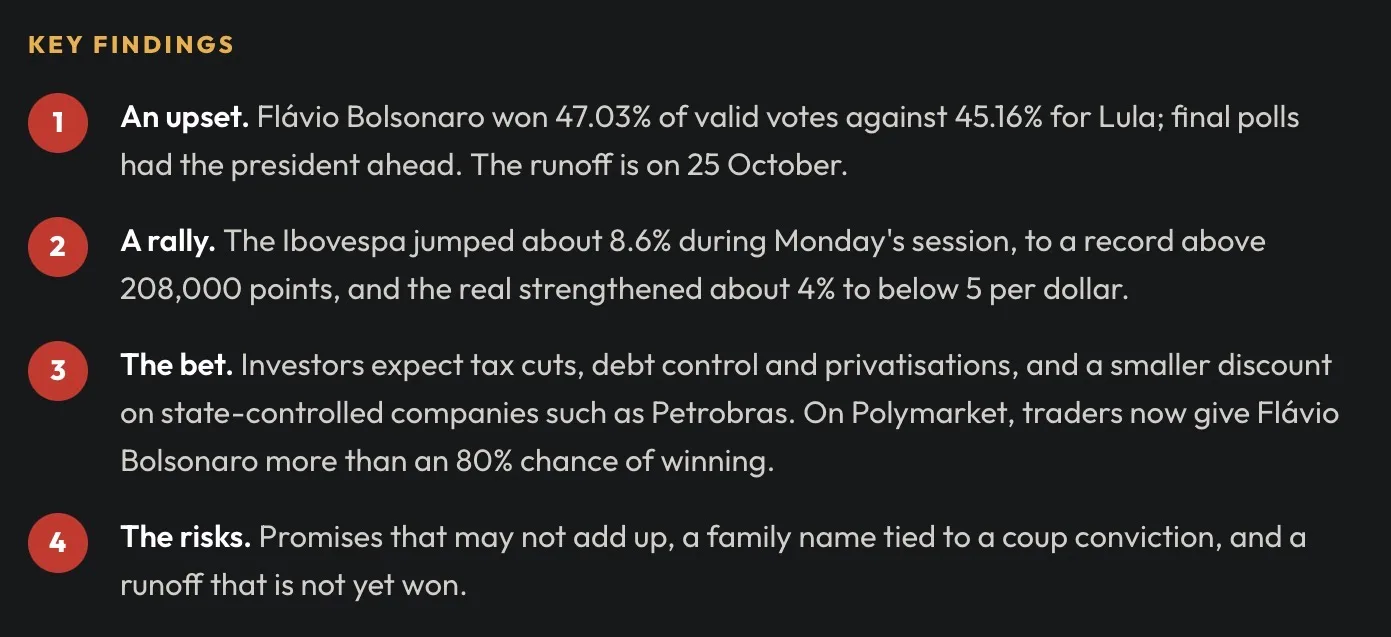
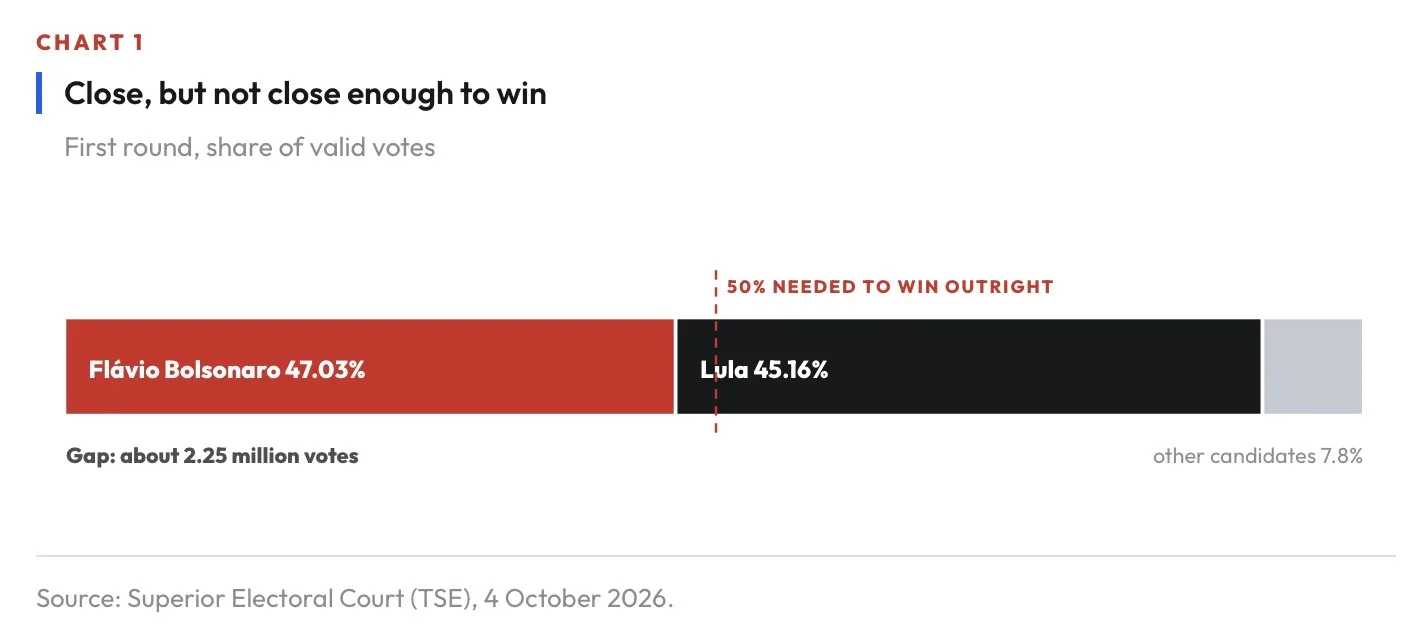
Senator Flávio Bolsonaro, 45, the eldest son of former president Jair Bolsonaro, finished first in Sunday's presidential election with 47.03% of valid votes, about 56 million votes. President Luiz Inácio Lula da Silva took 45.16%, according to the Superior Electoral Court. The gap was about 2.25 million votes, the closest first round since Brazil returned to direct presidential elections after the military dictatorship.
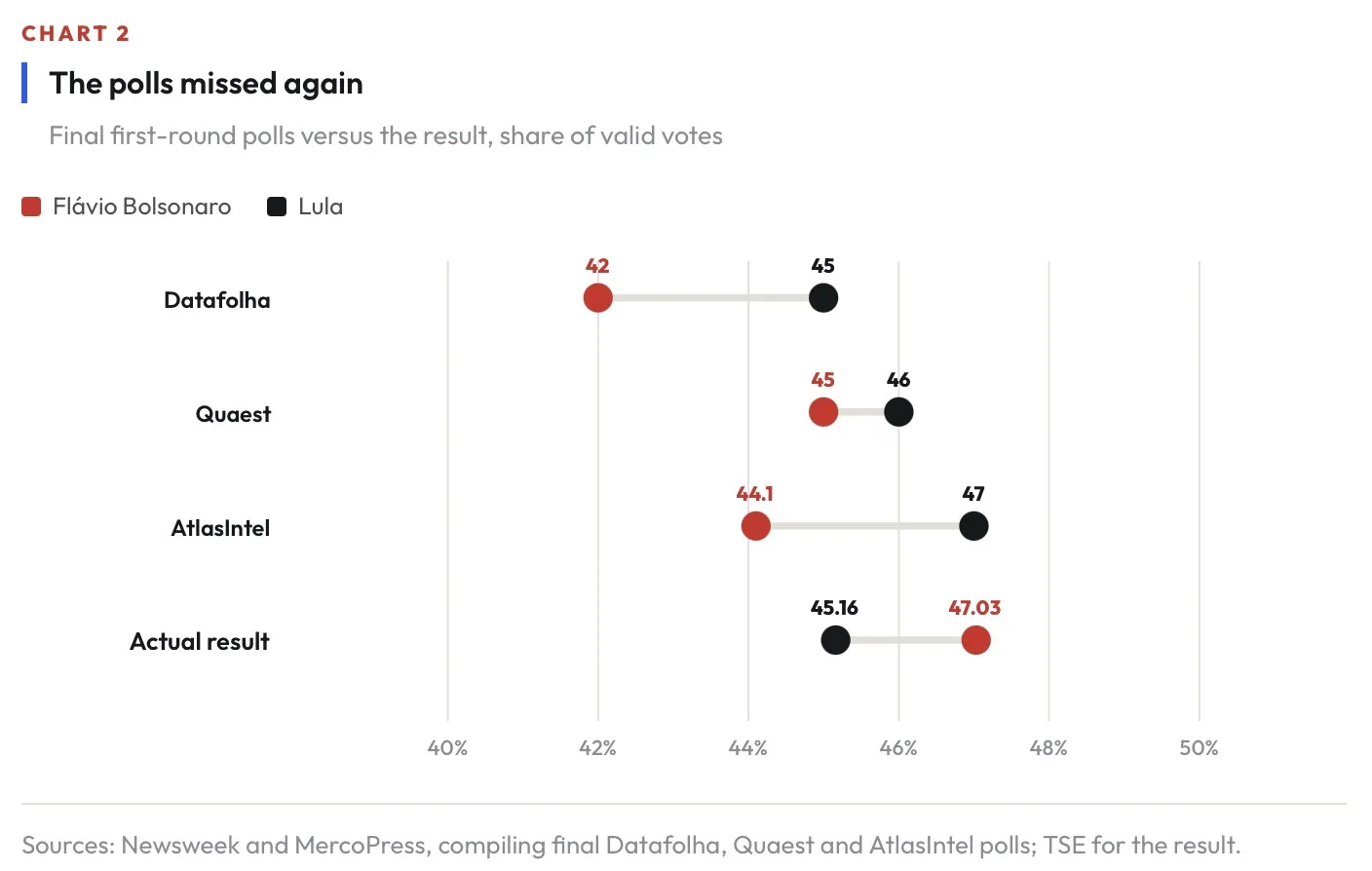
The result defied the polls, in a field of 12 candidates. Datafolha's final survey had Lula ahead by three points; Quaest and AtlasIntel also had the president in front. Flávio Bolsonaro even won more first-round votes than his father did in 2022.
2. Why markets cheered
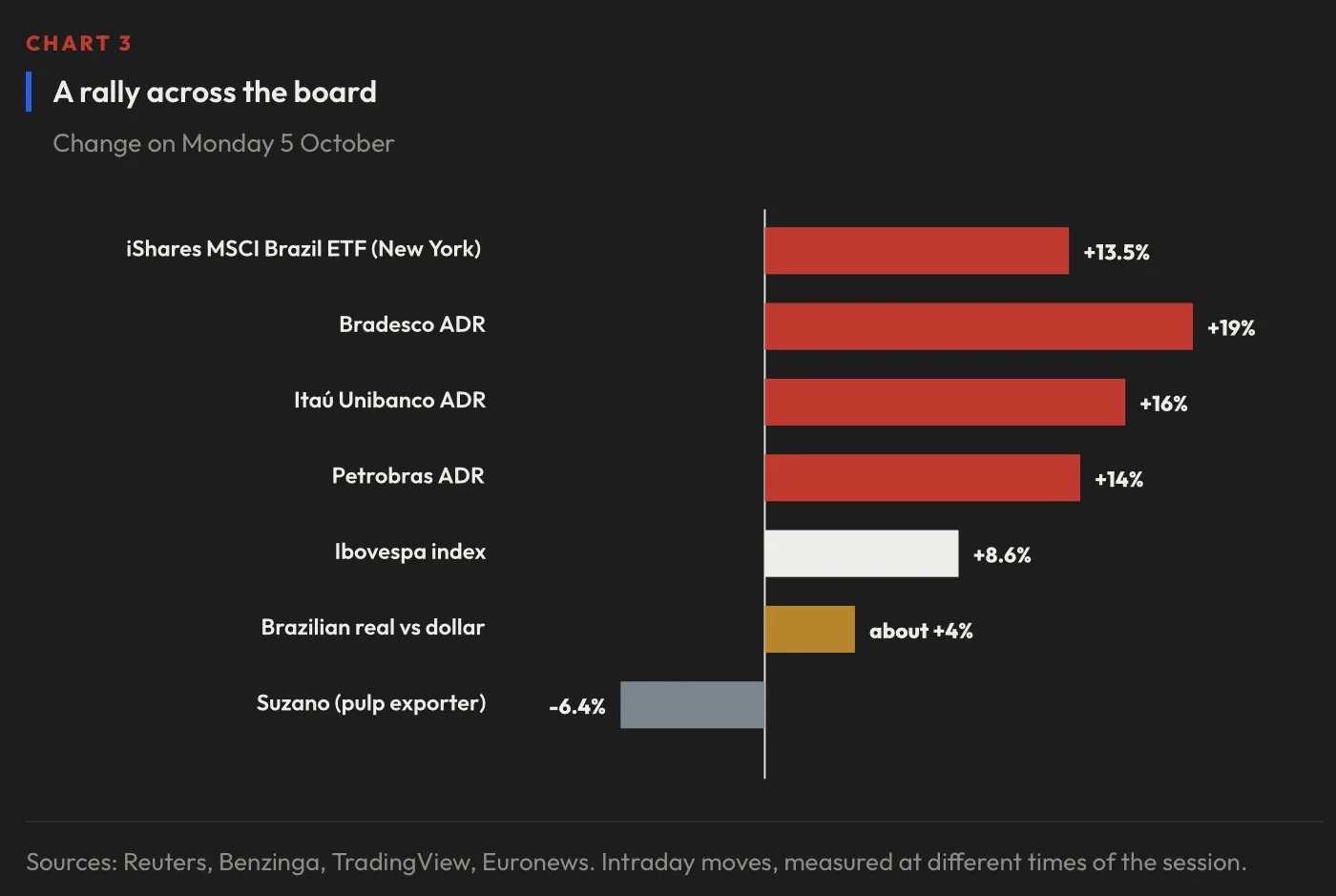
Brazilian assets surged on Monday. During the session, the Ibovespa was up about 8.6%, around 208,650 points, a record, and the real strengthened about 4% to roughly 4.99 per dollar. In New York, the iShares MSCI Brazil ETF jumped 13.5%, on track for its best day since 2020.
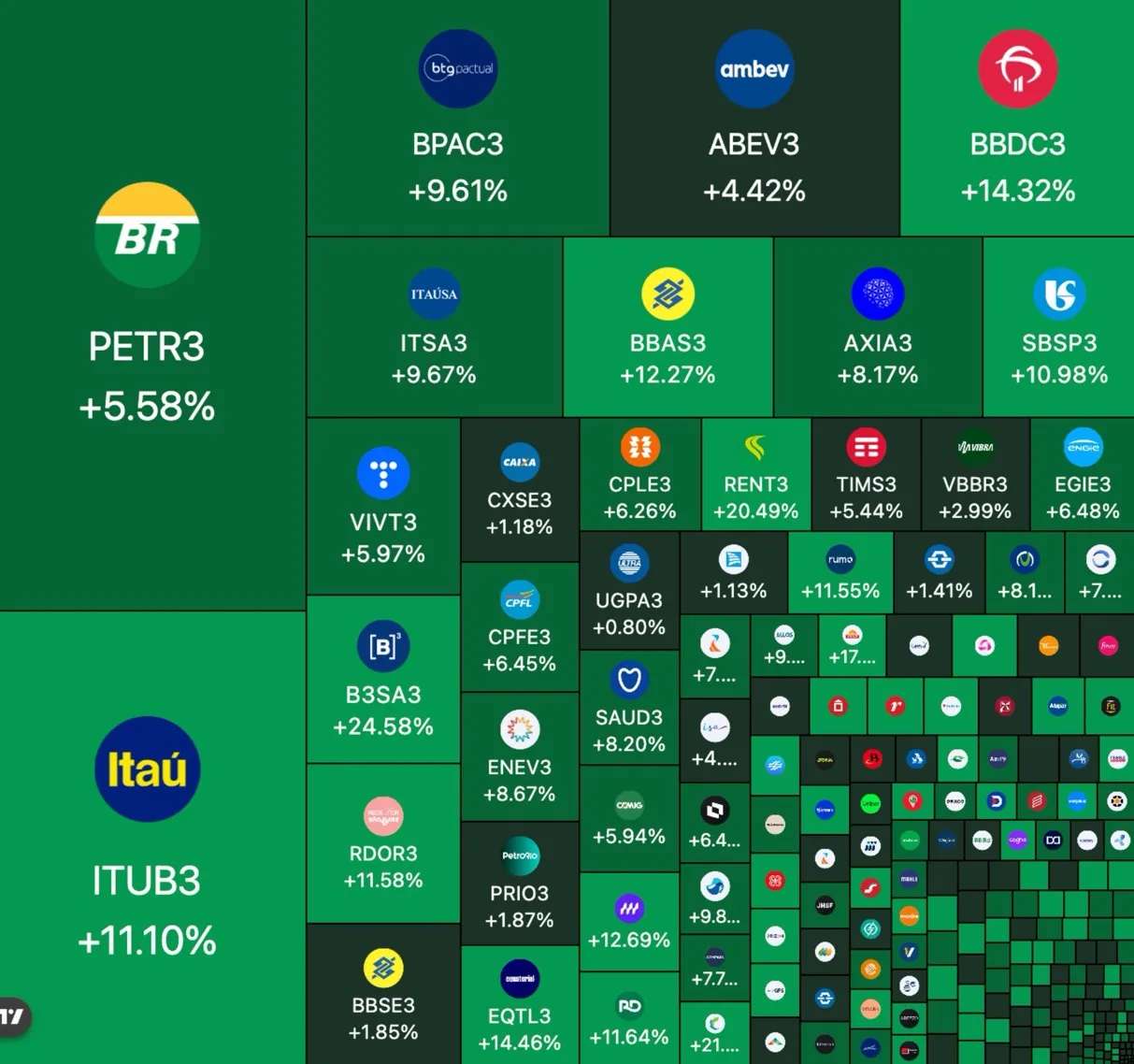
Shares of the stock exchange operator B3, lender BTG Pactual and retailer Magazine Luiza gained more than 20%, and J.P. Morgan upgraded Brazilian equities to "overweight".
Three reasons explain the enthusiasm.
The public finances. Brazil's gross debt is about 82% of GDP. "The market wants change, it wants reform; it doesn't want a high public deficit," said Pedro Galdi of AGF Investments.
The programme. Flávio Bolsonaro's platform includes scrapping taxes, measures to rein in public debt and the privatisation of dozens of state-owned companies.
Less political risk in state companies. Petrobras rose even as oil prices fell, a sign that investors were shrinking the discount they apply for political interference in fuel prices and investment.
Not everyone won. Exporters such as the pulp producer Suzano fell, because a stronger real reduces the value of their dollar revenue.
Where the bets are
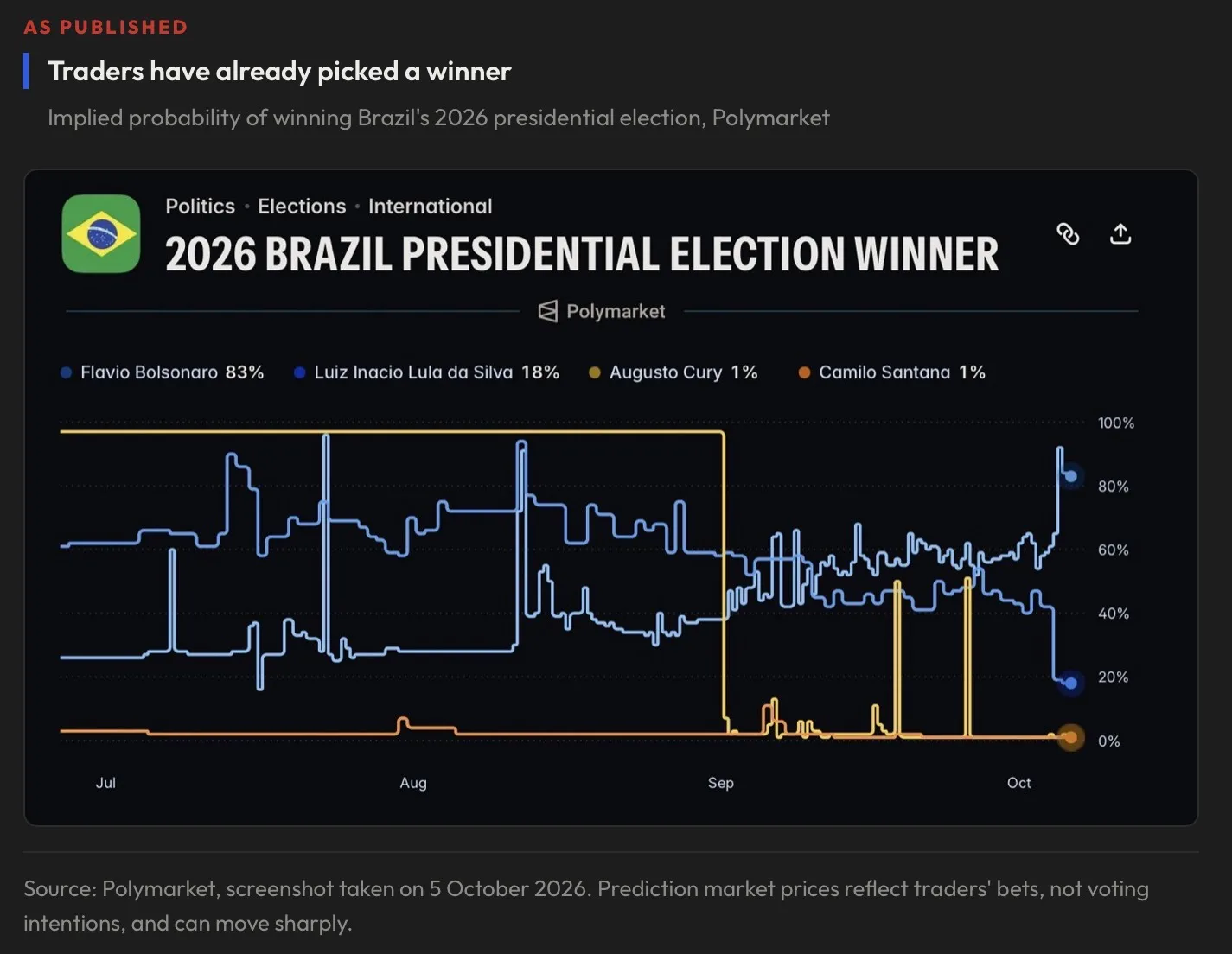
The clearest expression of the "Bolsonaro trade" is not on the stock exchange but on prediction markets, where traders bet real money on the outcome. On Polymarket, Flávio Bolsonaro's implied chance of winning the presidency jumped above 80% after the first round, while Lula's fell below 20%. Benzinga put the odds at 84.5% against 15.5%.
The professionals followed. "We expect a strong rally across Brazilian assets," said Thierry Larose, a portfolio manager at Vontobel. "Investors will wake up on Monday to a very powerful rally across asset classes," predicted Ivo Chermont, chief economist at Quantitas, before the open. J.P. Morgan raised Brazilian equities to "overweight". But some warned the move had to be earned: "Sustaining any initial rally will require a credible plan for the public finances," said Gustavo Medeiros, head of research at Ashmore.
3. What markets may be missing
A precedent
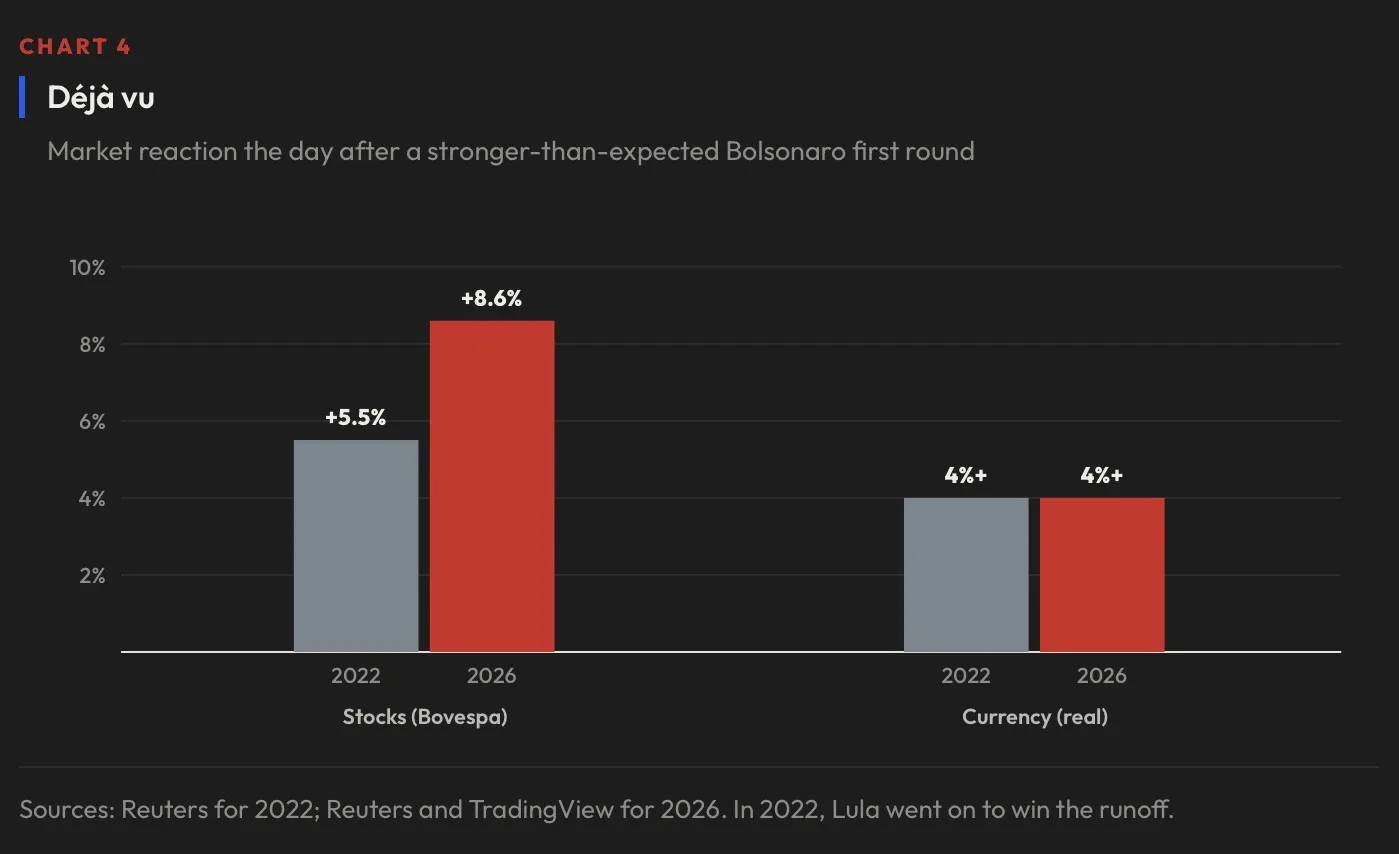
Brazil has seen this before. In 2022, when Jair Bolsonaro beat the polls in the first round, the Bovespa jumped 5.5% and the real gained more than 4% the next day. Four weeks later, Lula won the runoff.
Promises that may not add up
Cutting taxes while reducing debt requires deep spending cuts, privatisation revenue, or both. Investors will want details. "The market will be looking for clear signals from Bolsonaro that he is serious about tackling the country's problems," said Bryan Harris of Sabio.
The family name
Jair Bolsonaro lost to Lula in 2022 and was later convicted of plotting a coup to overturn the result. His son's campaign carries that legacy, and the relationship between a new Bolsonaro government and the judges who convicted his father would be tense from day one.
Washington
Flávio Bolsonaro is a close ally of Donald Trump, who in July 2025 imposed 50% tariffs on many Brazilian goods, calling the prosecution of Jair Bolsonaro a "witch hunt". Trump declined to back either candidate before the vote.
4. The money question
One file is likely to resurface during the runoff campaign. In 2018, Brazil's financial intelligence unit, COAF, flagged R$1.2 million in atypical transactions in the accounts of Fabrício Queiroz, a former aide to Flávio Bolsonaro when he was a state lawmaker in Rio de Janeiro. Prosecutors suspected a rachadinha scheme, in which staff hand back part of their salaries, and in November 2020 charged the senator with embezzlement, money laundering and criminal organisation.
The case never went to trial. Brazil's Superior Court of Justice annulled the breach of his banking secrecy in 2021, then key decisions of the investigation, and the charges were archived in 2022. Flávio Bolsonaro has always denied wrongdoing and called the case political persecution.
5. What could happen next
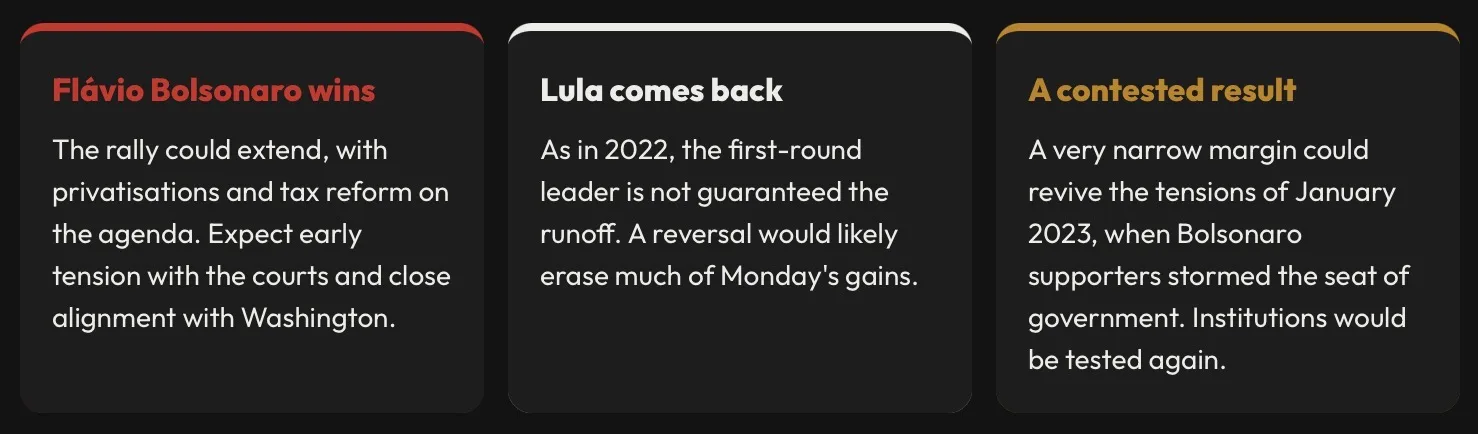
Prediction markets are not polls, and they were not tested by a runoff of this kind. The runoff will turn on the 7.8% of voters who backed other candidates, mostly on the centre-right and right, and on turnout: abstention reached about 21% in 2022 and traditionally hits lower-income voters, Lula's base, the hardest.