
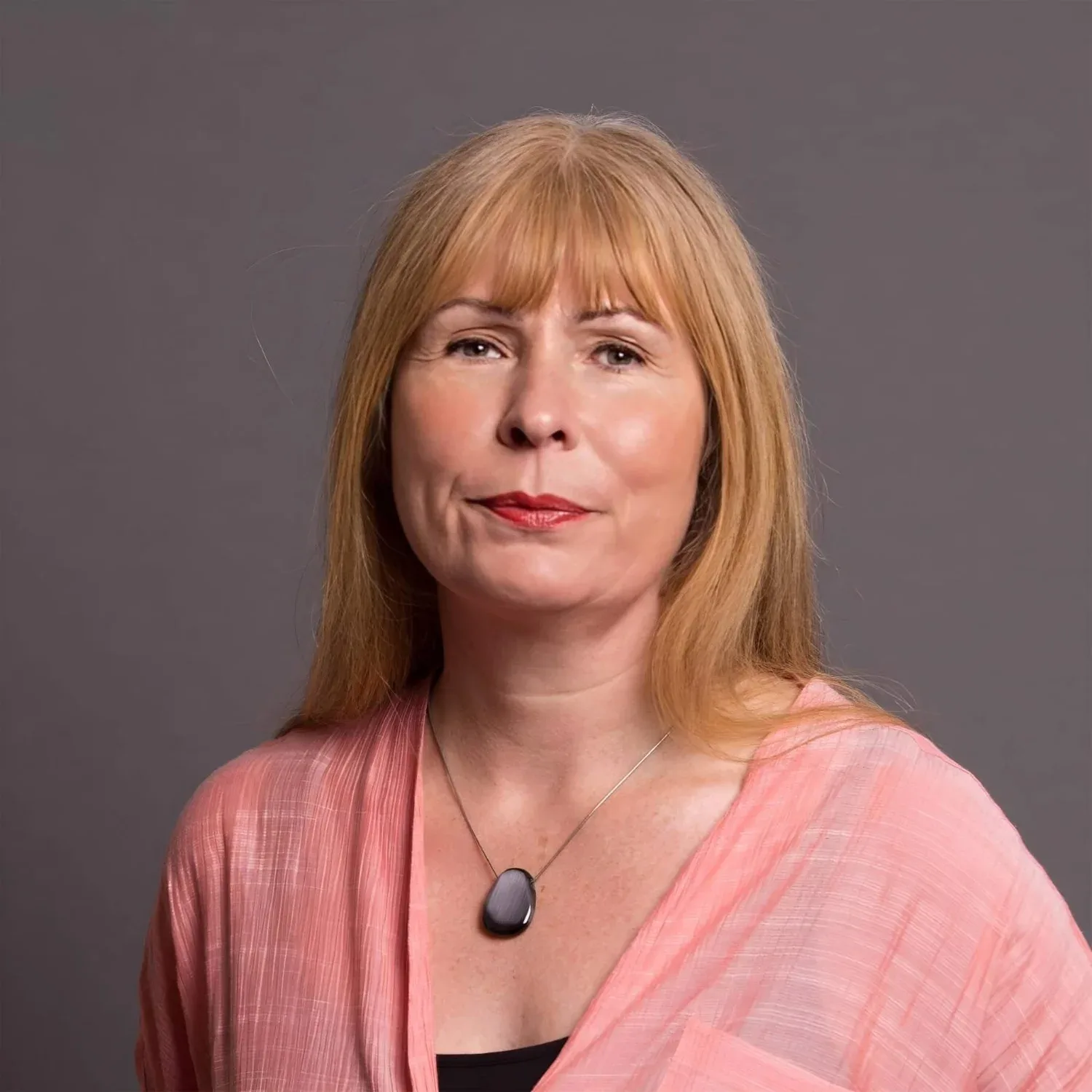
The essentials
- Who. Born in June 1959 and raised in colonial Sarawak, trained at the BBC, she launched Sarawak Report from London in 2010 and Radio Free Sarawak that November.
- The scoop. On 28 February 2015, with London's Sunday Times, she published PetroSaudi documents tracing US$700m out of 1MDB, supplied by the whistleblower Xavier Justo. The US later alleged that more than US$4.5bn was misappropriated from the fund.
- Her role in the hunt. Investigators in Switzerland, Singapore and the US acted on their own evidence from August 2015; the documented links to her reporting are mostly in 2015, when outlets credited her and Malaysia moved against her. Najib Razak was convicted in 2020 and 2025 and is appealing the second verdict.
- The price. A 2015 police move to arrest her (Interpol refused a red notice), lawsuits, surveillance and a 2024 conviction in absentia for criminal defamation, set aside in December 2025 with a retrial ordered; the charge still stands (as of 9 November).
- The book. The China Contract, out from Saqi Books on 12 November in the UK, alleges that China helped Najib cover 1MDB's debts and later helped bury the story. Malaysian ministers have denied related claims; we found no response from Beijing.

1. A window seat over Borneo
Her father, John Rewcastle, had studied law at Oxford, arrived in the Crown Colony of Sarawak in December 1951 and joined the colonial police; she was born in June 1959. Her mother, Karis, went to the villages to work as a midwife and took her daughter along, TIME reported. Sarawak, she told the magazine, was a "fantastic place for a child to live".


What she remembers most of Sarawak, she told Le Détroit in October, is its people: how close they were, and how warm. Her mother, she recalls, was very kind and gave a great deal of herself to others. There was also, she says, a time of some instability.
Le Détroit's reading: a policeman's sense of the rules and a midwife's sense of people are the two halves of her later method. She has drawn the first link herself. "Maybe because my dad was a policeman, I don't like people who break the law…" she told Malay Mail in 2015. Asked by the Harvard Political Review in 2020 how those years had shaped her, she said: "I think it affected my perspective immensely." Growing up so far from London also loosened its hold: "I just couldn't think that Britain mattered as much as everybody else did."
That instinct has stayed with her. When she spoke to Le Détroit in October, she said that what matters most to her is the human side of journalism, the people behind the story. This profile follows that thread, setting her account beside the public record, from the people who shaped her to those who paid for the story.
Hover or tap a line for the record
Each point appears in the text where it belongs.
2. The craft, then the kitchen table
She read modern history at King's College London and, in 1983, while studying for a master's degree at the London School of Economics, took a secretarial job in the current-affairs department of the BBC World Service. She went on to spend 14 years covering London news for the BBC, then Sky News and ITV, where colleagues knew her as an aggressive investigator, TIME reported. "I have had the good fortune to always live in a free country, and I was trained in a powerful, protected, and publicly-funded media organisation, the BBC," she told The Business Standard, a Bangladeshi daily, in 2020.
What the BBC gave her, she told Le Détroit, was rigour, the habit of checking sources constantly, tenacity and a taste for investigation; in her view every reporter has to go through the freelance years. It was the toolkit she would later turn on Sarawak.
At the BBC she met Andrew Brown, whose elder brother Gordon, the future prime minister, was best man at their wedding in 1992, according to TIME. In 2001 she left television reporting to look after their two sons. Sarawak pulled her back. At a press conference in 2005 she asked the chief minister whether the tribes of the interior had anything of value to offer the world; his reply, as she recounted it to Malaysiakini in 2011, was: "Ha ha, yes, we have put all that stuff into a museum somewhere!" In 2009, TIME reported, armed officers sent her home from the state.
Hover or tap the items for details
Photographs: Kuching, archive photograph; with Peter John Jaban, photo Graham Jepson (2010); with her 2018 book; cover, Saqi Books (2026).
Malaysia's mainstream media were tightly controlled, so she went around them. "And so I got a blog," she told TIME in 2017. "They have a totally controlled media, but they also have an Internet." Sarawak Report went live in February 2010, run from the dining room of her London home, which TIME found doubling as a newsroom, with a programmer she hired that year. The web also showed her how much corporate information was public, held by owners who "didn't think it would be accessible to a middle-aged journalist sitting in her kitchen in England".
Le Détroit's reading: this is the core of her method, and it can be copied. She needed no access to the elite in Kuala Lumpur, only filings scattered across jurisdictions, the patience to connect them and a country safe to publish from. "So, thanks to the internet, I decided I ought to try and make up for the lack of critical and investigative journalism in Malaysia by using my training and technique from the UK, and applying it as a rare challenging voice against the powerful actors," she told The Business Standard.
3. Journalism powered by people
Sarawak Report picked the hardest target in the state. Abdul Taib Mahmud was chief minister for 33 years, from 1981 to 2014, and died in February 2024, aged 87. Her campaign linked him to overseas properties worth hundreds of millions of dollars in the United States, Canada and Australia, Mongabay reported in 2011. On the forest, Taib answered in public: in March 2011 he said about 70% of Sarawak's forest was intact and that he would be open to "independent inspection and I have nothing to hide".
A satellite study published in 2013 told a different story: just 22% of the land of Sabah and Sarawak remained intact, unlogged forest between 1990 and 2009, against 54% in neighbouring Brunei. Her brother-in-law Gordon Brown, by then a former prime minister, called Sarawak's deforestation "probably the biggest environmental crime of our times", Mongabay reported.
Hover or tap the items for details
The plots are not strictly comparable: Taib spoke of Sarawak's forest, the survey measured land surface and gives Sabah and Sarawak together. Trees are placed for illustration.
That, in her account, is why she started. She told Le Détroit that she saw corruption on a monumental scale and the destruction of a whole ecosystem, and that people in Sarawak faced greater risks than she did, so she decided to take the risk herself.

A website reads in cities; the interior listens to the radio. In November 2010 she added Radio Free Sarawak, a shortwave station, Malaysiakini reported. Its best-known voice was Peter John Jaban, a former Cats Radio deejay, who went on air as "Papa Orang Utan". In 2011 he told The Borneo Post that he was in "political exile in the UK", that he reported to her, and that he did the work of his own free will, denying claims that he was a paid "radio mercenary". Mongabay later described the radio and the website as projects she had set up with him.

Going public was itself a decision about people. She ran the site anonymously at first, partly, she said, so as not to involve her brother-in-law, "particularly when he was still in office". In February 2011, after anonymous threats, she and her colleagues put their names to it. "We have received unpleasant emails, but they were anonymous so we are making no accusations about who sent them," she told Malaysiakini that week. Gordon Brown's advice, as she recalled it to Esquire Malaysia in 2015, was blunt: "Look, you should just say who you are and what you're doing". "But when he stepped down, I was bolder, and actually, he was really encouraging."
Her October account adds a note of caution: she told Le Détroit that her brother-in-law had also urged her to be careful, because it was a dangerous field. She knew, she says, that this was what she had to do, because Borneo mattered so much. There were threats and many attempts to frighten her, she recalls; she held her course.
She framed the work around Sarawakians rather than herself. "I do not see it as my job to bring down Taib. That is for the Sarawakian people to decide about," she told Malaysiakini in 2011. "This is my agenda and I will stop the moment people from Sarawak no longer want or need my help."

4. The break: a source, a weekend, a warrant
She was first tipped off about 1MDB, Malaysia's state investment fund, in December 2013, when she learned that Prime Minister Najib Razak's stepson, Riza Aziz, had bankrolled The Wolf of Wall Street, TIME reported. The break came through a person: Xavier Justo, a former employee of PetroSaudi, 1MDB's joint-venture partner, who held thousands of the company's documents and emails and wanted to be paid. "I've never paid for a story," she told the Harvard Political Review. In her account, a Malaysian media owner who ran a financial newspaper promised Justo the money, and he eventually received it. "So I didn't pay the money, but I did broker the deal."
On Saturday 28 February 2015 Sarawak Report published the result "together with London's Sunday Times". The documents, it reported, showed that US$700m described as a loan had gone to an account at RBS Coutts in Zurich held by Good Star, a company with a Seychelles address that it said Jho Low controlled. She knew the material was true, she told Le Détroit, because she had corroborated all of it. In 2018 she told TIME: "They knew I wasn't part of an interest group," and: "People knew I was doing this because I cared, perhaps because they knew I had been born there."
Hover or tap the items for details
Positions are illustrative; only roles documented in public sources.
Bigger newsrooms took up the trail. In early July 2015 The Wall Street Journal reported that some US$700m had moved through government agencies, banks and companies before ending up in Najib's personal accounts; Malay Mail noted that the allegations had "first been highlighted" by Sarawak Report. That month her site became the first news website officially blocked in Malaysia by state censors, according to TIME.
Then the state turned on the messengers. Justo was arrested at his home on Koh Samui on 22 June 2015 and on 17 August jailed in Bangkok for three years for attempting to blackmail PetroSaudi (he was freed by royal amnesty in December 2016); he told The Straits Times that the documents had reached her and a Malaysian businessman, Malay Mail reported. On 4 August Malaysian police said they were seeking her arrest for "activities detrimental to parliamentary democracy". "Am I quaking in my shoes… actually not," she said, Says.com reported. Interpol refused Malaysia's request for a red notice; "to its credit, the Interpol announced it would not countenance such a case against a journalist," she told The Business Standard in 2020.
5. Her role in the money hunt
What did her reporting do for the hunt? She published documents and kept the story in front of readers; investigators in Switzerland, Singapore, the United States and, after 2018, Malaysia built their cases on their own evidence. The Swiss case, for one, began with two reports from the country's money laundering reporting office. Le Détroit sorted each step by whether a public source ties it to her reporting.

The documented links cluster in 2015, and most concern her as a target rather than as a source for prosecutors: Justo's arrest, the WSJ story Malay Mail said she first highlighted, the block on her site and the police move against her. That last chapter closed after Najib's coalition lost the election of 9 May 2018, when the new government lifted the warrant; her site was unblocked and she flew in. "It was very relaxed at the airport, no problems with immigration," she told Reuters. "It's a big sigh of relief from me."
The official actions abroad sit in the second column. Switzerland's Office of the Attorney General opened criminal proceedings on 14 August 2015 against two former 1MDB officials and persons unknown. On 24 May 2016 Singapore's central bank moved to withdraw BSI Bank's merchant bank status, its first such withdrawal since 1984, citing "serious breaches of anti-money laundering requirements"; the same day the Swiss regulator FINMA ordered BSI to give up CHF95m over its 1MDB-linked business. On 20 July 2016 the US Justice Department filed civil forfeiture suits alleging that more than US$3.5bn had been misappropriated; by June 2017 its estimate exceeded US$4.5bn. None of the Swiss, Singaporean or US releases we read mentions media reports.
Swipe the map sideways
Schematic map: lines show the direction of flows the sources describe, not exact routes. US figures are civil allegations unless a court ruled.
Le Détroit's reading: the record supports a narrower and sturdier claim than "she brought down a government". Her 2015 documents described the PetroSaudi venture on which a Swiss federal court ruled in August 2024, when it convicted PetroSaudi's Tarek Obaid and Patrick Mahony of fraud, criminal mismanagement and money laundering over some US$1.8bn; both had denied wrongdoing, and Obaid appealed at once. The reports of that verdict we read do not mention her. What her work did, on the record, was put the money in public view months before the Swiss and US cases opened, and keep it there through the eleven years the courts took.
In Malaysia the reckoning came after politics changed. 1MDB, she told TIME in November 2018, "was the key platform Mahathir used", and the result was "a complete vindication of why we have to have free journalism and a proper democratic process". In July 2020 Najib was convicted over RM42m of SRC International funds; he has been in prison since August 2022, on a 12-year term the Pardons Board halved to six in 2024. On 26 December 2025 the High Court convicted him on four counts of abuse of power and 21 of money laundering and sentenced him to 15 years, with a fine of 11.4 billion ringgit (US$2.8bn). The judge called his claim of a Saudi donation "incapable of belief". Najib denies wrongdoing and has appealed. Not every case has gone against him: in March 2023 he was acquitted of tampering with 1MDB's audit report, and in November 2024 he was granted a discharge not amounting to an acquittal on six breach-of-trust charges.

His first sentence is still in dispute (as of 9 November). On 6 November the Kuala Lumpur High Court issued an order allowing him to serve the rest of it under house arrest, after his party, UMNO, paid the RM50m fine set as a condition of the pardon the king granted on 18 September. He left Kajang prison that afternoon, but the Attorney General's Chambers asked for the arrangement to be "temporarily postponed pending legal clarification", and he was returned to prison that evening, Malay Mail and AP reported. On 7 November, when he was still in Kajang prison according to his lawyers, the palace said the king's order was clear and should not be disputed, while prosecutors, denying any defiance of the king, sought a court ruling on whether his first sentence had ended and, if so, whether his 15-year 1MDB term should begin. On 8 November the Attorney General told Berita Harian that an error in the court document used to carry out the order was "glaring", Malay Mail reported; by the morning of 9 November we found no court ruling and no hearing date.
The bank settled sooner than the men were judged. Goldman Sachs, which underwrote about US$6.5bn of 1MDB bonds in 2012 and 2013, agreed a US$3.9bn settlement with Malaysia in July 2020 and in October a coordinated resolution of more than US$2.9bn with US, UK, Singapore and other authorities, in which its Malaysian unit pleaded guilty. Its former banker Roger Ng was sentenced to ten years in March 2023; Tim Leissner, who pleaded guilty and testified against him, received two years in May 2025. Jho Low, indicted in the US, remains at large; in May 2026 the WSJ reported that he had filed a US pardon request, which a White House official said was not under active consideration, The Vibes reported. Beijing has consistently denied harbouring him.

None of this, in her view, closes the account. She told Le Détroit that she suspects more money, running to several billion, is still unaccounted for.
6. The price of being right
The cost to her has come as surveillance, litigation and fear, rather than prison, so far. "I have been stalked around London. Someone's spying on me and photographing me. But if we all live in fear, then we have no future," she told Malay Mail in July 2015; TIME later reported that she had received police protection after realising she was being followed and photographed in Hyde Park. Her family held firm: "My family has been fairly pragmatic, they're not being frightened either. They've always supported me." Asked what kept her going, she was dry: "Some people do gardening. I do this."
She worried more about others. "I'm not fearful, but there's a great deal of fear among Malaysian journalists," she said in the same interview. Looking back, she told Le Détroit in October that she was afraid at times, for instance when private investigators were paid to follow her, not discreetly but so that she would know she was being watched; she calls it psychological warfare. One tense evening, she recalls, Malaysians came to her home with food, a scene of communion she described as extraordinary.

A political party took her to court; its law firm, she told a House of Lords committee in 2022, had reckoned that "an outlay of around £200,000" would force her to retract. "The real pressure on them was that they were running up costs of around £2 million by that stage," she said. "Thanks to marvellous legal support, I had stood my ground and they retreated." What troubled her most was "the chilling effect this has on the bigger media".
The longest fight began with one passage in her 2018 book, The Sarawak Report: The Inside Story of the 1MDB Exposé. The Sultanah of Terengganu sued her for defamation that year. In her defence she said she had made an honest mistake in identifying the person concerned, and should have named the sultan's sister. The High Court found the statement not defamatory in 2022; in December 2023 the Court of Appeal reversed that and ordered her, her publisher Chong Ton Sin and printer Vinlin Press to pay RM300,000 in damages and RM120,000 in costs, and in September 2024 the Federal Court refused leave to appeal. Malaysian supporters in the Engage network set out to raise RM292,000; she had already raised RM128,000 in the UK.
A criminal case ran in parallel. Charged in absentia in September 2021 under Section 500 of the Penal Code, she was convicted by a Kuala Terengganu magistrate on 7 February 2024 and sentenced to two years in prison. Asked that May whether she would return to Malaysia, she said: "Yes, that is the 'invitation', and I am still considering it." On 14 December 2025 High Court judge Mohd Radzi Harun declared a mistrial and ordered the case mentioned before a new magistrate with a view to a retrial; "the charge against the appellant (Rewcastle-Brown) still subsists," he said. In January 2026 her lawyers asked prosecutors to drop it, arguing that "a person can only be regarded as an 'accused' if brought before the court, which is not the case here." We found no decision and no new hearing date (as of 9 November).
Such cases are extremely expensive, she told Le Détroit, and she has learned to weigh each legal threat: a claimant who would have to expose their own affairs in open court is less likely to see a case through, which gives her more room. Some things, she says, must be made public all the same.
Still open (as of 9 November): the criminal retrial ordered in December 2025; in January 2026 her lawyers asked prosecutors to drop the charge, and we found no decision. The civil suit ended in September 2024, when the Federal Court refused leave to appeal.
She has had her critics, and some of their points stick. Her own mistake in the 2018 book cost her the civil case. Najib's government dismissed documents she published as fake, as she herself recounts. And opponents long cast her radio as a paid foreign operation, a claim Jaban rejected in 2011. Her answer has been to publish the documents and let readers judge.
7. The China Contract: the chapter she says was buried
Her new book argues that 1MDB did not end with Najib's fall, and that its last chapter runs through Beijing. Saqi Books publishes The China Contract: The Inside Story of the World's Biggest Financial Scandal... and How It Was Covered Up in the UK on 12 November 2026; a US retail listing gives 18 February 2027. The publisher's pitch opens with a scene: "A fugitive flees Kuwait in the boot of a car," carrying documents the Chinese government wants buried. The cover borrows a phrase Fortune used when it ranked her 49th among the World's 50 Greatest Leaders in 2016: "an irritant in the corridors of power".
Her own summary, she told Le Détroit, is that China's money became leverage over the Malaysian state and its contracts. Why has it taken a decade? Because, she says, the case kept widening and had to be followed wherever it led, as far as Kuwait. There, prosecutors ordered the arrest of Sheikh Sabah Jaber Mubarak al-Sabah, a son of a former prime minister, in July 2020; in March 2023 a criminal court sentenced him, and Jho Low in absentia, to ten years for laundering some US$1.1bn of 1MDB money, and Kuwait's top court upheld the sentences in June 2024.
The book's case, as set out in her recent articles, is that Najib turned to China in 2016 as 1MDB's debts mounted. In her account, based on a document she says she received that year, the East Coast Rail Link was "removed from public tender and converted into a Chinese Belt & Road project", its cost "doubled to RM60 billion", while two pipeline projects financed by China's Exim Bank had "88 percent of the projected $2 billion cost" delivered upfront to the Chinese contractor. Ministers dismissed the leaked schedule as a fake story at the time, Sarawak Report itself notes. "Najib was selling his country's independence to get off a hook of his own making," she wrote there in October.
Hover or tap the items for details
 Cover: Saqi Books
The allegations are the author's and have not been independently verified by Le Détroit; we have not read the book.
Parts of that case already sit on the public record, which is why the book deserves a close reading. In January 2019 The Wall Street Journal, citing minutes of meetings held in 2016, reported that senior Chinese officials had offered to help bail out 1MDB and to use their influence to try to get the United States and other countries to drop their investigations, while Malaysia offered stakes in Belt and Road rail and pipeline projects. Najib signed about US$34bn of rail, pipeline and other deals with Chinese state companies that November. China's Foreign Ministry denied that Belt and Road money had been used to bail out 1MDB; Najib wrote that the bailout "did not occur".
One official figure matches hers exactly. When the new government suspended the rail link and the two pipelines in July 2018, Finance Minister Lim Guan Eng said RM8.3bn, or 88% of the pipelines' RM9.4bn construction value, had already been paid, for work 13% complete by an unaudited count. China Petroleum Pipeline Engineering denied that money from the projects had paid 1MDB-linked debts, calling a BBC report "blatantly false information". In April 2019 Malaysia agreed to resume work on the railway after the cost of its first two phases was cut by about a third, from 65.5 billion to 44 billion ringgit.
Once again the story turns on people who took risks. Her source in Kuwait, the business partner of a sheikh, "did time in jail for speaking out", she writes. She also alleges that in 2025 China waived some US$3bn of Malaysian debt in return for Chinese state companies and banks being kept out of 1MDB claims, and Sarawak Report has reported, citing unnamed sources, that Jho Low took part in the talks. Johari Abdul Ghani, who chairs the 1MDB task force, denied knowing of any decision to hold back from pursuing Jho Low, according to Sarawak Report; on 9 July 2026 Deputy Finance Minister Liew Chin Tong told Parliament, "I deny it. I deny the allegation," when asked whether Jho Low had come to Malaysia with a Chinese delegation. We found no response from Beijing to the book. These are her allegations, which Le Détroit has not independently verified.
Le Détroit's reading: if her documents hold, the book turns 1MDB from a story about stolen money into one about how a debt can be refinanced into silence. "To me, the 1MDB cover-up represents the ultimate case study in how Belt & Road corruption has worked to extend Chinese interests," she wrote in Asia Sentinel in September. The official record of 2018 and 2019 shows a cheaper railway and halted pipelines; her book claims to go further, with a fugitive's documents from Kuwait and a 2025 debt deal. More than eleven years after her PetroSaudi scoop, the largest part of her story may still be to come. The test at publication is simple: whether Malaysia's Finance Ministry or China's state lenders answer her with documents rather than denials.
8. Le Détroit's reading: why her method matters
Strip away the yachts and bonds, and her method rests on four things anyone who tracks dirty money will recognise: people, trust, documents and a safe place to publish. Whistleblowers, she told the Harvard Political Review, are "always difficult characters to deal with", and a reporter's instinct is to "cling on to sources like a limpet". Readers gave the story its weight: "I've had many, many Malaysians, far more than I have critics, encouraging me and thanking me," she said in 2015, three years before Malaysian voters changed their government.
Journalism, she told Le Détroit in October, is also a form of activism, and being an activist matters to her: she calls it essential. In 2015 she had stressed the other half to Malay Mail: "I'm a journalist and I follow the story." Her method holds the two together: the cause chose Sarawak, and corroboration, by her account, was how she knew what was true.
Her advice to younger reporters is the method in one sentence: "What I recommend is to stand firm, check your facts and base your criticism from a jurisdiction which is at least out of the influence of powermongers, who are used to abusing the levers of state in their own countries to silence unwanted criticism and exposure." The clock shows why the last clause matters. By our count from 28 February 2015, Malaysian police moved against her after 157 days and the first US filing came after 508; Najib's first conviction took 1,977 days and the main 1MDB verdict 3,954. Moving against a messenger takes one decision; accountability takes many institutions, in several countries, to agree.

Her days now, she told Le Détroit, are spent talking with people about the story, writing and investigating. What stays with her, she says, are her sources and all the people she met along the way, many of them Malaysians. Among her regrets are the treatment of Xavier Justo, her source, thrown into prison in Thailand in a way she calls horrible, and the stories she would have liked to land and could not.
That is why the point she made when she spoke to Le Détroit in October, that the human side of journalism and the people behind the story matter most to her, reads less as sentiment than as method. She put it another way on landing in Kuala Lumpur in 2018: "But I wouldn't have done it if I didn't have a deep down confidence that Malaysia could come through and this could have a good outcome." The gap is not closed: Jho Low is free, Najib's main case sits with the Court of Appeal and her own charge is still open.
She would love to go back one day, she told Le Détroit, to see friends and above all the indigenous communities she sees as protectors of nature; what has been done there, she says, disgusts her. Her book, out on 12 November, is a bet that the story still has readers, and that the people inside it will keep talking.
What to watch
- 12 November: UK publication of The China Contract (a US retail listing gives 18 February 2027), and whether Malaysia's Finance Ministry, China's state lenders or anyone named in it answers with documents, or sues.
- Najib: whether the house arrest ordered on 6 November goes ahead; the Attorney General's Chambers asked for it to be put on hold and sought a court ruling, and we found no ruling or hearing date (as of 9 November). Then his appeal against the December 2025 verdict and its 11.4 billion ringgit fine.
- Terengganu: whether prosecutors act on her lawyers' January 2026 request to drop the criminal defamation charge, or list a retrial before a new magistrate.
- Switzerland: the appeal of PetroSaudi's Tarek Obaid against his August 2024 conviction, the court case closest to the documents she published in 2015.
- Jho Low: his reported US pardon request, and any move to locate or extradite him.
This profile is based on public sources and on a video interview Le Détroit conducted with Clare Rewcastle Brown on 16 October 2026. Her October account is reported in our own words. All quotes are verbatim from the published sources named in the text. Jho Low, charged in the United States, has not been tried there and is presumed innocent; a Kuwaiti court sentenced him in absentia in 2023, and he maintains his innocence. Najib Razak denies wrongdoing and is appealing his December 2025 conviction. Tarek Obaid and Patrick Mahony denied wrongdoing; Obaid has appealed his conviction. Claims about Taib Mahmud, who died in 2024, are those of Sarawak Report's campaign. Xavier Justo's conviction in Thailand was for attempted blackmail of PetroSaudi. Allegations in The China Contract are the author's.