
1. The facts
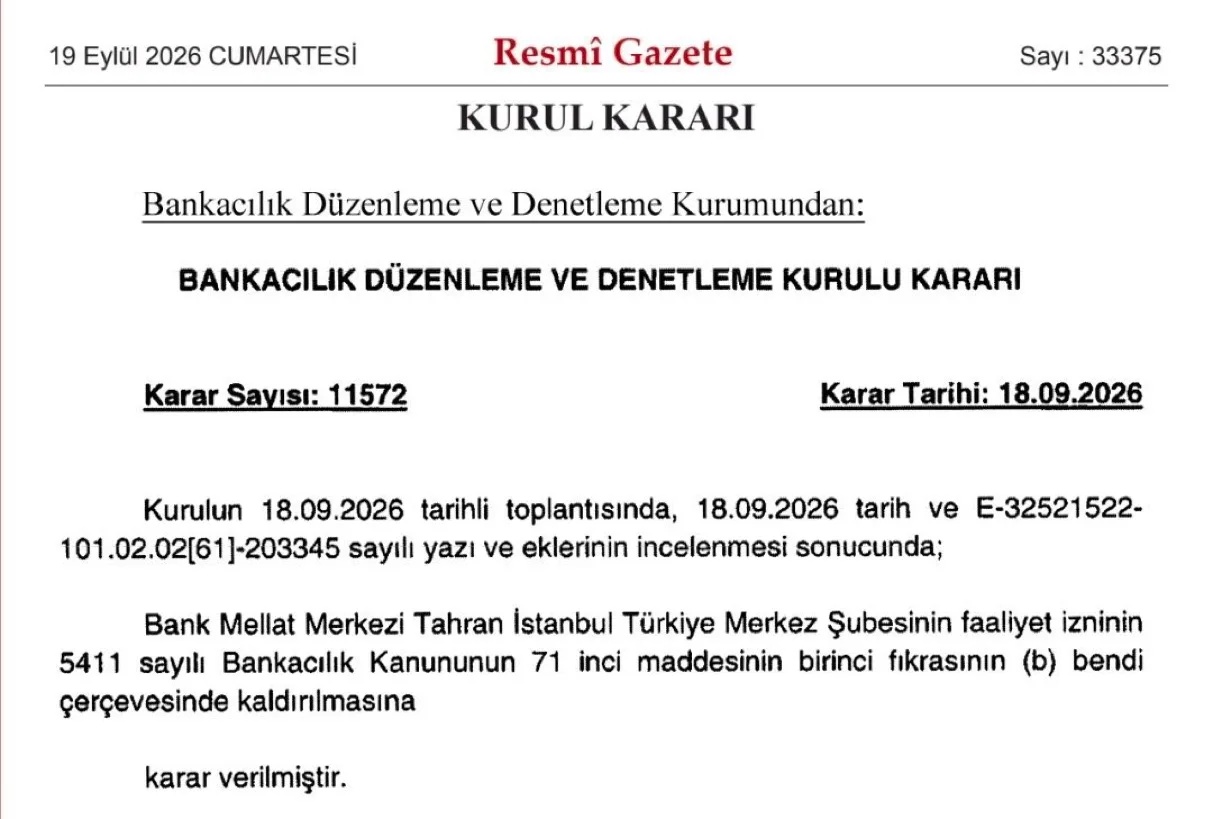
Turkey's banking regulator, the BDDK, revoked the operating licence of Bank Mellat's Istanbul central branch by decision number 11572 dated 18 September 2026, published in the Official Gazette on Saturday 19 September, issue 33375.
The legal basis is article 71, paragraph 1(b) of banking law 5411, which allows the regulator to withdraw a licence when continued operation is deemed to endanger depositors' rights or the security and stability of the financial system. The notice cites no US measures and identifies no specific operational failure at the bank.
Bank Mellat received its Turkish authorisation by cabinet decision of 5 February 1981 and opened in Istanbul on 16 April 1982, followed by Ankara in October 1985 and Izmir in October 1992. Forty-four years of continuous presence, ended in a single Gazette entry.
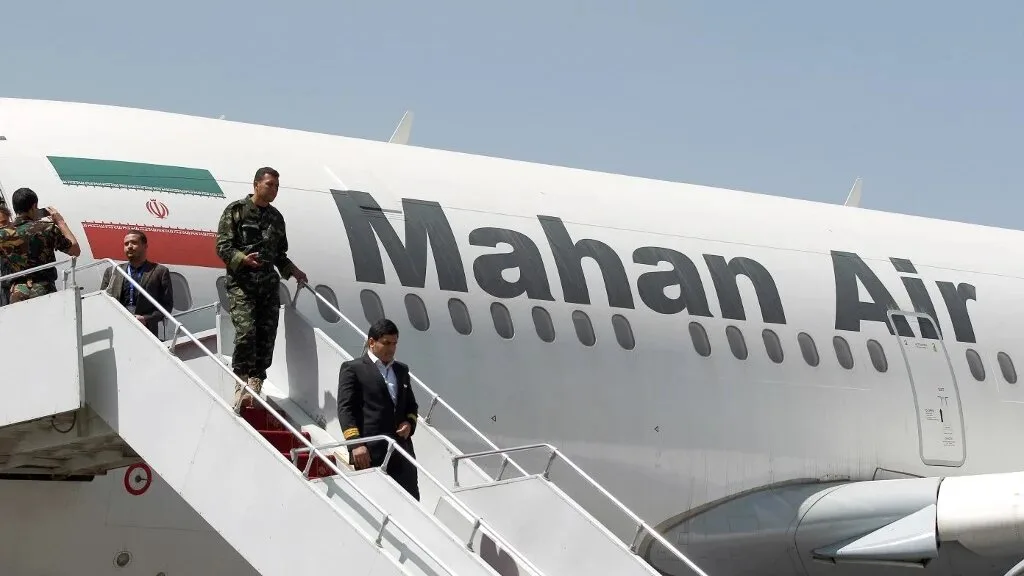
Four days earlier, Turkish officials confirmed to Middle East Eye that Mahan Air would be suspended from 21 September, covering all flights to and from Iran. Mahan confirmed, attributing the decision to instructions from Turkish aviation authorities and making no reference to sanctions. The carrier operated at least three daily Istanbul to Tehran rotations. It is also suspending Muscat, from 17 September, and Georgia, from 21 September.
2. Why it matters: the sas is closing
The framing to avoid is sequence. Mahan did not cause Mellat. Both are downstream of the same event.
On 8 September, the US Treasury's OFAC issued a sweeping package against Iran's aviation sector, targeting 27 Iranian carriers plus foreign companies supplying aircraft, cargo, sales and ground services. Three Turkish firms were designated: S Sistem, Mes Cargo and Sky Phoenix. Separately this month, Treasury sanctioned Turkish investment bank Golden Global and two subsidiaries. US ambassador Tom Barrack said that action targeted the conduct of one entity, not a nation or a banking system.
The message landed. Secondary sanctions exposure is now the operative risk for Turkish institutions, and Ankara has moved pre-emptively rather than waiting to be designated.
Turkey has spent two decades as the regulated grey zone between Iran and the rest of the world. That function is being switched off, channel by channel.
What matters for anyone tracking illicit finance is what happens next, not what closes. A licensed Iranian bank in Istanbul was a visible, supervised, reportable channel. Removing it does not remove Iranian trade finance from Turkey. It pushes it toward exchange houses, trade misinvoicing, gold, crypto rails and third-country intermediaries. The flows become cheaper to hide and harder to count.
Turkish officials were careful to say the Mahan decision is not a general ban on Iranian airlines, while adding that other carriers remain under review. That is the sentence to watch.
3. What to watch
Ankara and Izmir. The Gazette notice names the Istanbul central branch. Confirm whether the two other branches and their attached units are wound up under the same decision, and whether the TMSF deposit insurance fund takes over.
Other Iranian carriers. Iran Air and the rest are under review. A second suspension would turn a targeted measure into a policy.
Other Iranian-linked institutions in Turkey. Mellat was the most visible. It was not the only exposure.
Tehran's response. Iran has not yet framed this publicly. Whether it treats Ankara as coerced or complicit will set the tone of the relationship.
The displacement. Turkish-Iranian trade does not stop because a licence is revoked. Watch informal exchange networks in Istanbul, gold flows, and third-country invoicing over the next two quarters. That is where the volume goes.