1. A streak that keeps growing
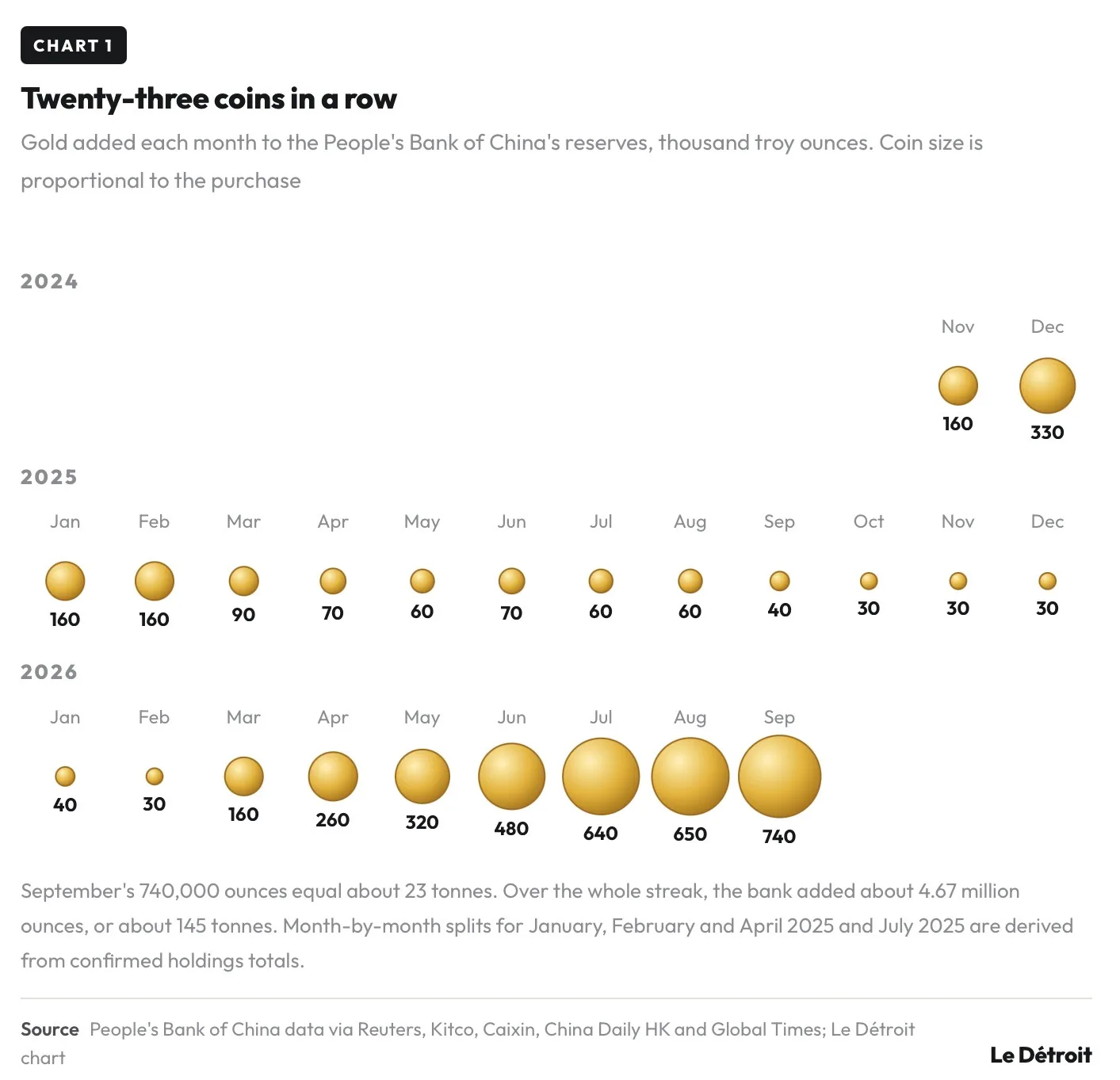
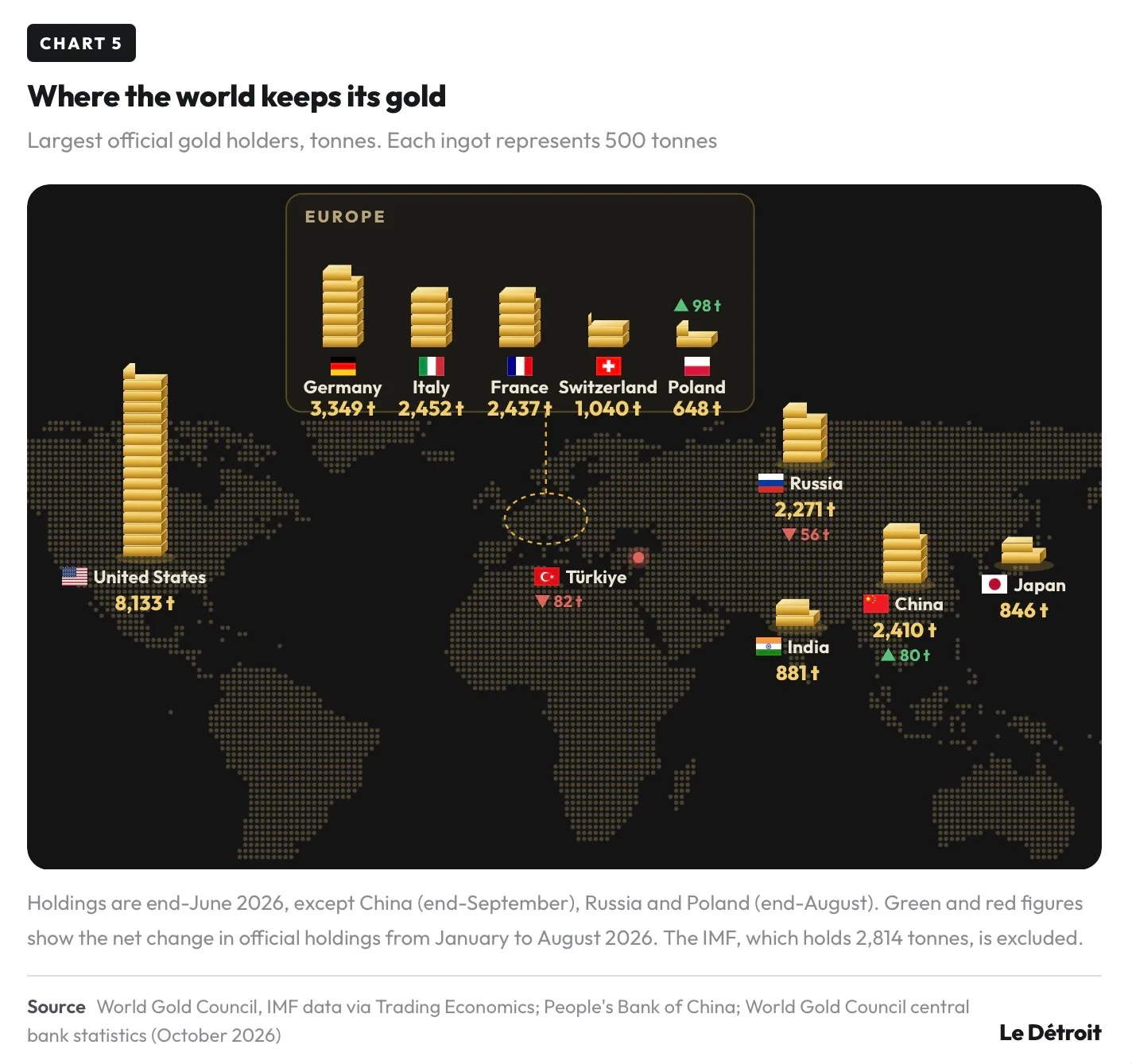
The People's Bank of China (PBOC) added 740,000 troy ounces of gold to its reserves in September, about 23 tonnes, according to official data released on 7 October. It was the bank's 23rd consecutive monthly purchase and its largest since September 2023, matching October 2023. Official holdings reached 77.47 million ounces, about 2,410 tonnes, worth $323.5 billion at the end of the month.
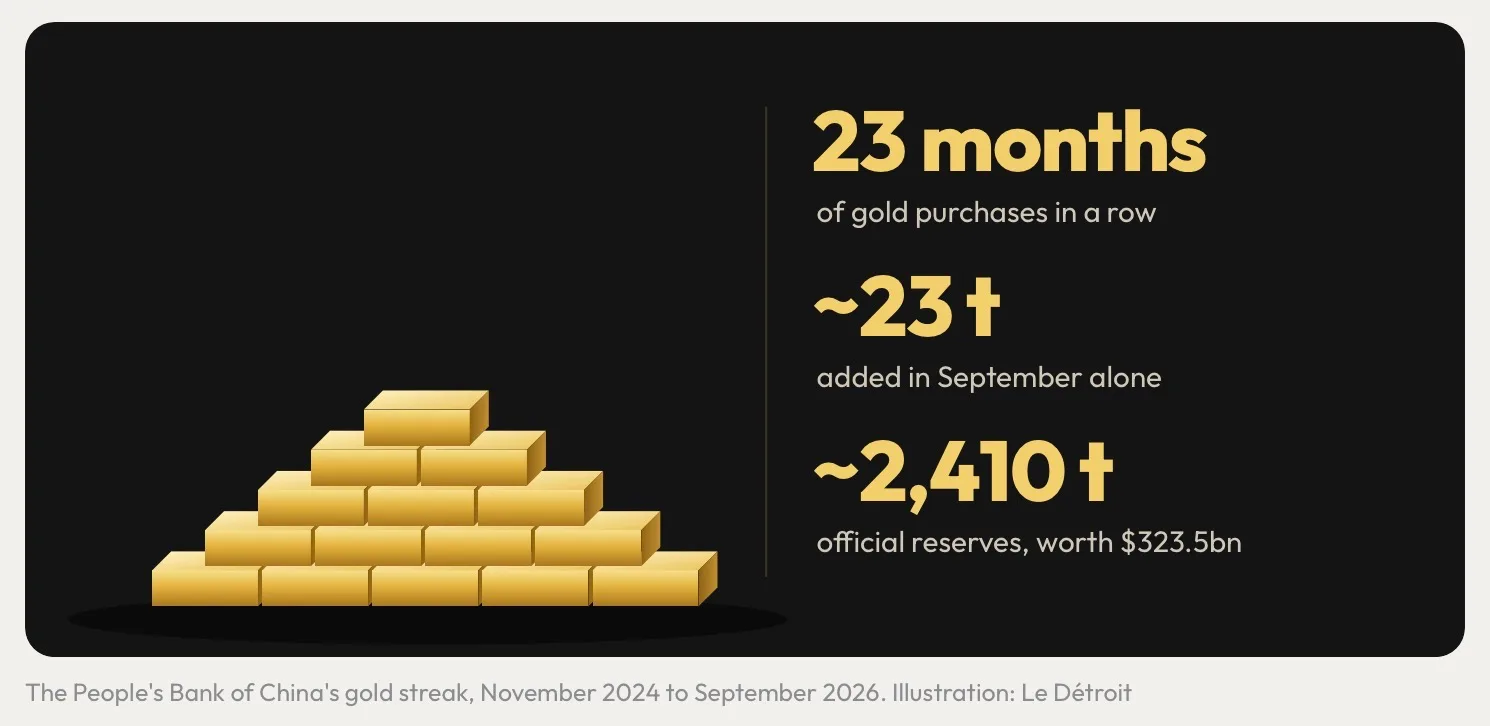
The streak began in November 2024, after a six-month pause. It is now the longest since the PBOC began publishing monthly figures in 2015, ahead of an 18-month run that was halted in May 2024. And it is accelerating: nearly 70% of the gold added since November 2024, about 101 of 145 tonnes, was bought between March and September 2026.
2. Buying the dip
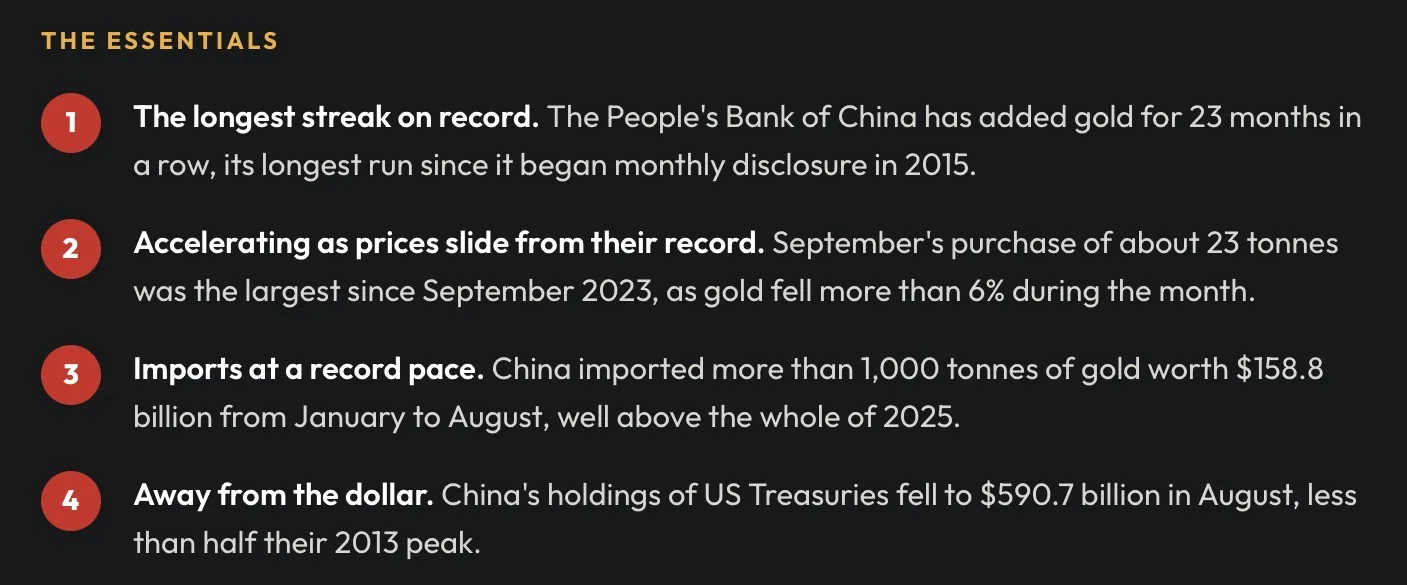
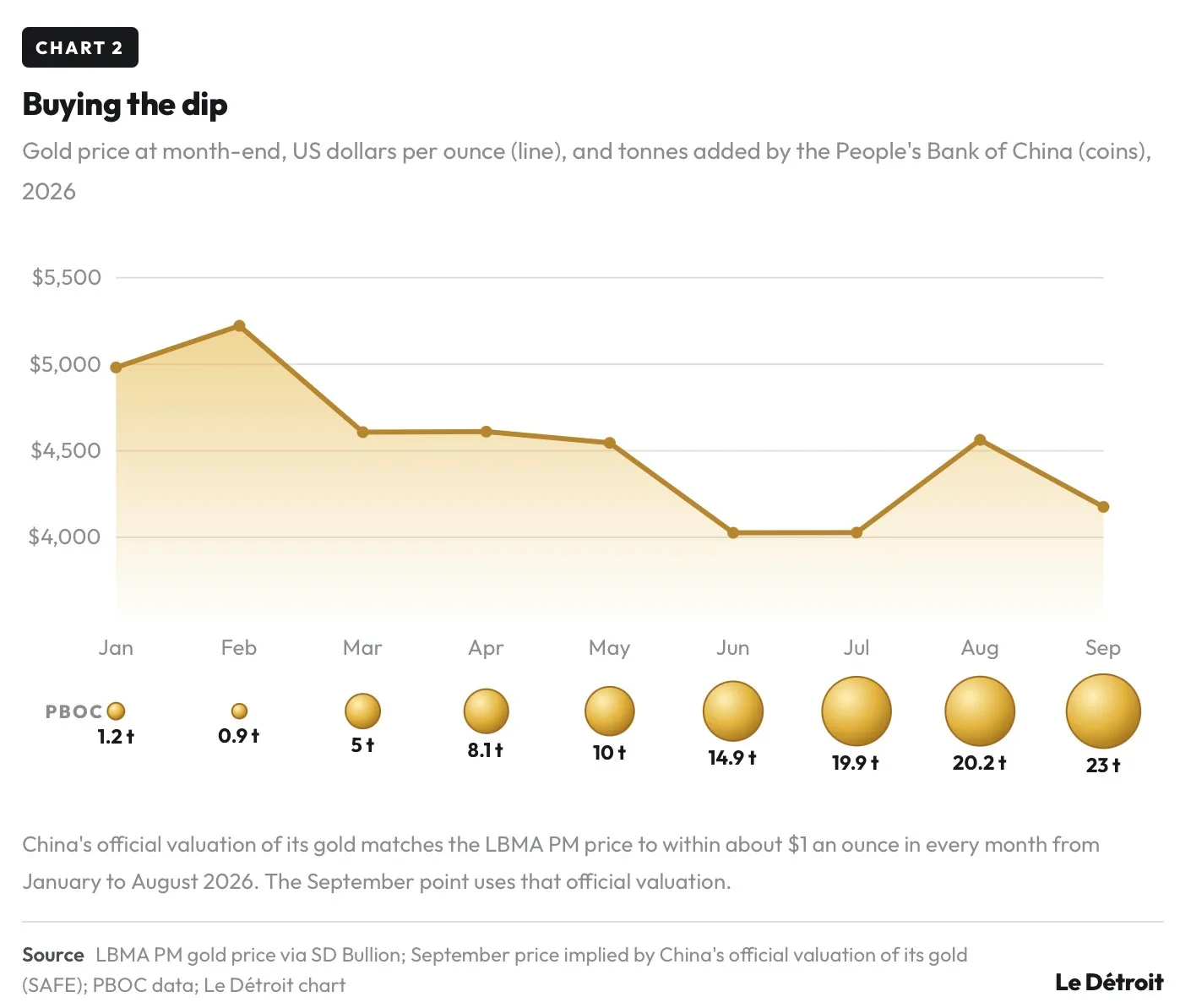
Gold hit a record in January 2026, above $5,500 an ounce (about $5,600 on Trading Economics' spot series), then fell back. It lost more than 6% in September alone and traded around $4,168 on 19 October, about a quarter below its peak, according to Trading Economics. The PBOC stepped up its purchases as prices fell in September. Its July and August purchases had each been described at the time as the largest since late 2023.
Official figures may understate the effort. Goldman Sachs estimates that China bought more than 48 tonnes through over-the-counter markets in London in May, against 10 tonnes reported. This is an estimate, not official data.
3. Record imports
The appetite is not only official. China imported more than 1,000 tonnes of gold worth a record $158.8 billion from January to August, according to customs data reported by The Nation, compared with 886 tonnes and $96.5 billion in the whole of 2025. Kitco describes the pace as the highest since at least 2017. Zijie Wu, an analyst at Jinrui Futures, told Bloomberg, as reported by Kitco, that the strong yuan was "enabling regulators to grant more generous approval quotas".
4. Why Beijing wants gold
Analysts cite three reasons. The first is diversification away from the dollar: Julius Baer's Carsten Menke points to the "weaponization of the US dollar" through sanctions. The second is cost: Saxo Bank's Ole Hansen argues that low Chinese interest rates make gold cheap to hold.

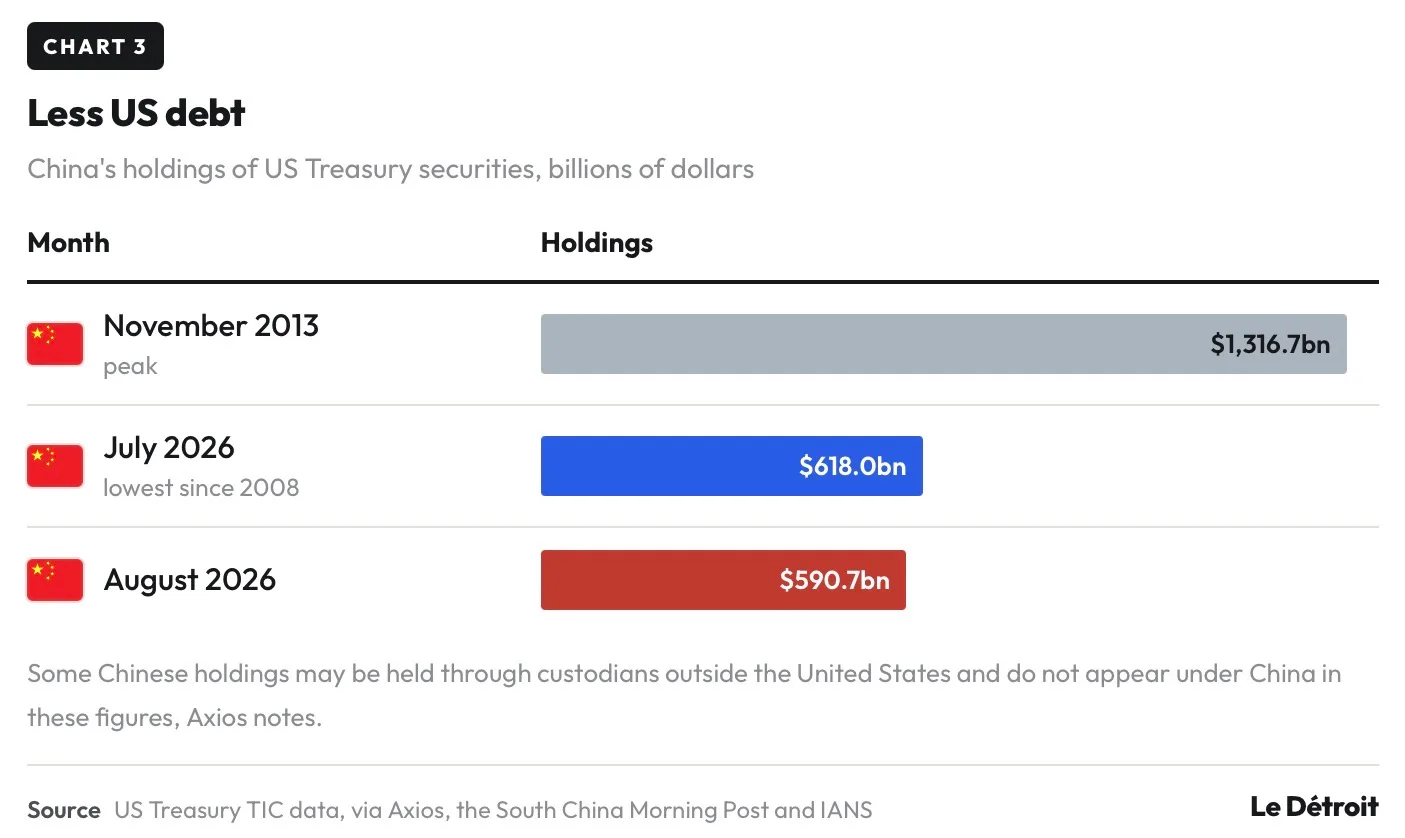
The third is the yuan's international role. More gold is necessary for the central bank to optimise its reserve structure, hedges against international financial and geopolitical risks and supports a steady and prudent internationalisation of the yuan, Professor Li Changan of the University of International Business and Economics told the Global Times. At the same time, China keeps reducing its exposure to US government debt: its holdings of Treasuries fell to $590.7 billion in August, from a peak of $1.32 trillion in 2013.
5. A global shift, with exceptions
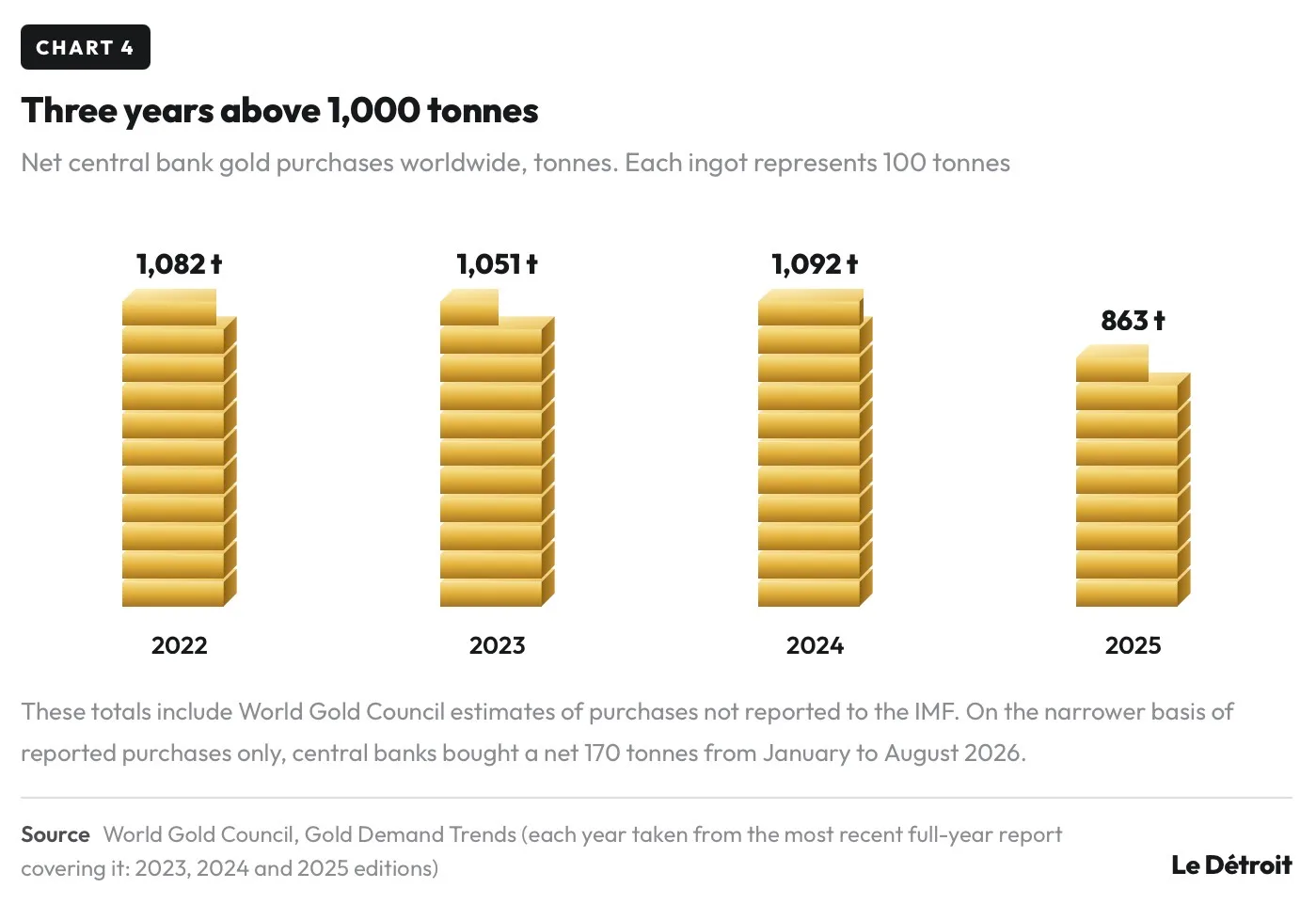
China is not alone. Central banks bought a net 170 tonnes of gold from January to August, according to the World Gold Council, led by Poland, which wants to reach 700 tonnes. But the picture is not uniform: Türkiye and Russia have been net sellers this year.
6. Le Détroit's reading
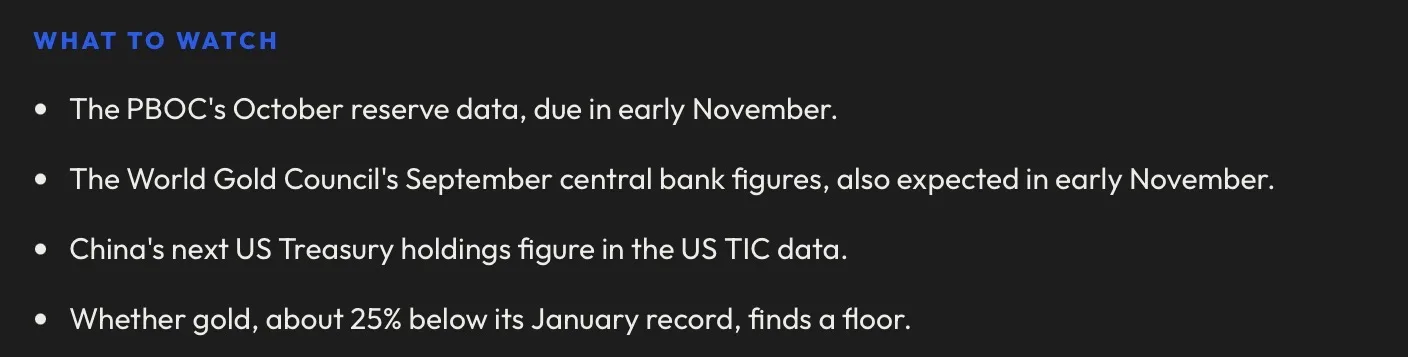
Gold made up only about 8.5% of China's reserves at the end of September, according to the World Gold Council, so Beijing has room to keep buying. The steady accumulation, combined with the steady retreat from US Treasuries, points to a long-term decision rather than a trade: to hold more of its savings in an asset it can keep at home, beyond the reach of foreign sanctions. For gold, that means a patient buyer that steps in when prices fall. For the dollar, it is another sign that its largest creditors are slowly reducing their exposure, one month at a time.