1. A September that refused to cool
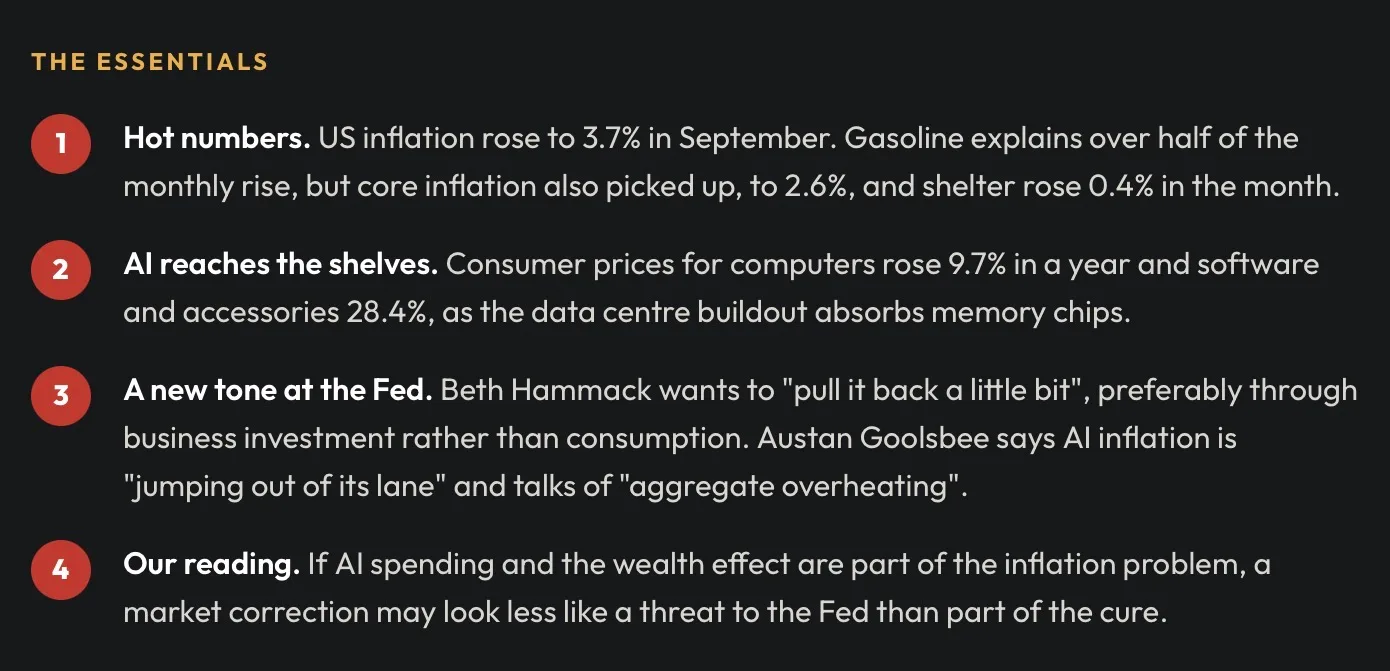
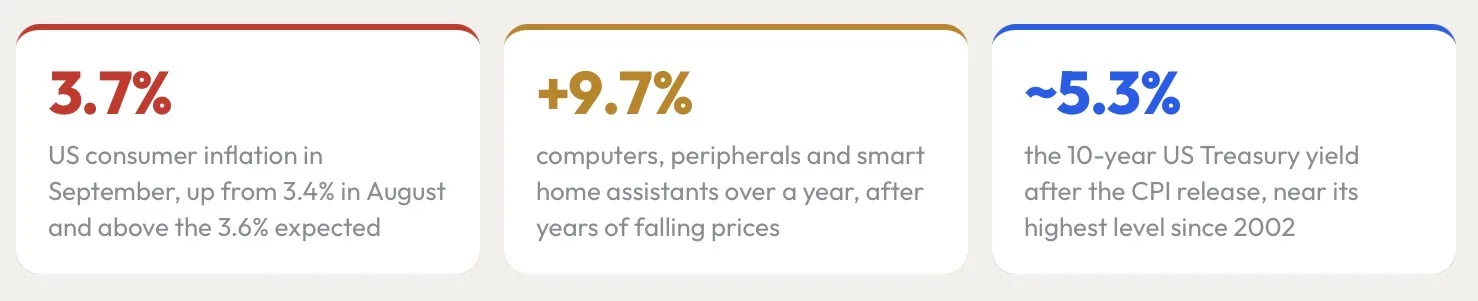
US consumer prices rose 0.6% in September and 3.7% over a year, up from 3.4% in August and above the 3.6% economists expected, according to the Bureau of Labor Statistics. Energy did most of the damage: gasoline jumped 9.1% in a month, which alone accounts for "over half" of the monthly increase. But the problem is not only oil. Core inflation, which excludes food and energy, rose 0.3% in the month and accelerated to 2.6% over a year, from 2.4%, above the 2.5% expected. Shelter, which weighs about 35% of the index, rose 0.4% in the month.

2. Inflation reaches the computer
One line of the report stands out. For more than three years, the price of computers and peripherals fell steadily, often by 5% a year, as it usually does with technology. In September, it was up 9.7% over a year, and 1.4% in the month alone. Computer software and accessories rose 28.4%, a record according to Briefs Finance, which links both increases to "ongoing pressures tied to the data center buildout".
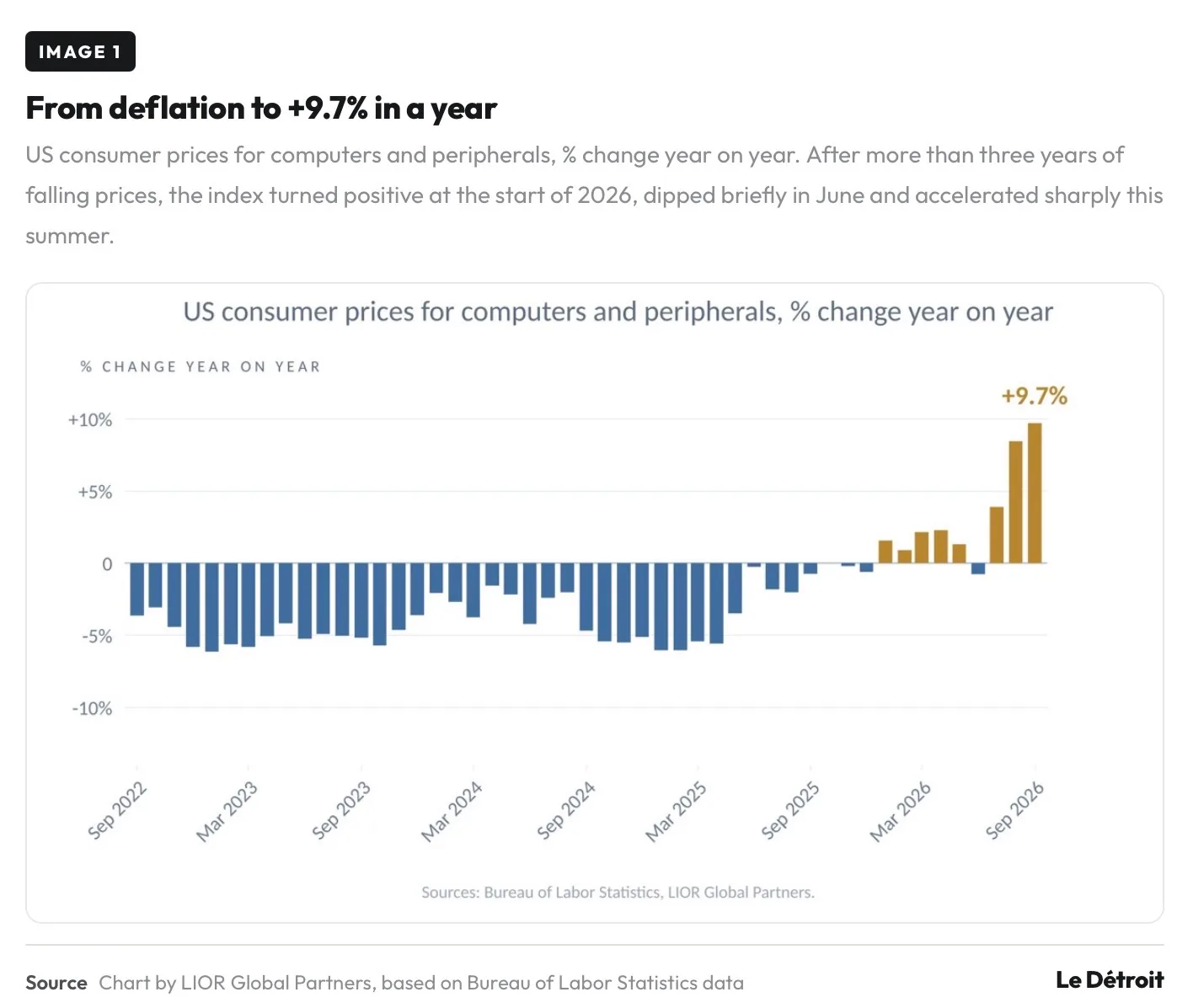
The mechanism is known. Data centres for artificial intelligence are absorbing memory chips. TrendForce estimates that AI systems will consume 70% of global memory production this year, and memory now accounts for about 35% of the cost of making a laptop, against 16% to 20% historically, Gulf News reported in May. DRAM prices rose by about 95% in the first quarter alone. Consumers appear to be paying for a shortage driven by the race for computing power.
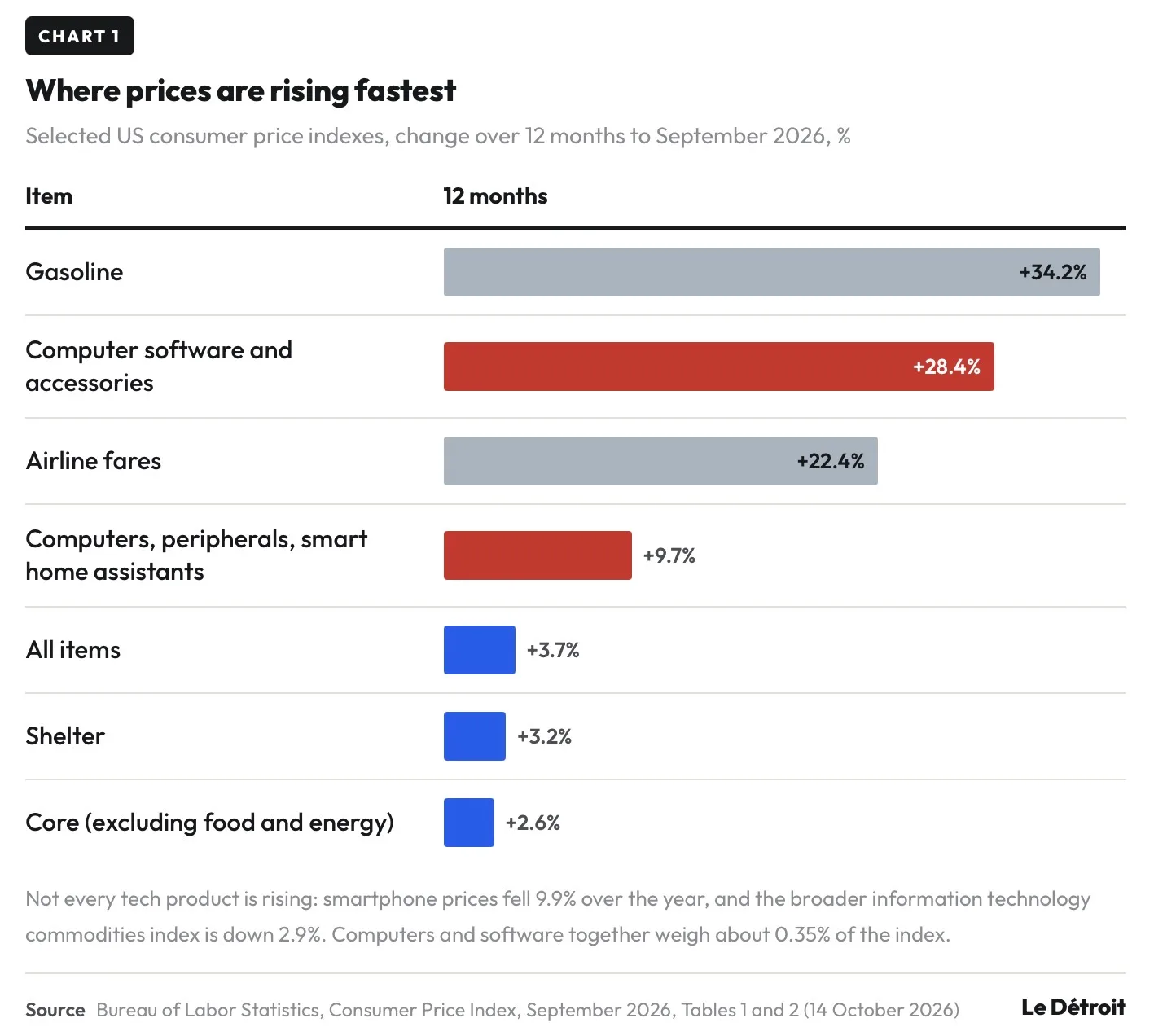
The weight of these products in the index is tiny, and smartphones are still getting cheaper. But they are a visible sign of what worries the Fed: AI demand is no longer just a story of chips and power lines, it is showing up in prices that households pay.
3. Hammack: "pull it back a little bit"
Beth Hammack, president of the Cleveland Fed and a voting member of the rate-setting committee this year, said in an interview with Reuters this week that she wants the economy to slow. She dissented in July in favour of a hike, and the Fed raised rates in September for the first time since 2023.

What is new is where she wants the slowdown to happen. "If we can curb it on the capital expenditure side, then maybe it doesn't have to hit as much on the consumption side," she said. On AI, she was explicit: "It may have started with the data centres, but I think it's starting to impact things more broadly." She also noted that consumer spending "does seem like it's being held up largely by the top end of the income spectrum and by the wealth effect", that is, by households who feel richer because their portfolios have risen. "I think we need to put more restrictions on the economy," she said. Elsewhere in the interview, she said she wanted to "do it in a deliberate fashion so that we don't weaken the labour market if we don't need to."
4. Goolsbee: AI inflation "jumping out of its lane"
Austan Goolsbee, president of the Chicago Fed, who does not vote this year, went in the same direction. In an interview published by Semafor on 13 October, he said that "the AI data center cost increases are jumping out of its lane", and that "prices are going up in spaces that are not just components in data centers".

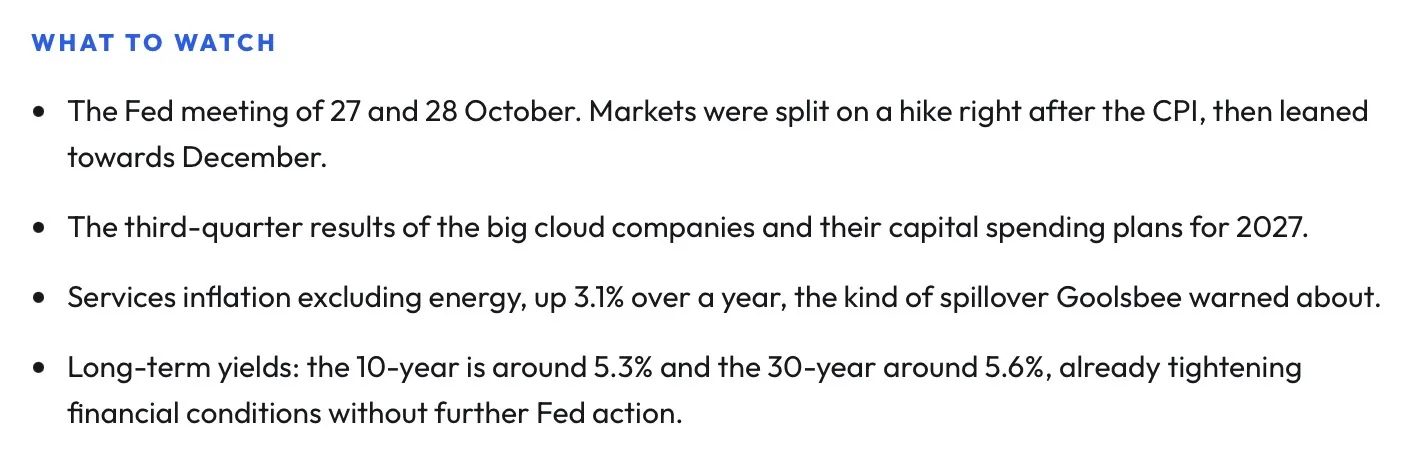
The distinction matters. A supply shock, such as an oil price spike, is expected to fade on its own. Overheated demand is different: "It takes a long time for overheated demand to get going, and once it's going, it's hard to get rid of that," Goolsbee said, adding that in that case "you act decisively and you act quickly to prevent that from rolling into inflation expectations." The day after, on Yahoo Finance, he called the CPI report "discouraging" and said persistent services inflation showed the rise went beyond tariffs and the war around Iran.
5. Markets and yields
The Fed's next meeting is on 27 and 28 October. Before the CPI release, futures priced a roughly 22% chance of a hike. Right after it, the odds rose to between 43% and 50%, before falling back to about a third in the evening, while the odds of a hike by December reached about 90%, according to CME FedWatch figures compiled by FinanceFeeds and Invezz.

Meanwhile, long-term rates keep climbing. The 10-year Treasury yield rose to about 5.3%after the CPI release, and the 30-year to about 5.6%. Earlier this month, both reached their highest levels since 2002. Higher long-term rates raise the cost of mortgages, corporate debt and the capital that funds data centres. The five largest cloud companies are projected to invest nearly $700 billion in 2026, according to First Trust.
6. Le Détroit's reading
For years, markets have lived with an implicit promise: if stocks fall hard, the Fed will step in. The words of Hammack and Goolsbee suggest that this reflex is weaker today. If part of US demand rests on AI investment and on the wealth effect of the richest households, then a cooling of both is not a risk to be fought but part of what the Fed is looking for. Neither official calls for a crash. But a correction in tech stocks would now do some of the Fed's work for it.