1. A racetrack across the river
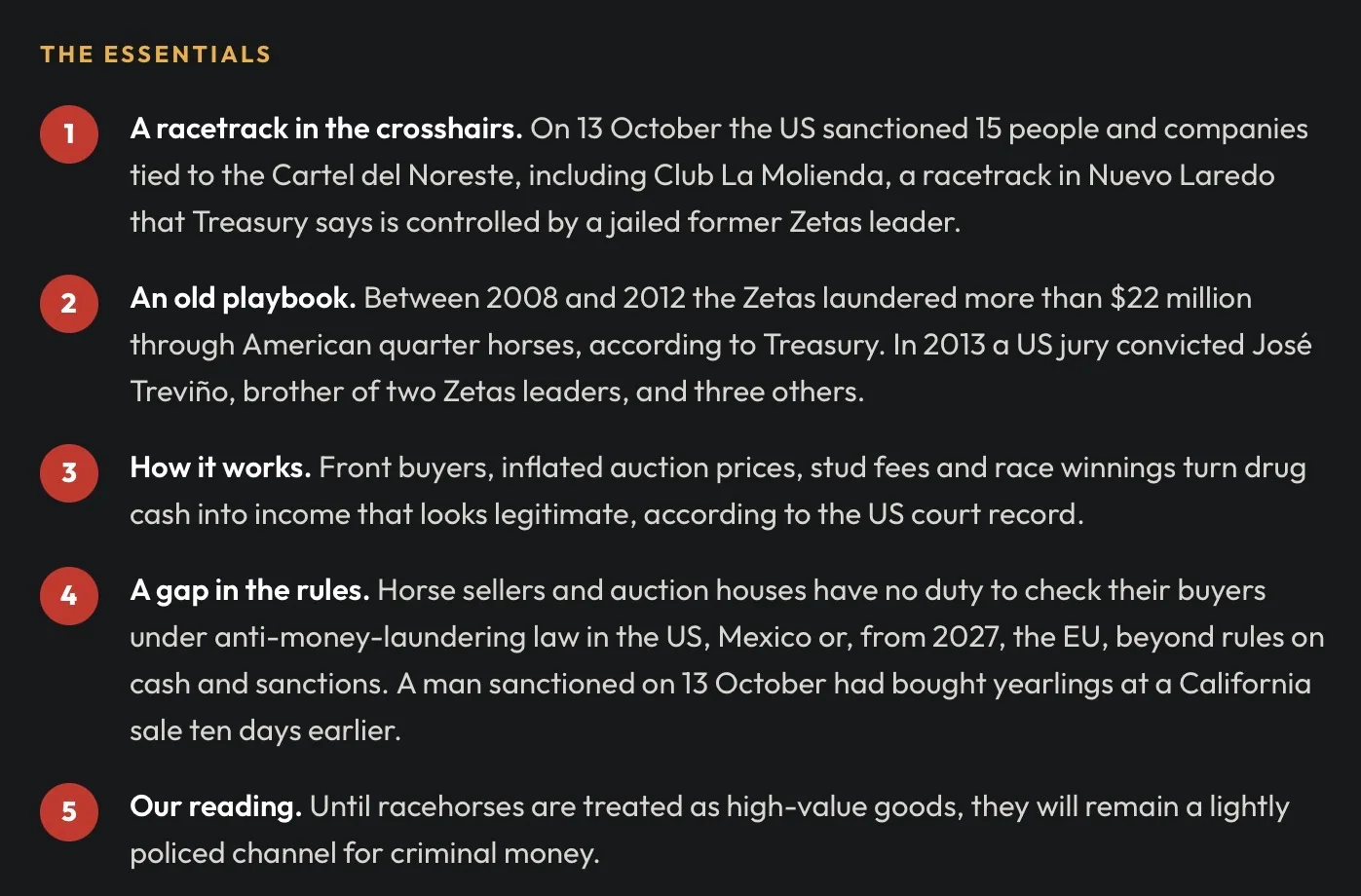
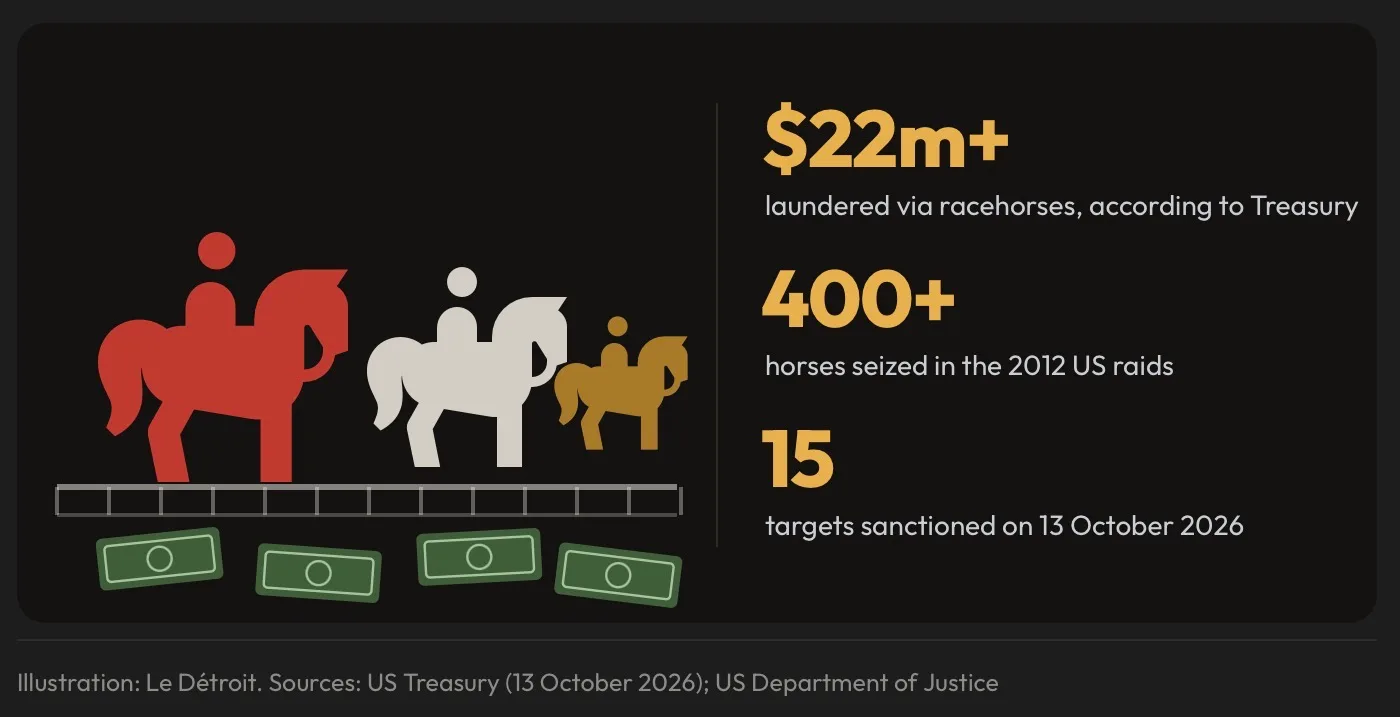
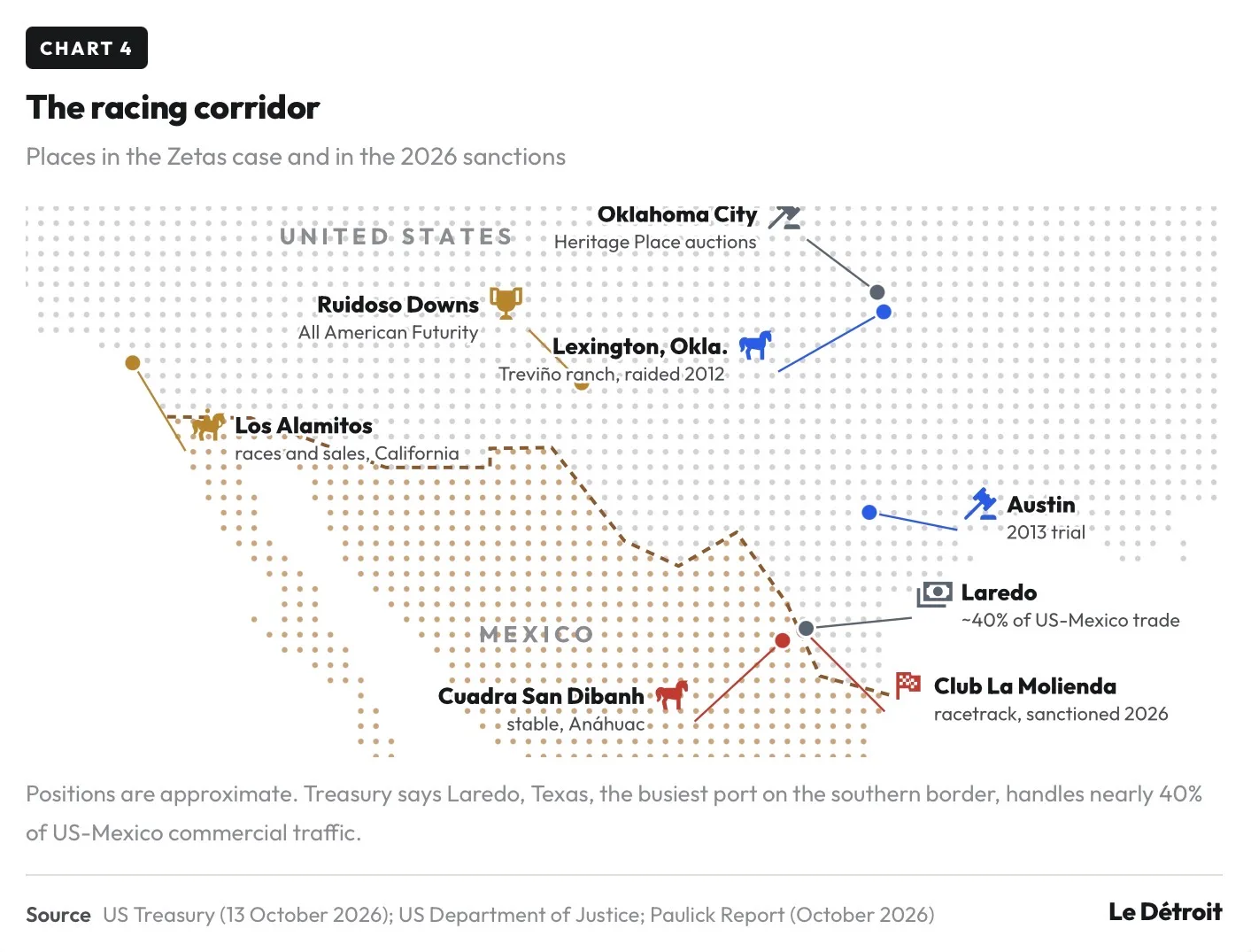
On 13 October the US Treasury sanctioned four people and eleven companies tied to the Cartel del Noreste (CDN), a group Washington designated as a terrorist organisation in February 2025. At the centre of the network, according to Treasury, is Club La Molienda, a racetrack with a restaurant and bar on the outskirts of Nuevo Laredo, across the Rio Grande from Laredo, Texas, the busiest port on the US-Mexico border. Treasury says the track earns money from entry fees paid by owners and spectators, hosts horses bought by cartel members, many of them in the US, and is controlled by Miguel Ángel Treviño Morales, known as Z-40, a former leader of Los Zetas who is held in US custody.
The list also includes a quarter horse stable, Cuadra San Dibanh, and its owner, the businessman Gamaliel Garza García, whose horses race in California and New Mexico, according to Treasury, as well as construction, gas and trucking firms. Treasury says one construction company won public contracts in Nuevo Laredo and Tamaulipas "corruptly". The Tamaulipas state government says none of the fifteen targets has held a state contract since October 2022, while the city of Nuevo Laredo has acknowledged contracts with two of the companies. Mexico's financial intelligence unit, the UIF, added all fifteen to its list of blocked persons. The designations are sanctions, not criminal charges.
2. The template: the Zetas' racehorses
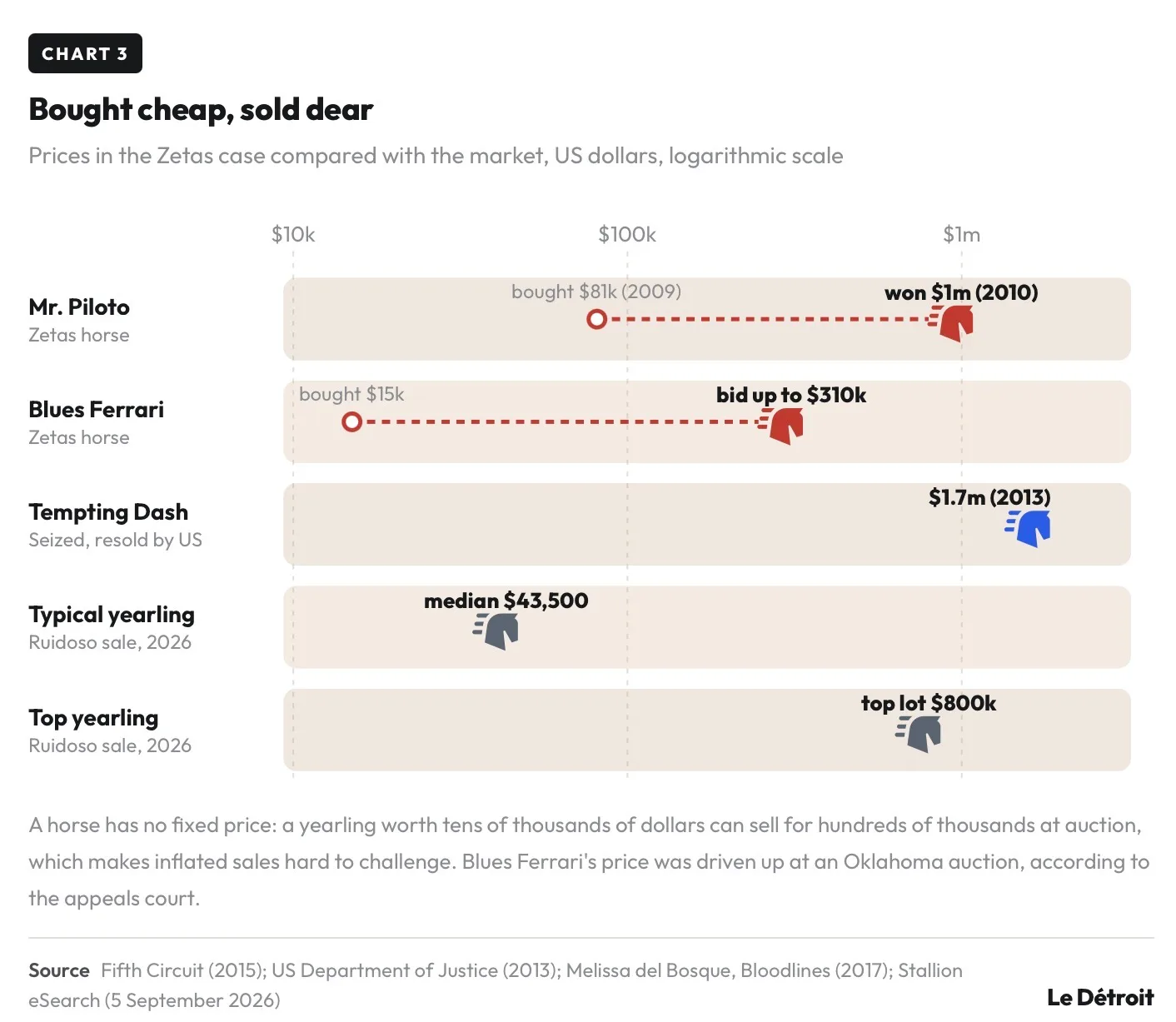
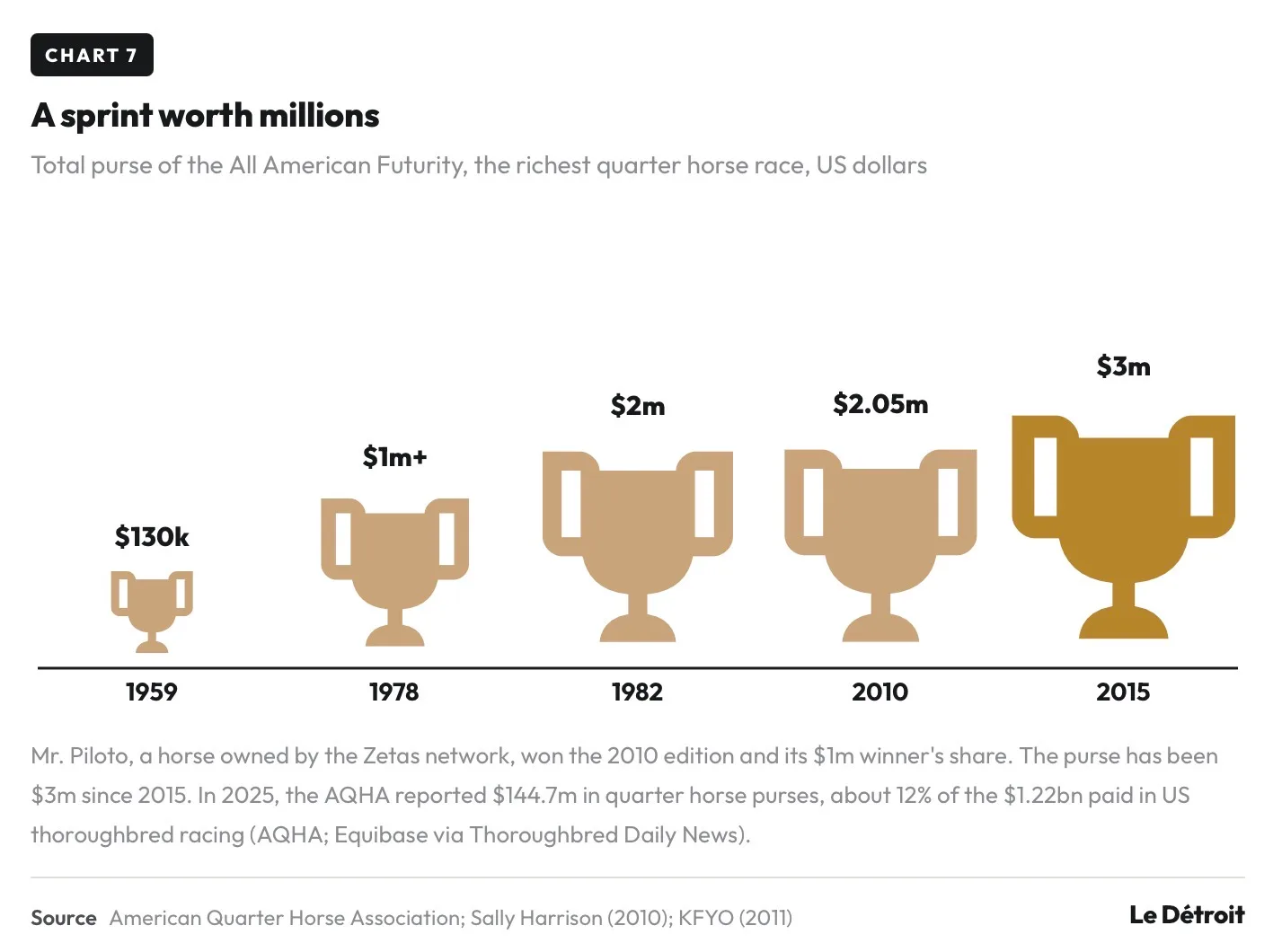
The scheme Treasury describes is not new. In June 2012 US agents made arrests in four states and seized more than 400 horses from a network run in the US by José Treviño Morales, the brother of Z-40 and of his successor Omar, known as Z-42. Treasury now says the operation spent $16 million on horses over 30 months and laundered more than $22 million. Its star, Mr. Piloto, bought for $81,000 in 2009, won the 2010 All American Futurity at Ruidoso Downs in New Mexico, the richest race in quarter horse racing, and its $1 million winner's share.
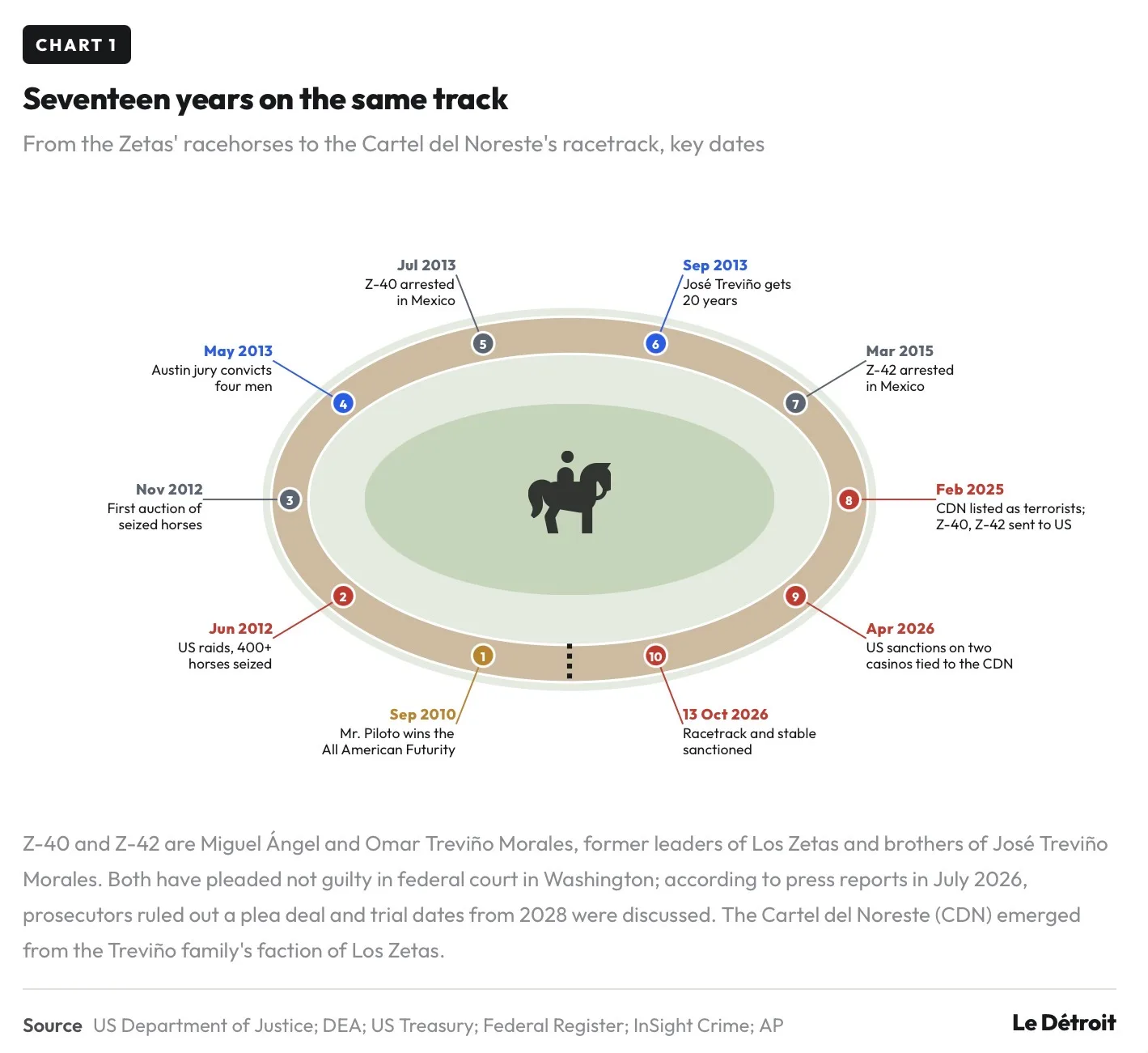
In May 2013 a federal jury in Austin convicted José Treviño and three others of conspiring to launder money; he was sentenced to 20 years. The Mexican businessman Francisco Colorado Cessa received the same sentence; his first conviction was overturned on appeal in 2015, and he was convicted again at a retrial that year. The US government auctioned the seized horses for about $12 million, including $1.7 million for the champion Tempting Dash. Z-40 and Z-42 were arrested in Mexico in 2013 and 2015 and were among 29 prisoners Mexico sent to the United States in February 2025. Both have pleaded not guilty to drug trafficking and other charges in Washington.
3. How a horse launders money
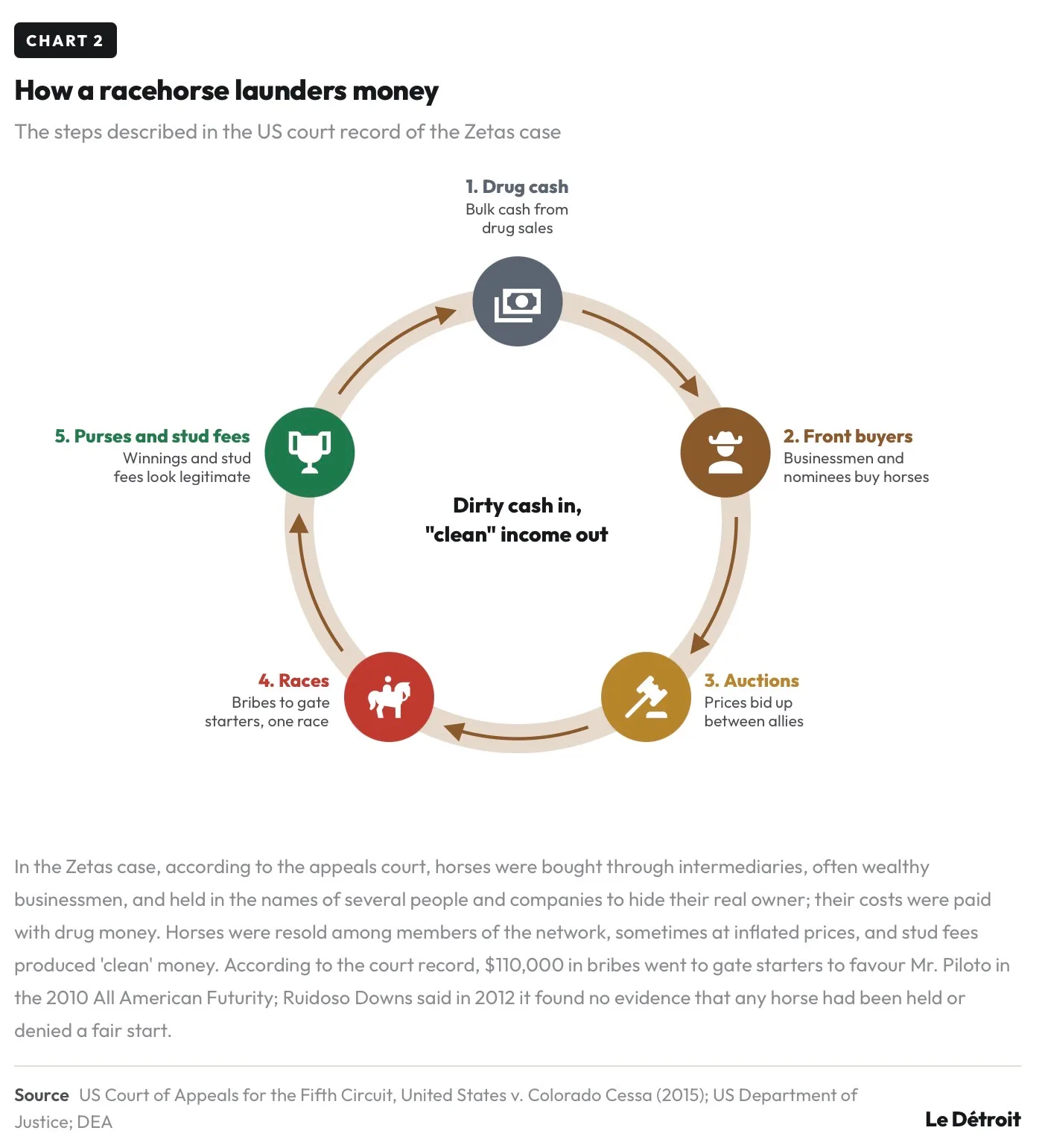
Racehorses suit launderers because their value is subjective and their earnings look legitimate. In the Zetas case, according to the US Court of Appeals for the Fifth Circuit, the Zetas bought horses through intermediaries, often wealthy businessmen, and held them in the names of several people and companies to hide their real owner; training, breeding and racing costs were paid with drug money; horses were resold among members of the network, sometimes at inflated prices; and stud fees and race winnings turned dirty cash into income that could be explained to a bank. José Treviño's reported income rose from about $22,000 a year to about $5.4 million over 30 months, the court found.
Prices are the weak point. At the Ruidoso select yearling sale in 2026, the median price was $43,500 and the top lot sold for $800,000, according to the trade site Stallion eSearch. With such a range, an inflated price is hard to challenge, and a winning horse can multiply its value overnight.
Geography does the rest. The 2012 network operated between ranches in Oklahoma, races in New Mexico, Texas and California and its suppliers in Mexico; the 2026 sanctions sit on the same corridor, a few kilometres from the border crossing through which nearly 40% of US-Mexico trade passes.
4. Not only Mexico
Horses appear in criminal finance far beyond the CDN. In Chihuahua, horse races have been the scene of deadly shootings linked to cartel rivalries: 11 people were killed at a clandestine race in El Sauz in April 2022, and at least eight at the Santa Teresa track in Parral in November 2025. In December 2019, Colombian prosecutors seized a paso fino stud farm and a colt reportedly bought for about $1.5 million from a cousin of a former Norte del Valle cartel leader. In Italy, the Carabinieri's "Corsa Nostra" operation in 2018 targeted Cosa Nostra clans accused of fixing races at the Palermo racetrack. In Ireland, the High Court found in 2019 that a convicted drug dealer had bought most of Labaik, a 2017 Cheltenham winner, with the proceeds of crime, after a case brought by the Criminal Assets Bureau.
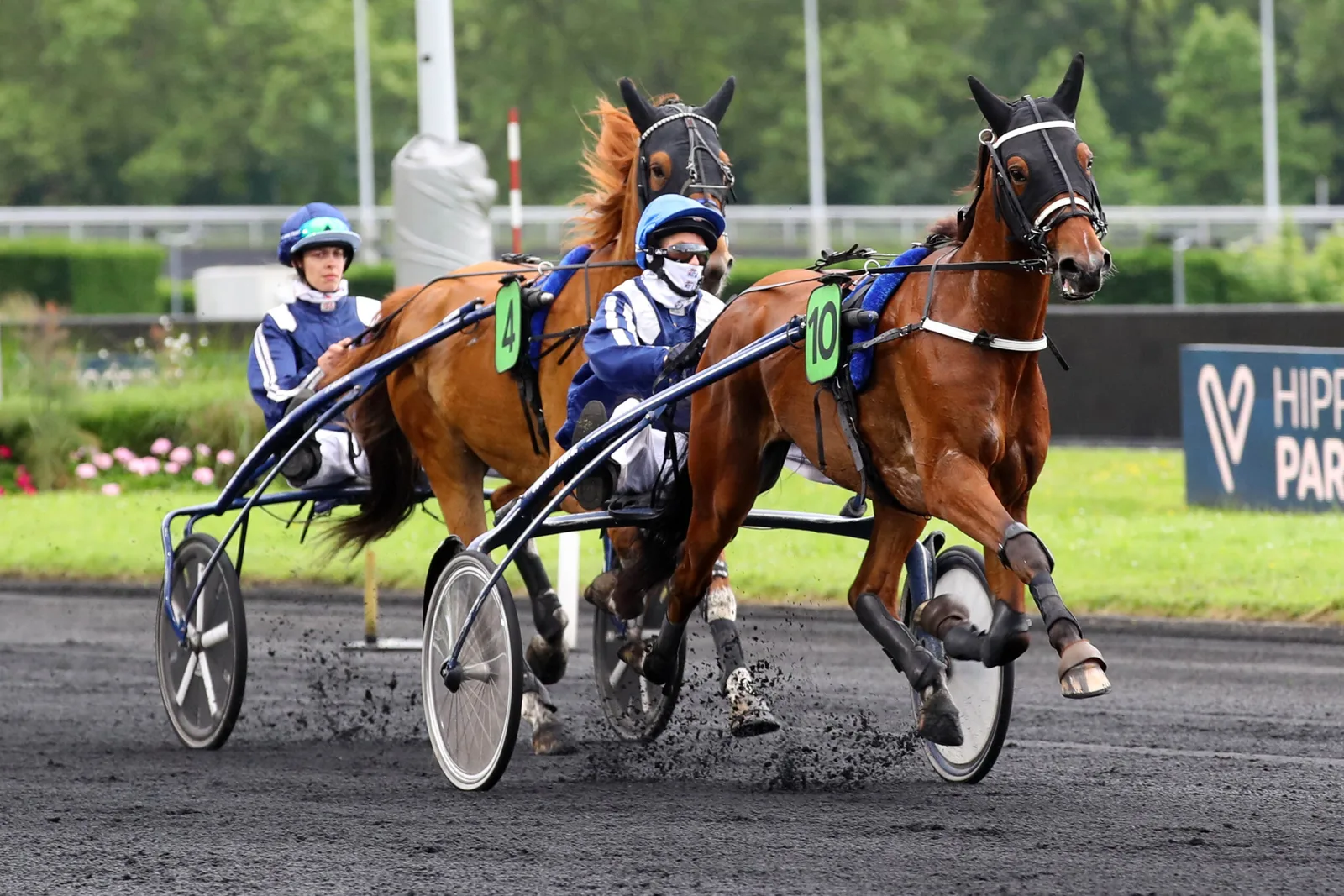
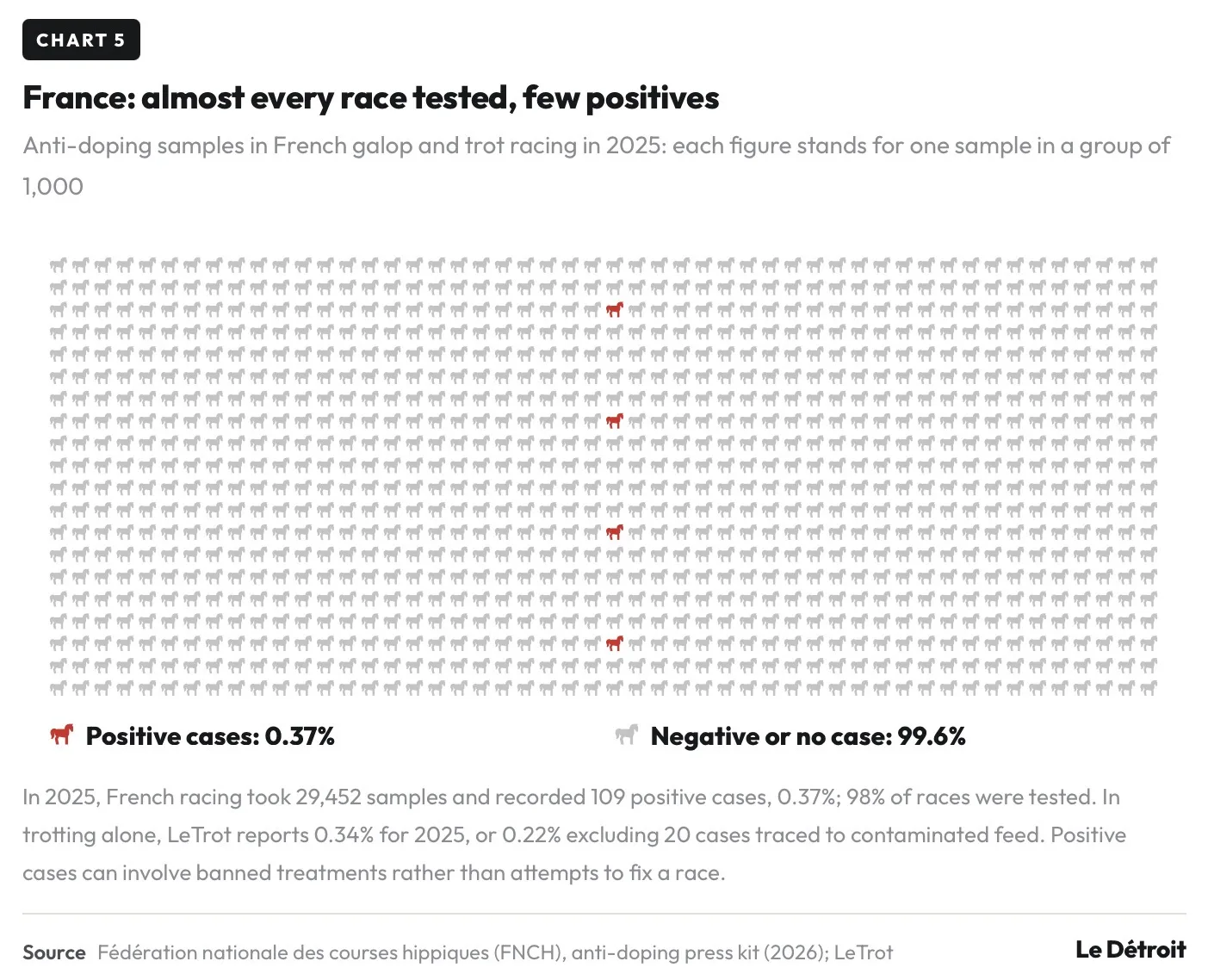
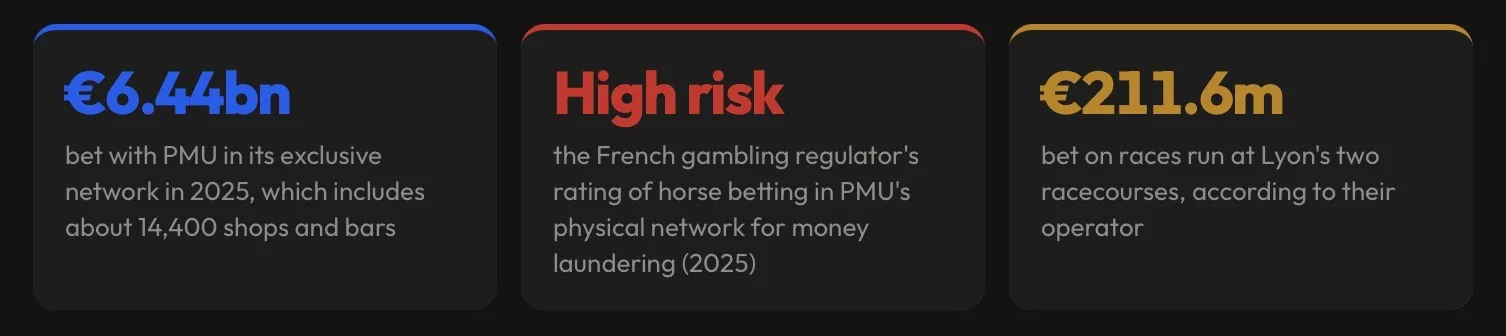
In France, the risk sits mainly at the betting counter. The national gambling regulator, the ANJ, rates horse betting through PMU's network of about 14,400 shops and bars as a "high risk" for money laundering, citing the purchase of winning tickets from their holders, and said in 2025 that PMU still reported too few suspicious transactions for the size of its clientele, although its reports had increased. On the tracks, French racing tested 98% of races in 2025, and 0.37% of samples were positive. Recent French cases have involved doping linked to betting rather than riders paid to lose: in March 2026 a trainer received a suspended sentence and a five-year ban over three races at Saint-Cloud and Longchamp on which bettors had won about €4 million.
5. The gap in the rules
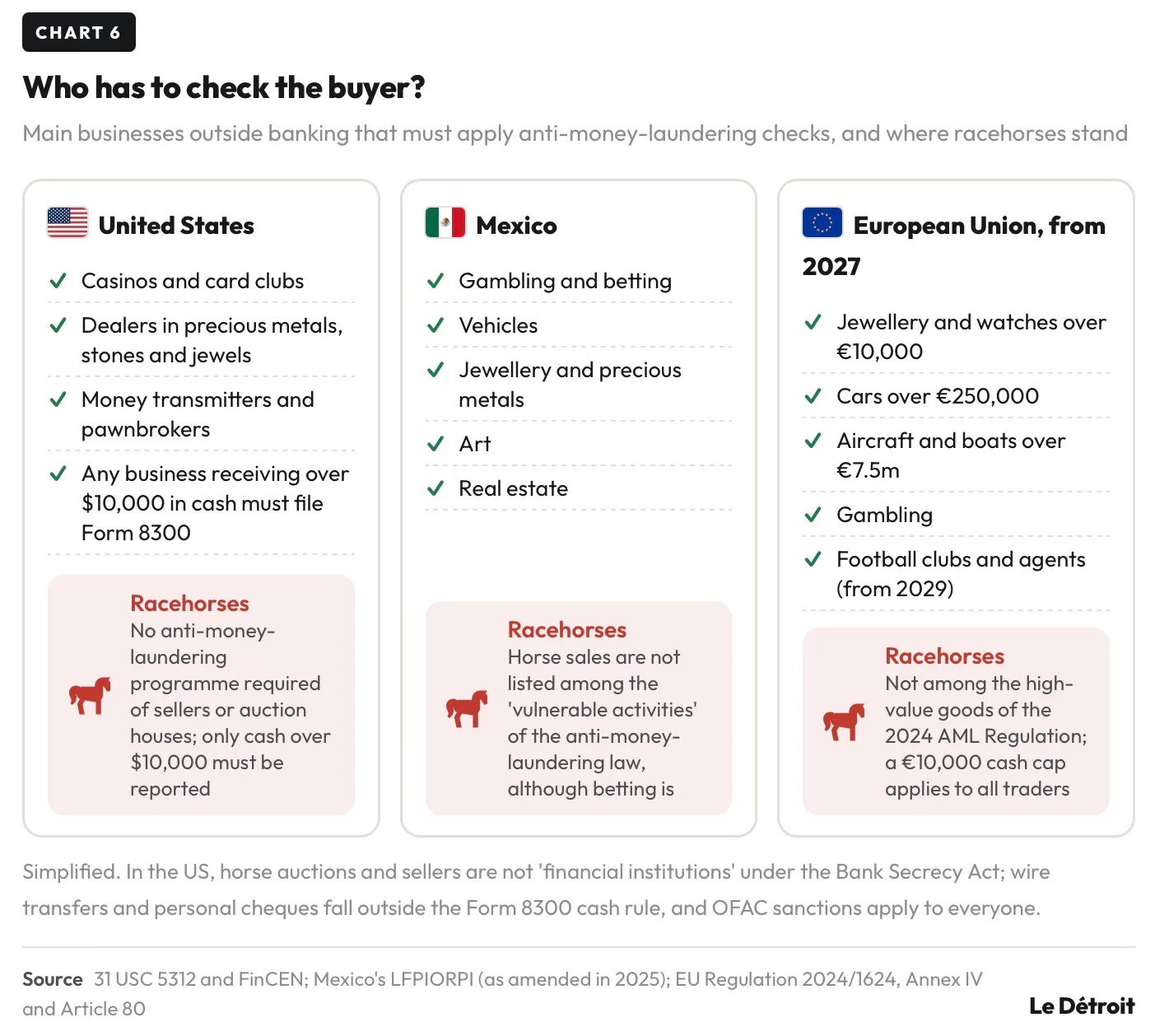
The racing industry sits outside most anti-money-laundering rules. In the US, horse sellers and auction houses are not "financial institutions" under the Bank Secrecy Act: they need no compliance programme and file no suspicious activity reports, beyond reporting cash payments above $10,000. Mexico's anti-money-laundering law covers vehicles, jewellery, art and real estate, but not horses. The EU's new AML Regulation, which applies from July 2027, names jewellery, watches, luxury cars, aircraft and boats as high-value goods, and will cover football clubs from 2029, but not horses.
The 2026 case shows the result. Gamaliel Garza García bought six yearlings for $491,000 at a sale at Los Alamitos in California on 3 and 4 October, according to the trade site Paulick Report, ten days before he was sanctioned. He was not yet on any sanctions list, and no anti-money-laundering rule required the sale to check the source of his funds. Dealing with the CDN itself, designated since 2021, was already prohibited.
6. Le Détroit's reading
Fourteen years after the Zetas' horses were sold at auction, Washington says a racetrack across the river is controlled by Z-40, and that the CDN's involvement in horse racing continues. The persistence says less about horses than about the rules around them: an asset with a subjective price, prize money that looks like honest income and an industry with no duty to check its buyers is a natural channel for criminal cash.
Sanctions can close a racetrack in Nuevo Laredo. They cannot, on their own, close the gap that let a man sanctioned ten days later buy yearlings at a California sale. That would take rules that treat a racehorse as what it can be for launderers: a high-value good that can be bought with dirty money and sold, or raced, into clean money.