
1. "Faster than we did in Guyana"
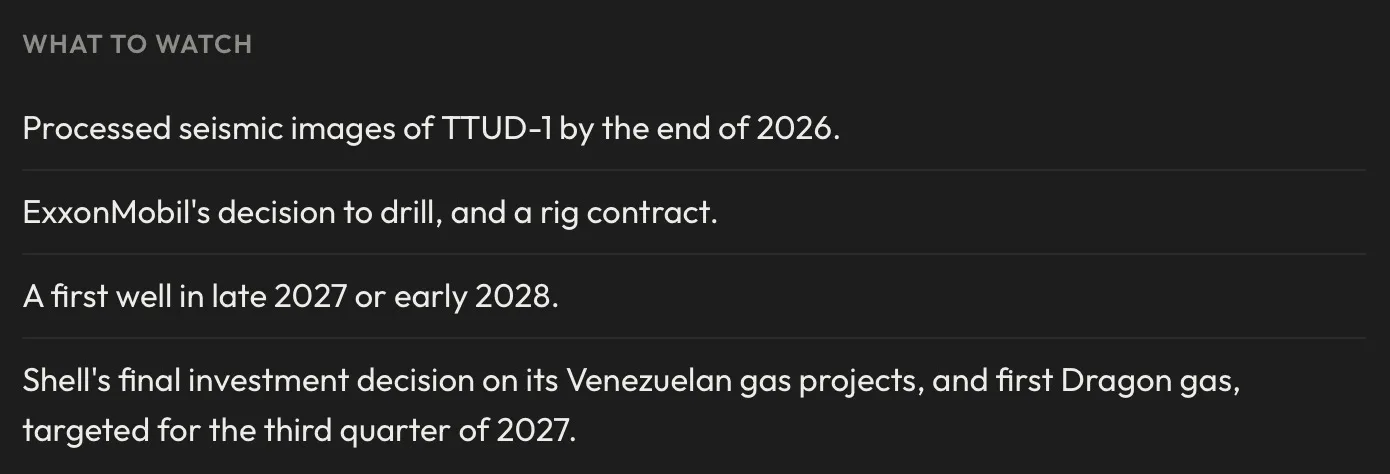
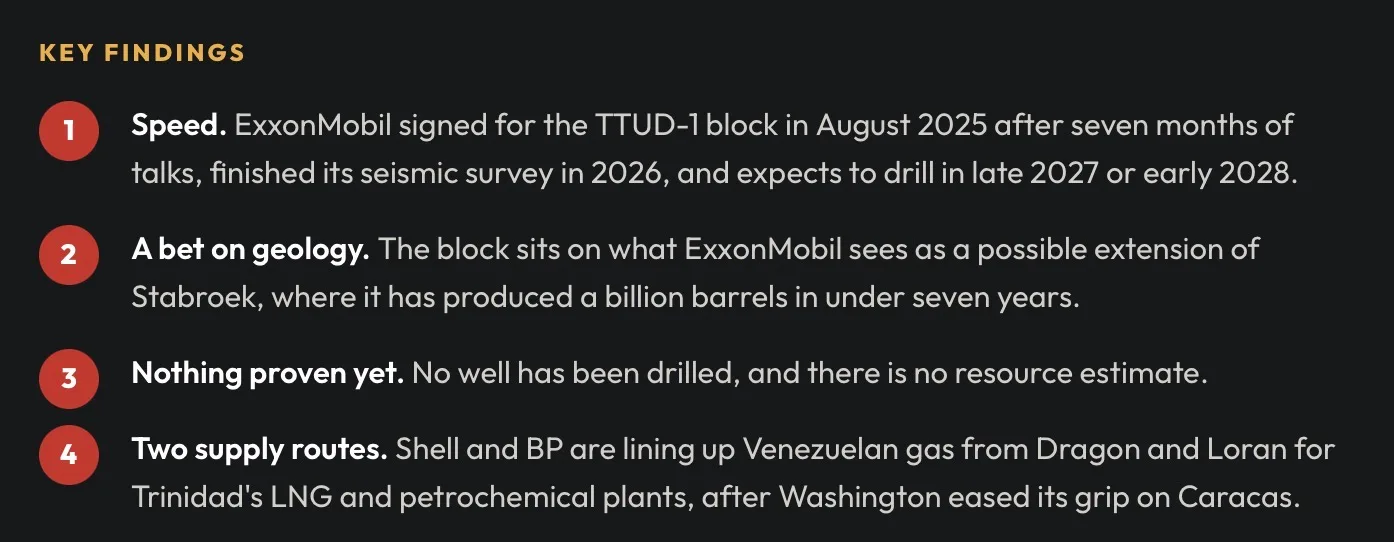
"We'll see an image by the end of the year, and we would expect to be drilling in late '27, early '28," John Ardill, ExxonMobil's vice president of exploration, said at the Rio Oil and Gas conference on 21 September. The company is moving on TTUD-1 "faster than we did in Guyana", he said, citing the pace of contract negotiations and seismic work.
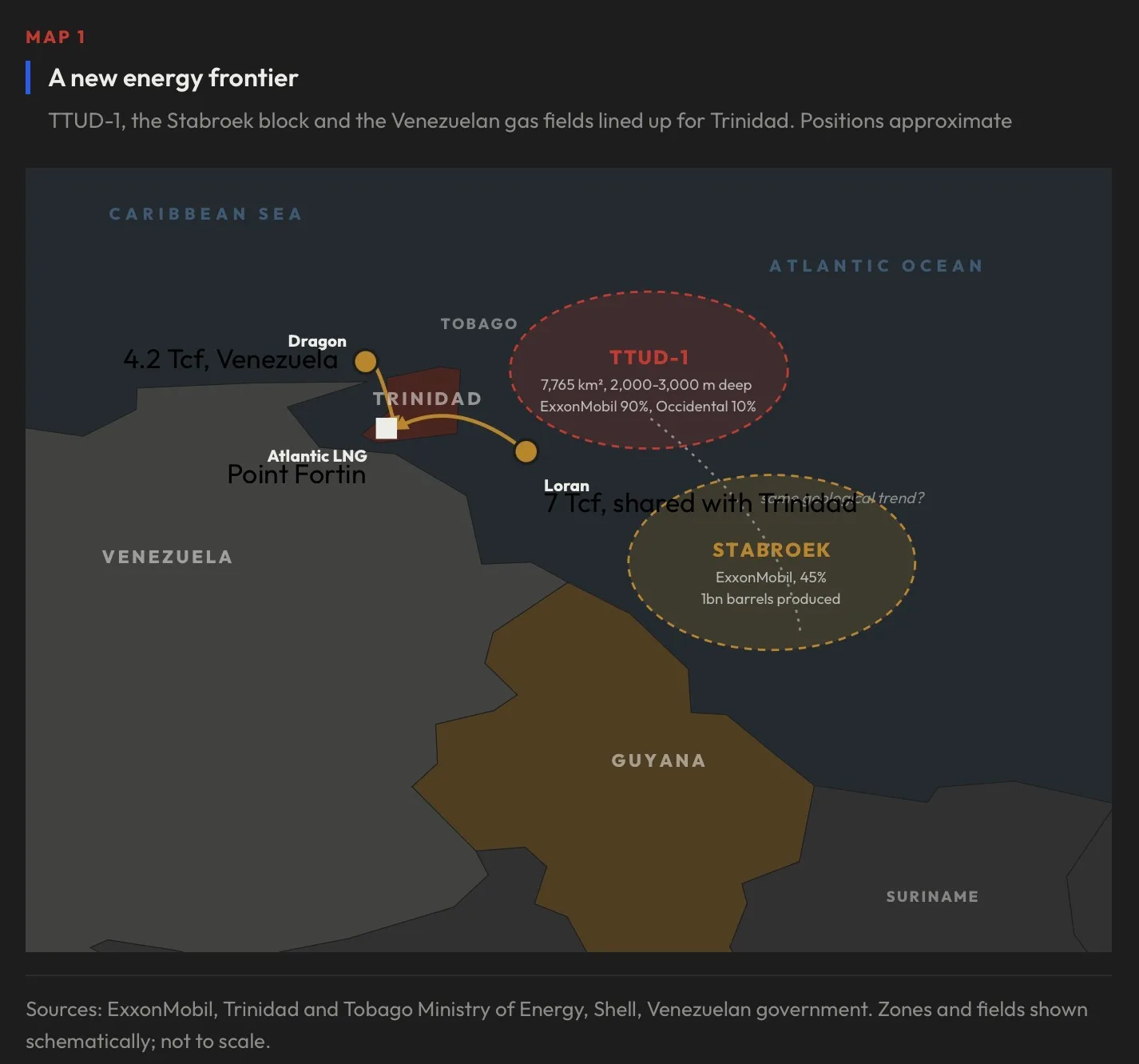
ExxonMobil returned to Trinidad and Tobago in August 2025 with a production-sharing contract for TTUD-1, a block of about 7,765 square kilometres off the country's east coast, formed by combining seven ultra-deepwater blocks, in water 2,000 to 3,000 metres deep. The contract followed just seven months of talks. A 3D seismic survey of about 6,000 square kilometres, carried out by the Shearwater vessel Amazon Warrior, was completed over the summer of 2026. In June, Occidental Petroleum bought a 10% stake; ExxonMobil keeps 90% and remains operator.
2. The Guyana playbook
ExxonMobil is reusing a method it knows well: deepwater experience in the same region, seismic vessels booked early, fast contracting with a government eager for results, and the option to copy proven development designs if it finds something. Ardill also points to Angola's Lower Congo basin, where the company drilled three exploration wells in the late 1990s before production began in 2003.
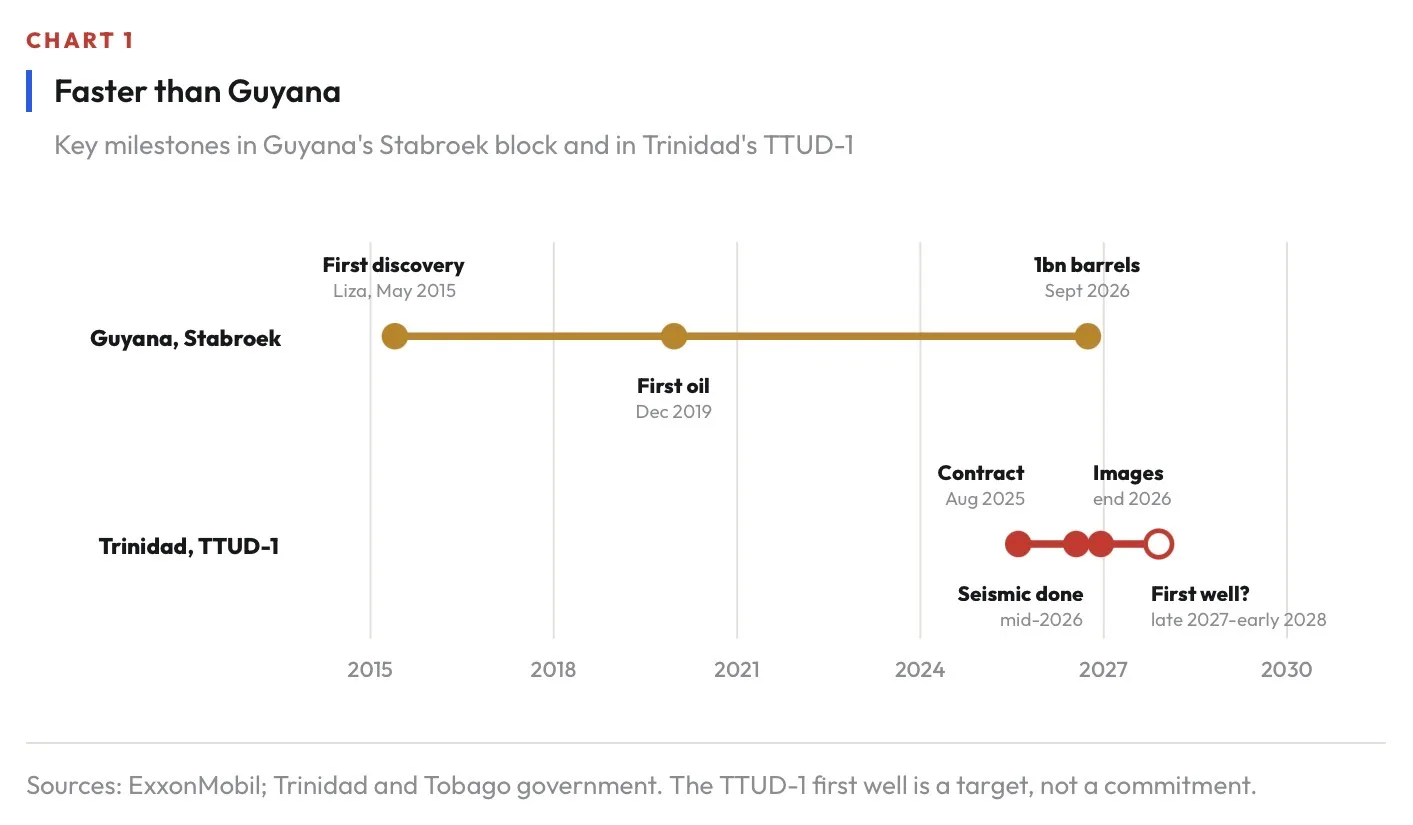
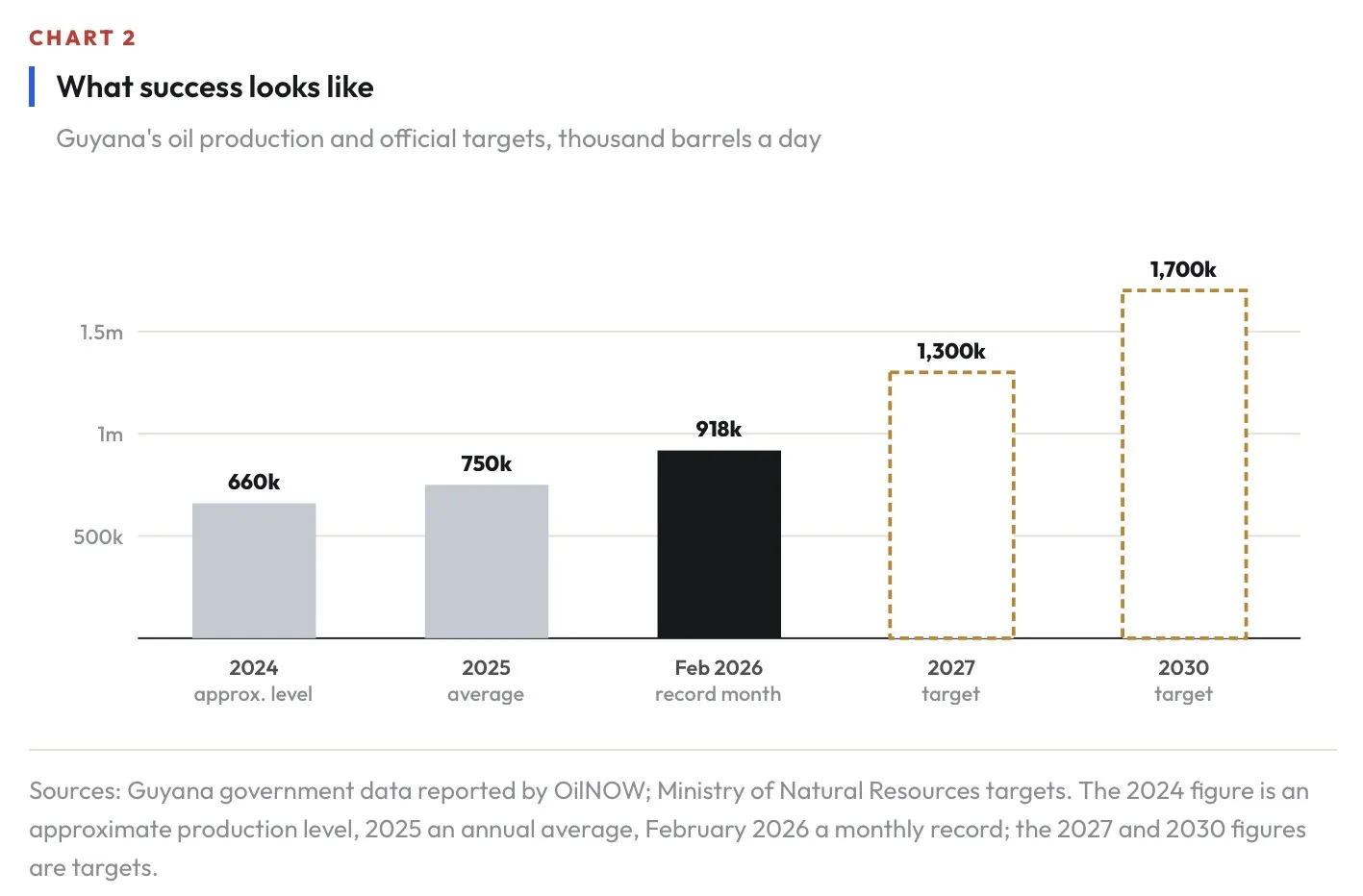
The benchmark is Guyana. Since first oil in December 2019, the Stabroek block, where ExxonMobil holds 45% alongside Chevron's Hess (30%) and CNOOC (25%), has produced one billion barrels, a milestone announced on 28 September. Ardill has told Reuters that the Trinidad acreage could hold potential comparable to Stabroek or to ExxonMobil's deepwater assets offshore Angola.
3. Why Trinidad needs it
Trinidad and Tobago built its economy on natural gas: LNG, ammonia, methanol and power. Gas generates nearly 80% of the country's export revenues, according to S&P Global. But production has declined from a peak of 4 billion cubic feet a day in 2010 as mature fields deplete. The first train of Atlantic LNG, Latin America's largest LNG plant, has been idle since 2020 for lack of gas and is being decommissioned. A deepwater discovery could refill that system for decades.
4. The Venezuelan route
The other supply route runs across the maritime border. After the United States captured Nicolás Maduro in January 2026, Venezuela reformed its hydrocarbon law and opened its offshore gas to foreign partners. Shell signed agreements in March for the Dragon field, estimated at 4.2 trillion cubic feet, targeting first exports to Atlantic LNG in the third quarter of 2027. In June, Caracas signed five agreements with Shell, including the cross-border Loran field, estimated at 7 trillion cubic feet, whose Trinidadian side Shell is developing through its Manatee project. BP has signed for Loran and the neighbouring Cocuina-Manakin project.
On 6 October, Shell chief executive Wael Sawan said the company sees its competitive edge in Venezuela in offshore gas rather than heavy oil. Supply is now converging on Trinidad from two directions: Venezuelan gas across the border, and ExxonMobil drilling the deep water.
5. The risks
Geology is a reason to drill, not a guarantee. No well has been drilled in TTUD-1 and there is no resource estimate. Nobody knows whether the block holds oil, gas or nothing commercial.
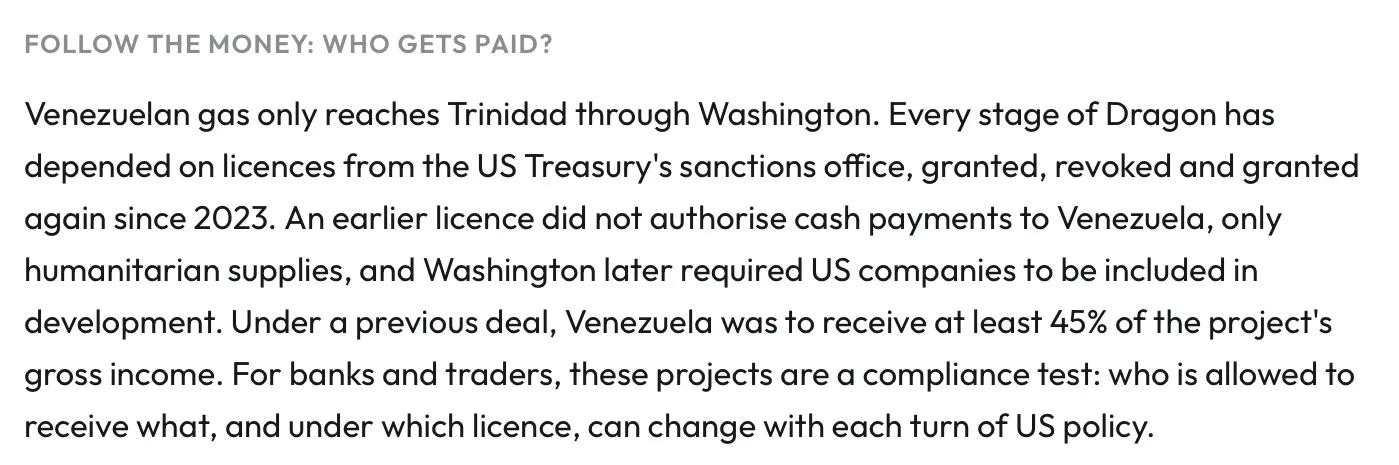
Politics. The Venezuelan gas deals rest on US licences and on a political transition in Caracas that is still unfolding.
Borders. Venezuela has long claimed part of Guyana's territory and had warned that ExxonMobil's production vessels were operating in waters it considers its own.
Dependence. A former Trinidadian energy minister, Kevin Ramnarine, has noted that relying on Venezuelan gas effectively turns Trinidad into a gas importer.