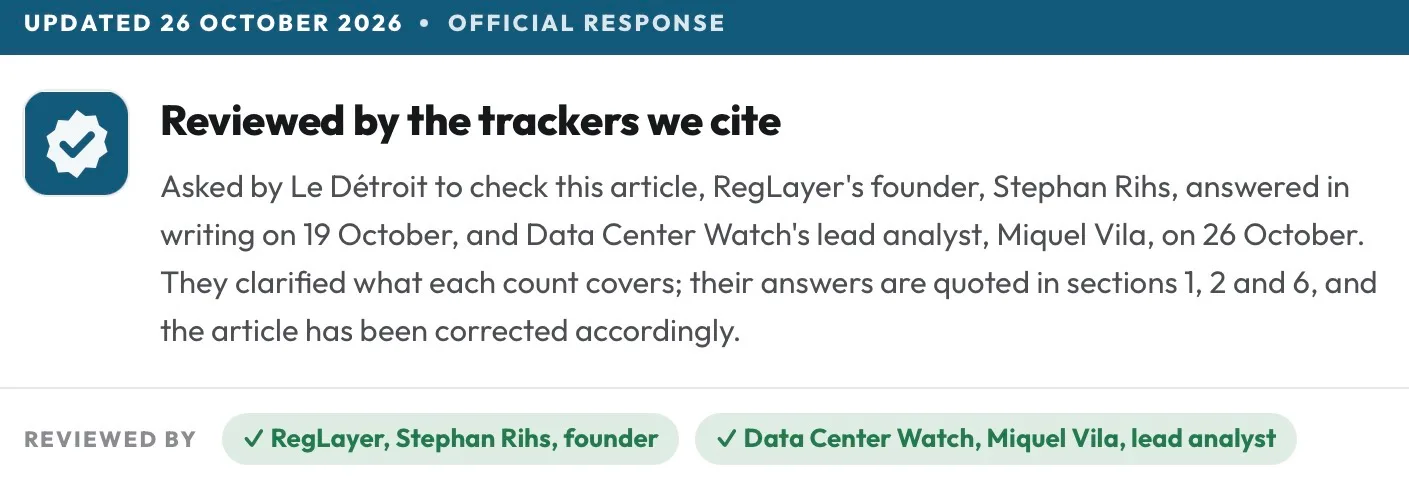
1. Four trackers, one direction
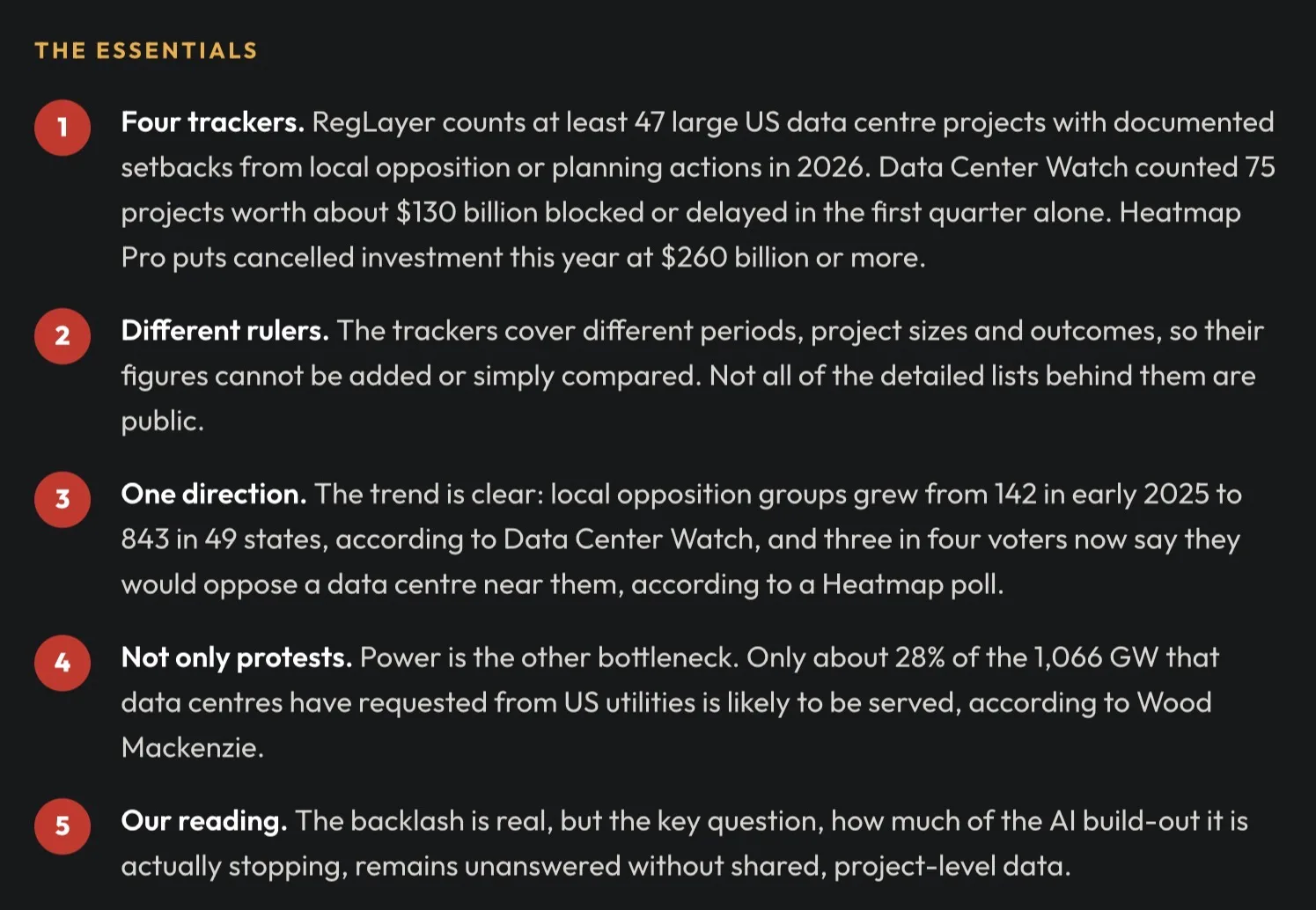
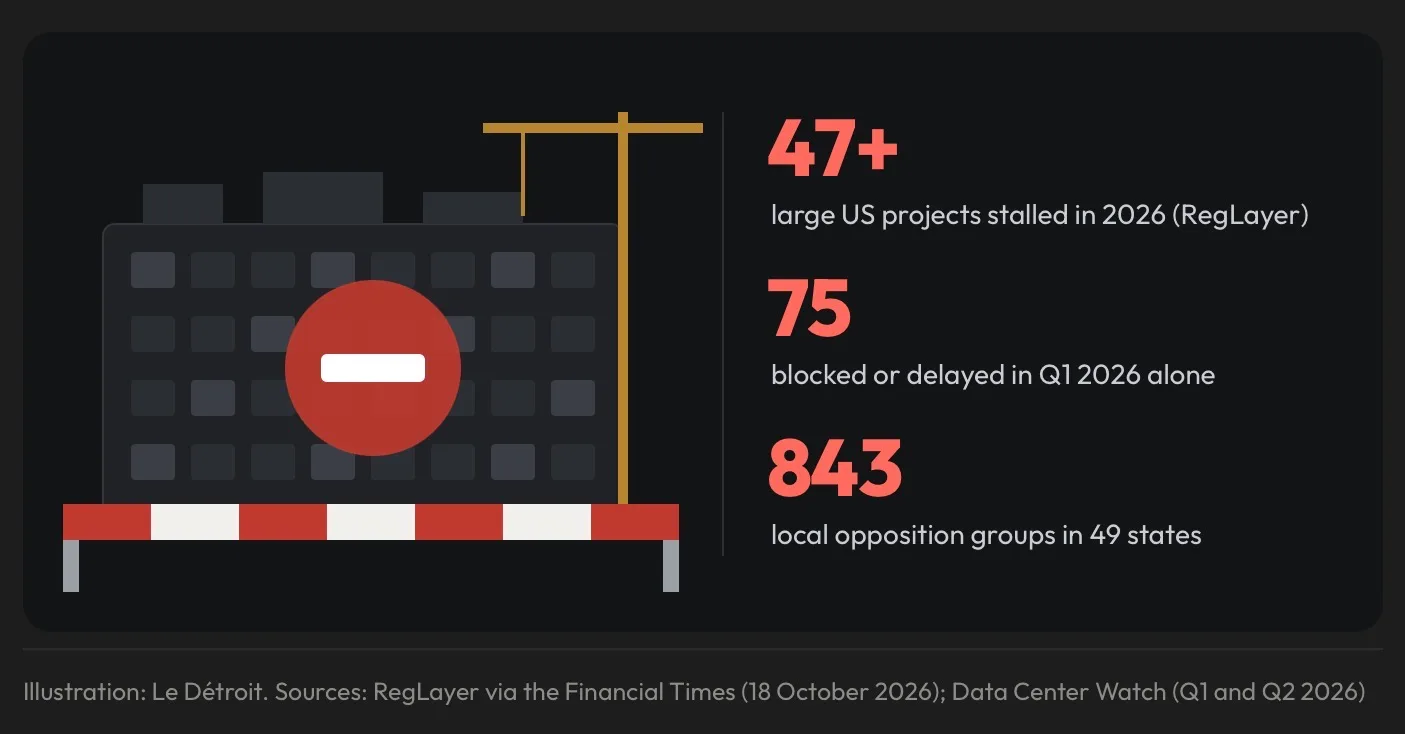
How many American data centre projects has local resistance stopped? The answer depends on who is counting. At least 47 large US projects have been delayed, withdrawn or blocked in 2026, according to RegLayer, a regulatory-intelligence firm, cited by the Financial Times on 18 October. RegLayer describes its figure as a conservative estimate that concentrates on the largest sites. Data Center Watch, a research project of the AI security firm 10a Labs, counted at least 75 projects worth about $130 billion blocked or delayed by local opposition in the first quarter of 2026 alone, and 45 worth nearly $68 billion in the second. Heatmap Pro, the data service of the climate news site Heatmap, puts investment cancelled this year after sustained local opposition at $260 billion or more.
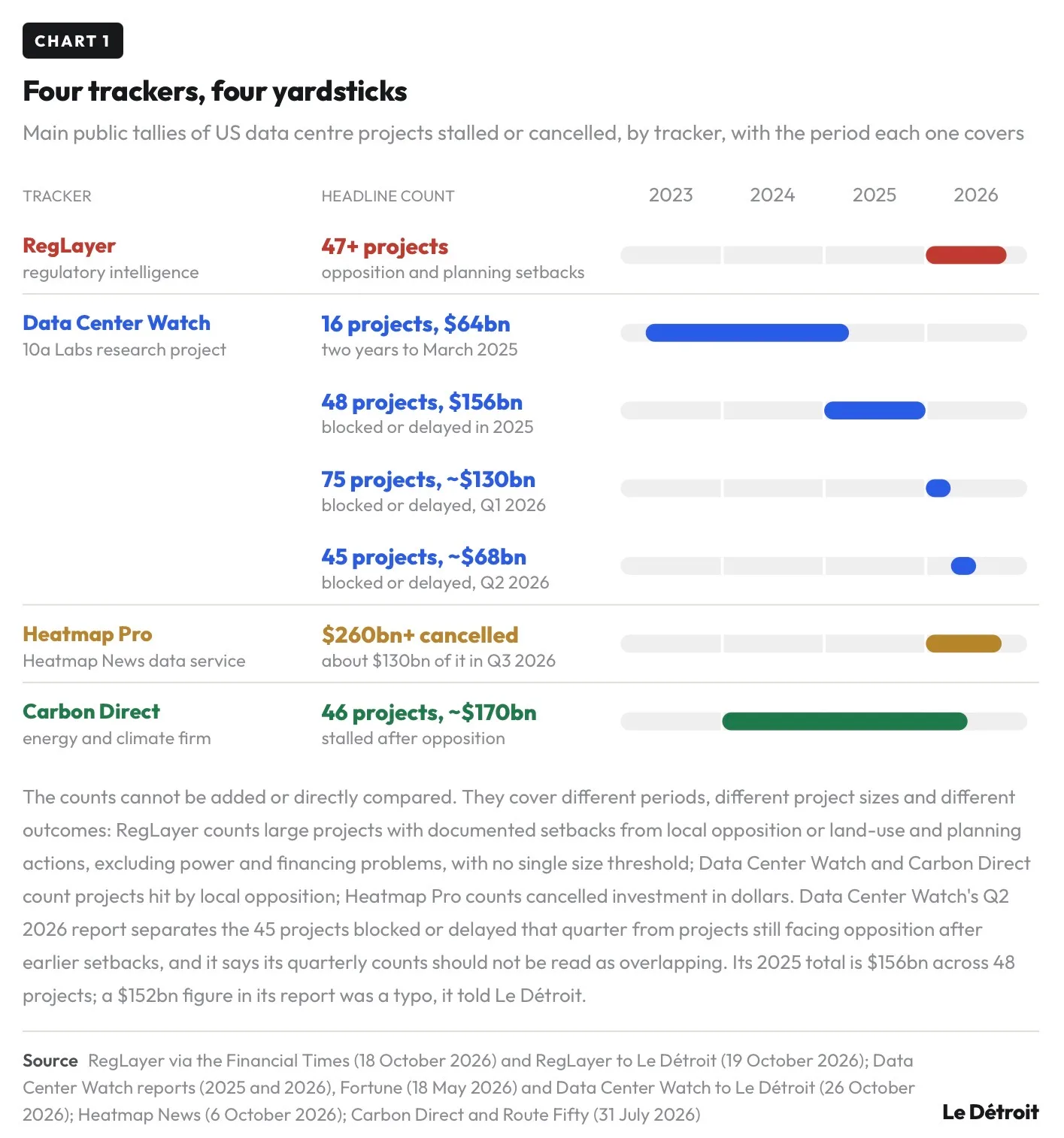
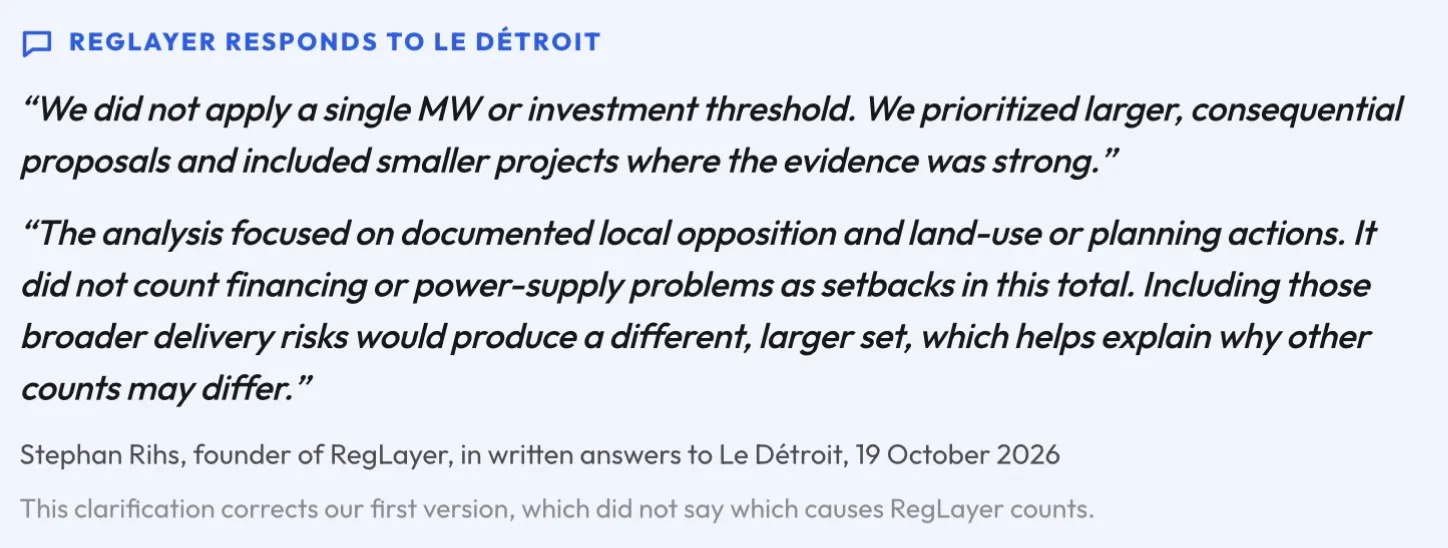
These figures do not contradict each other: they measure different things. RegLayer's count covers large projects with documented material setbacks during 2026, based on cases identified by mid-October. It is limited to local opposition and land-use or planning actions, leaves out financing and power-supply problems, and uses no single size threshold. Data Center Watch and the consultancy Carbon Direct count projects hit by local opposition. Heatmap Pro counts dollars, not projects, and warns that only about 60% of projects disclose their planned investment.
2. What Data Center Watch sees
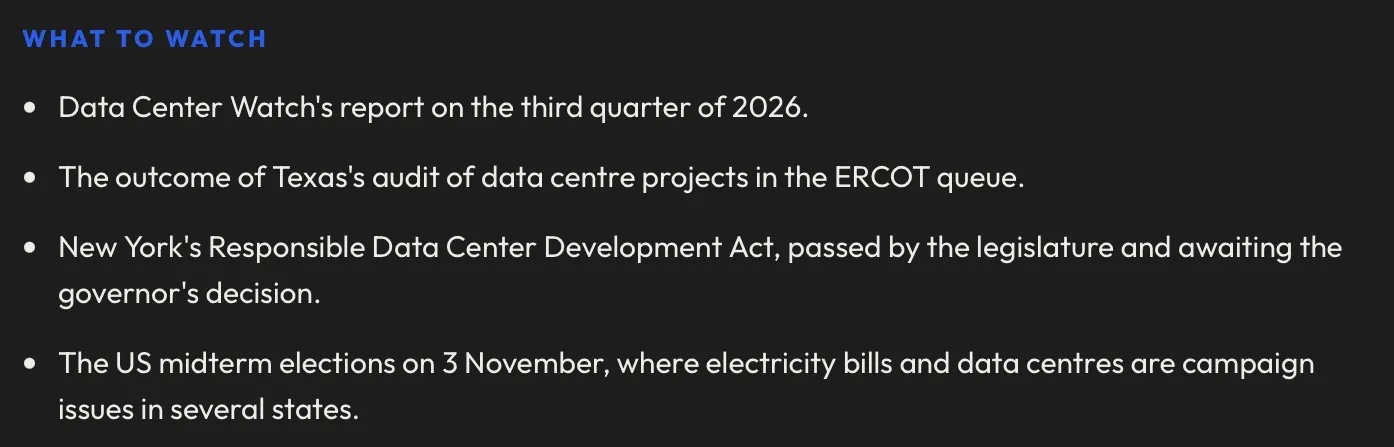
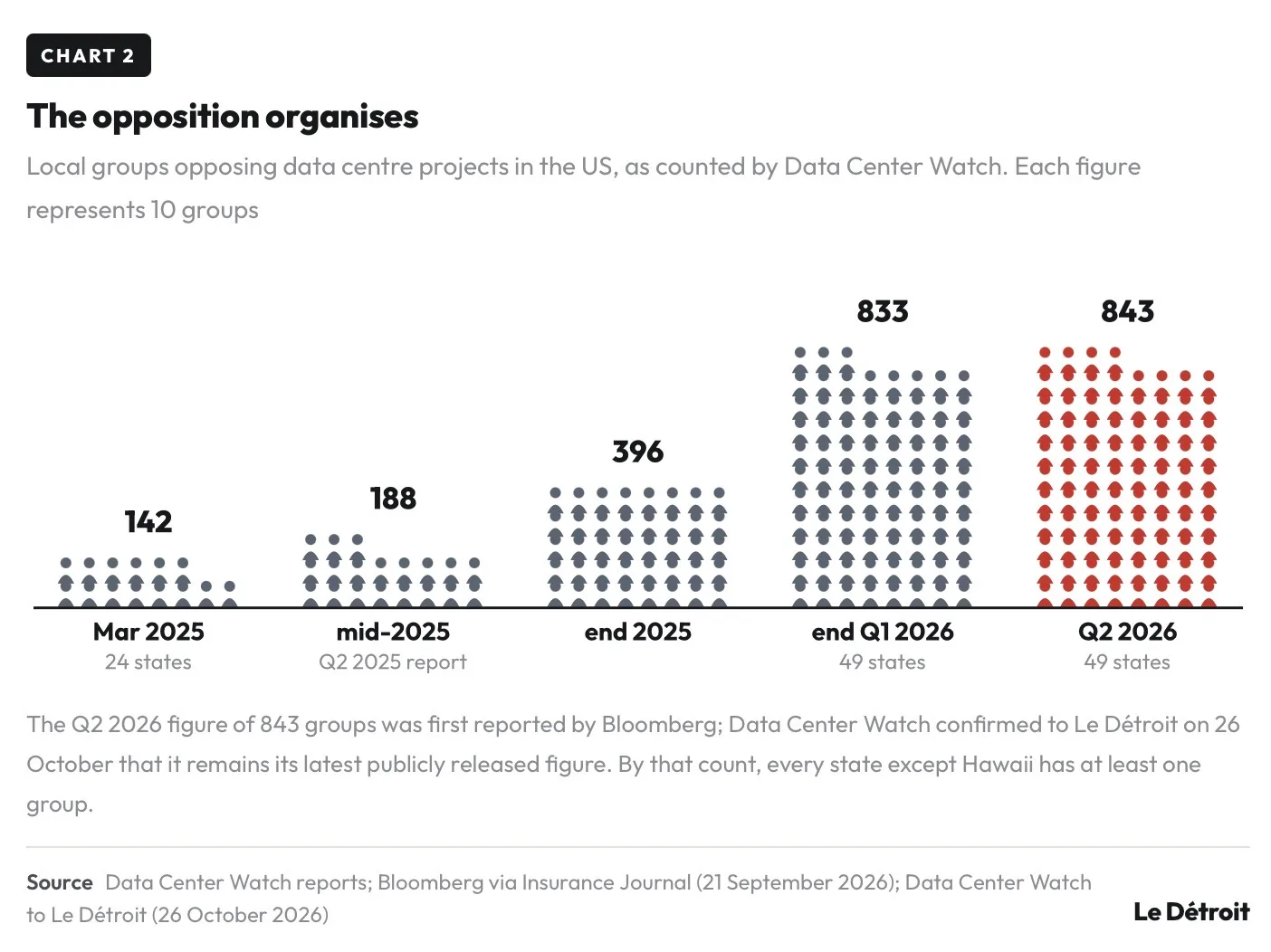
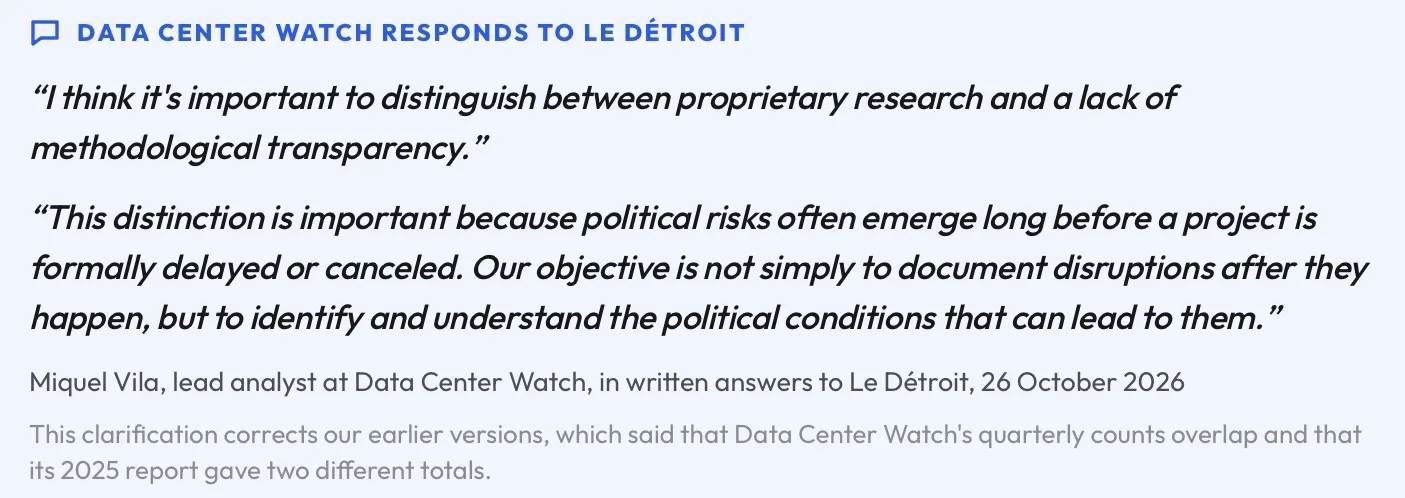
Data Center Watch has published the longest public series. In its first report, covering the two years to March 2025, it found 16 projects worth $64 billion blocked or delayed, and 142 opposition groups in 24 states. It defines a project as blocked when development is definitively halted, by a permit denial or a voluntary withdrawal, and delayed when the original timeline is disrupted while the developer still seeks approval, concentrating on the states where hyperscalers plan projects of 50 MW or more. By the second quarter of 2026, the number of local groups had reached 843 in 49 states, which remains its latest publicly released figure, Data Center Watch told Le Détroit on 26 October; it has not yet announced a date for its third-quarter report.
The tracker's own definitions matter. Its data come from public sources such as local media, government filings and petitions. Its second-quarter report separates the 45 projects blocked or delayed during that quarter from projects that continued to face opposition after being affected in earlier quarters, which, Data Center Watch says, should not be read as evidence that its quarterly counts overlap. For 2025 its figure is $156 billion across 48 projects. When its first report came out, DatacenterDynamics advised reading it with close attention to its definitions, noting that two cases accounting for $14.5 billion of the $18 billion counted as blocked had been followed by new proposals nearby, a link it called unclear in one case. Its lead analyst, Miquel Vila, has said the project is separate from 10a Labs' main work and is not paid for by any clients. Opposition is also bipartisan: of the officials who opposed projects of 50 MW or more in its first report, 55% were Republicans and 45% Democrats.
3. Twelve projects that stalled
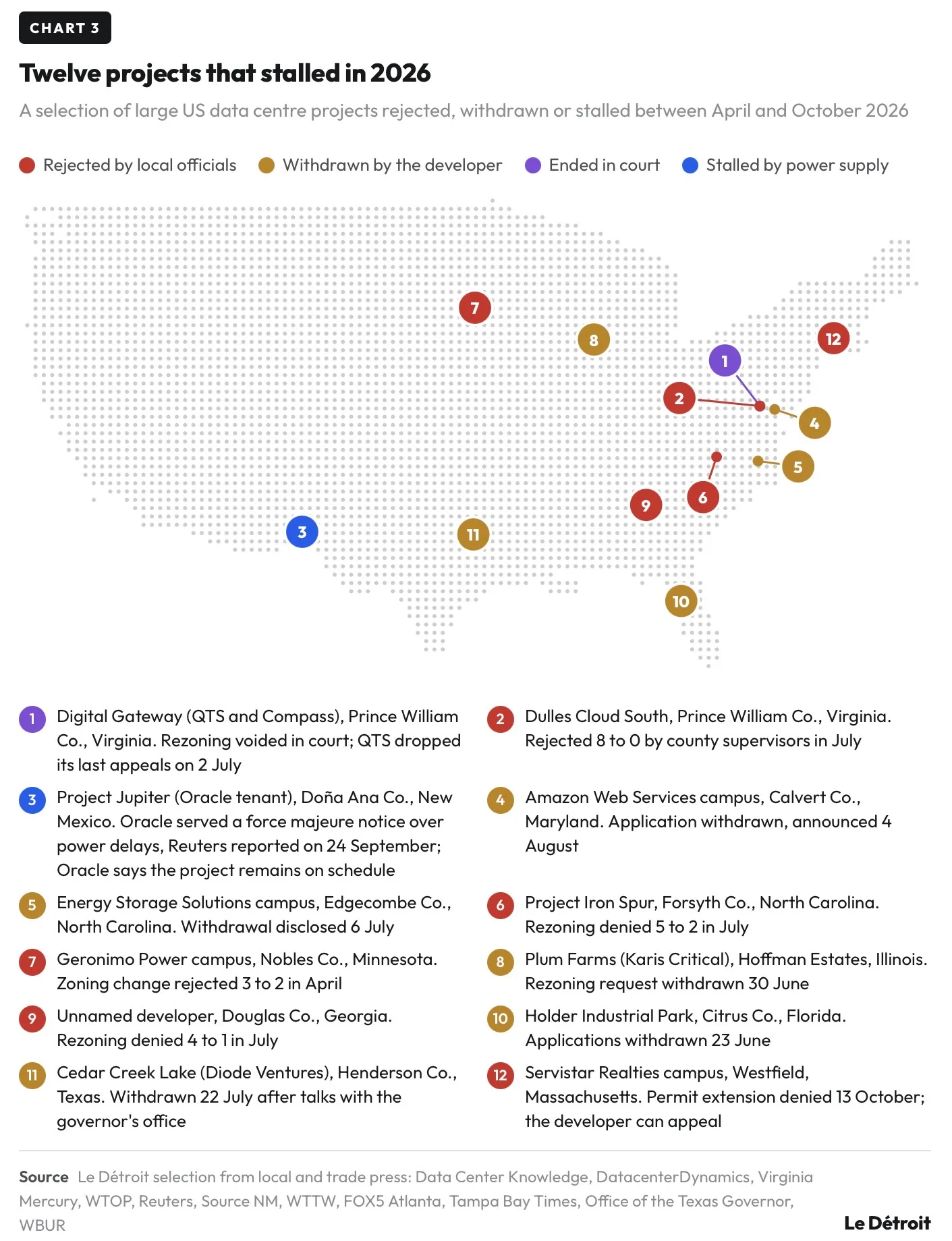
The national tallies hide very different local stories. In Virginia, the largest US data centre market, courts voided the rezoning of the Digital Gateway, a campus of about 2,100 acres planned by QTS and Compass, and QTS dropped its last appeals on 2 July; days later, Prince William County supervisors rejected a second large proposal, Dulles Cloud South, by 8 votes to 0. Elsewhere, developers withdrew before a vote, as Amazon Web Services did in Calvert County, Maryland, without citing local opposition. In New Mexico, Oracle served a force majeure notice on the Project Jupiter campus over power delays, Reuters reported on 24 September; Oracle says the project remains on schedule.
4. Power, the other bottleneck
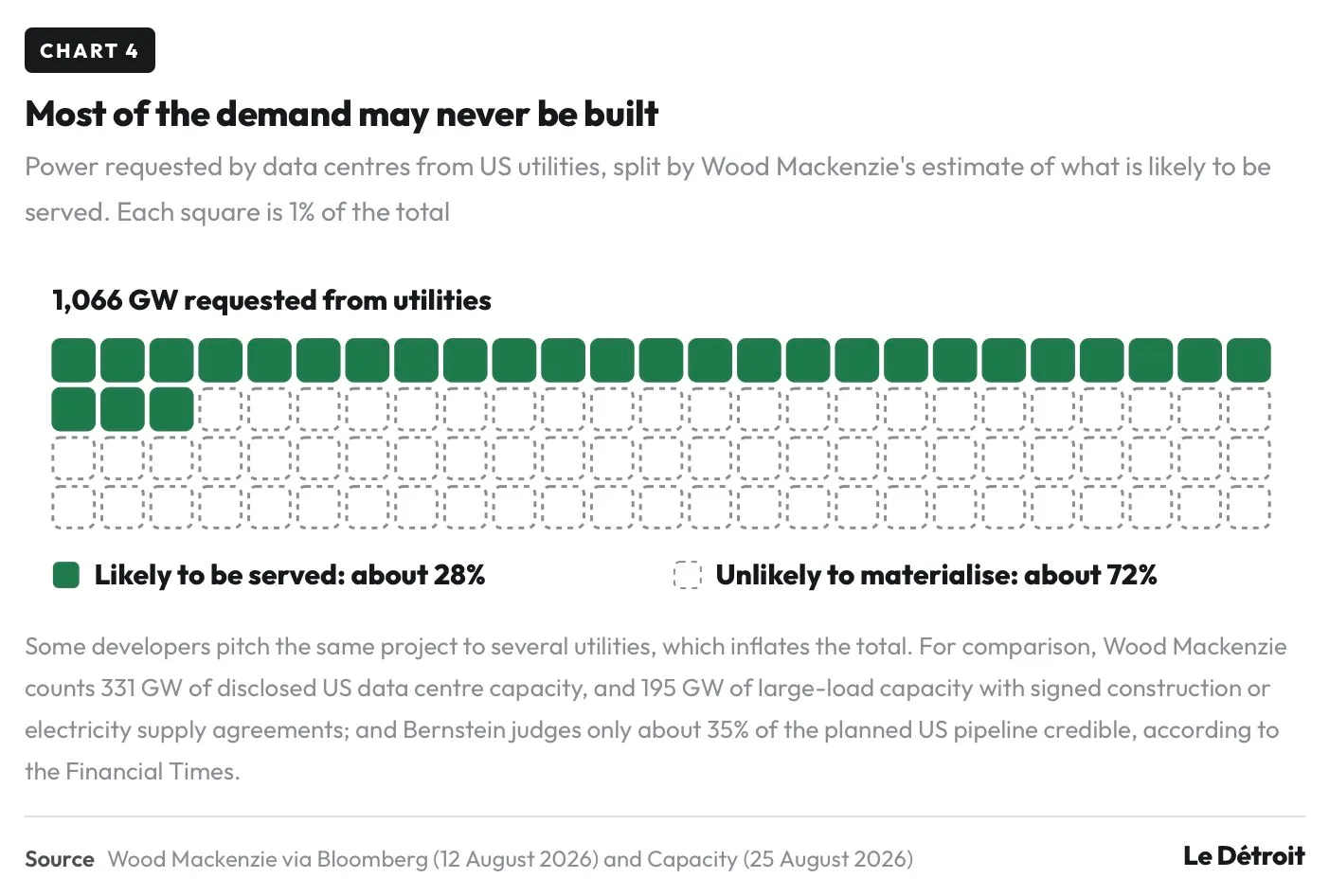
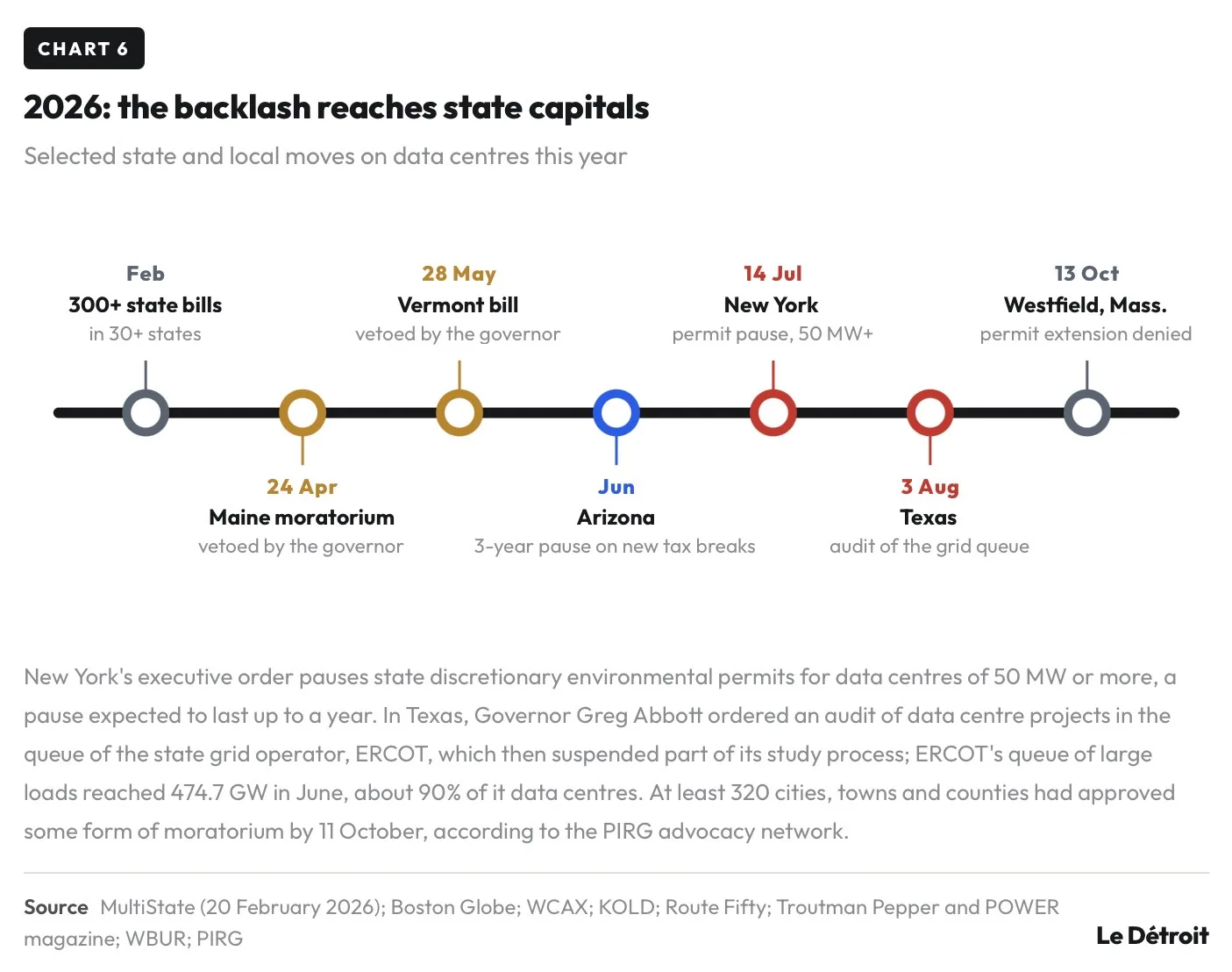
Local opposition is not the only brake. Data centres have asked US utilities for about 1,066 GW of power, but only about 28% of that is likely to be served, according to Wood Mackenzie, because developers file duplicate requests and many projects never reach construction. In Texas, Governor Greg Abbott ordered an audit of all data centre projects in the queue of the state grid operator, ERCOT, on 3 August; the queue of large loads had reached 474.7 GW in June, about 90% of it data centres. Analysts at Bernstein judge only about 35% of the planned US pipeline credible, according to the Financial Times.
5. Voters and statehouses
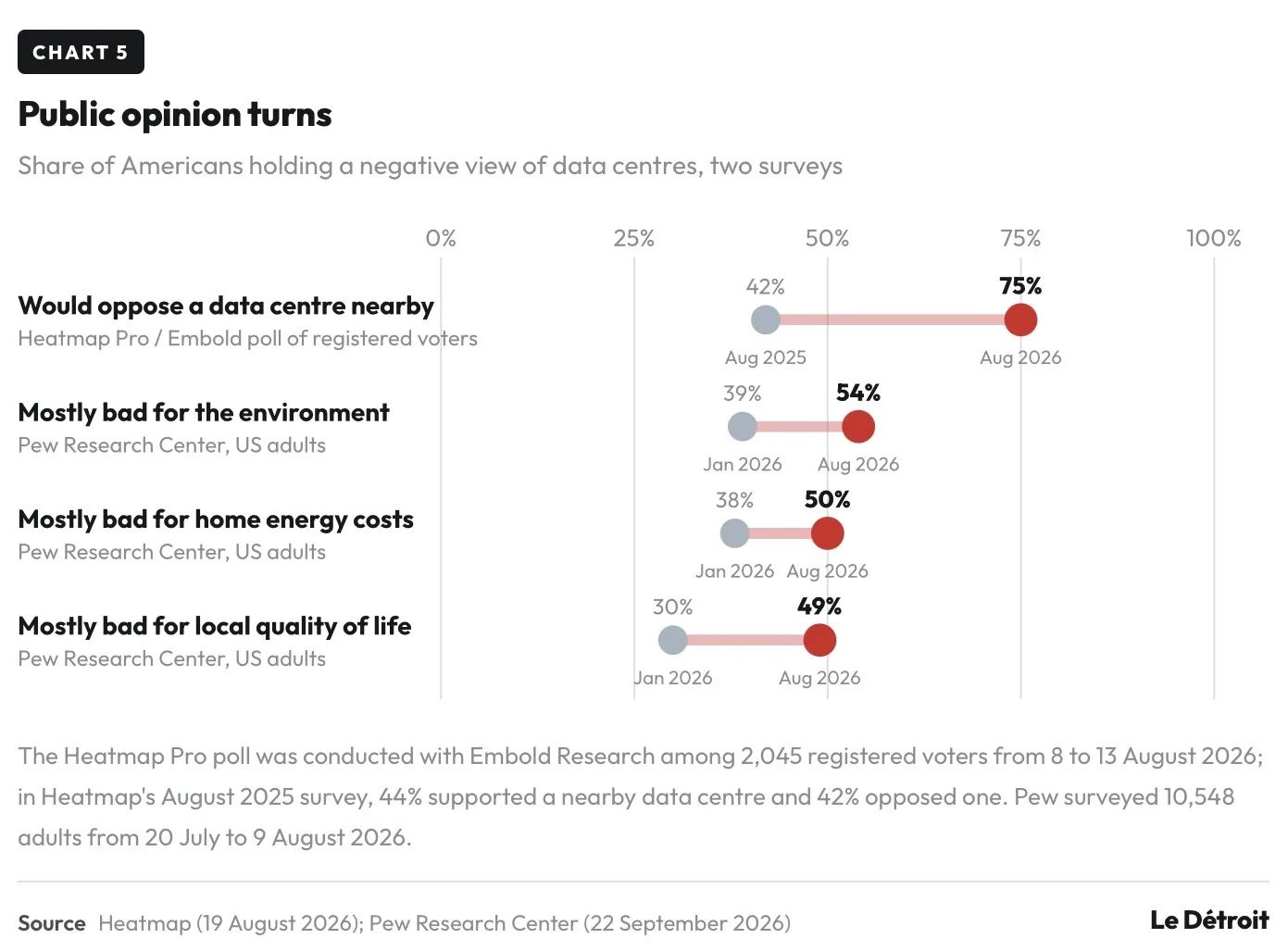
Public opinion has turned fast. In August 2025, Americans were evenly split on a data centre near their home, with 44% in favour and 42% against, according to a Heatmap poll; a year later, 75% said they would oppose one. Pew found that the share of adults who see data centres as mostly bad for home energy costs rose from 38% to 50% between January and August 2026. The worry has a basis: average US residential electricity prices rose about 5% in 2025 and are expected to rise about 5% again in 2026, according to Energy Information Administration data, although studies disagree on how much data centres are to blame.
States have started to act. More than 300 data centre bills were filed in more than 30 states in the first weeks of 2026, according to MultiState. New York became the first state to pause environmental permits for large data centres, while the governors of Maine and Vermont vetoed bills that would have halted or tightly regulated new projects. At least 320 cities, towns and counties had approved some form of moratorium by 11 October, according to the PIRG advocacy network.
6. Le Détroit's reading
The backlash against data centres is no longer a series of local disputes: it is a national political fact, visible in polls, statehouses and investment decisions. But the counts that describe it are still partial. Each tracker sees a different slice, several keep their project lists private, and none can yet say how much of the delay is caused by protests rather than by power shortages, financing or developers' own changes of plan.
That gap matters for more than accuracy. The build-out could cost more than $10 trillion by 2032, according to estimates cited by the Financial Times, and investors need to know how much of the announced pipeline will actually be built. A shared, public, project-level dataset, showing which projects stalled, where and why, would tell them, and local officials, far more than any headline total. Counting projects is only a first step, as RegLayer's founder pointed out to us. In the meantime, the direction is clear: developers are looking for what the president of one company that withdrew a North Carolina project called "friendlier communities", and the map of America's AI infrastructure is starting to be redrawn, partly by the people who live next to it.