
1. Riyadh's airport hit twice in two days
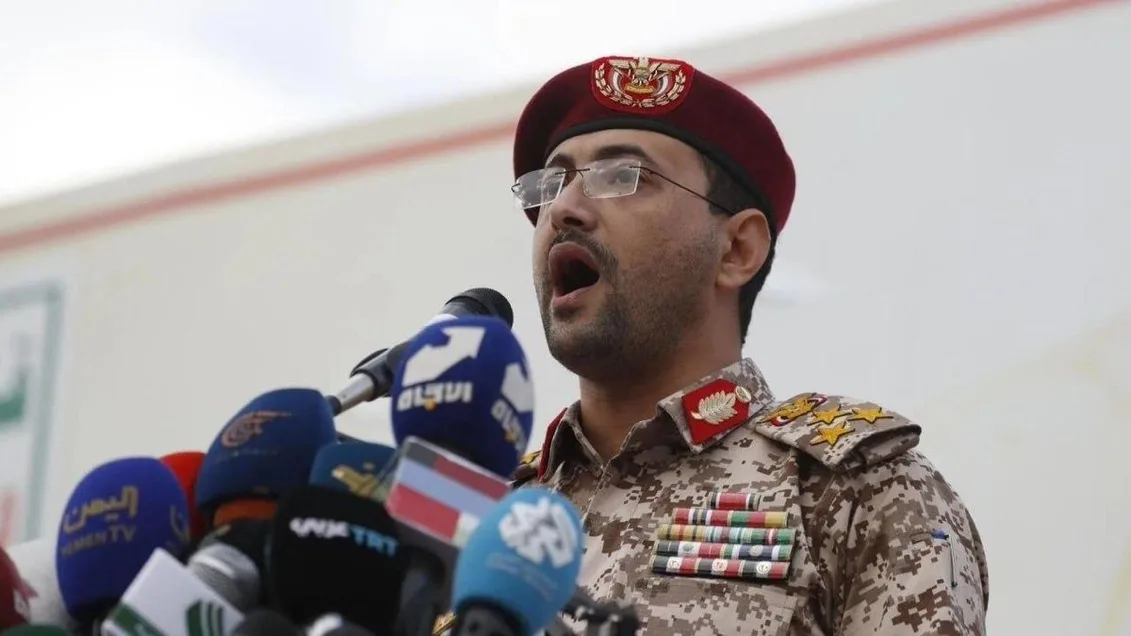
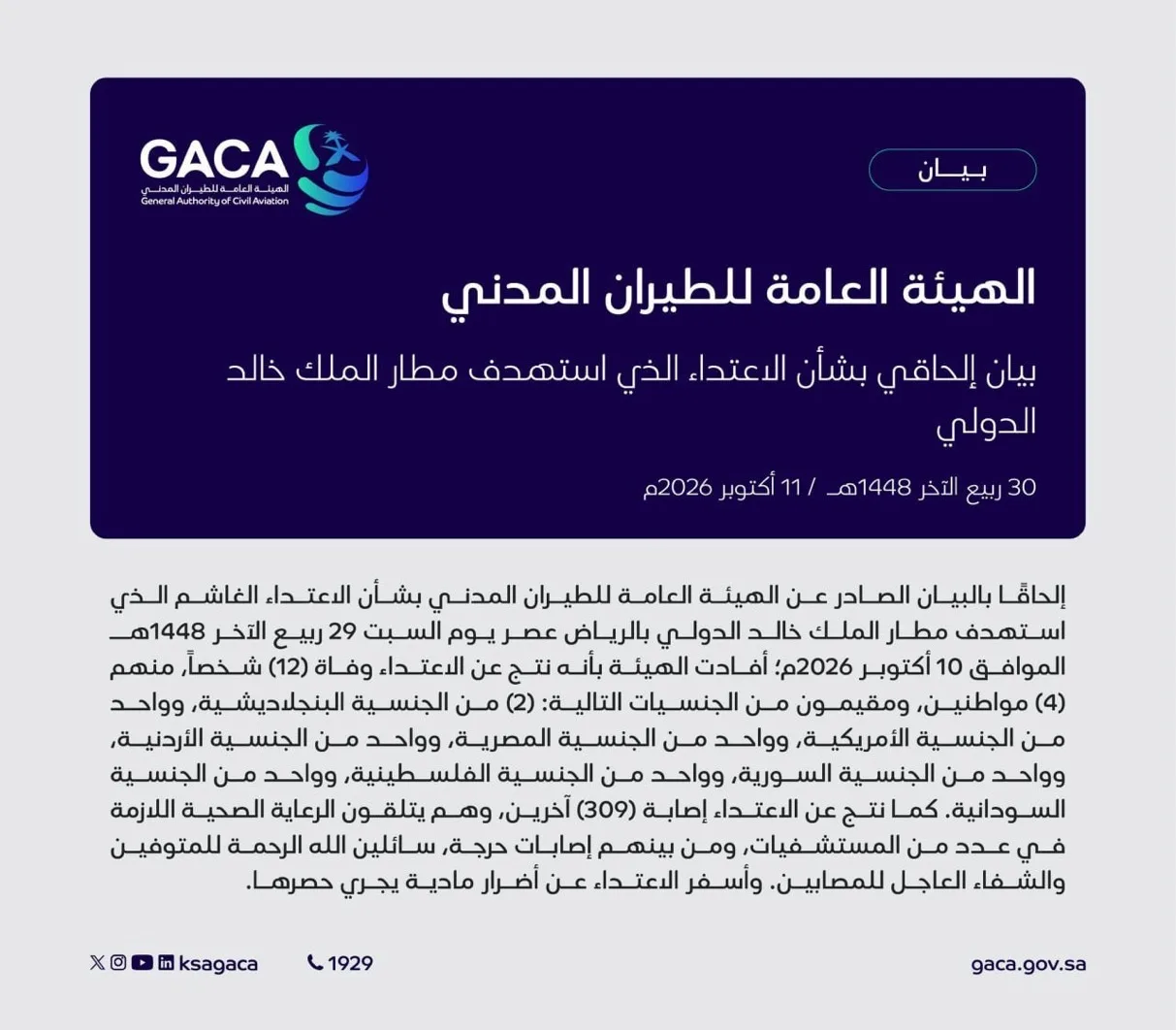
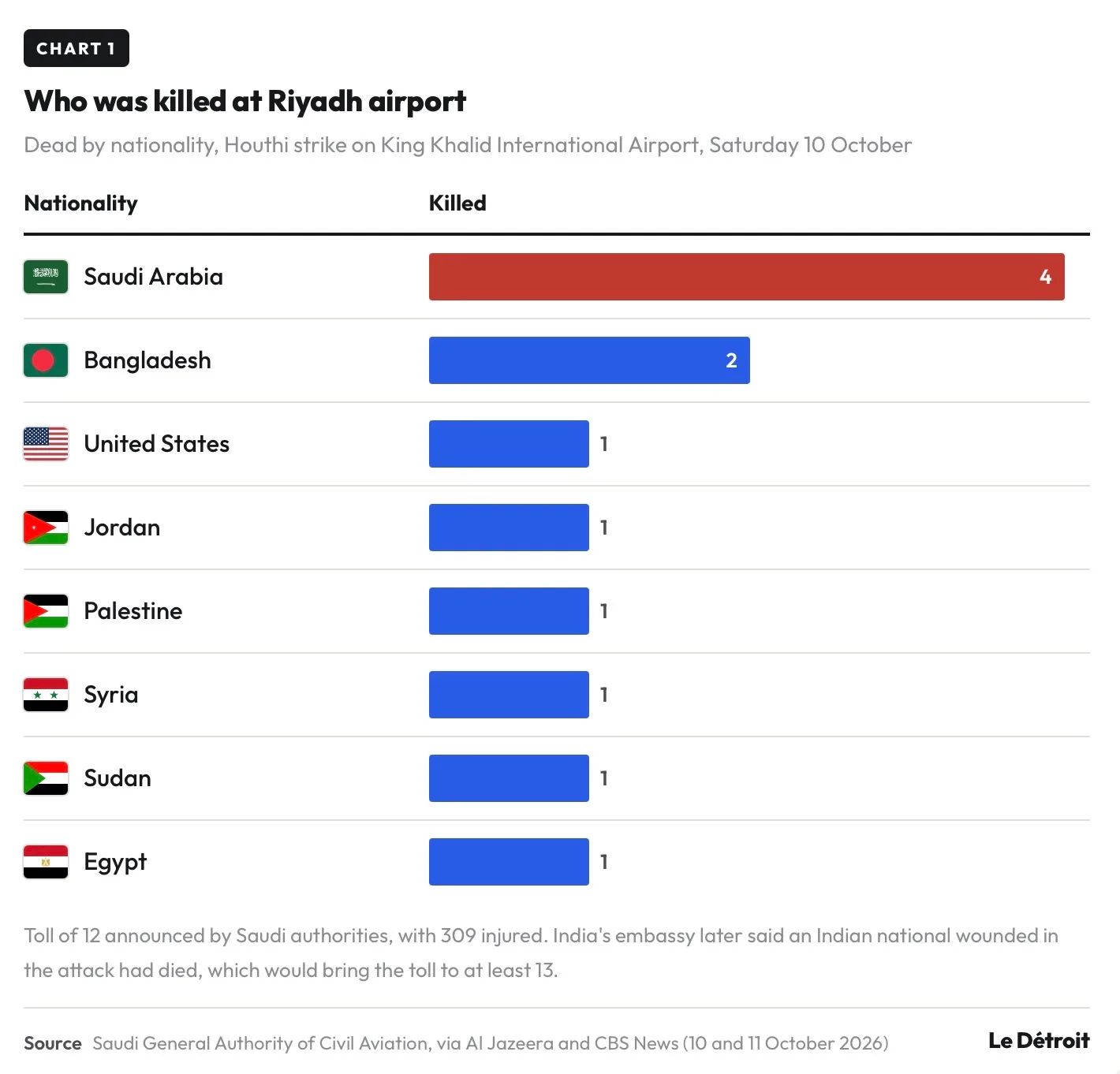
A Houthi strike on King Khalid International Airport on Saturday killed at least 12 people and injured 309, Saudi Arabia's civil aviation authority said, the deadliest attack on Saudi soil in more than a decade. The dead include four Saudis, two Bangladeshis and one person each from the United States, Jordan, Palestine, Syria, Sudan and Egypt; India's embassy later said a wounded Indian national had died. Secretary of State Marco Rubioconfirmed an American was among the victims. On Sunday a passenger terminal was hit again, the airport stayed closed and Riyadh's schools moved online. "The airports and airspace are exposed to targeting," Houthi spokesman Yahya Saree wrote. Donald Trump said Washington could join Saudi strikes on the Houthis.
2. An energy ceasefire that lasted a few hours
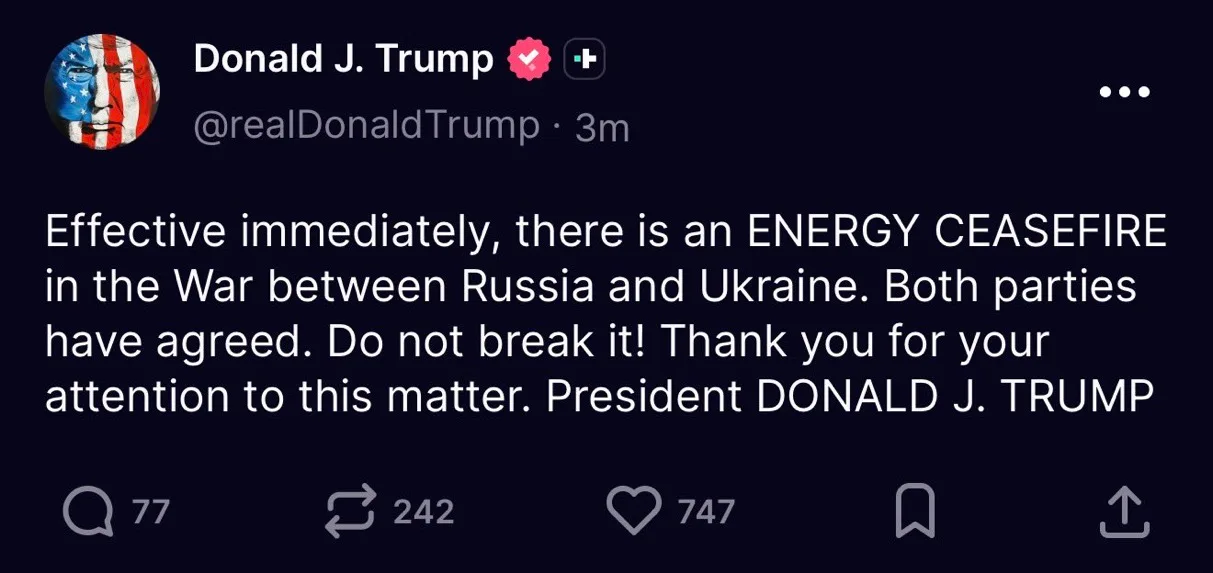
On Sunday Donald Trump posted: "Effective immediately, there is an ENERGY CEASEFIRE in the War between Russia and Ukraine. Both parties have agreed. Do not break it!" Kyiv said it had no information about any deal. "If President Trump negotiated it with Putin, please tell us when the ceasefire begins," Volodymyr Zelensky said. Hours later, Russia struck the CHP-5 combined heat and power plant in Kharkiv at least twice, starting a fire, and Zelensky said another plant was hit in Kyiv. He counts more than 200 Russian strikes on Ukraine's power generation and transmission over the past week, plus 17 on gas and oil sites. The Kremlin had not commented by Sunday evening.
3. Beijing orders a national blockchain network
A policy document released on 9 October by the Communist Party's Central Committee and the State Council sets out 19 measures for technology-led industries, including a national blockchain network and a national integrated computing power network, tied to the "East Data, West Computing" programme and to new rules on data ownership and trading. It gives no architecture, budget, operator or launch date, and it does not touch crypto: Chinese regulators kept restrictions on virtual-currency businesses and mining in February. Traders bought anyway; the token of Conflux, a Chinese-linked blockchain, rose about 28%, according to KuCoin.
4. SpaceX buys spectrum, telecoms tumble
SpaceX has bought a nationwide portfolio of 800 MHz low-band spectrum from the private-equity firm Grain Management, for about $8 billion according to the Wall Street Journal, to push its Starlink mobile service. On Friday AT&T, Verizon and T-Mobile fell between 5.5% and 7.4% before the opening, and the selling spread to Europe: Deutsche Telekom -6.5%, Vodafone -4.1%. Tower operators rose. "SpaceX is going to be a more aggressive acquirer of spectrum," Morgan Stanley wrote. The deal still needs regulatory approval.
https://x.com/spacex/status/2108291133025698301?s=61
5. Banks open the earnings season with yields above 5%
Wall Street ended the week higher: the S&P 500 closed Friday at 7,811.54, gold at $4,221, oil at about $91.70 a barrel and bitcoin near $82,500. The US 10-year yield held around 5.24%. The third-quarter season starts on Tuesday with JPMorgan Chase, Goldman Sachs, Citigroup and Wells Fargo, followed by Bank of America, Morgan Stanley, BlackRock and ASML on Wednesday and TSMC on Thursday. With household delinquencies rising, according to CNBC, credit provisions will matter as much as profits.
6. Hormuz traffic falls as attacks multiply
Crude moving through the Strait of Hormuz averaged 8.5 million barrels a day in the week to 7 October, about 40% below normal, according to Kpler data cited by CNBC. Over the weekend Iran's Revolutionary Guards said a supertanker using an unauthorised route hit a mine, US Central Command bombed a Panama-flagged cargo ship to enforce its blockade, and a projectile struck an outbound tanker. US Vice President JD Vance said Iran must make a "meaningful" cut to its enrichment capacity to end the war. Al Jazeera reports that no breakthrough is expected before Israel's election on 27 October and the US midterms on 3 November.