1. Iran's war on shipping has its worst week
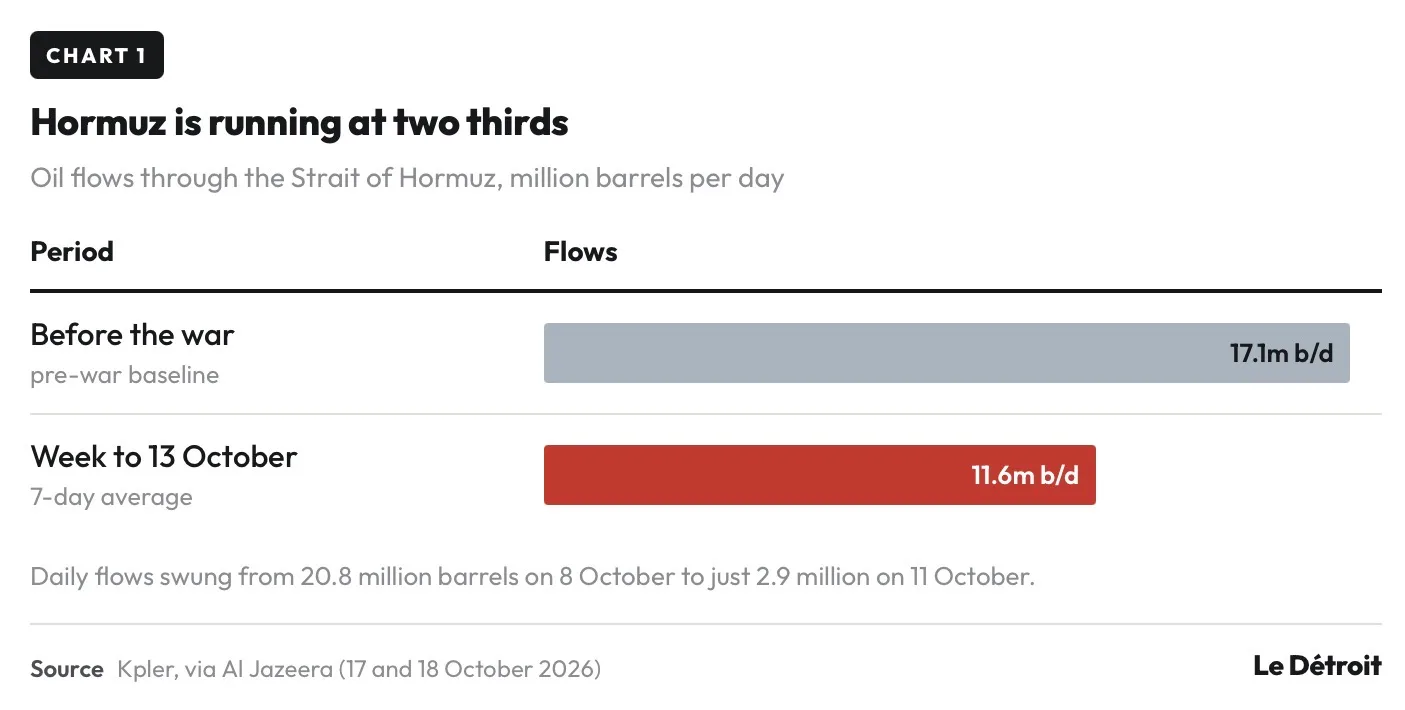
At least 12 ships were attacked around the Strait of Hormuz in the week to 16 October, according to the UK Maritime Trade Operations centre (UKMTO): one sank, two were disabled and three were damaged or their fate is unknown. October is now the worst month for attacks on ships since the war began on 28 February. On Saturday, Iran's Revolutionary Guards said a tanker carrying about 2 million barrels of crude had hit a mine on an "unauthorised" route and caught fire, and state media reported a second tanker ablaze. Neither ship has been named, and the claims have not been independently confirmed; the US military said on Friday that it had cleared the strait of mines and that ships are being hit by projectiles. Flows have fallen to about two thirds of pre-war levels, and Brent settled at $109.86 on Friday, its highest close since May, after touching $110. "The Strait of Hormuz is controlled by the United States and our regional partners, not Iran," said Admiral Brad Cooper, head of US Central Command.
2. Trump suspends new Russia sanctions as drones hit St Petersburg
On Friday, Donald Trump signed an executive order waiving the new sanctions and tariffs of the Graham Act, a law named after the late senator Lindsey Graham, two days before they were due to take effect. The waiver covers tariffs of up to 500% on Russian goods, tariffs of up to 100% on the main buyers of Russian oil and gas, and sanctions on foreign banks doing business with Russian state banks. Existing sanctions remain. Secretary of State Marco Rubio said Trump would take up to 60 days to weigh the economic impact. "It's unconscionable that this administration is capitulating to a Russian dictator," said Republican senator Thom Tillis, while Putin's envoy Kirill Dmitriev hailed "a truly historic moment". On Sunday, Ukraine launched what Russian state agency TASS called the largest drone attack on the region in four years: at least one person was killed and several injured around St Petersburg, and fires broke out at the city's oil terminal. Volodymyr Zelenskywrote that the "United States should see that Russia is not taking any reciprocal steps in response to sanctions relief or agreements".
https://x.com/nbcla/status/2111458481345610103?s=61
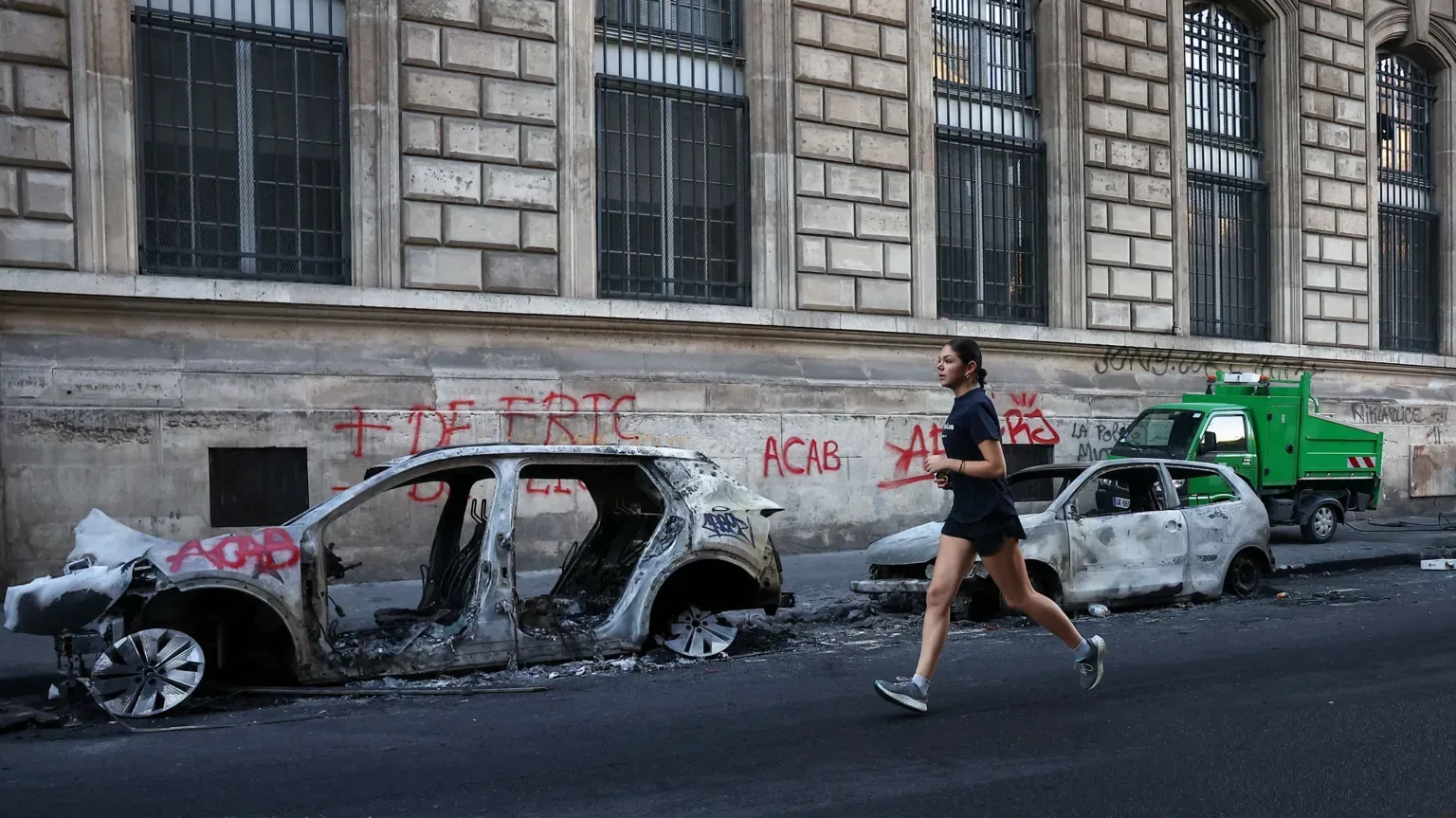
3. France counts nearly 2,400 arrests after a day of riots
More than 500,000 people have marched across France in a movement that began at the start of the school year over under-resourced schools and staff shortages, and has widened into protests against spending cuts and the cost of living. On Saturday, most marched peacefully, but groups looted shops and attacked public buildings: the historic town hall of Limoges was largely destroyed by arson. The Interior Ministry said nearly 2,400 people were arrested and almost 1,000 police officers and gendarmes injured, seven of them seriously. In a televised address on Sunday, Emmanuel Macron promised "full transparency" on the police response and said prefects and mayors could ban gatherings. "Nothing justifies it, nothing explains it, nothing excuses it," he said. "Tonight, we all feel anger and shame." He added: "Those who have destroyed must pay." The government will meet students, teachers, MPs, unions and business leaders this week to draw up "concrete proposals".
https://x.com/reuters/status/2111551572140511647?s=61
4. Debt fears hit the AI trade
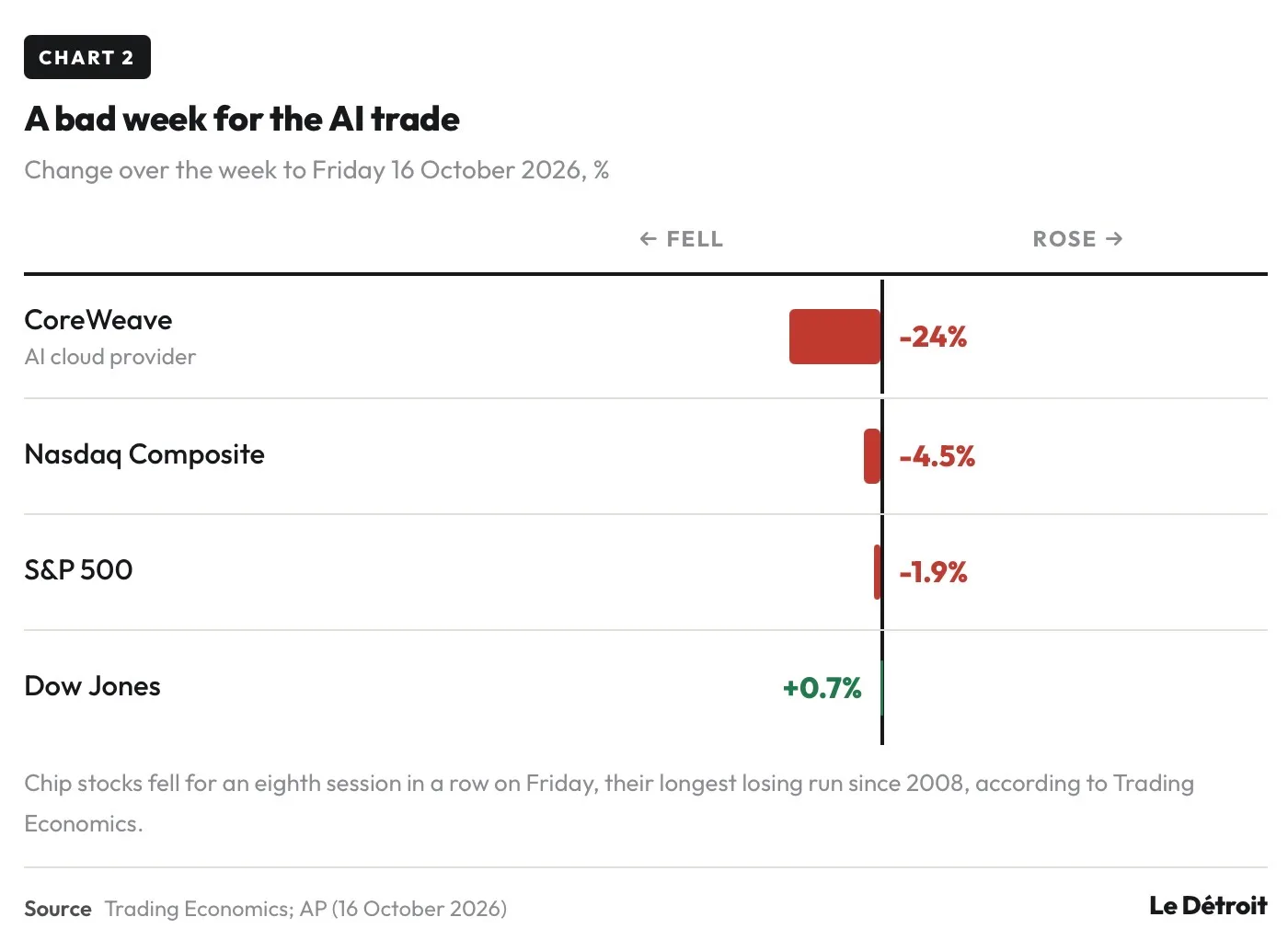
Doubts about the debt behind the artificial intelligence boom hit markets on Friday. Shares of CoreWeave, which rents out computing power to AI companies, fell nearly 12% on Friday and about 24% over the week, according to Trading Economics. Its dollar bond due in 2031 briefly yielded more than 16% on Thursday, and the cost of insuring its debt against default hit a record. Fortune puts its obligations at $35.6 billion of debt plus $16.3 billion of leases, against a net loss of $1.4 billion in the first half. Chipmakers fell for an eighth session in a row, their longest losing run since 2008, according to Trading Economics. The Nasdaq lost 2.1% on Friday and 4.5% over the week, and the S&P 500 closed at 7,659.44. "You cannot take CoreWeave as the poster child for AI," said Tommaso Leodari, chief investment officer at Index & Cie.
5. Sharjah police break up a $2.4 billion laundering network
Police in the emirate of Sharjah say they have dismantled four linked criminal networks that laundered Dh8.8 billion, about $2.4 billion, through bank accounts, digital wallets, international platforms and intermediary companies. The operation, codenamed "End of the Battle" and run with the UAE Ministry of Interior, led to the arrest of 33 suspects, including six companies, from 12 nationalities, according to Gulf News and The National. Each gang had its own role: cyber-attacks and data theft, laundering through virtual assets, social engineering to empty victims' crypto wallets, and violent assaults to force victims to reveal their passcodes. Police seized more than Dh200 million in cash, 17 luxury cars and 29 watches, and audited about 3,000 digital wallets. Investigators reached the network by tracing the wallet of a 15-year-old suspect. "What distinguished this gang was that it did not rely on a single type of criminal activity," said Lieutenant General Abdullah Mubarak bin Amer, commander-in-chief of Sharjah Police.
6. Abiy takes direct control of Tigray
Ethiopian Prime Minister Abiy Ahmed announced on Friday a six-month interim administration for Tigray, to be followed by "free and transparent" elections, after federal forces crushed an offensive launched by the Tigray People's Liberation Front (TPLF) in September. The interim body has five appointees, including the mayor of Mekelle, who will take "directives and instructions" directly from the federal government, according to AFP, which did not name them. Fighters surrendered in Mekelle in early October, and government forces later entered Adwa, witnesses said. The crisis has spread to the border: Addis Ababa accuses Eritrea of backing the rebels, which Asmara denies, and the two countries have severed ties. US Secretary of State Marco Rubio called Abiy on 14 October to urge de-escalation. "The people of Tigray must break free from this cycle of conflict," Abiy wrote.
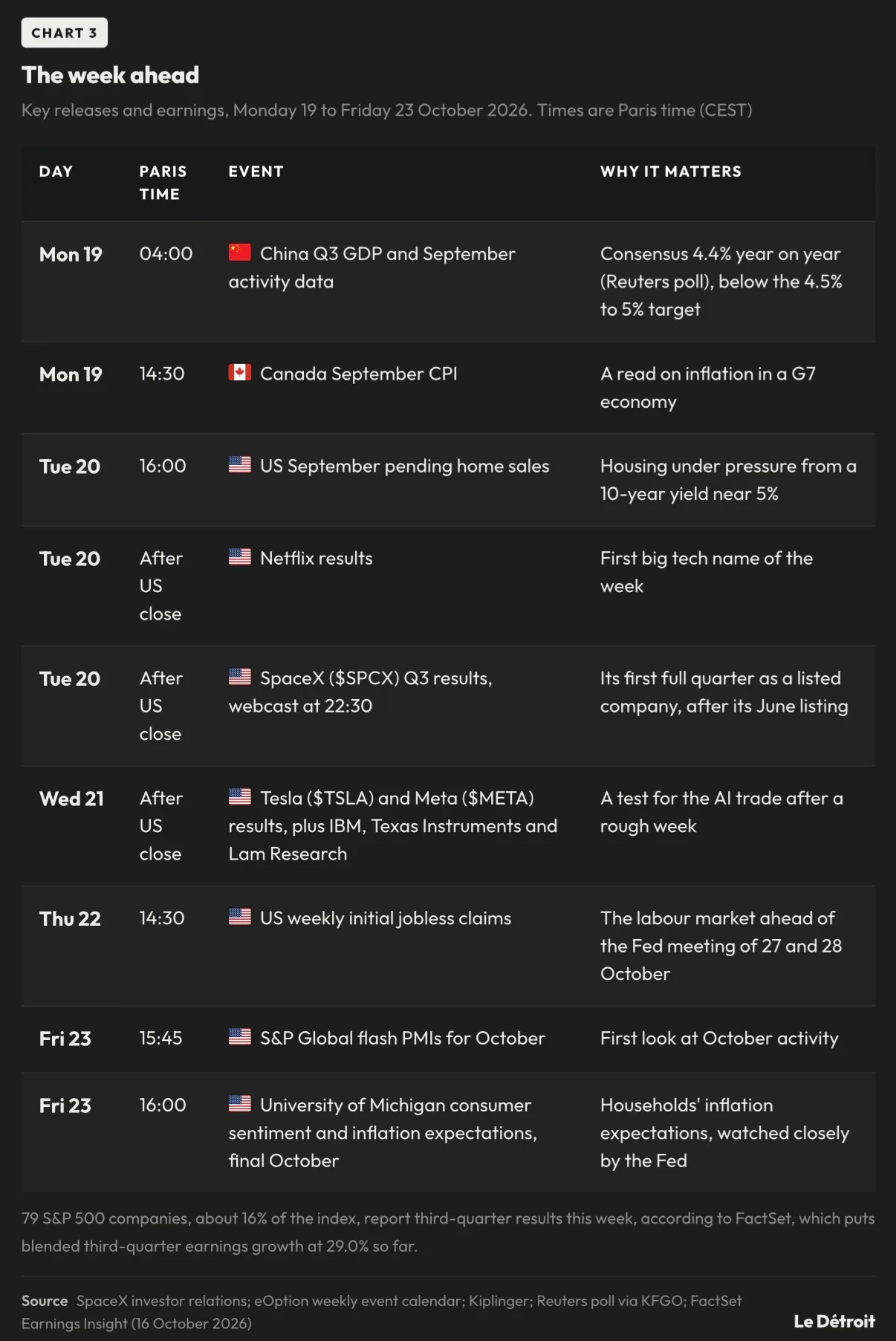
The week ahead