1. Lula wins a fourth term in a late comeback
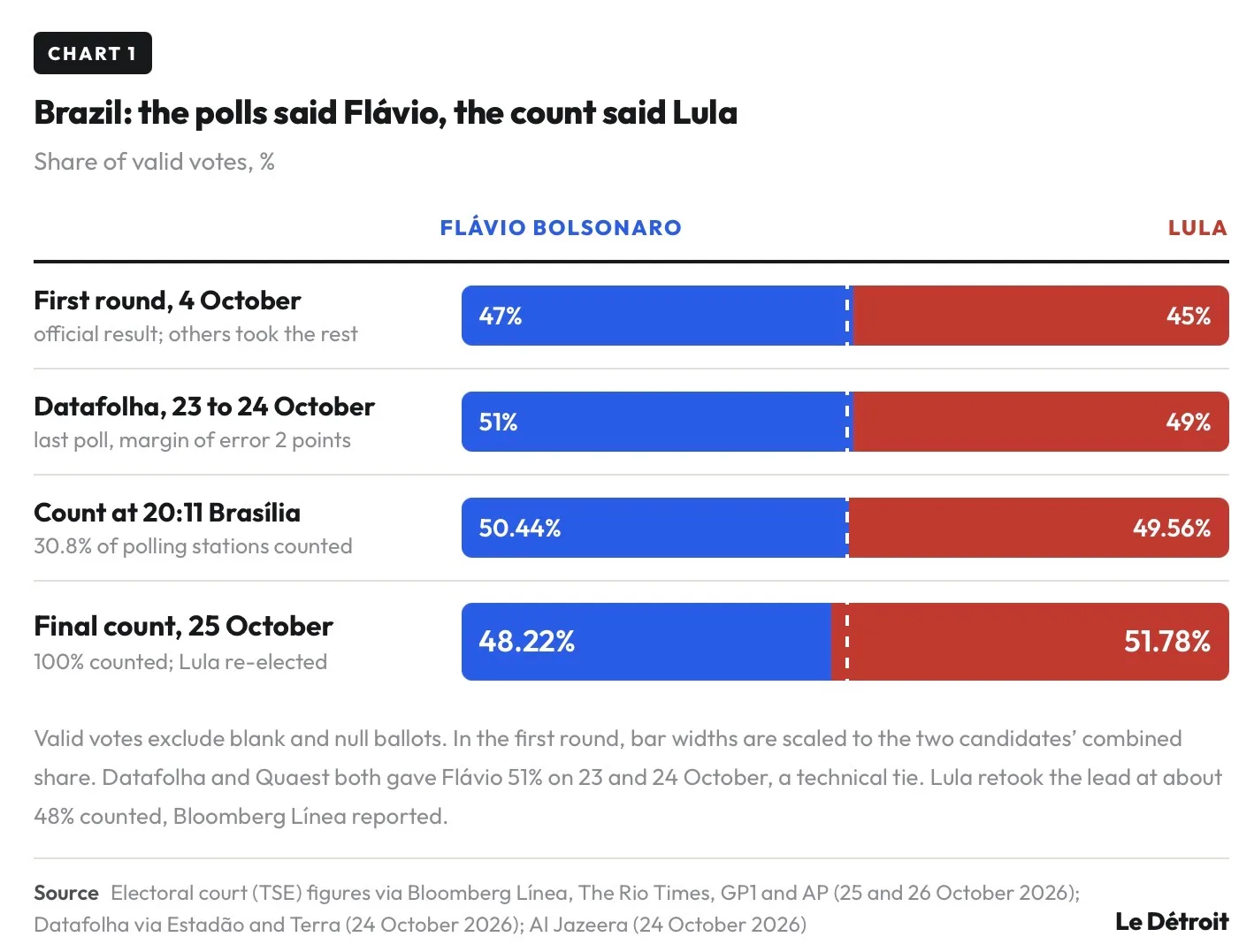
Luiz Inácio Lula da Silva, 80, won a fourth term as Brazil's president on Sunday 25 October, beating Senator Flávio Bolsonaro, son of former president Jair Bolsonaro. With 100% of the vote counted, Lula had 51.78% of valid votes to Flávio's 48.22%, a margin of about 4.4 million votes, according to electoral court figures reported by AP and The Rio Times. Flávio had led the first round on 4 October with 47% to 45%, and Datafolha and Quaest gave him 51% on the eve; he briefly led the count. The night was marked by a dispute: Supreme Court Justice Cristiano Zanin, once Lula's lawyer, extended voting by two hours after both campaigns asked for more time, Lula's over bus shortages and Flávio's over bad weather; the electoral court limited it to stations still open. Electoral prosecutors had opposed the extension, and Senator Rogério Marinho, Flávio's campaign coordinator, called it on X a "shameful and untimely decision", Bloomberg Línea reported. No statement from Flávio on the result had been reported by 02:40 Paris time. Futures on the real fell 9.1% in Chicago, Bloomberg Línea reported. Lula is due to be sworn in on 5 January 2027.

2. Mines, missiles and threats lift Brent to a six-month high
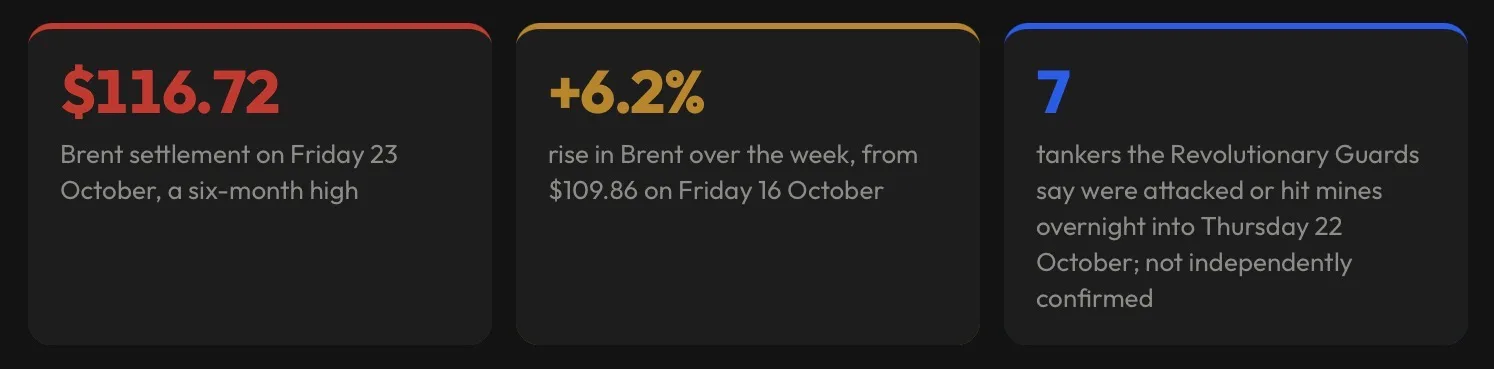
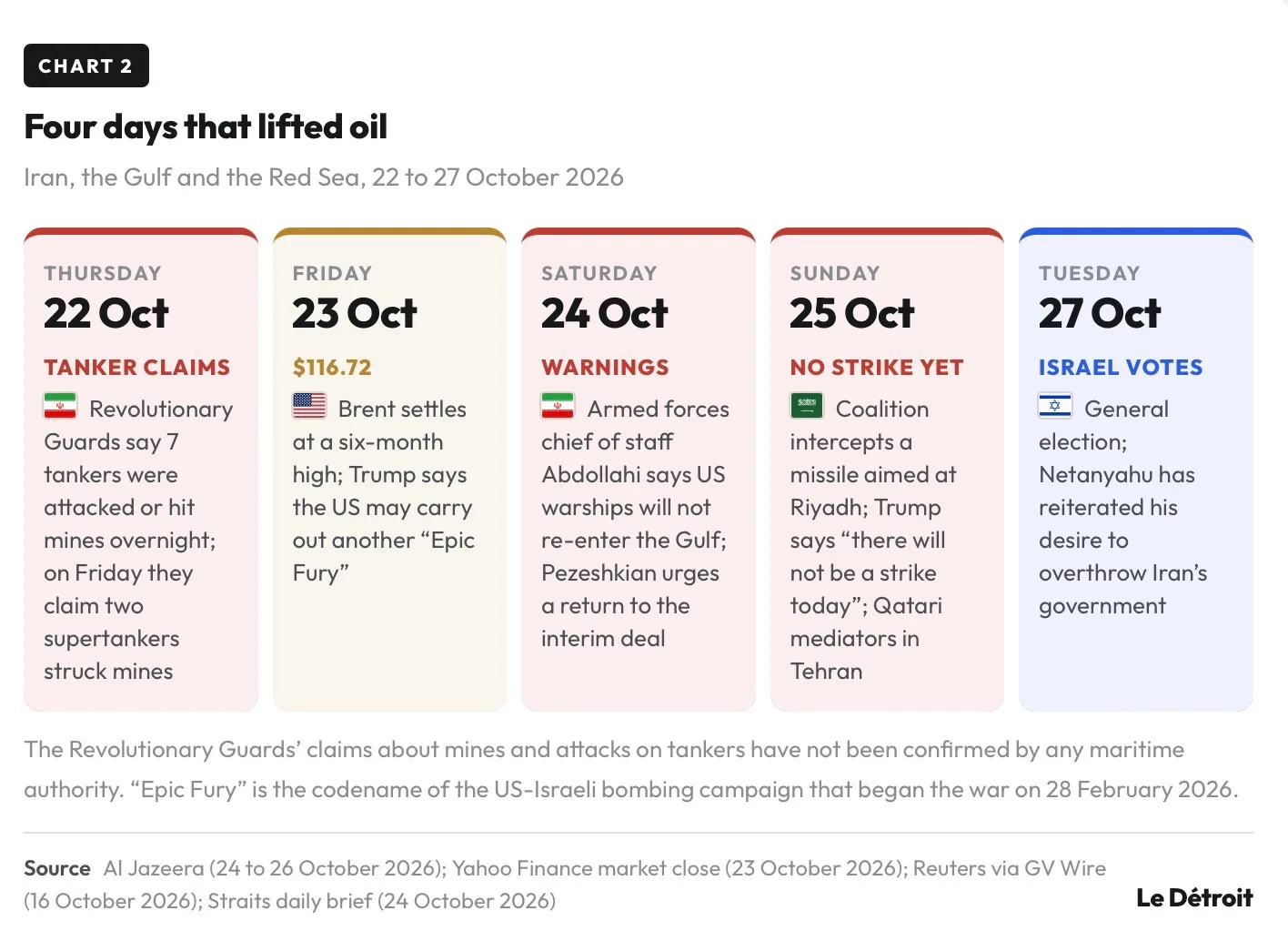
Brent crude settled at $116.72 a barrel on Friday 23 October, its highest in six months and up 6.2% on the week, after Iran's Revolutionary Guards said seven tankers had been attacked or hit mines overnight into Thursday, and that two supertankers had struck mines on Friday after taking what Iranian state media called an unauthorised route. No maritime authority has confirmed the claims. Donald Trump told a rally in Florida on Friday that the US might carry out another "Epic Fury", the codename of the US-Israeli bombing campaign that began the war on 28 February. On Saturday, Iran's armed forces chief of staff, Ali Abdollahi, said US warships would not be allowed back into the Gulf, while President Masoud Pezeshkian blamed Washington for the unravelling of an interim deal. The fighting around Saudi Arabia is also spreading: the Houthis fired two ballistic missiles at Aden's airport on Saturday, the fourth such attack this month according to Yemen's transport ministry, and the Saudi-led coalition said it intercepted a missile aimed at Riyadh on Sunday, the day the capital's airport reopened after a two-week closure. On Sunday, Trump told reporters "there will not be a strike today", as Qatari mediators visited Tehran, Al Jazeera reported.
3. Vučić concedes defeat to Serbia's student movement
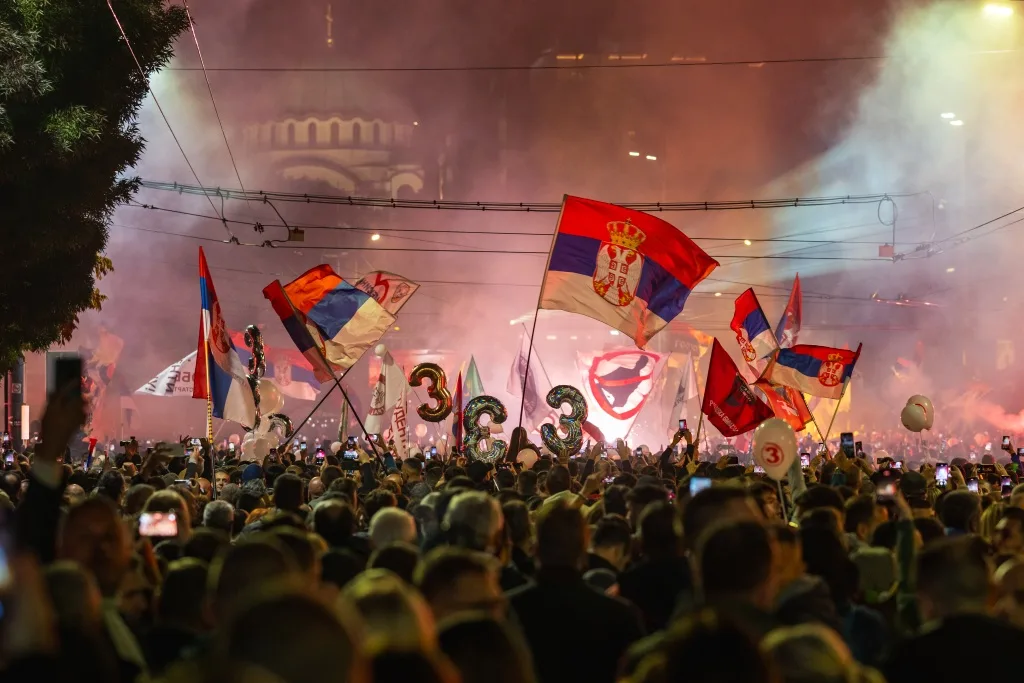
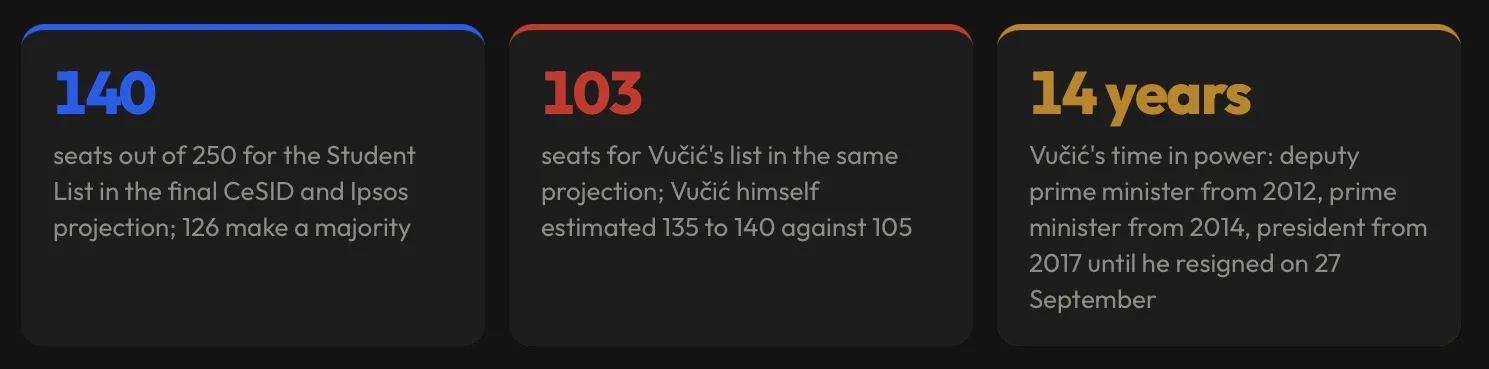
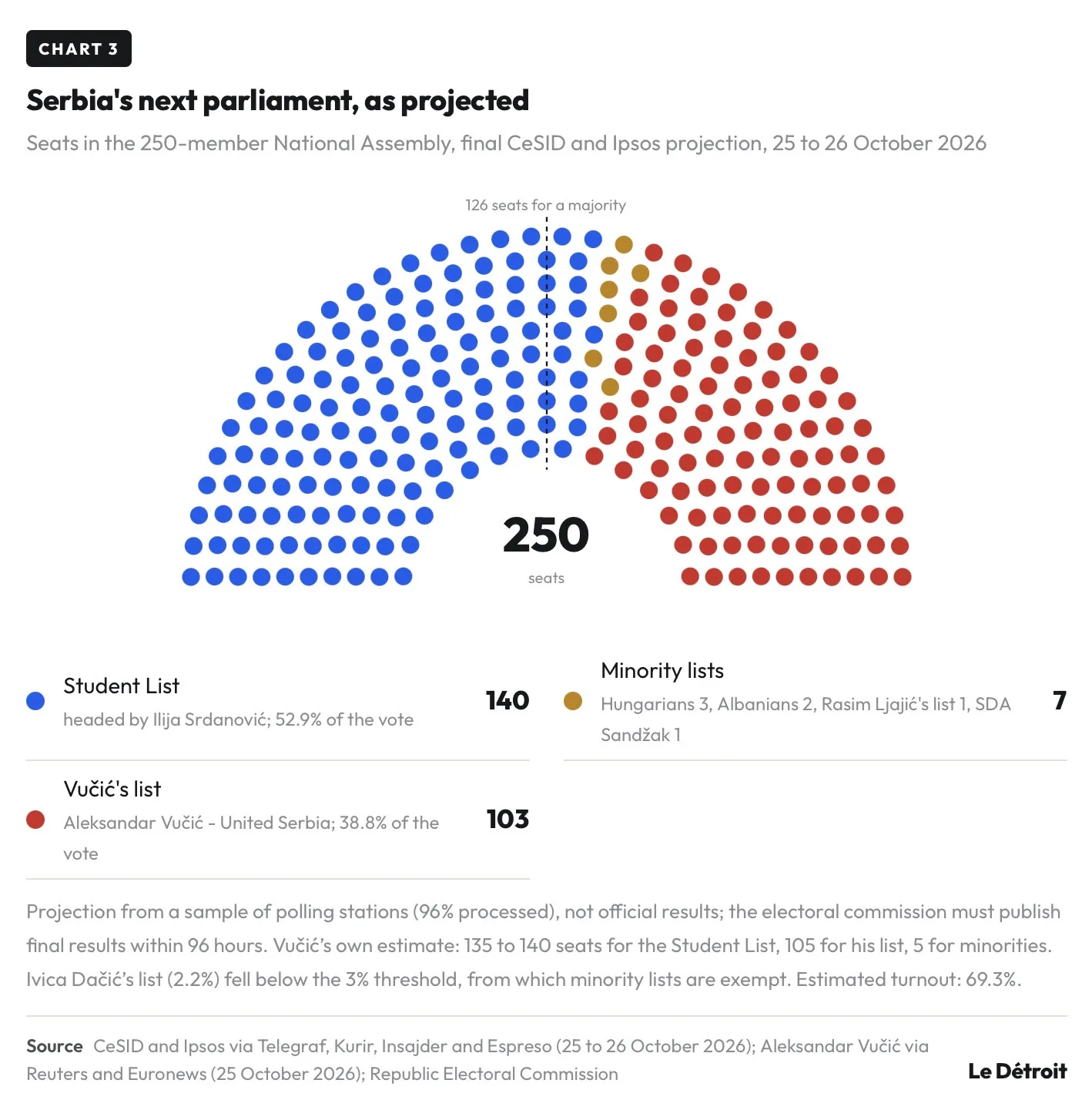
Aleksandar Vučić, who resigned as Serbia's president on 27 September to run for prime minister, conceded defeat on Sunday 25 October to a student-led movement in the snap election, after 14 years in power. "We still do not have final results, on the basis of a sample ... it is clear that we have lost these elections," he said, according to Reuters. He said the Student List would win between 135 and 140 of the 250 seats and his Serbian Progressive Party 105; apart from minority parties, "no one else has entered parliament". In their final projection, pollsters CeSID and Ipsos gave the Student List 52.9% of the vote and 140 seats, and Vučić's list 38.8% and 103 seats. Turnout, 64.9% by 18:00 according to the electoral commission, was the highest since 1992, Reuters and ABC reported. The movement grew out of protests over alleged corruption after a station canopy collapsed in Novi Sad in November 2024, killing 16 people. Vučić, who was endorsed by Vladimir Putin, had denounced it as a foreign-led attempt to unseat him, which the students deny. Their list, headed by Ilija Srdanović, campaigned on the rule of law and against corruption, and has floated a referendum on EU membership, Al Jazeera reported.
4. Italy's art police hunt fake Neapolitan masters sold online
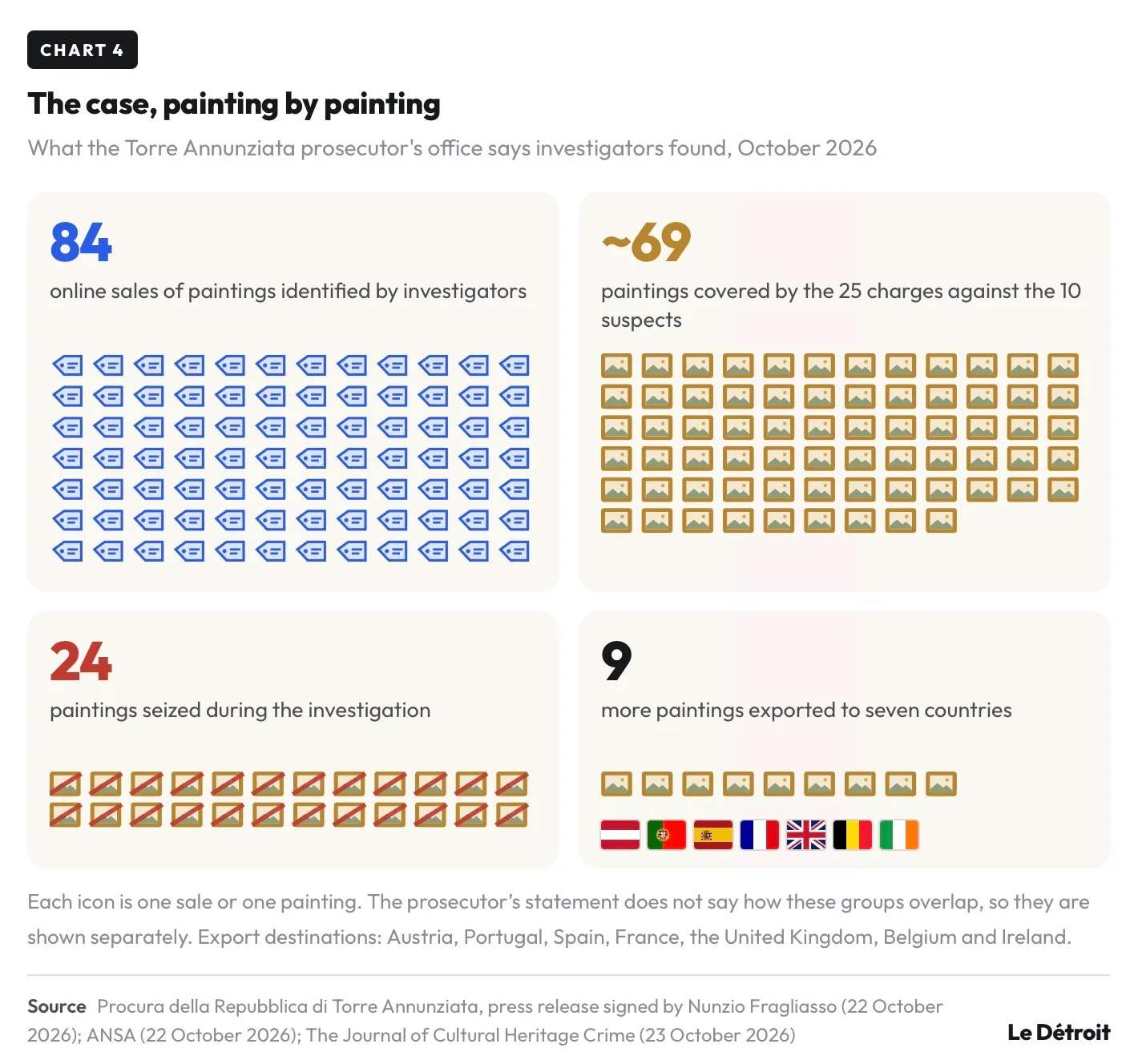
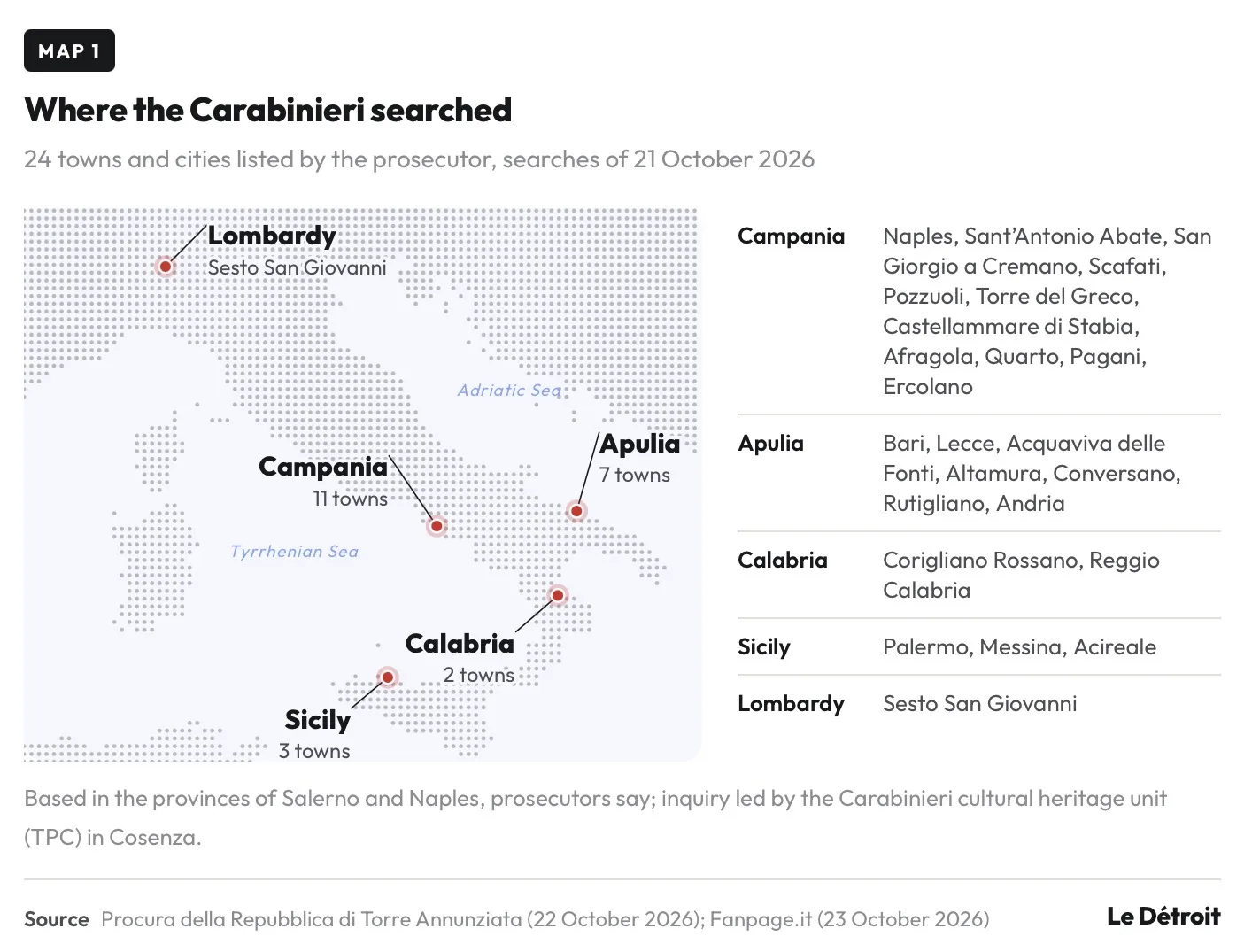
Italy's Carabinieri art squad searched 41 people, and as many shops or homes, in 24 towns and cities from Sicily to Lombardy on Wednesday 21 October, looking for fake paintings attributed to 19th-century Neapolitan artists, in particular Vincenzo Irolli (1860 to 1949), the prosecutor's office in Torre Annunziata, near Naples, said. Ten people are under investigation for criminal association, counterfeiting works of art, receiving illicit cultural goods and illegally exporting cultural goods, in 25 charges covering about 69 paintings, according to the statement of 22 October signed by the chief prosecutor, Nunzio Fragliasso. Investigators say the group, based in the provinces of Salerno and Naples, sold fakes for several years on specialist markets and to unwitting buyers, through an unnamed, well-known online platform. Its alleged leader relied on his wife for logistics and on a friend for technical advice, the statement says. 24 paintings have been seized and 84 online sales identified; nine more paintings were exported to Austria, Portugal, Spain, France, Britain, Belgium and Ireland. The inquiry was led by the Carabinieri's cultural heritage unit in Cosenza. The case is at the preliminary stage: the seizures can be challenged before a review court, and the suspects are presumed innocent until a final conviction.

5. A sanctioned former president files to run again in Haiti
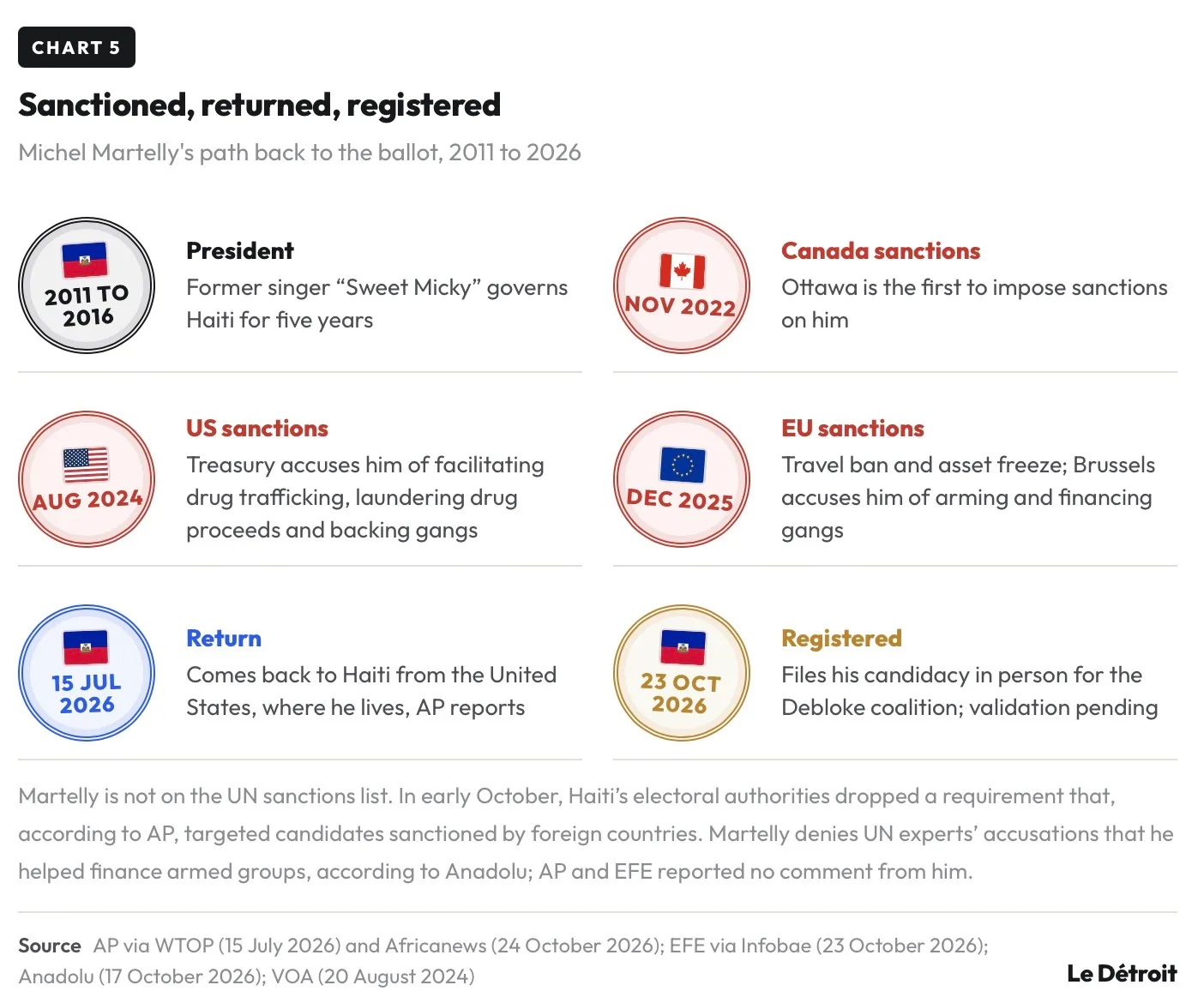
Michel Martelly, Haiti's president from 2011 to 2016, filed his presidential candidacy in person at the Provisional Electoral Council in Port-au-Prince on Friday 23 October, although he is under sanctions in the United States, Canada and the European Union. Washington sanctioned him in August 2024, accusing him of facilitating drug trafficking to the United States, laundering the proceeds and backing gangs; Canada acted in November 2022, and the EU in December 2025 accused him of arming and financing gangs. Martelly, a former singer known as "Sweet Micky", is running for Debloke, a coalition that includes former members of PHTK, the party he once led. He arrived with lawyers, supporters and armed men carrying rifles, according to EFE. In early October, the electoral authorities dropped a requirement that, according to AP, targeted candidates sanctioned by foreign countries, and pushed the registration deadline back to 31 October; 16 presidential candidates had registered. The general elections, the first in more than a decade, are scheduled for 13 December, but the council has postponed the start of the campaign and promised a new calendar. Gangs control about 70% of Port-au-Prince and have displaced more than 1.4 million people, AP says. Martelly denies accusations by UN experts that he helped finance armed groups, Anadolu reported.

6. An oil shock hangs over a week of central-bank decisions
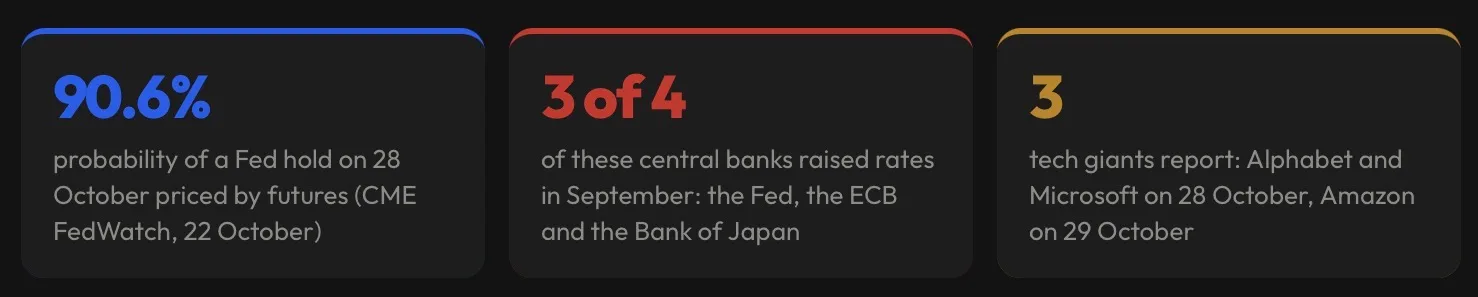
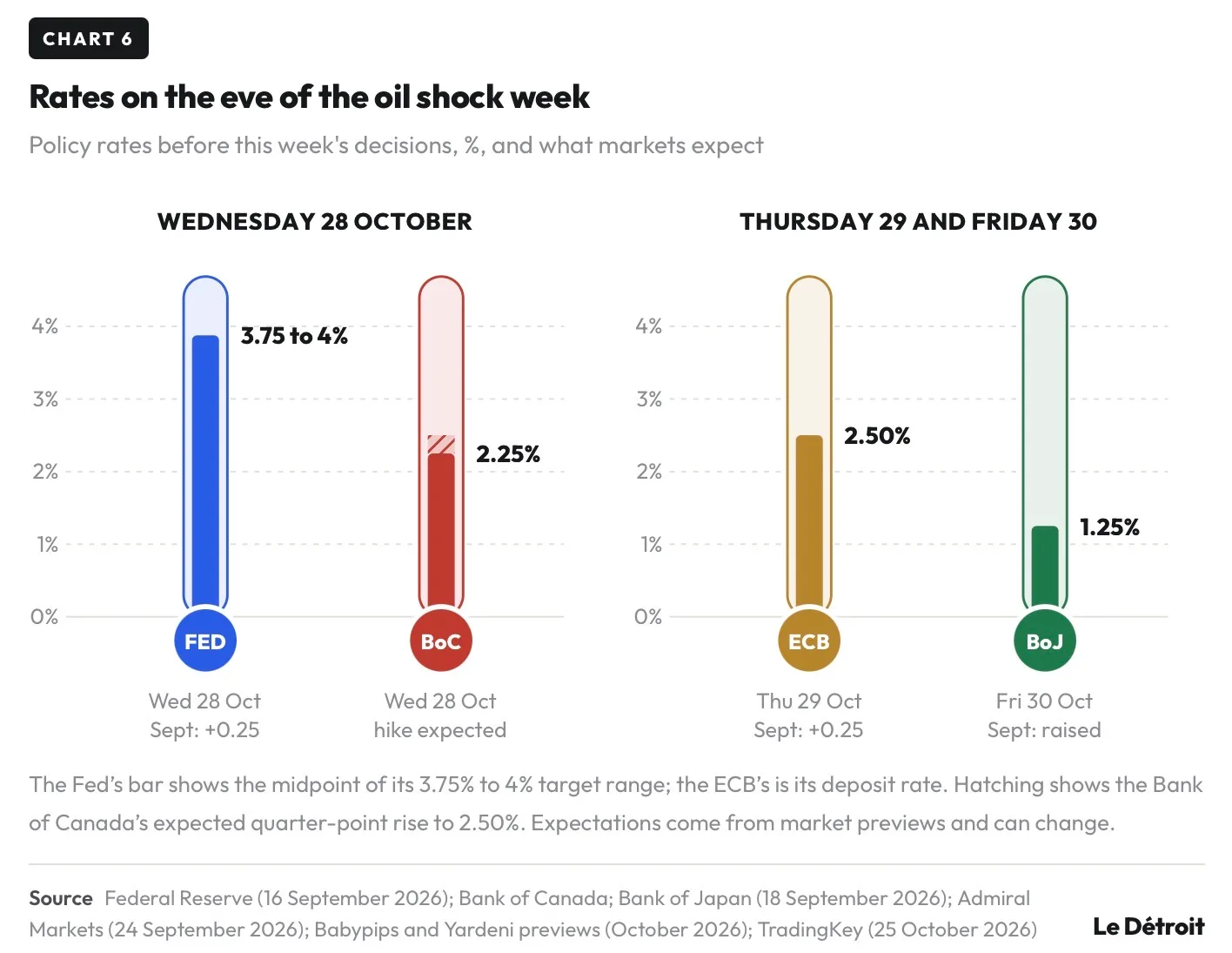
Four big central banks set interest rates this week with Brent near $117, and three of them raised rates in September. The US Federal Reserve, which lifted its target range by a quarter point to 3.75% to 4% on 16 September, its first increase since July 2023, announces its decision on Wednesday 28 October; futures priced a 90.6% chance of a hold on 22 October, according to CME's FedWatch tool, cited by TradingKey. It will be followed by a press conference by its chair, Kevin Warsh. The Bank of Canada, whose rate has stood at 2.25% since a cut in October 2025, is expected to raise it by a quarter point the same day. The European Central Bank, which raised its deposit rate to 2.50% on 10 September, is expected to hold on Thursday 29 October, and the Bank of Japan, at 1.25% since September, on Friday 30 October. In between, Alphabet and Microsoft report on Wednesday and Amazon on Thursday, with investors watching their spending on artificial intelligence after a slide in chip stocks on 22 October, and the first estimate of US third-quarter GDP and September PCE inflation are due on Thursday.
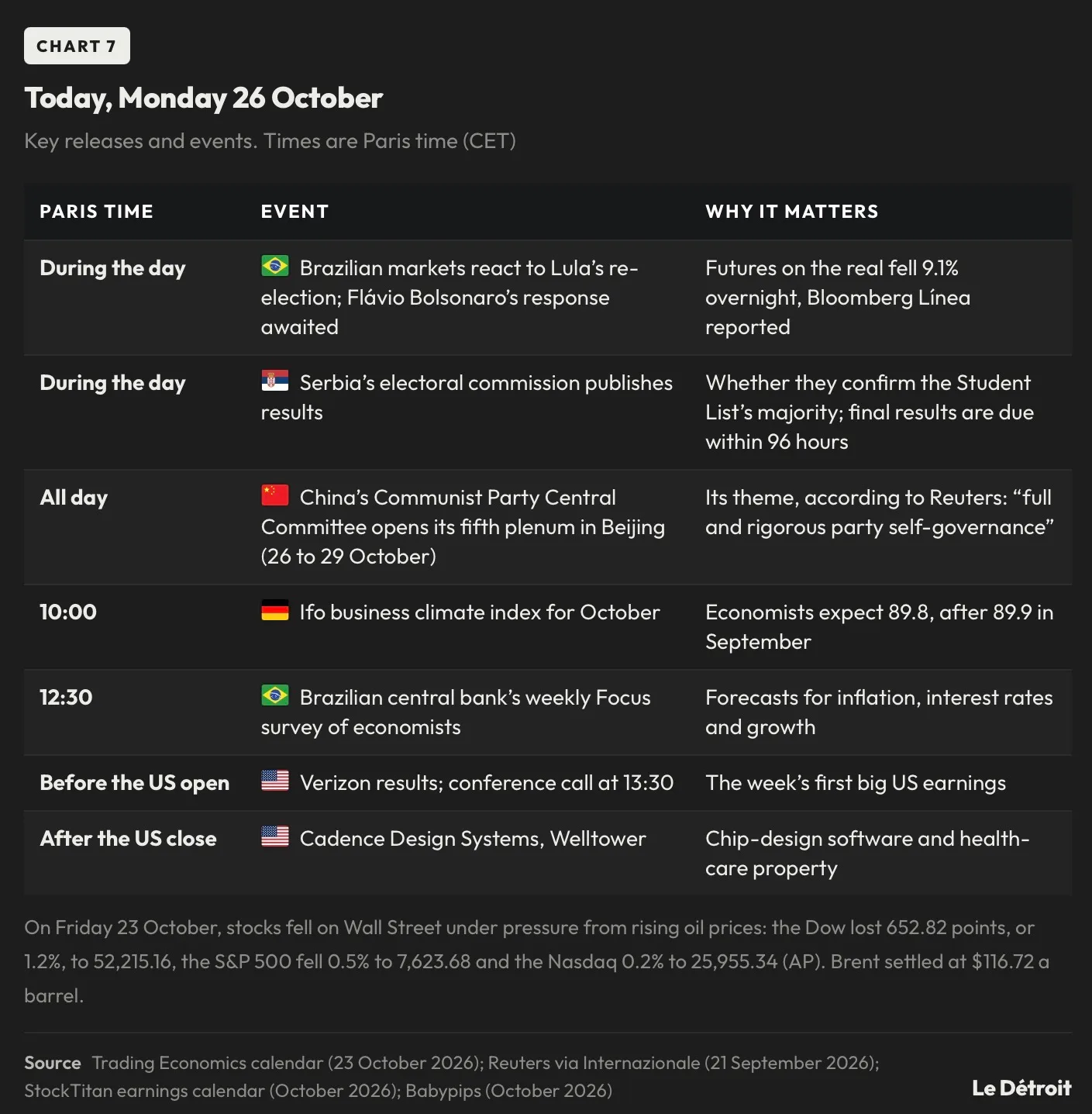
Today