
1. Bank of America sinks after its fine
A day after its $1.2 billion anti-money laundering penalty, Bank of America paid the price on the market. Its shares fell as much as 8.7% on Wednesday, their steepest drop since April 2025, before closing down 4.8%. Net income fell to $6.9 billion in the third quarter, from $8.3 billion a year earlier, as the fine weighed 17 cents on earnings per share. Even excluding it, adjusted earnings of $1.08 per share missed forecasts, and revenue of about $30 billion fell short of expectations. Investment banking fees dropped 11% and trading revenue 5%, while net interest income rose 8%. "While investment banking and sales and trading revenues were lower, commercial lending grew in every client segment," said chief executive Brian Moynihan.
2. US inflation jumps to 3.7%
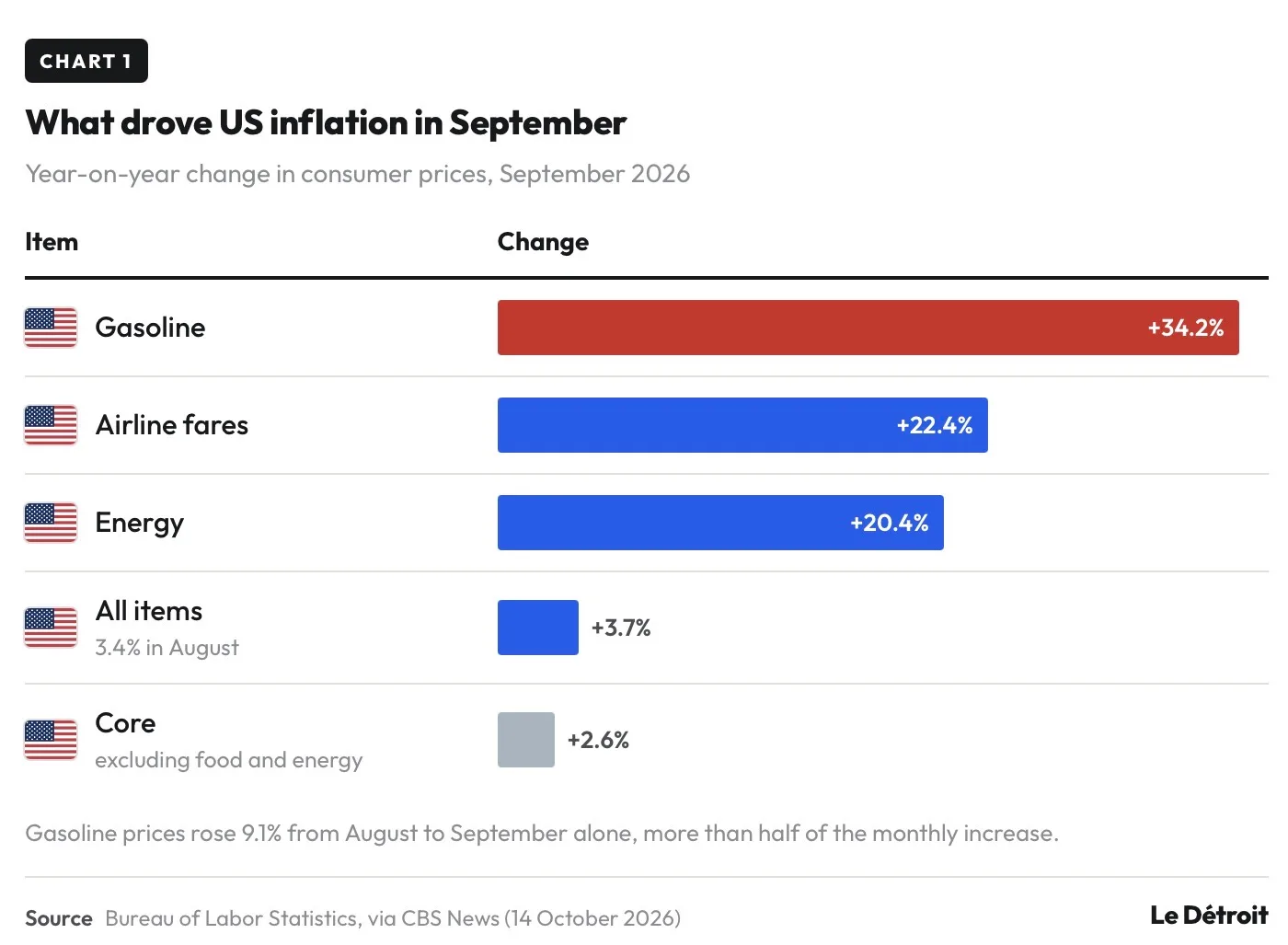
US consumer prices rose 3.7% over a year in September, up from 3.4% in August and above the 3.6% expected, the Labor Department said on Wednesday. Energy did most of the work: gasoline rose 9.1% in a single month and 34.2% in a year, as the war with Iran pushes up fuel prices. Core inflation also picked up, to 2.6%. "The CPI was clearly hot, and there aren't many ways to sugarcoat it," said Adam Crisafulli of Vital Knowledge. Markets now see a 50% chance of another Fed rate hike this month, according to Capital Economics, after September's increase to 3.75%-4%. The Nasdaq lost 1.9% and the S&P 500 1.1%.
3. Wall Street talks up a Tesla-SpaceX merger
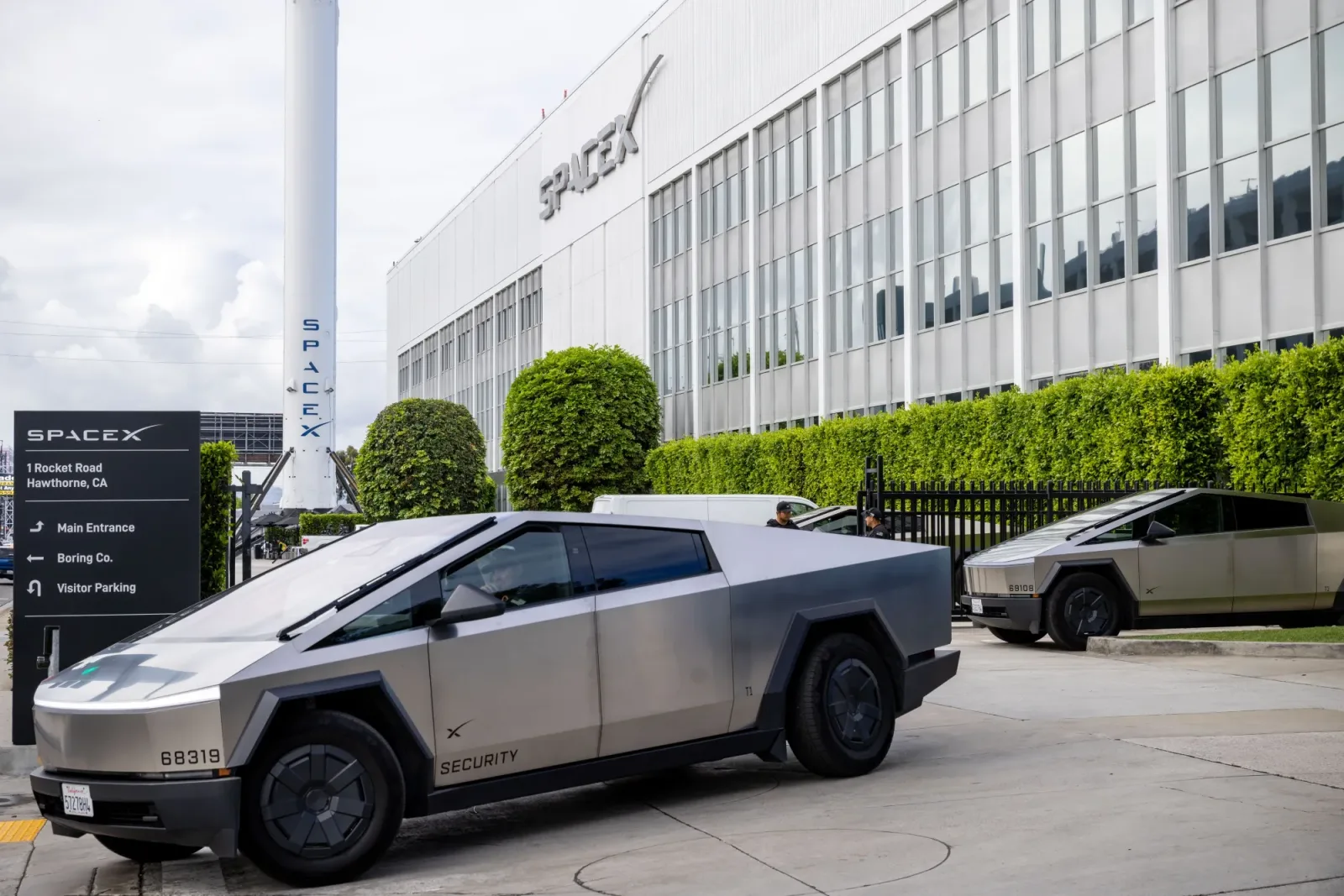
No deal has been announced, but the idea is gaining ground. Barclays analyst Dan Levysaid a merger between Tesla and SpaceX could be announced before Tesla's annual meeting, which must be held by 6 December, Bloomberg reported on Wednesday. The bank sees an all-stock deal in which SpaceX, listed since June, would absorb Tesla at about 0.7 SpaceX share per Tesla share. SpaceX is worth about $2.1 trillion and Tesla about $1.5 trillion. "The true value would be in vertical integration," Barclays wrote, pointing to AI. Elon Musk, who controls most of SpaceX's votes, has not announced anything. Bettors are less convinced: Polymarket gives a 24% chance of a merger by the end of 2026.
4. Colombia takes to the streets against De la Espriella
Thousands of people marched in Bogotá and other major cities on Wednesday in the first major protests against President Abelardo de la Espriella, a far-right former defence lawyer who took office in August after a narrow June runoff. Unions, including the CUT and the teachers' federation Fecode, Indigenous groups, students and the Historic Pact coalition joined former president Gustavo Petro, who called the government "tyrannical and imposed". Protesters fear for reforms of the Petro years, such as wider university access, a higher minimum wage and labour protections, as allies of the president push spending cuts. The day before, the government signed Decree 1525, which lets police act faster against violent acts during protests. The president replied that "there is no right to destroy, attack the security forces, assault others or sow chaos." The marches were largely peaceful.
5. China's exports surge 36.3%
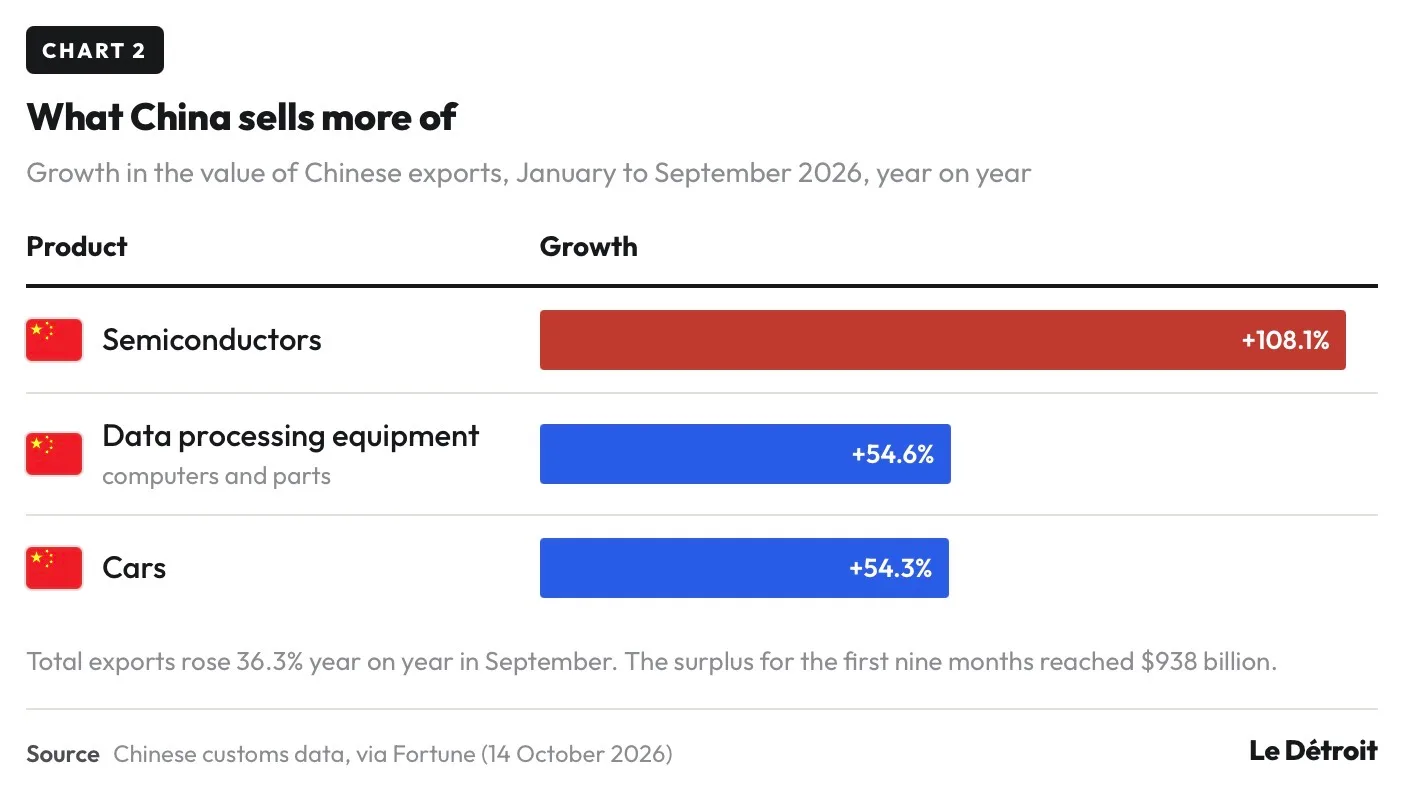
Chinese exports jumped 36.3% over a year in September, their fastest growth since February, and imports rose 31%, customs data showed on Wednesday. The monthly trade surplus widened to $133.5 billion, bringing the total for the first nine months to $938 billion, close to the 2025 full-year record of $1.2 trillion. Chips lead the way: semiconductor exports more than doubled in value over nine months. The surge feeds tension with Europe, which runs a trade deficit with China of more than $1.1 billion a day. "The EU's push to rebalance directly targets high-value exports," said Ecaterina Bigos of BNP Paribas Asset Management. Beijing says it has "no need or intent" to weaken the yuan to gain an advantage.
6. 241 websites of a crypto scam taken down in New York
The Brooklyn District Attorney's virtual currency unit and the FBI's New York office disabled 241 websites and seized 112 servers used by a multinational crypto investment scam, according to a release dated Wednesday. The network ran fake investment sites, collected victims' data and contacted targets, mostly Russian-speaking residents of Brooklyn and other parts of the United States, some lured through Facebook ads. It stole "tens of millions of dollars", according to Crypto Times. Investigators linked its infrastructure to servers in the United States and Eastern Europe, including Ukraine. The investigation began about three years ago, and no operator has been named.