1. UK inflation jumps to 3.5% on the back of fuel
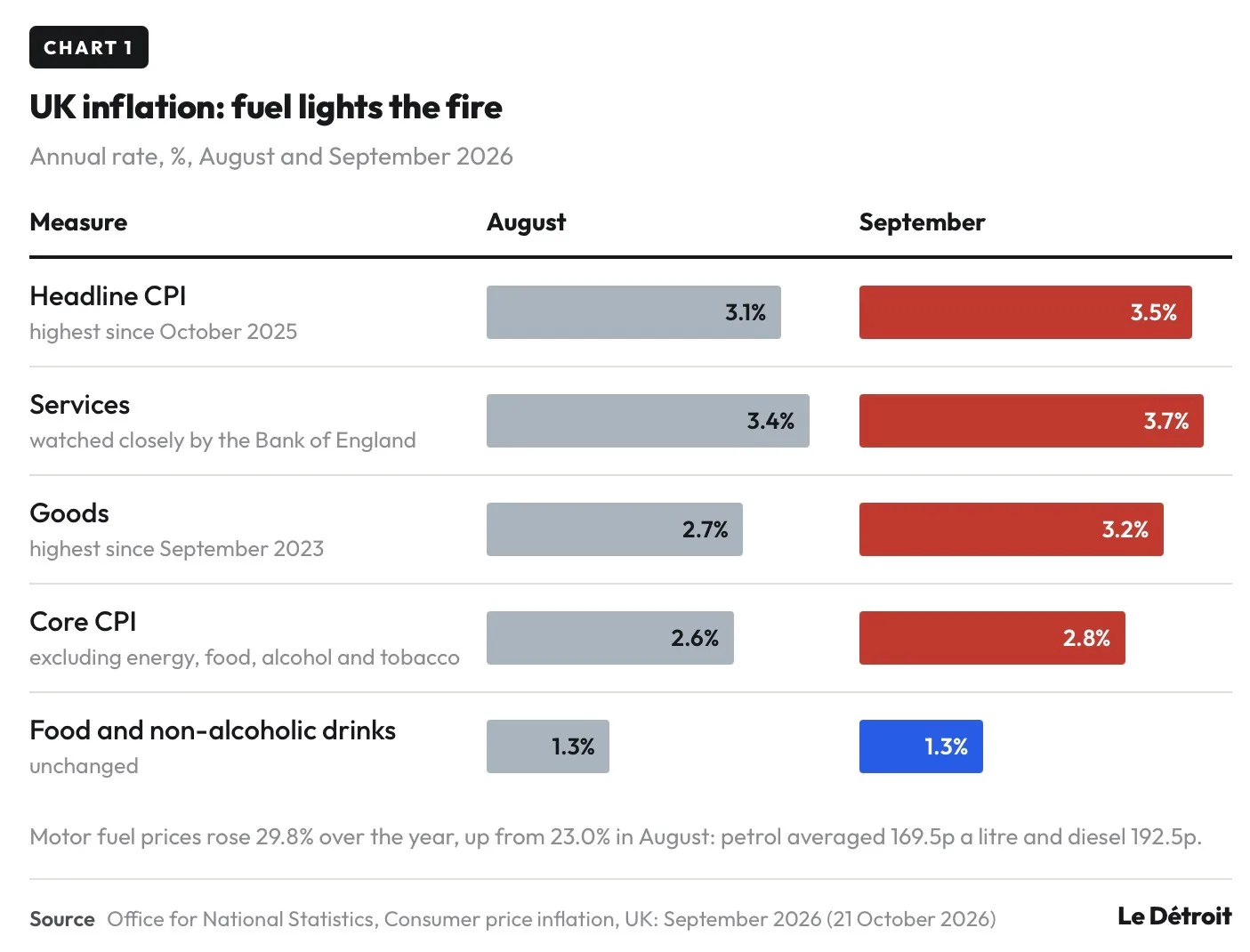
British inflation rose to 3.5% in September from 3.1% in August, the Office for National Statistics said on Wednesday, its highest since October 2025 and above the 3.4% most economists had expected. Fuel was the biggest driver: motor fuel prices were up 29.8% on a year earlier, with diesel averaging 192.5p a litre, as the war with Iran and bottlenecks in the Strait of Hormuz squeezed supply. Services inflation, which the Bank of England watches closely, rose to 3.7%, and goods inflation reached its highest since September 2023. "With inflation increasing, the pieces are falling firmly into place for a November rate rise," said Suren Thiru, chief economist at the ICAEW. Most economists expect the Bank to raise its rate from 3.75% to 4% on 5 November, its first increase since 2023. Chancellor John Healey, who presents his first Budget on 28 October, said it would aim to give families and businesses "some breathing space".

2. Witkoff meets Putin as Russia frees an American
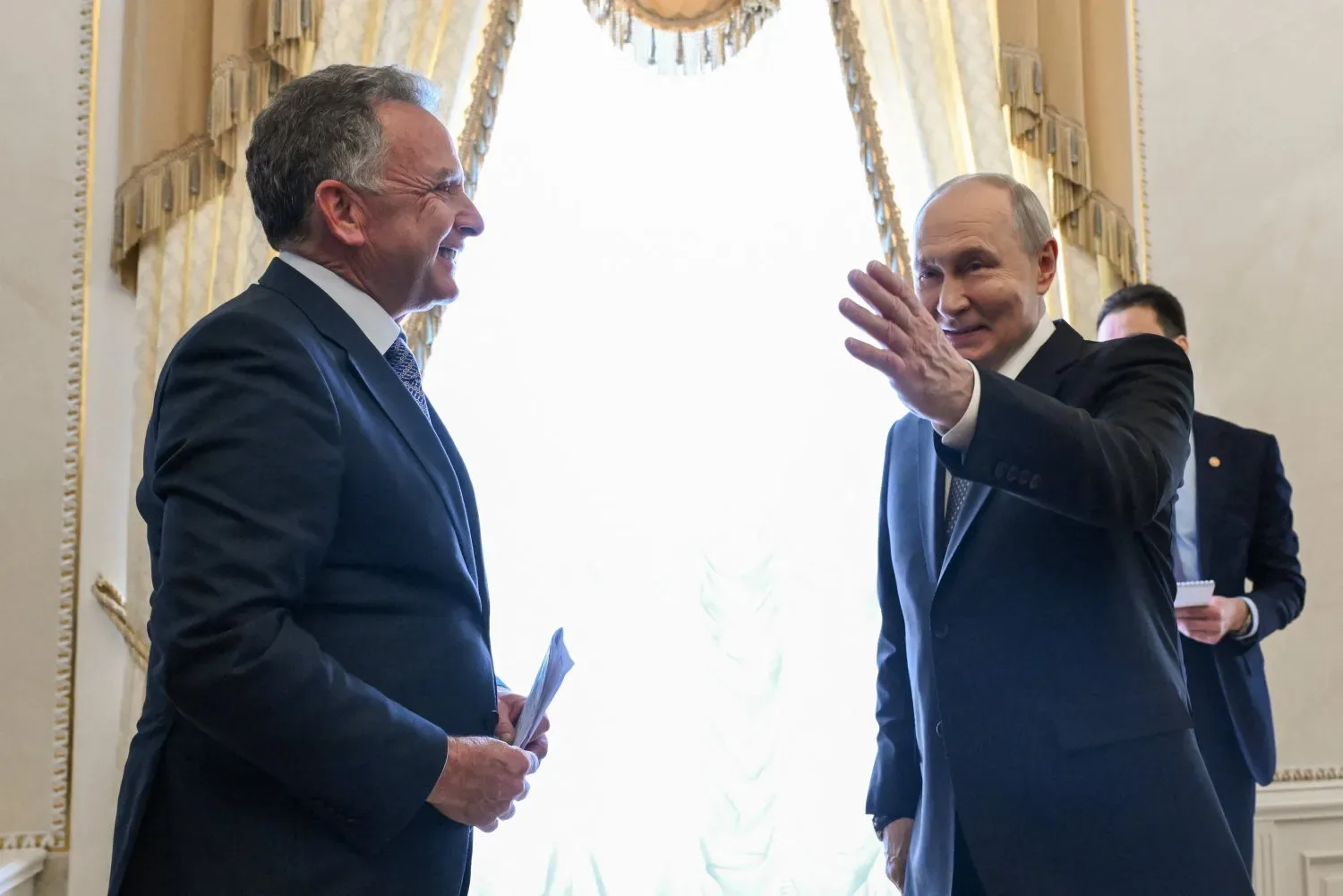
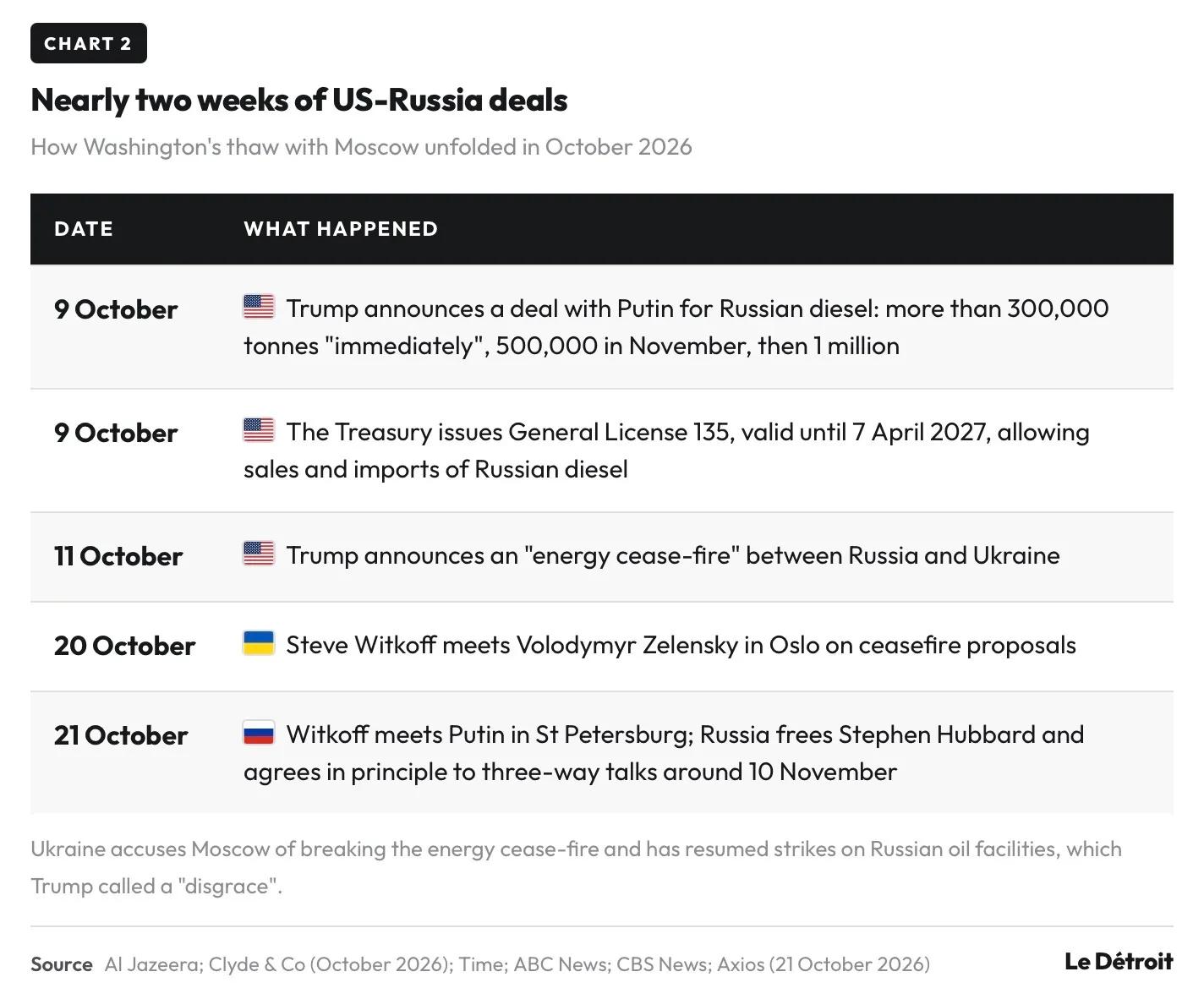
Russia released Stephen Hubbard, a retired American teacher in his seventies sentenced to nearly seven years in a penal colony for allegedly fighting as a mercenary for Ukraine, as Donald Trump's envoy Steve Witkoff met Vladimir Putin in St Petersburg on Wednesday. Video showed Witkoff thanking Putin on behalf of the president. Trump said he had asked Putin for Hubbard's release and that the United States "was not required to give anything in return". After about three hours of talks, the Kremlin said Russia was ready in principle to resume three-way talks with Ukraine and the United States around 10 November, possibly in Abu Dhabi. The release caps nearly two weeks of rapprochement: on 9 October Trump announced a deal for Russian diesel, which the Treasury allowed onto the world market with a licence valid until April 2027, after US diesel prices hit a record in September following the war with Iran. Volodymyr Zelensky, whom Witkoff met in Oslo on Tuesday, had called the diesel deal "a weak decision by strong partners".
3. Italy sends troops to Milan after cost-of-living riots
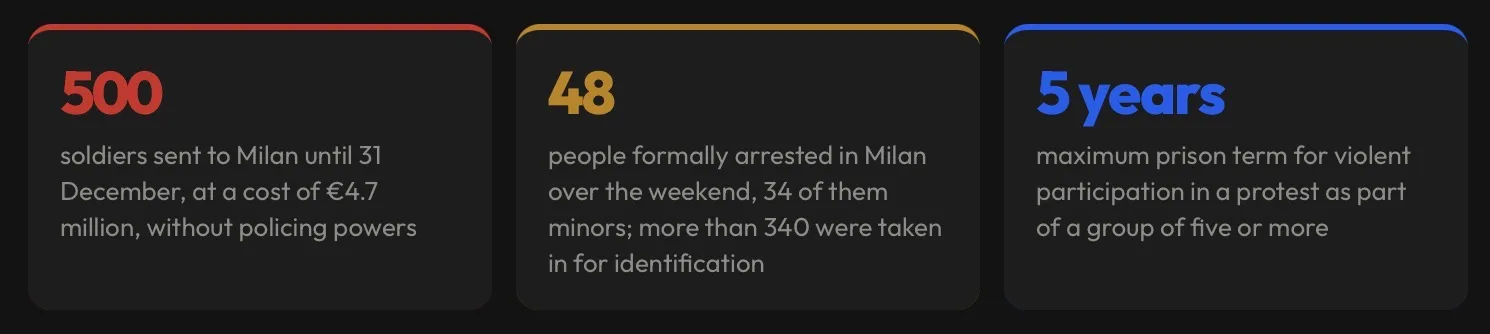
Italy's government approved sending 500 soldiers to Milan until the end of the year after cost-of-living protests turned violent last weekend, with looting and clashes with police in Milan and unrest in other northern cities. Some 5,000 people had joined peaceful marches in Milan against the rising cost of living. The cabinet also approved a security decree, which takes effect once published in the official gazette: a new offence of violent participation in a demonstration, with up to five years in prison for those in groups of five or more who endanger public safety, liability for parents of minors, preventive detention for 16- and 17-year-olds judged dangerous, and a presumption, unless proven otherwise, that minors over 14 are criminally responsible. It stopped short of giving soldiers policing powers, reportedly after objections from President Sergio Mattarella. "Destroying and stealing is not protest, it is crime," Prime Minister Giorgia Meloni said. In France, the government is planning a large police deployment for protests expected this weekend.
4. A $50 million contract, then a presidential pardon
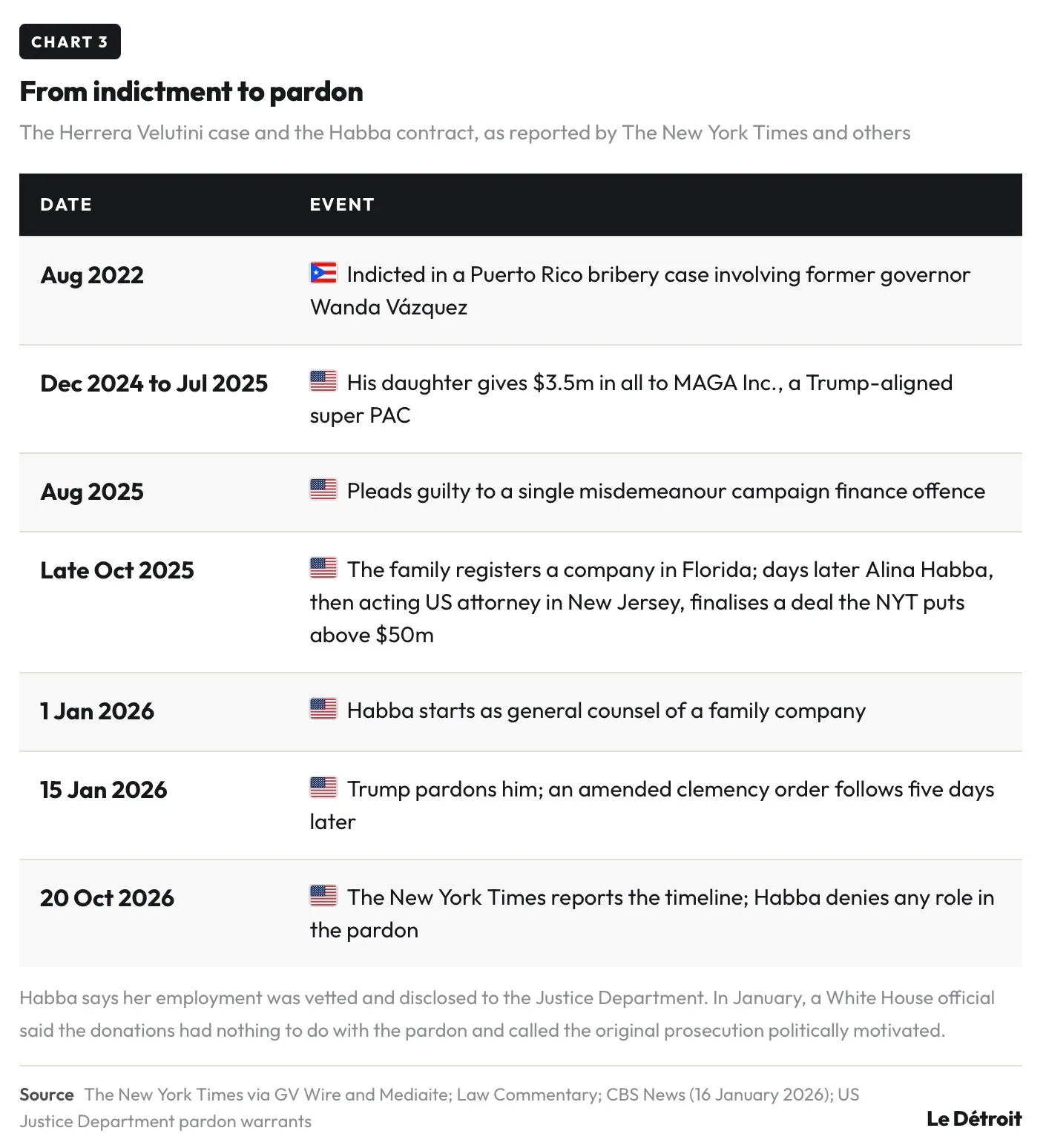
Julio Herrera Velutini, a Venezuelan billionaire banker indicted in 2022 in a Puerto Rico bribery case, received a pardon from Donald Trump weeks after Alina Habba, a lawyer close to the president, started a job worth more than $50 million with a family company, The New York Times reported. Prosecutors had alleged he funded the 2020 campaign of the island's then governor, Wanda Vázquez, to get a banking regulator replaced; in 2025 he pleaded guilty to a single misdemeanour campaign finance offence. Habba finalised the deal days after the family registered the company in late October 2025, while still acting US attorney in New Jersey, according to the NYT, and started on 1 January, by then a senior adviser to Attorney General Pam Bondi, on $10 million a year for four years plus bonuses; the pardon followed on 15 January. Habba says any insinuation that her employment "had anything to do with securing a pardon is false and defamatory"; the Justice Department says she did not discuss a pardon with anyone. A White House official said Habba played no part in the decision; in January, an official said the donations had nothing to do with the pardon. The family did not respond.
5. Meta beats forecasts, but a legal bill bites
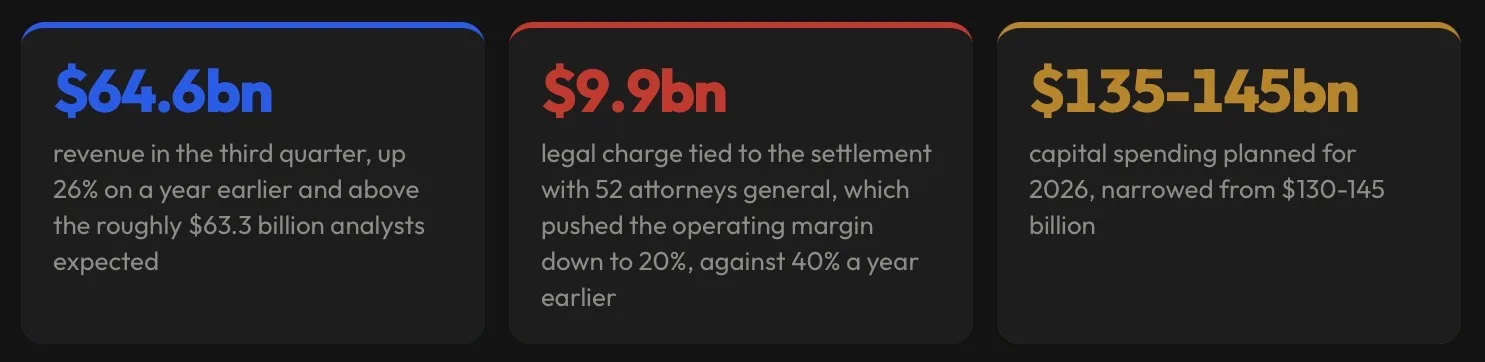
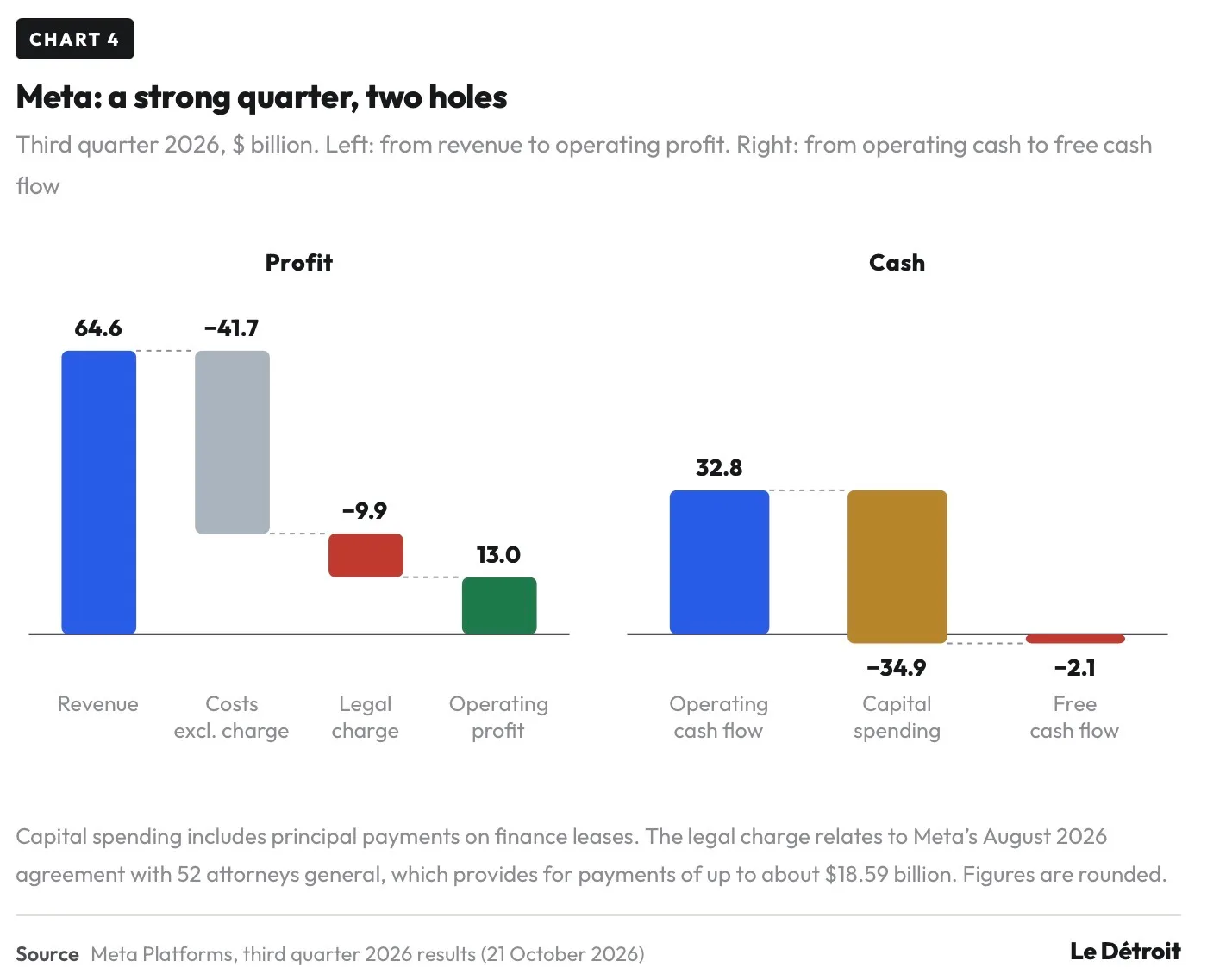
Meta reported third-quarter revenue of $64.6 billion on Wednesday, up 26% on a year earlier and above the roughly $63.3 billion analysts expected, with the average price per ad up 14%. But a $9.89 billion charge for its August settlement with 52 attorneys general over the effects of its apps on young people helped cut its operating margin to 20%, from 40% a year earlier. Free cash flow turned negative, at minus $2.1 billion, as capital spending reached nearly $35 billion in the quarter, up from about $19 billion a year earlier. Meta narrowed its 2026 spending plan to $135-145 billion and forecast fourth-quarter revenue of $73-76 billion, a midpoint above analysts’ estimates. A new class of non-voting shares, created on 19 January 2027 and distributed one for each existing share, should affect the price like a two-for-one split. Separately, a New Mexico judge ordered Meta on Wednesday to pay the state $25 billion over privacy deceptions tied to the Cambridge Analytica scandal; Meta says it will appeal. "Our investments are paying off, the core business is strong, and we’re seeing velocity across the board," said Mark Zuckerberg. The shares rose about 3% in after-hours trading. Chief financial officer Susan Li said Meta would give its 2027 outlook on its fourth-quarter call, while it expects "to continue investing aggressively".
6. Tesla holds its revenue as Musk eyes SpaceX
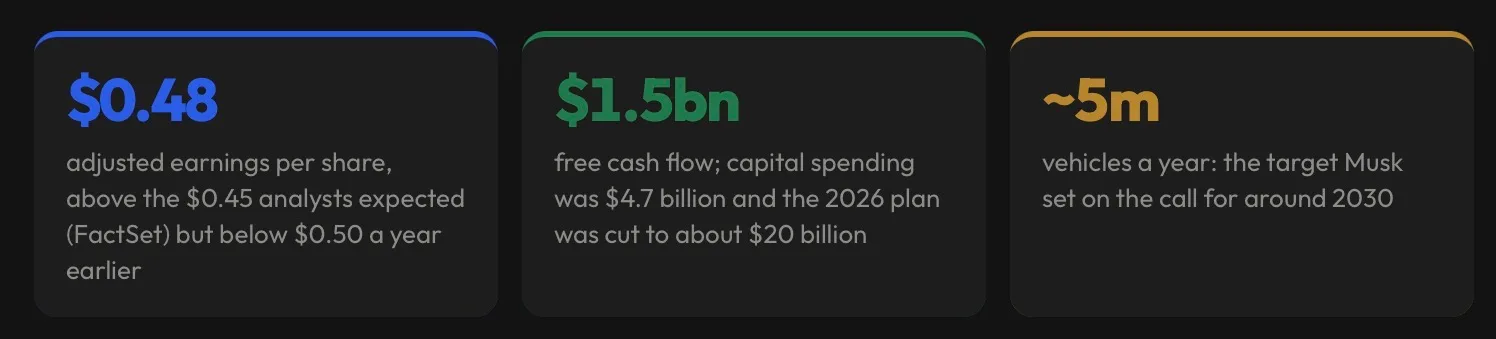
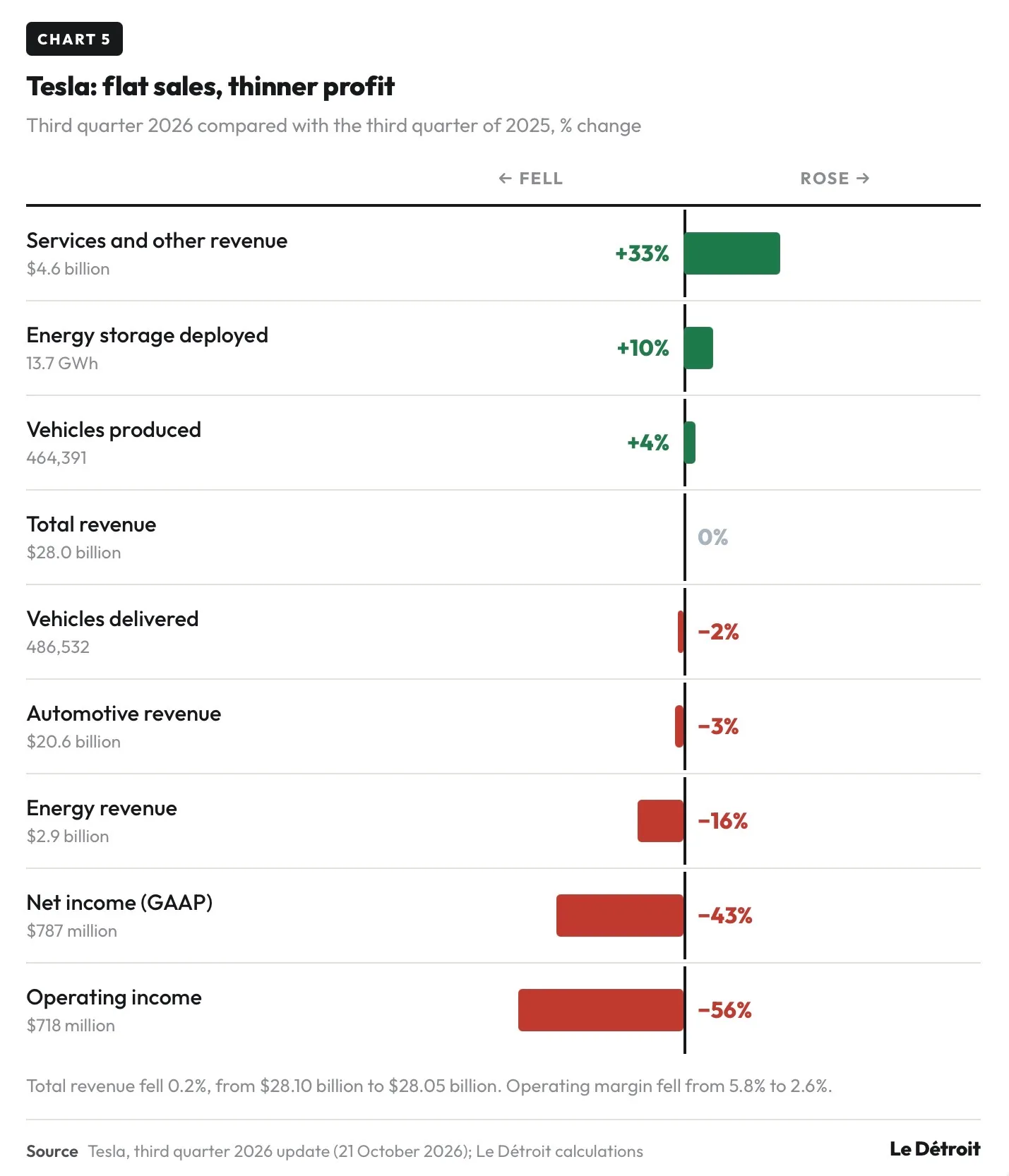
Tesla reported third-quarter revenue of $28.05 billion, almost unchanged from a year earlier and slightly above the $27.88 billion analysts polled by LSEG expected. Deliveries fell 2% to 486,532 vehicles, and operating income dropped 56% to $718 million. Adjusted earnings of $0.48 a share beat the $0.45 expected by analysts polled by FactSet, and Tesla generated $1.5 billion in free cash flow and cut its 2026 capital-spending guidance to about $20 billion, from more than $25 billion. On the call, Elon Musk said Tesla was aiming for about 5 million vehicles a year by around 2030, and the group said Dallas would follow Austin for its Cybercab robotaxis. Musk declined to discuss a merger with SpaceX, after saying on Tuesday that it would be a good idea and that both companies had formed special committees to discuss it. After a 3.4% gain during the day, the shares rose at first in after-hours trading, then slipped about 2%.
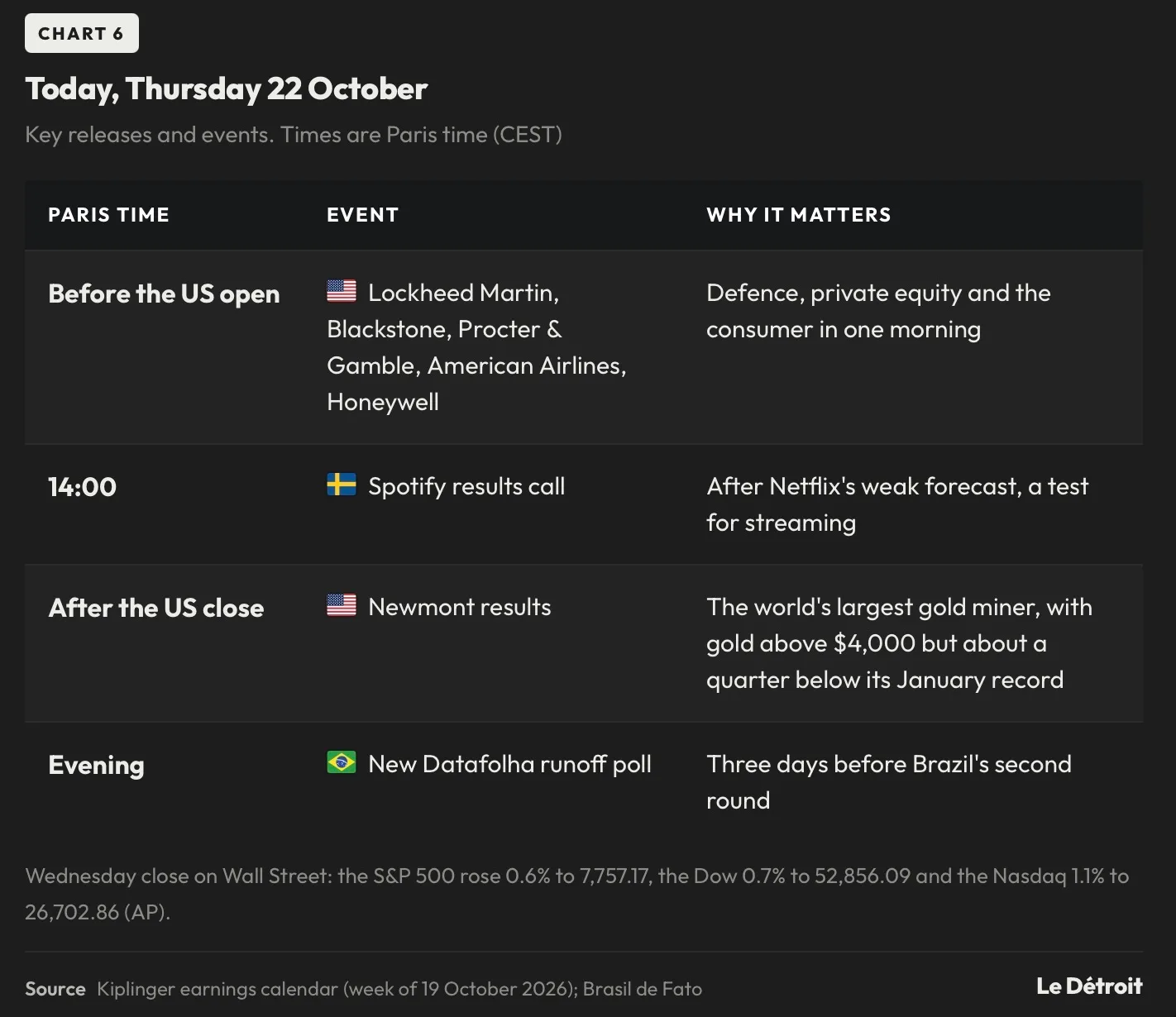
Today