
1. Congress pushes back on Trump's Russian diesel
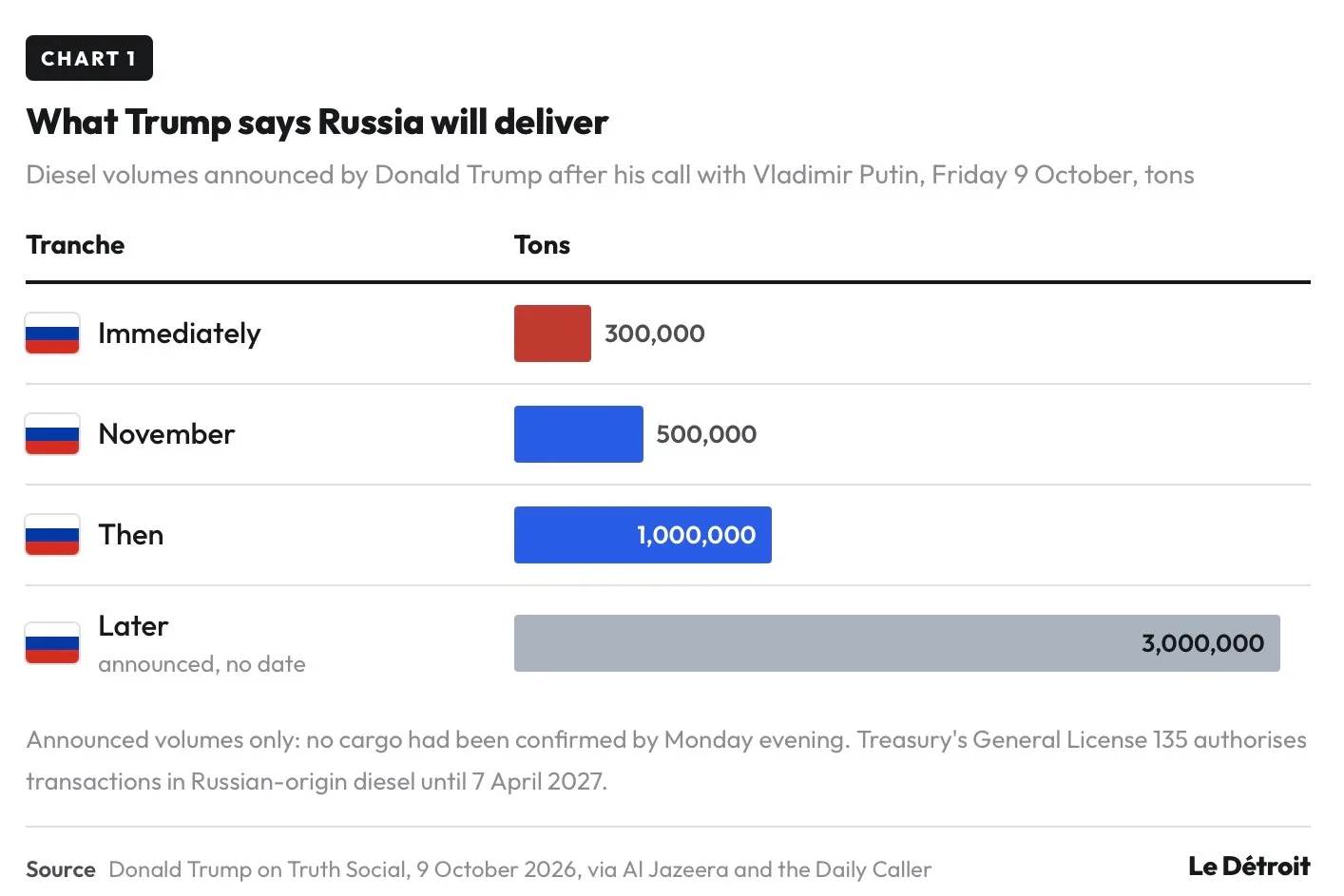
Seven senators from both parties, among them Republicans Thom Tillis, Lisa Murkowski, Susan Collins and John Curtis, urged the White House on Sunday to "immediately reverse course" on a deal Donald Trump announced on Friday after a call with Vladimir Putin: Russia would "immediately supply over 300,000 tons of diesel fuel", then 500,000 tons in November and 1 million tons after that. The Treasury issued General License 135, authorising transactions in Russian-origin diesel until 7 April 2027. The senators say this "runs directly counter" to a 2022 law banning Russian energy imports, which the president can lift only after certifying, among other conditions, that Russia and Ukraine have agreed to end hostilities. Treasury Secretary Scott Bessent said the administration was using "all the legal authorities we have." US diesel averaged $6.27 a gallon on Monday, according to AAA.
2. 139 dead off Djibouti
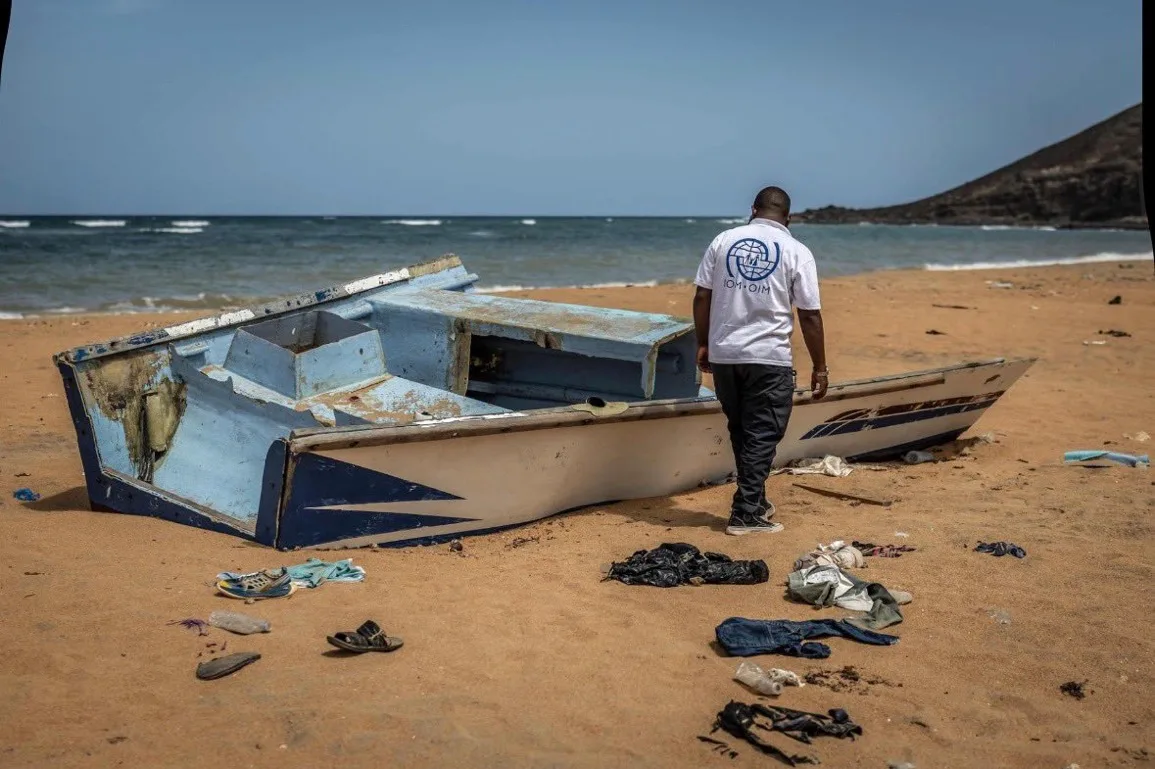
At least 139 migrants, including 15 children, died when an overcrowded boat capsized off Djibouti, near Guhere, north of Obock, the UN's International Organization for Migration (IOM) said on Sunday. The vessel was carrying 305 people towards Yemen and sank close to the shore on the night of 8 to 9 October. At least 84 people are missing; more than 80 survivors, all Ethiopians, were taken to an IOM centre in Obock. Local authorities were "overwhelmed with all the bodies that kept coming at once towards the shore," said Alexandre Coissac, head of the IOM in Djibouti. More than 900 people died or went missing on this Eastern Route last year, while the number of people making the crossing rose 18%.
https://x.com/unmigration/status/2109282745511780736?s=61
3. Manila hears of a "symptom of money laundering"
The prosecution's last witness at the Senate impeachment trial of Philippine Vice President Sara Duterte, forensic financial analyst Alexander Cabrera, testified on Monday about Cale88 Foods Corp., a company in which her husband Mans Carpio held a 47.5% stake from 2021 to 2024. Money "comes in and goes out" without adding value to the business, he said: "That is a symptom of money laundering." He stressed that he was not concluding that laundering had taken place. The Anti-Money Laundering Council has confirmed that Cale88 received 319 million pesos from mainland China and Hong Kong. Senators noted the firm had two employees on record against about 150 million pesos of sales in 2024. Duterte accused the prosecution of inventing evidence; her defence says nothing links the money to the Chinese state or shows it reached the couple.
4. A Chinese memory chip rattles Samsung, SK Hynix and Micron
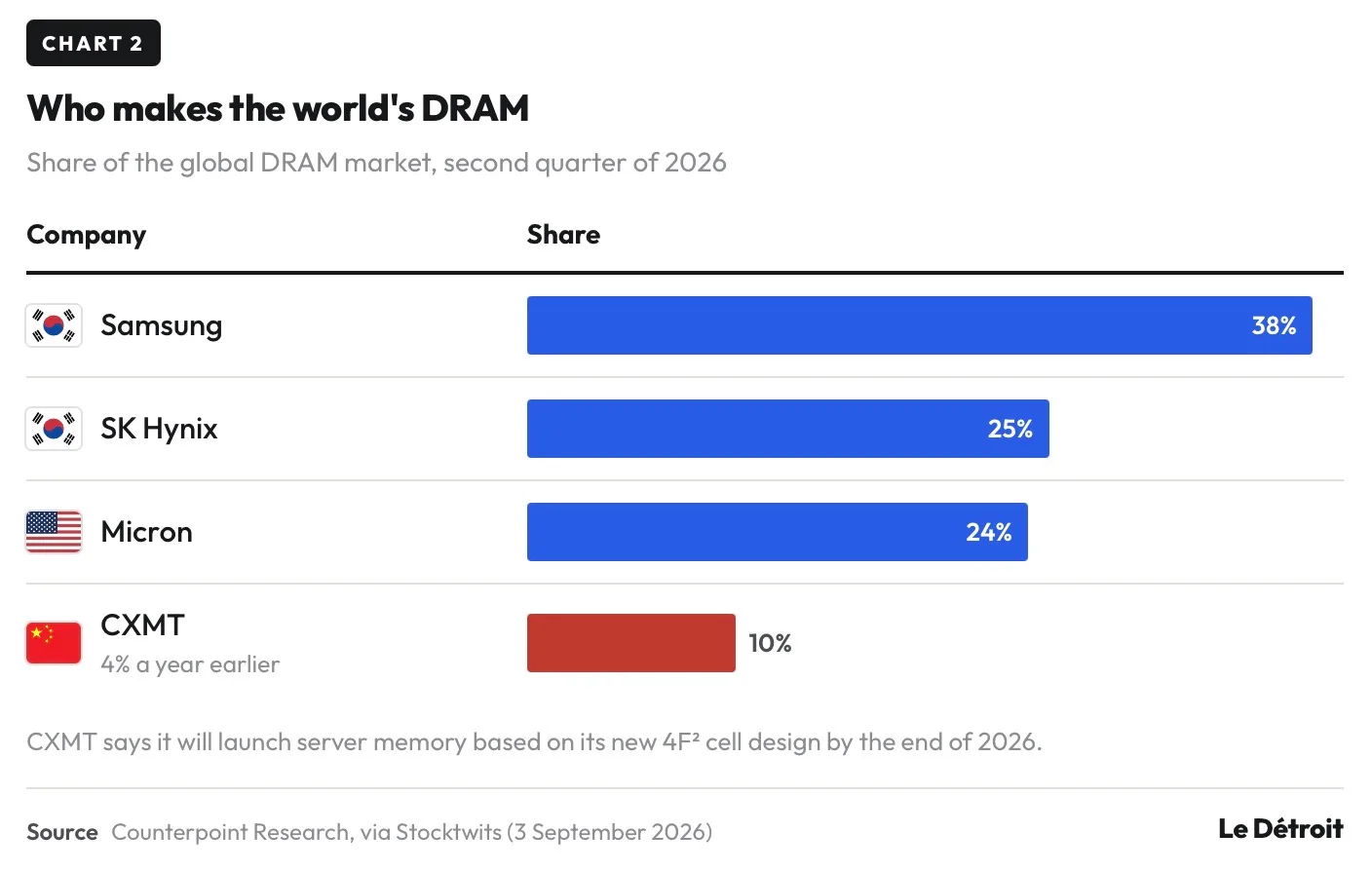
China's CXMT says it has made "key progress" on a 4F² DRAM cell, which fits each memory cell into four square units of the chip's minimum feature size instead of the usual six, and plans server memory built on it by the end of 2026, its president Cao Kanyu told an industry event in Shanghai at the weekend. Investors sold the incumbents. In Seoul, Samsung Electronics fell 4.39% and SK Hynix 4.52%, and the Kospi lost 3.65% to 6,384.24, with analysts also citing oil prices and fund rebalancing. On Wall Street, Micron lost between 4% and 5% during the session. CXMT already held 10% of the world's DRAM market in the second quarter, up from 4% a year earlier, according to Counterpoint Research.
5. Twenty Chinese brands at the Paris Motor Show
The Paris Motor Show opened on Monday with up to 60 new models and about 20 Chinese brands, twice as many as in 2024, Reuters reports, including newcomers such as Aito and Changan's Nevo and Avatr. They arrive under a cap: an EU-China deal limits imports of Chinese hybrids to 350,000 units a year, a European Commission official said, though it is unclear how it will be applied. Brussels is also drafting "Made in Europe" rules that would require minimum local content in electric cars. "Preserving this European sovereignty and our capacity to manufacture within Europe is crucial for us," said Emmanuel Macron. The pressure to export comes from China, where car sales fell 20% in the first half of 2026. "If they drop exports in Europe they die," said François Roudier of the international carmakers' association OICA.
https://x.com/reuterschina/status/2108452508452442555?s=61
6. A Nobel for the models central banks use
The 2026 Nobel prize in economics went on Monday to two Americans, Robert Hall of Stanford, born in 1943, and Michael Woodford of Columbia, born in 1955, for macroeconomic models built on how households and firms actually decide, which help monetary and fiscal policy smooth booms and recessions. Their work "has provided us with a stable theoretical foundation for the models that are now used by central banks and governments around the world," said John Hassler, who chairs the prize committee. Woodford wrote Interest and Prices (2003), a reference on how central banks steer expectations; Hall chaired the committee that dates US recessions at the National Bureau of Economic Research. They share 12 million Swedish kronor. The award lands as markets price a 19% chance of a Fed rate hike this month, according to CME FedWatch.