1. Pakistan's army chief shuttles to Tehran
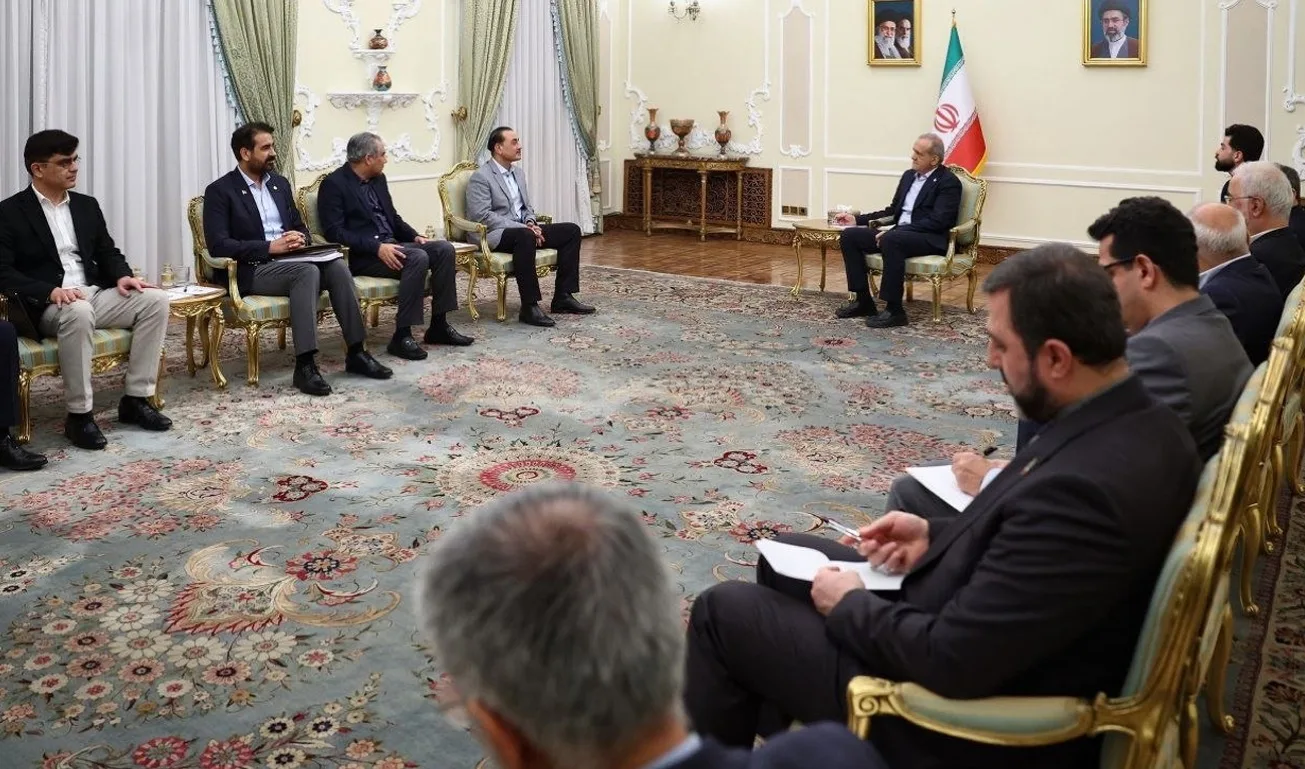
Pakistan's army chief, Field Marshal Asim Munir, met President Masoud Pezeshkian in Tehran on Tuesday, his fifth trip since the short-lived June memorandum between Washington and Tehran, in a renewed push to broker a deal. Iran set a hard line on the nuclear file. "Not even a tiny bit of enriched nuclear material will leave Iran," Mohsen Rezaei, secretary of the Supreme National Security Council, told him, according to Arab News. Separately, the Qatari newspaper Al-Araby Al-Jadeed reported that Qatar and Pakistan had put forward a framework, including the transfer to Iran of interest earned on $6 billion of Iranian funds frozen in Qatari banks and a confidential IAEA visit to nuclear sites, and, citing unnamed sources, that Washington and Tehran had responded positively. An official close to the talks later said reports that a deal was close were wrong, and Pezeshkian said that "for any negotiation, first the pressures, threats and sanctions must be lifted", according to Tasnim. Oil swung on the headlines: Brent touched $111.99, a five-month high, after the Houthis claimed new strikes on Saudi energy sites, then settled near $108.80. Iran's Revolutionary Guard also said two tankers had struck its mines in the Strait of Hormuz and caught fire, Euronews reported.

https://x.com/alarabiya_eng/status/2112611202148733052?s=61
2. A Google Cloud failure in London knocks out Revolut
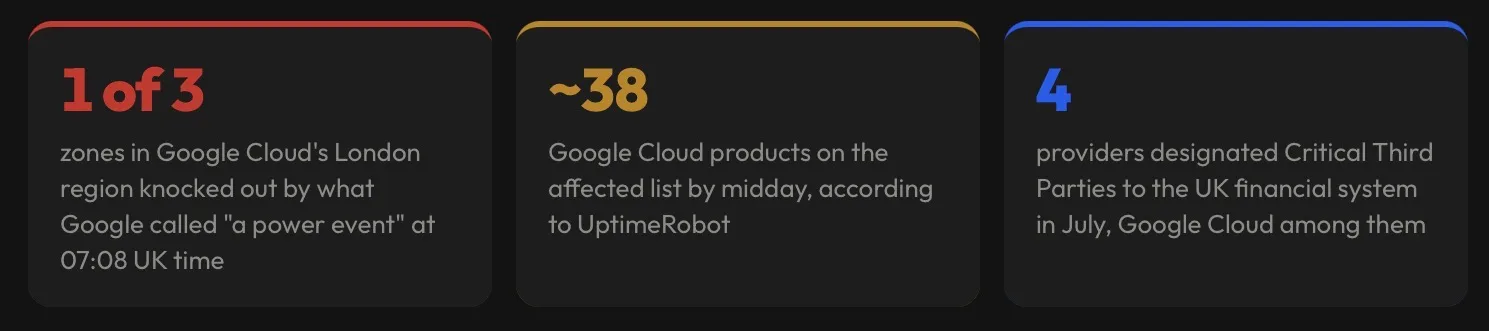
A "power event" at one of the three zones of Google Cloud's London region disrupted services across Britain on Tuesday from 07:08 UK time. Revolut's card payments, transfers, cash withdrawals and sign-in faltered for hours, in the UK and in Ireland, where it has 3.4 million customers. By the evening the bank said the issue had been fixed: "Due to a recent Google Cloud outage, customers may have experienced temporary service disruption on the Revolut app today," it posted on X, adding that customers' money and data had remained safe. Halifax said some customers had problems with its app, users reported issues at Lloyds and HSBC, and the video platform used for remote court hearings in England and Wales went down. By the evening Google said it had "resolved a disruption to Google Cloud services at a third-party facility" in the region, caused by a power event, and that services had been restored. Since July, Google Cloud EMEA has been one of four providers designated Critical Third Parties to the UK financial system.
3. SpaceX's AI business overtakes Starlink
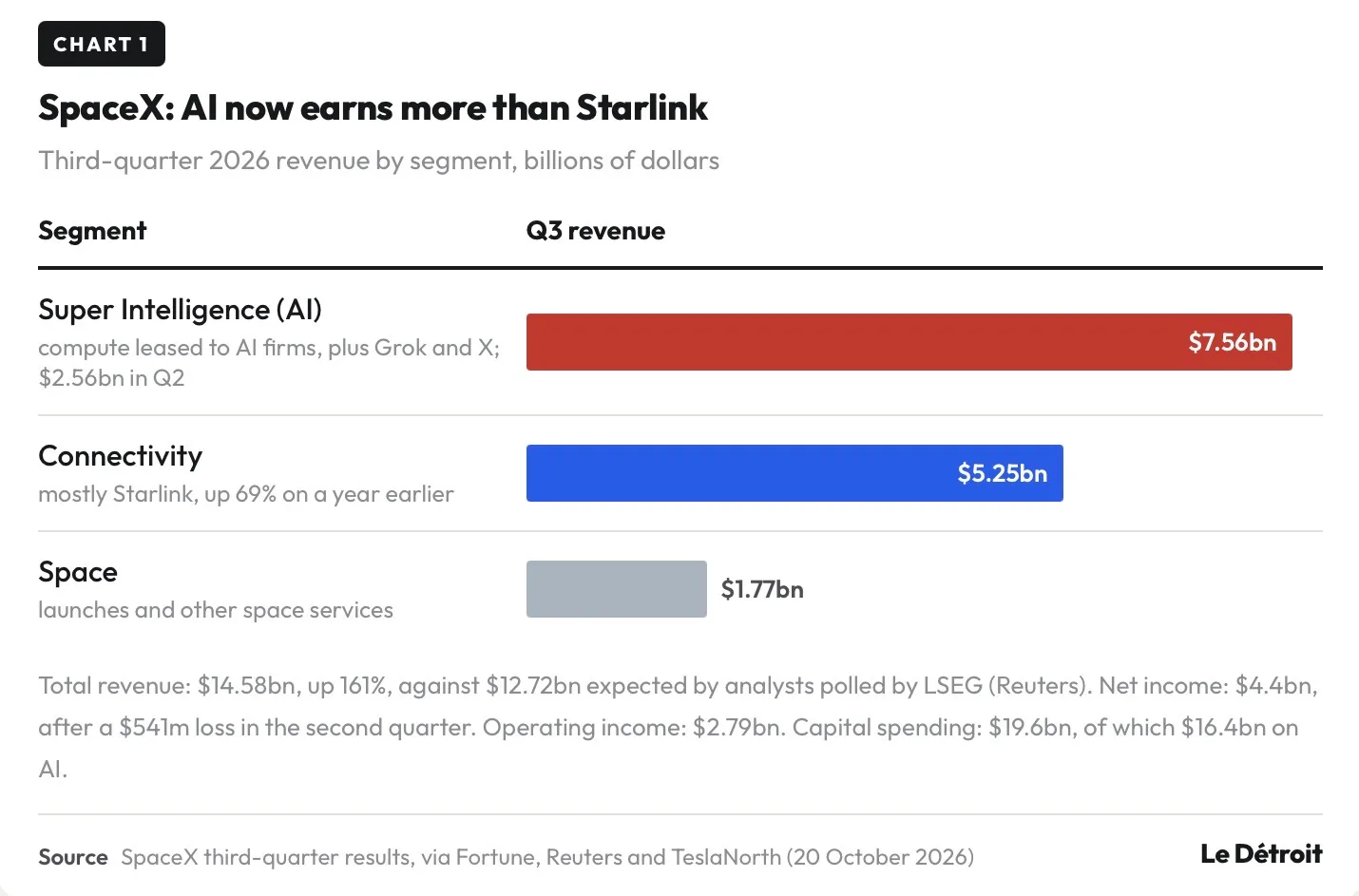
SpaceX reported third-quarter revenue of $14.58 billion, up 161% and well above the $12.72 billion analysts expected, and a net profit of $4.4 billion, its first profitable quarter since listing in June. The surprise came from its AI unit, renamed "Super Intelligence": revenue of $7.56 billion, nearly triple the $2.56 billion of the second quarter, including computing capacity leased to AI companies such as Anthropic and Google, as well as to Grok and X. That is now more than Starlink, whose connectivity revenue rose 69% to $5.25 billion, although it added 1.6 million consumer subscribers, short of the 2.29 million additions analysts expected, according to Fortune. The cost of the bet is visible too: capital spending reached $19.6 billion in the quarter, $16.4 billion of it on AI, and the company gave no full-year forecast.
4. Netflix cuts its forecasts and its staff
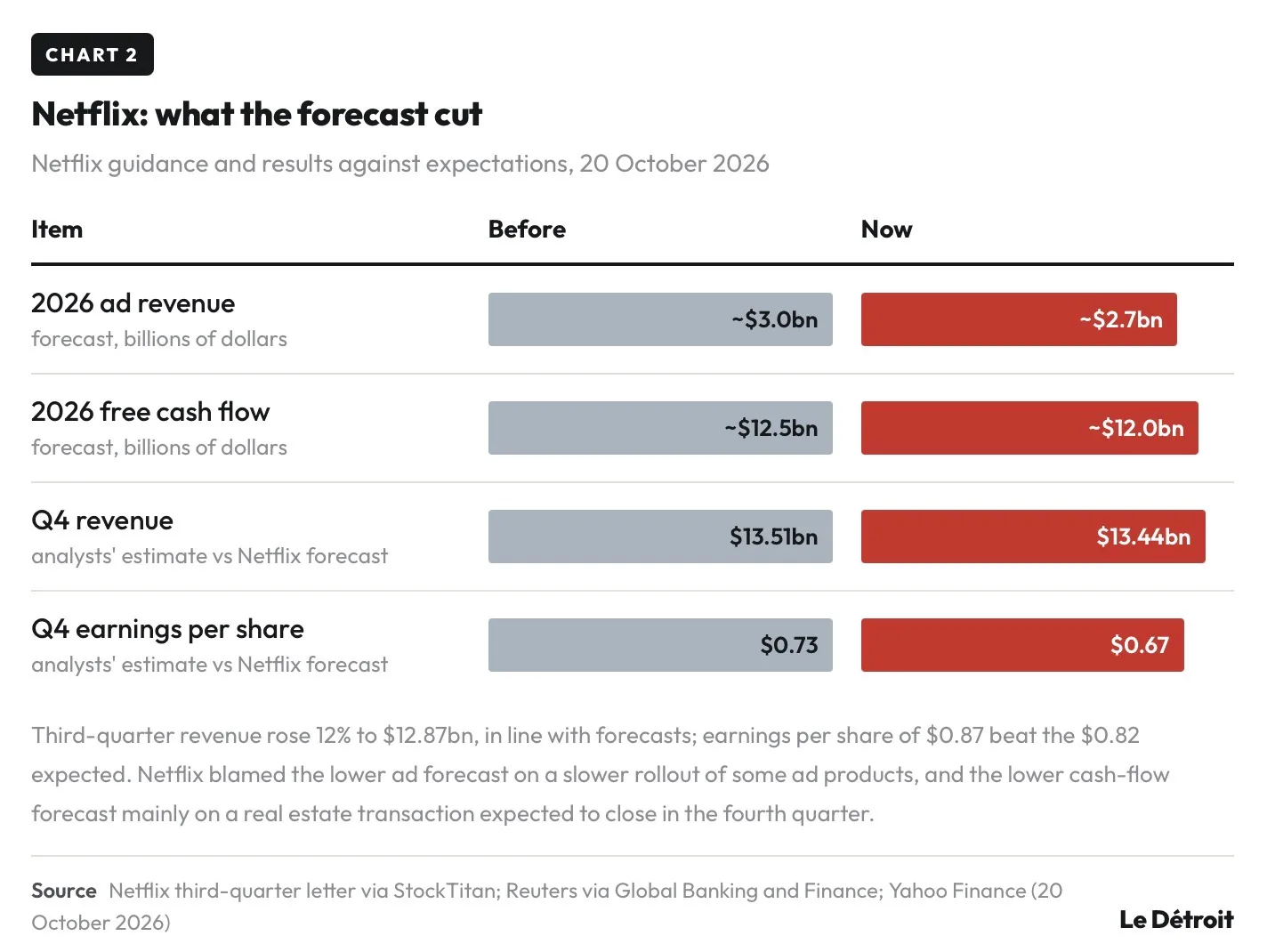
Netflix shares fell about 5% in extended trading on Tuesday after the company forecast fourth-quarter revenue of $13.44 billion, short of the $13.51 billion analysts expected, and cut its 2026 advertising revenue forecast to about $2.7 billion from about $3 billion, blaming a slower rollout of some ad products. Third-quarter revenue rose 12% to $12.87 billion, its slowest growth in nearly three years according to Reuters, and earnings per share of $0.87 beat forecasts. The results came days after Netflix said it would cut about 1,000 jobs, some 6% of its workforce and its biggest layoffs since 2022, and replaced its top programming executives: former Disney executive Peter Rice becomes chief content officer. The stock was already down about 25% this year, as viewers drift to YouTube and TikTok.
5. US sanctions the Chinese backers of an ex-Google engineer
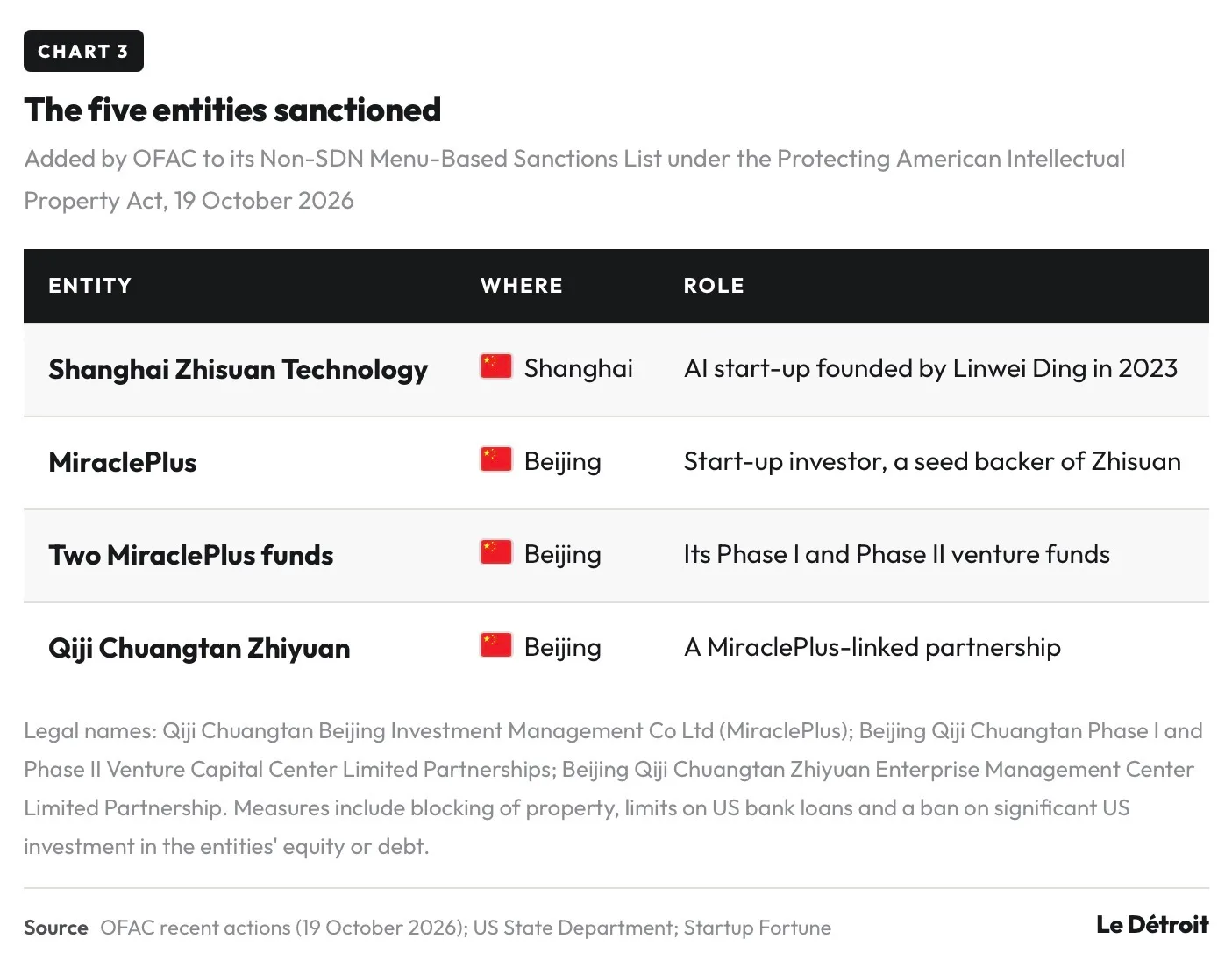
The United States on Monday sanctioned five China-based entities linked to Linwei Ding, a former Google engineer convicted of stealing trade secrets on Google's AI supercomputing technology, including designs for its TPU chips. The targets include Shanghai Zhisuan Technology, the AI start-up Ding founded in 2023, and MiraclePlus, the start-up investor that grew out of Y Combinator's China arm and backed Zhisuan, together with funds it manages. It is the first use against China of the Protecting American Intellectual Property Act, a law signed in January 2023, and only its second use overall, according to Startup Fortune. "This theft of trade secrets is a serious threat to U.S. economic, foreign policy, and national security interests," the State Department said. Ding was convicted by a jury in January; a judge later acquitted him of economic espionage, and he was sentencedè in September to just under a year in prison. On Tuesday China's Commerce Ministry expressed firm opposition to the sanctions.
6. Brazil's runoff turns into a duel over bank records
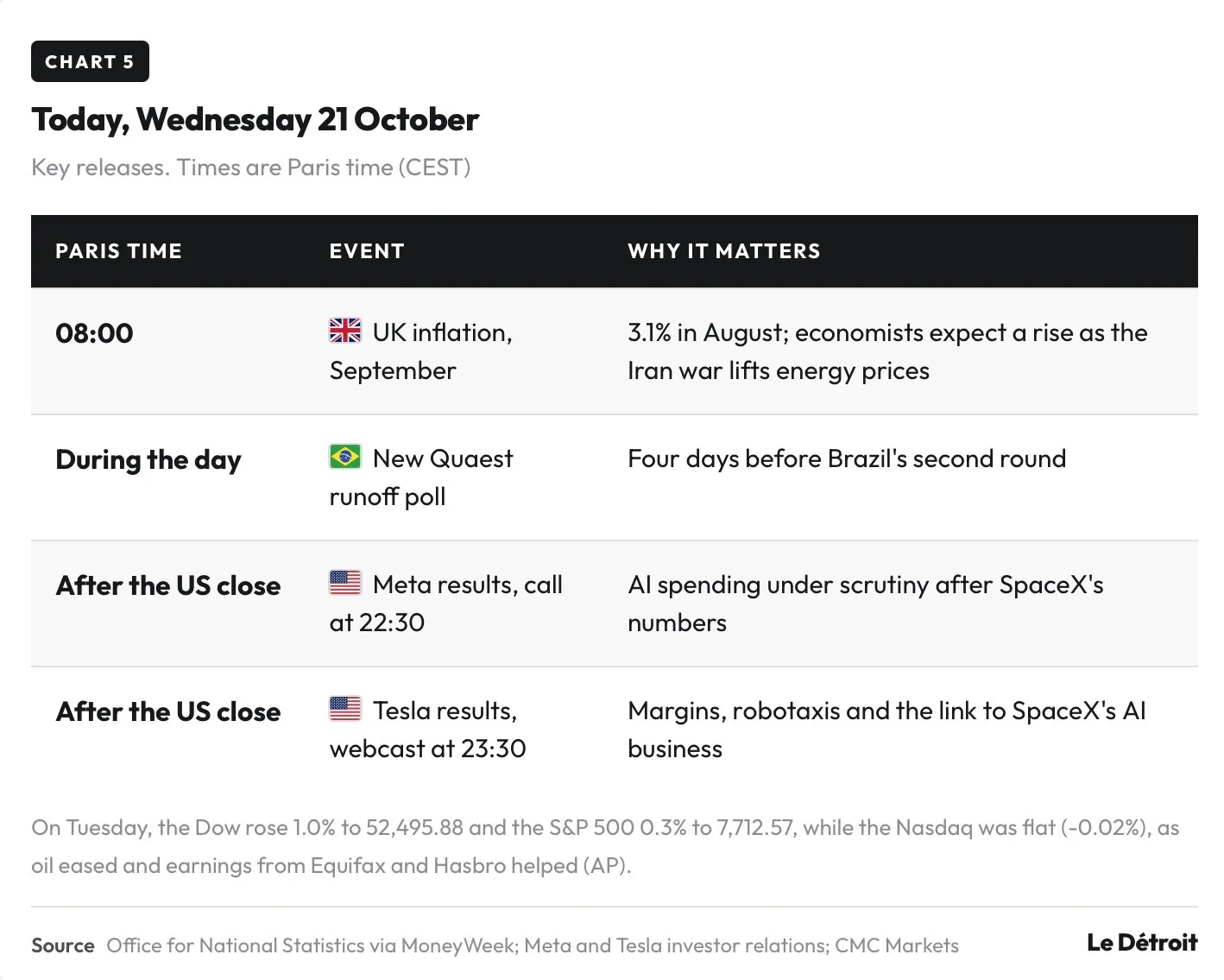
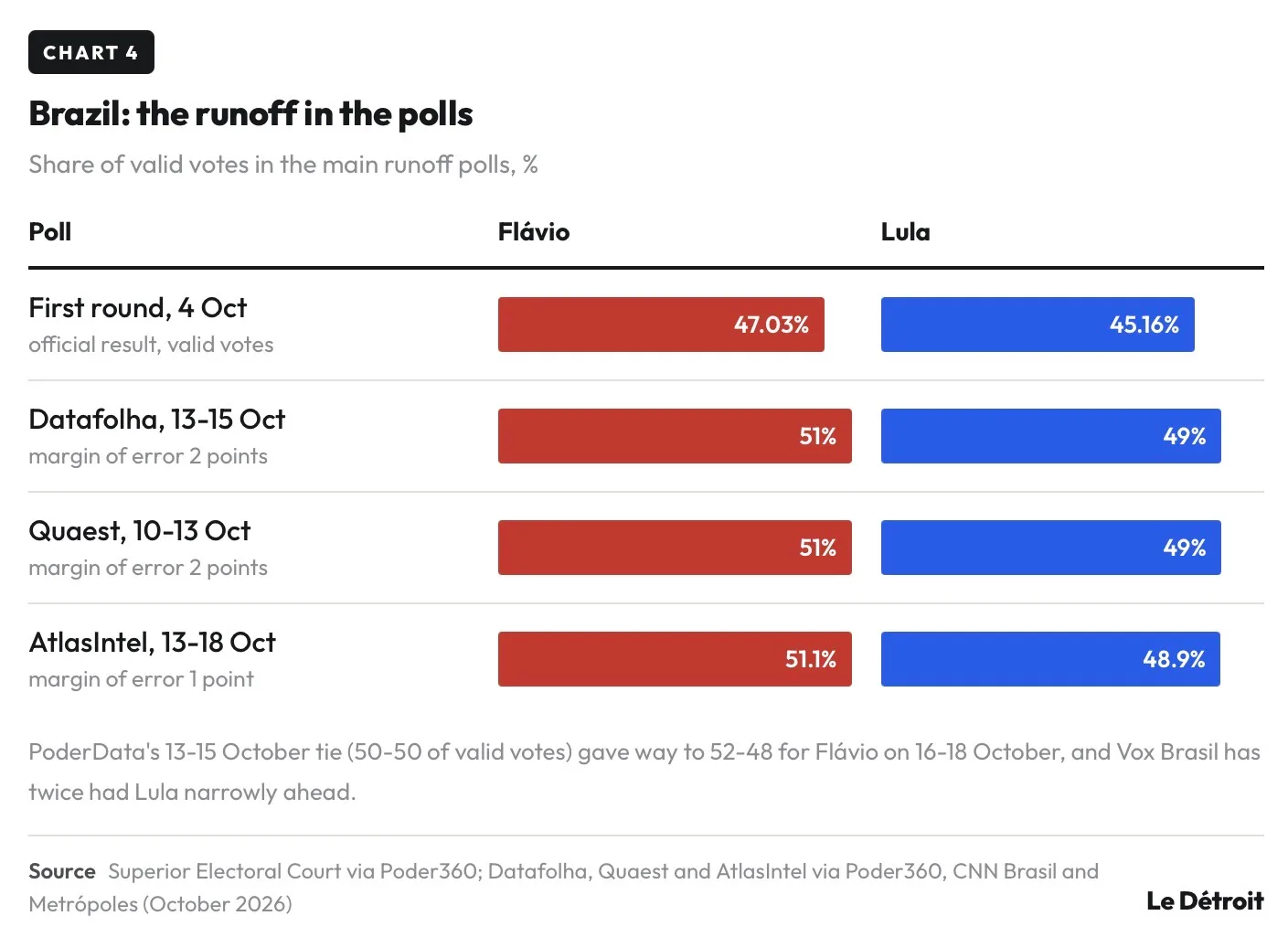
Five days before Brazil's presidential runoff, Lula filed a pledge with the electoral court on Tuesday to publish his bank, tax and phone records if his rival does the same. "I want to see whether he (Bolsonaro) has the courage to disclose his bank and phone records," he said, according to Reuters. Flávio Bolsonaro, who is under a Supreme Court inquiry over a US$24 million film deal he negotiated with Daniel Vorcaro, according to messages published by The Intercept Brasil, the jailed former owner of the failed Banco Master, will not take up the challenge, campaign members told an SBT News columnist, calling it an electoral trap; in Sunday's debate he said he had "absolutely nothing to hide". He acknowledges seeking funding for the film but denies wrongdoing. The Supreme Court has also authorised an investigation into Lula's son Fábio Luís over alleged influence peddling, which he denies, Reuters reported. Flávio led the first round with 47.0% of valid votes to Lula's 45.2%, and most polls since give him 50% to 53% of valid votes, within or close to their margins of error. Le Détroit's World this week explains how the bank's collapse reached the Supreme Court, the central bank and both camps.
Today