
What happened
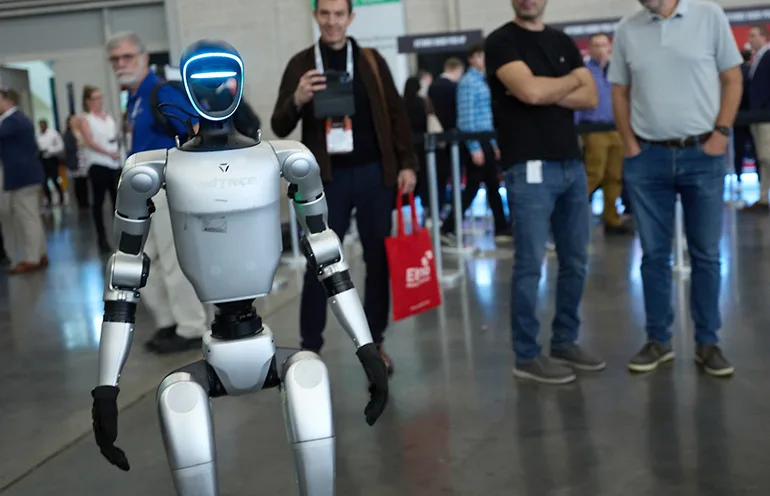
Unitree Robotics, also known as Yushu Technology, has fallen 44 per cent since it began trading on Shanghai's Star Market on 19 August, wiping out more than 200bn yuan ($29.8bn) in market value. The stock had surged 460 per cent on its first day of trading.
According to media reports, Chinese regulators are expected to heighten scrutiny over humanoid robot makers seeking IPOs on mainland exchanges, focusing on the sustainability of revenue growth, earnings prospects and applicants' capabilities in technological innovation.
The shift is expected to affect companies including Deep Robotics and Leju Robot, which remain unprofitable after filing for IPOs. Even after its decline, the Hangzhou-based Unitree was capitalised at 190bn yuan, or 347 times estimated earnings, against an average multiple of 118 for the Star Market. The stock was little changed at 469.80 yuan on Tuesday.
The context
Humanoid robotics is treated as a strategic industry in China, and Unitree has been regarded as its national champion. The company's tumultuous post-debut performance has stirred debate over whether regulators set the listing bar too low.
The industry's commercialisation remains limited, and most players struggle to turn a profit. Unitree's first-half profit fell 19 per cent year on year excluding extraordinary gains, while revenue growth slowed to 48 per cent from more than 300 per cent in 2025.
Peers show similar strains. Leju Robot, which has filed for an IPO on Shenzhen's ChiNext board, reported a loss of 69.8m yuan last year, its biggest over three years. Shenzhen Dobot, whose share sale was approved by the Shenzhen exchange in July, expected its first-half loss to widen to as much as 120m yuan on rising costs. Deep Robotics, whose application was accepted by the Shanghai exchange in May, posted a profit last year but warned its margin might shrink in the first half because of falling product prices.
Why it matters
Unitree's decline has exposed the gap between valuations and fundamentals in a sector that Beijing has designated a priority. "The company's fundamentals are insufficient to justify its valuation premium," said Kelvin Lau, an analyst at Daiwa Securities Group in Hong Kong. He added that Unitree needs to accelerate research and development spending in AI large models to stay competitive.
The company's reliance on a narrow customer base compounds the concern. Some 70 per cent of Unitree's downstream robot applications are concentrated in research and education, according to Lau, leaving it exposed until broader commercial uses emerge.
A tighter regulatory stance would slow the flow of capital into a field that has attracted speculative bets. It also signals a balancing act for Beijing: nurturing a strategic technology while curbing the risk that inflated listings damage retail investors and the credibility of the Star Market.
What to watch
The immediate signal will be how the China Securities Regulatory Commission and the exchanges treat the pending applications of Deep Robotics, Leju Robot and Shenzhen Dobot, and whether approvals are delayed or subjected to fuller disclosure.
Unitree's coming financial results will test whether revenue growth can stabilise and whether the company broadens its customer base beyond research and education. Any move by Beijing to formalise stricter listing criteria for the sector would confirm the shift in stance flagged by media reports.