1. What the FT revealed
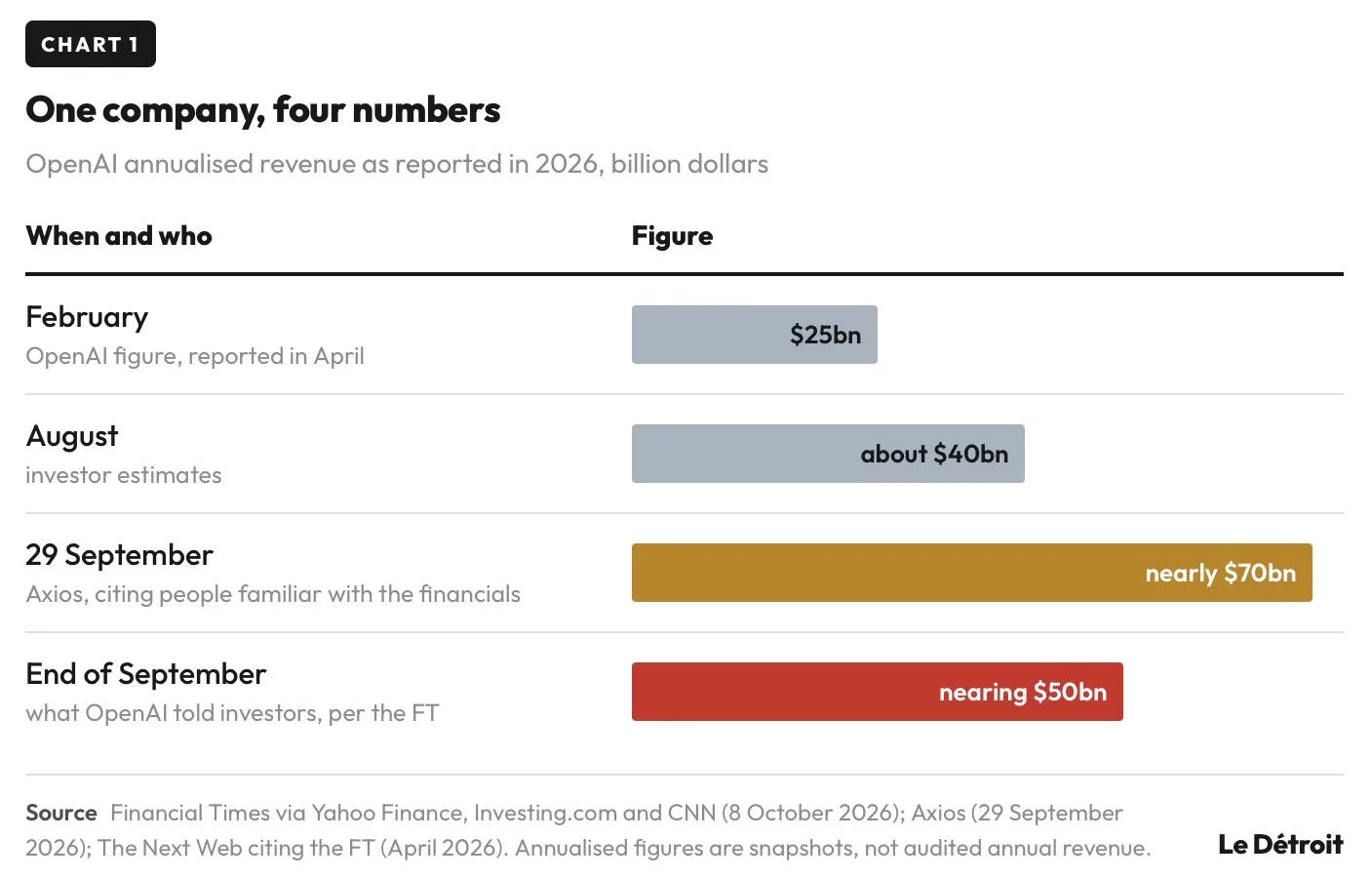
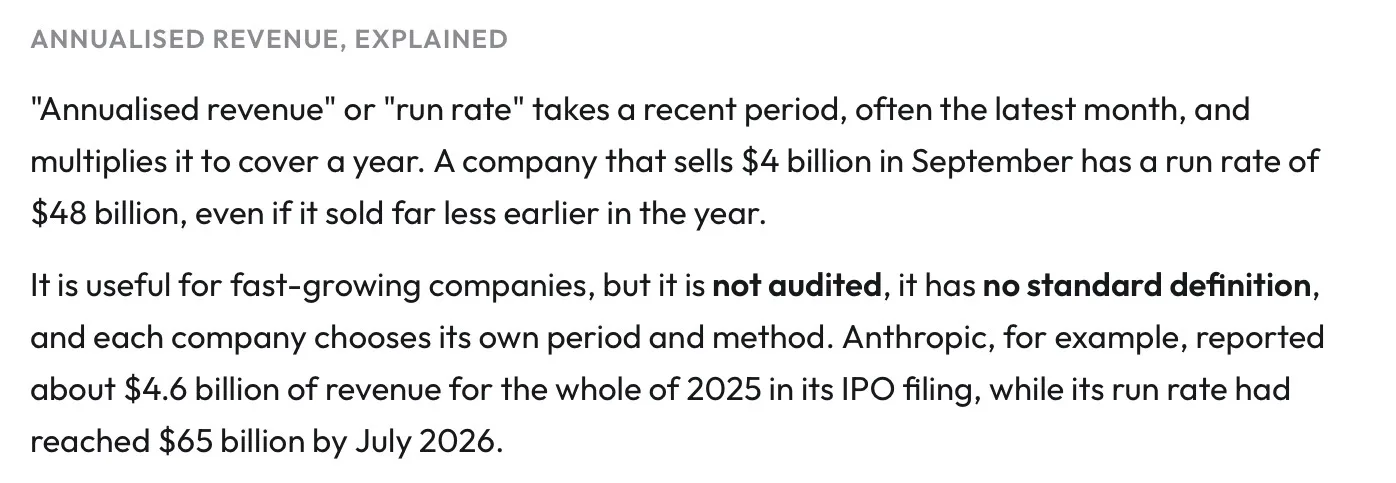
On Thursday 8 October, the Financial Times reported that OpenAI's annualised revenue was about $20 billion lower than had been signalled, according to financial documents shared with investors. OpenAI told them its annualised revenue was approaching $50 billion at the end of September. OpenAI declined to comment, according to CNN.
The $70 billion figure had circulated widely. On 29 September, Axios reported, citing people familiar with the financials, that OpenAI's annual recurring revenue was "nearing $70 billion", after growing more than 70% since the start of the third quarter. Bloomberg and Reuters picked up the report.
2. How $50 billion became $70 billion
According to the FT, the inflated figure was not a lie but a miscalculation. Investors had estimated OpenAI's revenue at about $40 billion in August. When OpenAI told them its revenue had grown more than 70%, some applied that growth to their own estimate and compared the result with Anthropic's figures. The problem: the two companies do not count the same thing.
3. The $1 question: gross or net
Both companies sell their AI models directly, but also through the big cloud platforms: Amazon Web Services and Google Cloud for Anthropic, Microsoft's Azure for OpenAI. When a customer pays $1 through one of these platforms, two accounting treatments are possible.
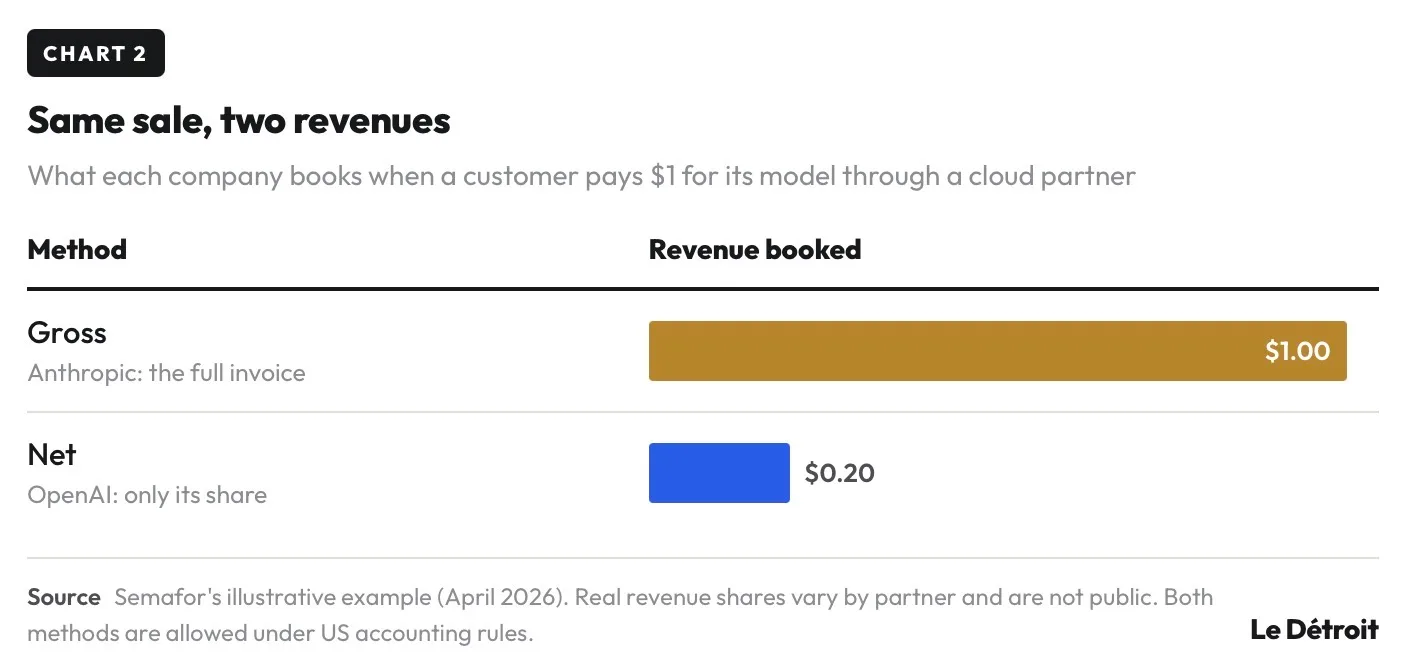
Anthropic counts the whole dollar as its revenue and treats the cloud provider's cut as a cost: it says it is the "principal" in the sale and the cloud is only a distribution channel. OpenAI counts only the share it receives. US accounting rules allow both, depending on who controls the service sold. The effect is large: in April, an internal OpenAI memo argued that Anthropic's then $30 billion run rate would fall to about $22 billion on a net basis. Anthropic has defended its method.
4. Why a definition moved the market
OpenAI is private, but much of the stock market is exposed to it. The company has signed enormous computing contracts on the strength of its expected growth, and investors use its revenue as a gauge of real demand for AI. A smaller number, even one explained by a definition, raises the question everyone is asking: will revenue catch up with the spending?
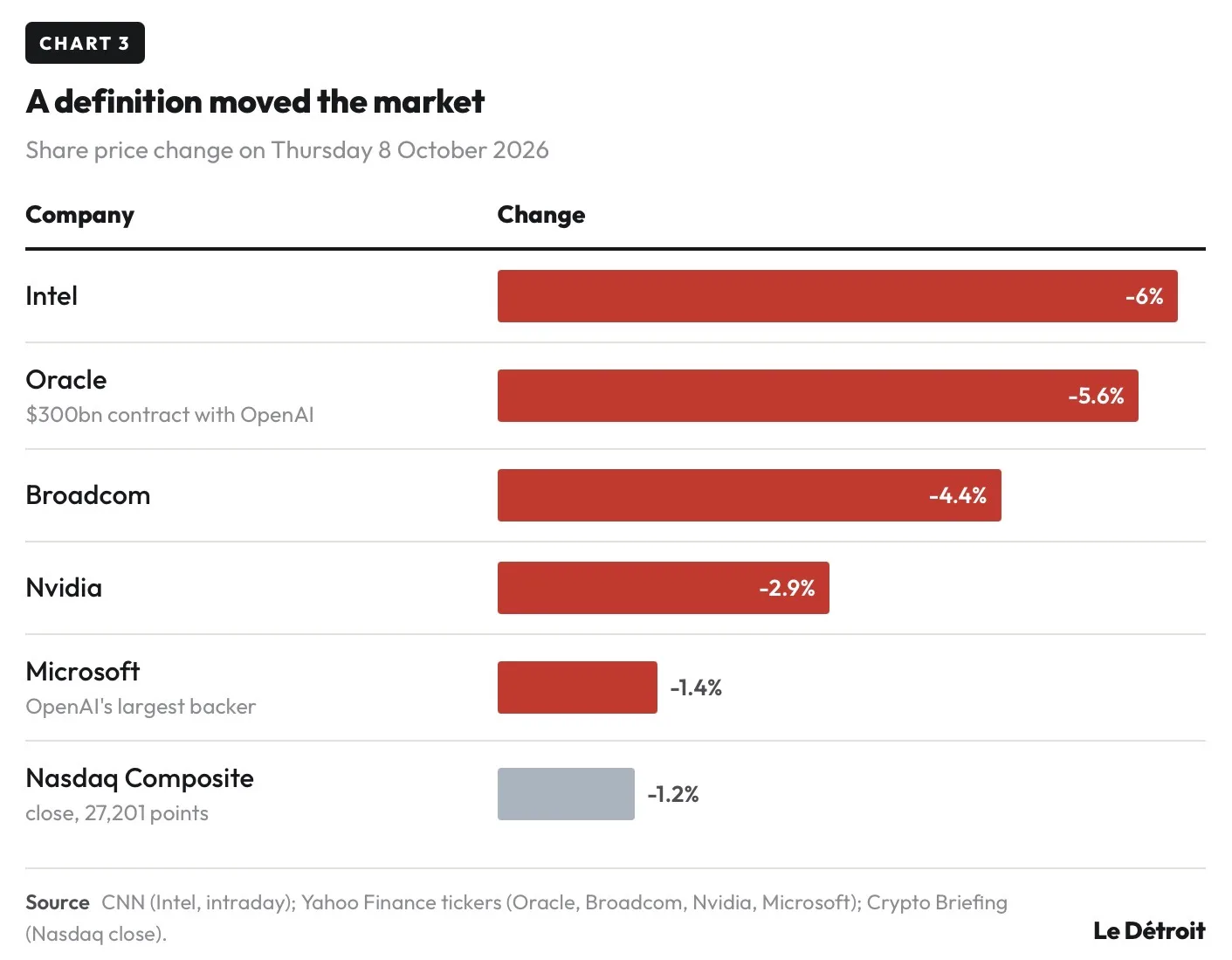
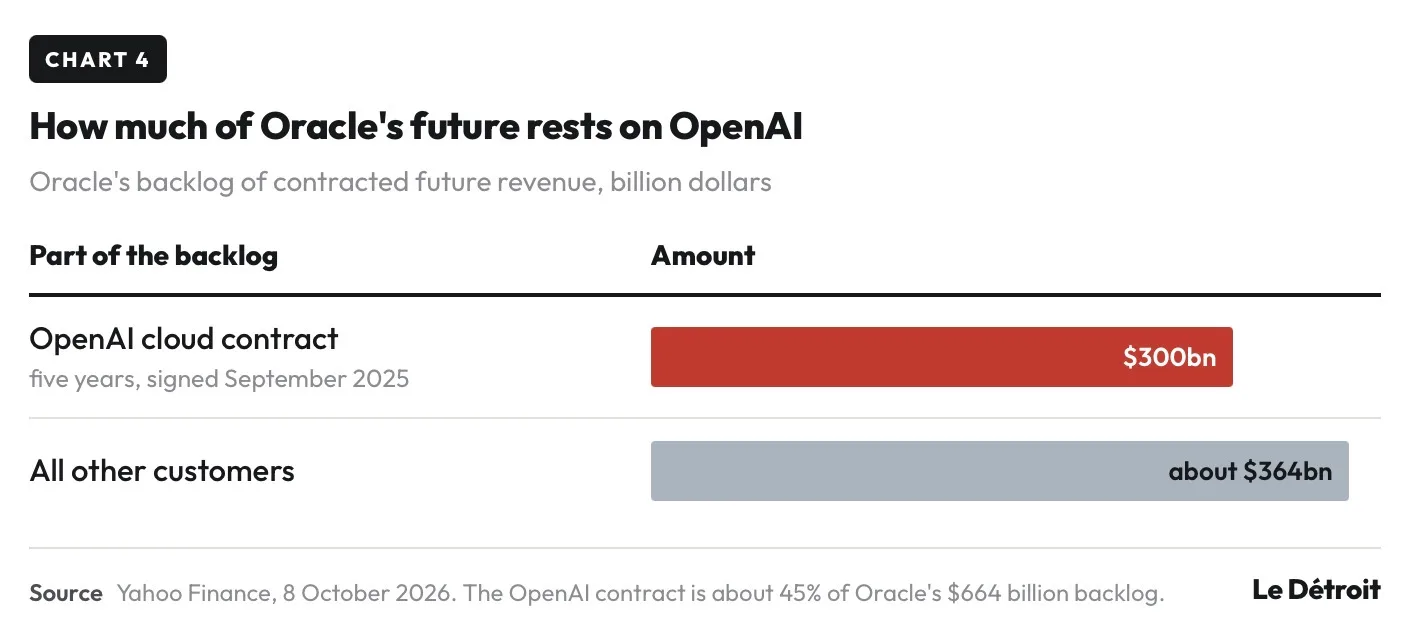
Oracle is the clearest case. Its five-year, $300 billion cloud contract with OpenAI represents about 45% of its backlog of contracted future revenue. Oracle has to build the data centres before it collects most of that money: in its latest quarter, its capital expenditure reached $28.5 billion and its free cash flow was negative by $5.4 billion. CoreWeave, AMD, Nvidia and SoftBank also have large commitments tied to OpenAI.
5. What the IPOs will change
Private companies can publish almost any metric they like. Listed companies cannot. Anthropic filed a draft prospectus confidentially on 1 June and is expected to list soon; OpenAI, which raised $122 billion at an $852 billion valuation in March, has said it will not go public before 2027. A prospectus requires audited figures under US accounting rules, with an explanation of how revenue is recognised.
That will not settle everything. Since both gross and net treatments are legal, the two companies may still report differently. Readers will have to look past the headline revenue to the notes that explain it.