1. What happened
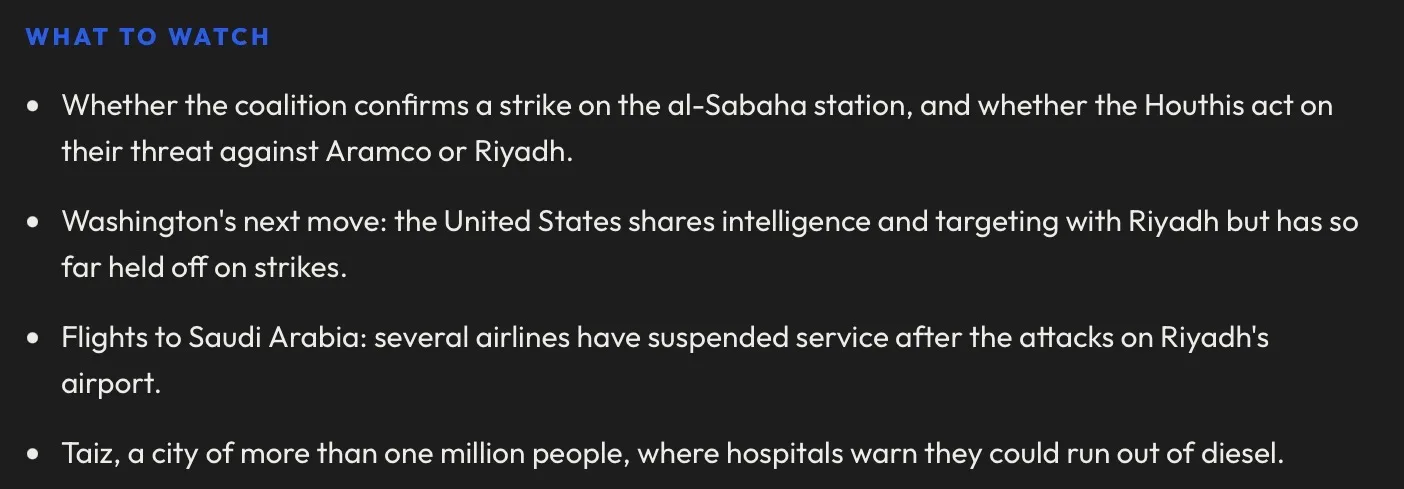
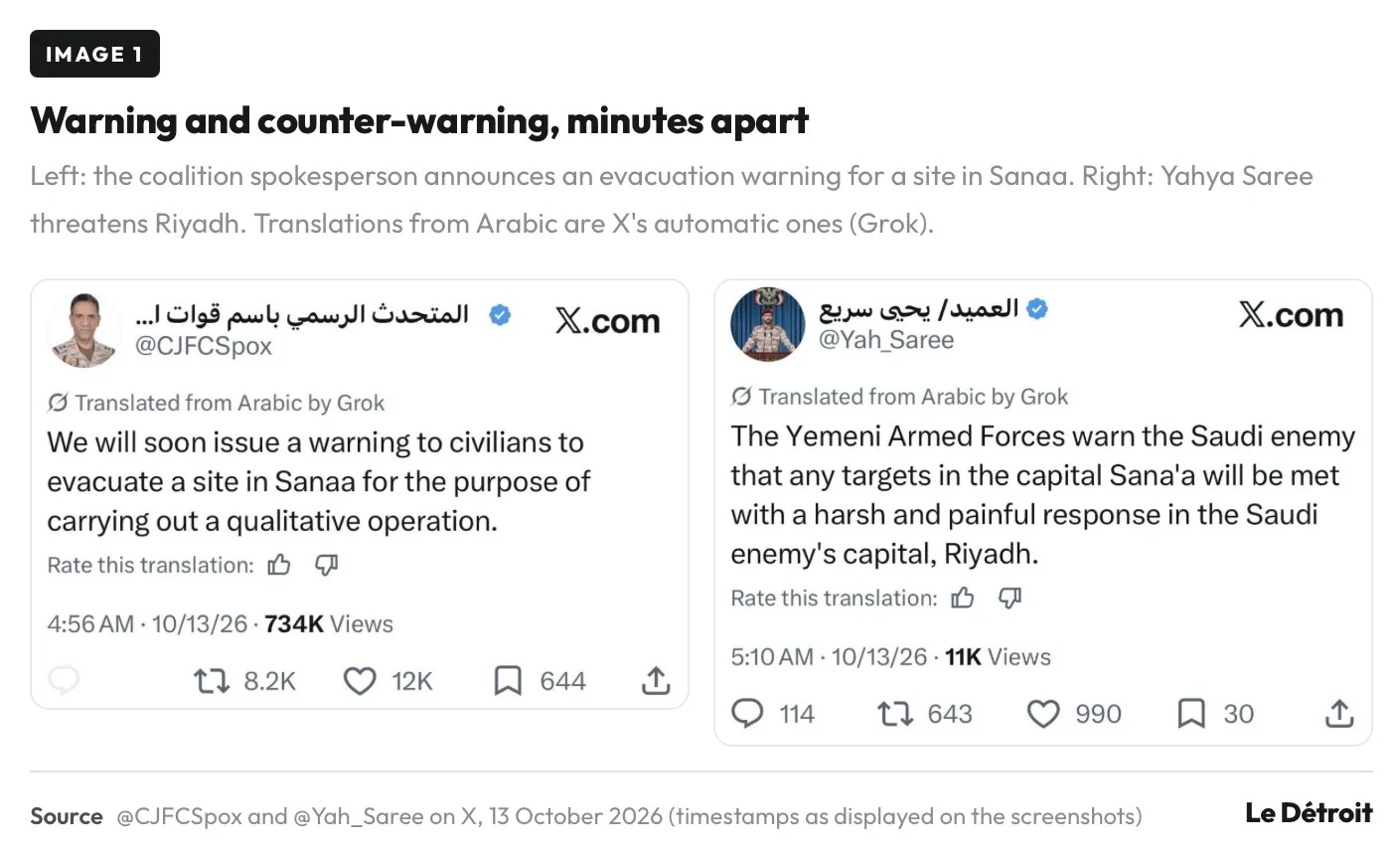
On Tuesday morning, the Saudi-led coalition issued what AP called a "rare statement": its spokesman, Maj. Gen. Turki al-Maliki, asked civilians in Houthi-held Sanaa to leave the Yemen Petroleum Company's al-Sabaha central station and nearby storage areas "for their own safety", ahead of a military operation. The site lies in al-Subaha, in western Sanaa. AP notes that the area is not populated, but that a fuel station nearby is used by the public.
https://x.com/sentdefender/status/2110019890857816113?s=61
Shortly afterwards, Al Jazeera's team in Sanaa reported hearing explosions, and the Houthi-run channel Al-Masirah said the coalition had struck oil facilities west of the capital. Neither the coalition nor independent sources had confirmed a strike at the time of writing.
2. The Houthi answer: Aramco and Riyadh
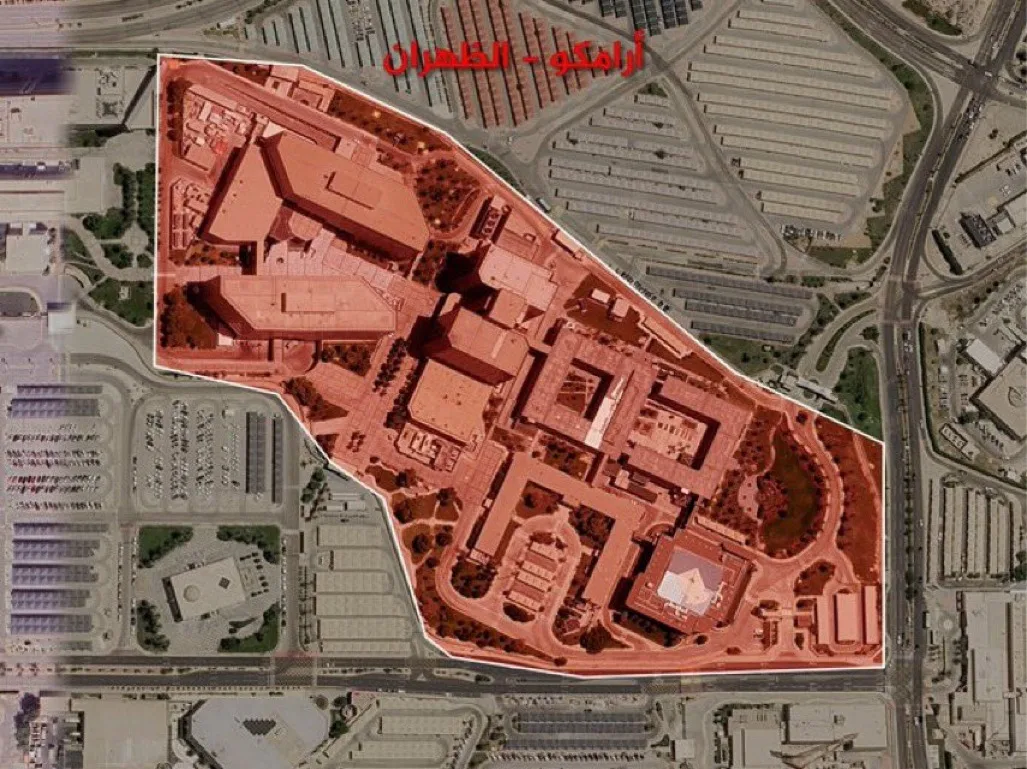
The Houthis replied within hours. Their military spokesman, Brig. Gen. Yahya Saree, warned that any attack on Sanaa would be met with a "painful" response in Riyadh, then went further: he called Saudi oil facilities "a legitimate target" and told employees and civilians near Aramco sites to evacuate. In a post on X, he named three targets: Aramco's headquarters in the Dammam area, King Khalid International Airport and an Aramco-affiliated refinery in Riyadh.

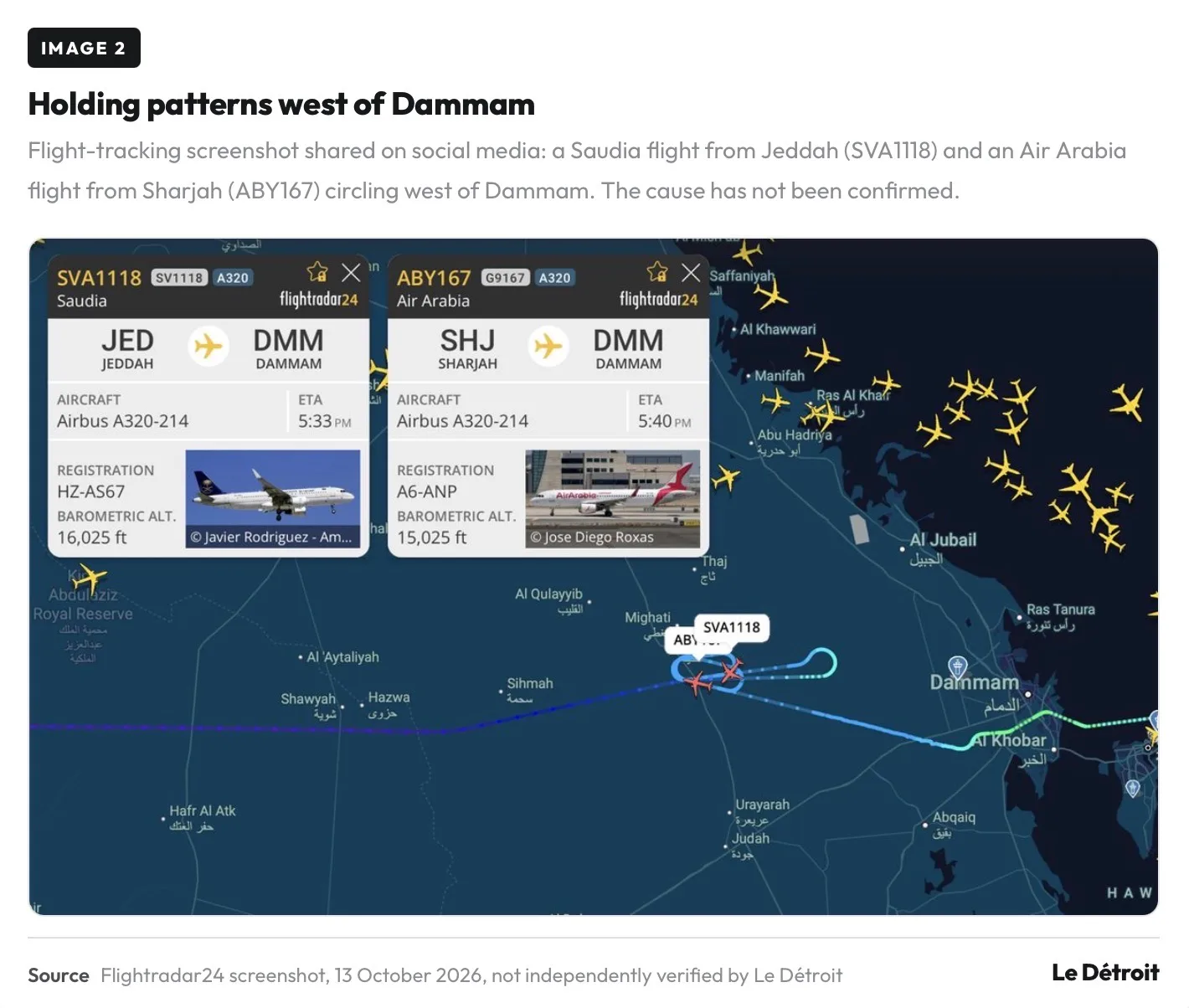
These threats carry weight because Riyadh has already been hit. An attack on King Khalid International Airport on Saturday killed at least 13 people and injured more than 300, and a projectile struck the airport again on Sunday. AP reports that Saudi Arabia is still trying to understand how its air defences failed to stop the barrage. Several airlines have since suspended flights to the kingdom. On Tuesday, flight-tracking images also showed aircraft bound for Dammam holding west of the city, close to the Aramco sites named by Saree.
3. Context: a war that restarted in August
The latest Saudi-Houthi war began after the Houthis ended the truce in August and seized the Red Sea coast in September, including Mocha near the Bab el-Mandeb Strait. Saudi-backed government forces answered with the "Dawn of Yemen" counteroffensive, which Rashad al-Alimi, head of the Presidential Leadership Council, says aims to retake all Houthi-held territory, including Sanaa. Washington provides intelligence and targeting support, but has held off on strikes of its own.
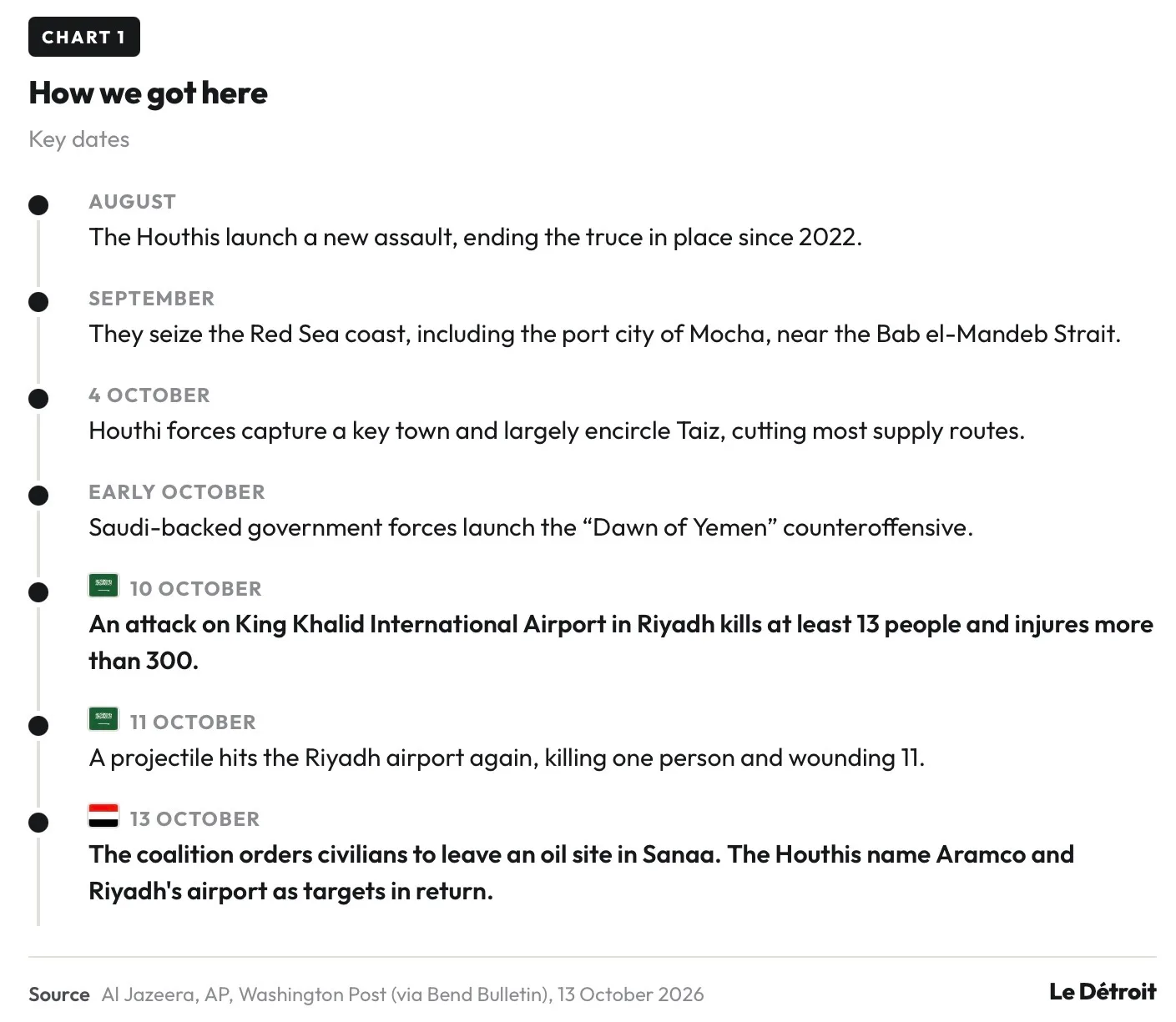
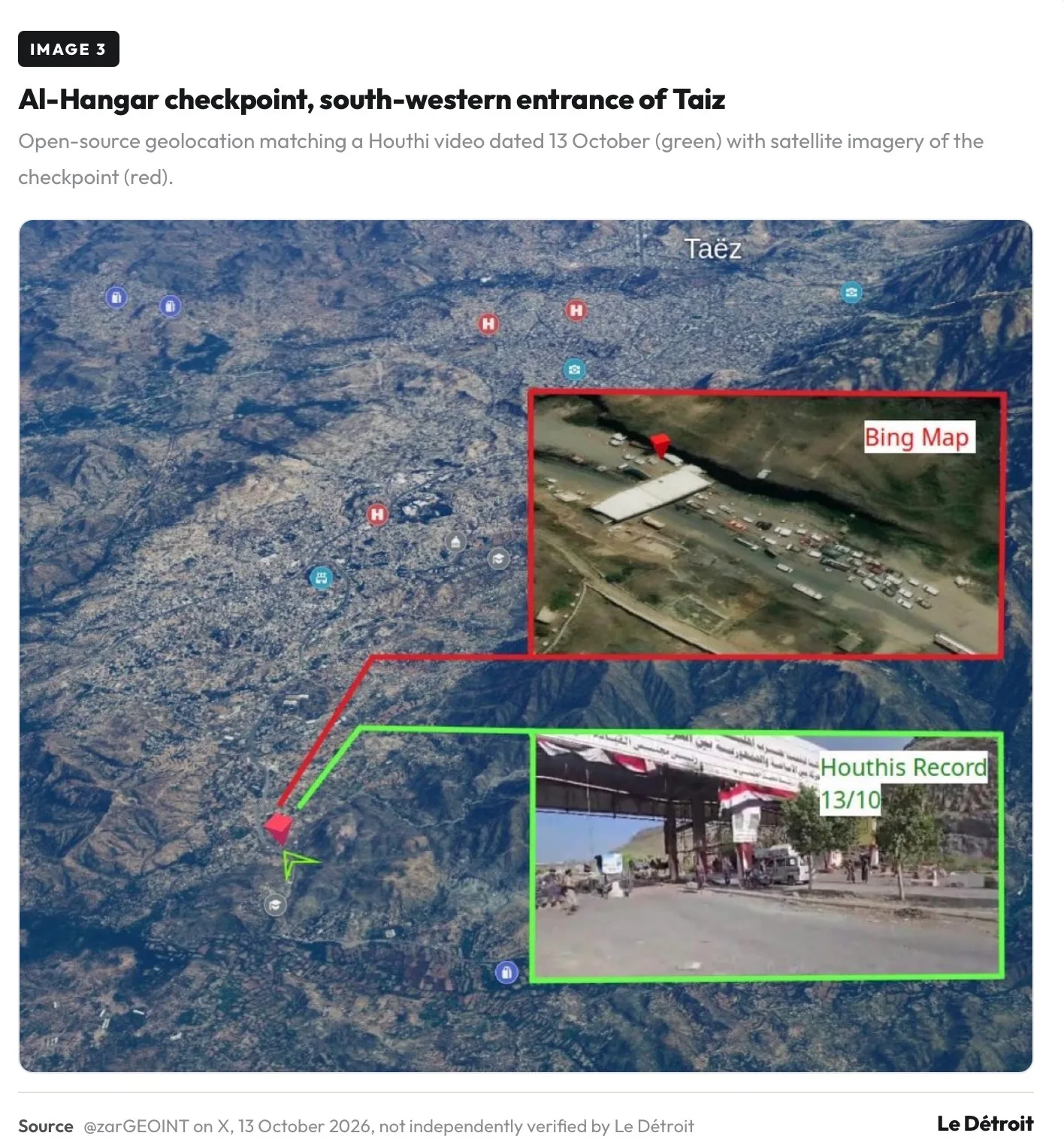
On the ground, the Houthis are tightening their grip on Taiz, Yemen's third-largest city, with more than one million residents. Since 4 October, they have largely encircled it and cut most supply routes, and Al Jazeera reports that they seized areas in Sabir, south of the city, on Monday. An open-source analyst also geolocated a Houthi video showing their fighters at the Al-Hangar checkpoint, at the south-western entrance of Taiz, a claim we could not confirm independently. A local rights network counted five civilians killed and 17 wounded in 24 hours.
4. Le Détroit's reading
Both sides are now pointing at the other's oil. Striking Sanaa's fuel depots would squeeze the Houthis' main energy supply. Striking Aramco would hit the heart of the Saudi economy and a pillar of world oil supply. In 2019, the attack on the Abqaiq plant, claimed by the Houthis and blamed by Washington on Iran, briefly knocked out about half of Saudi output.